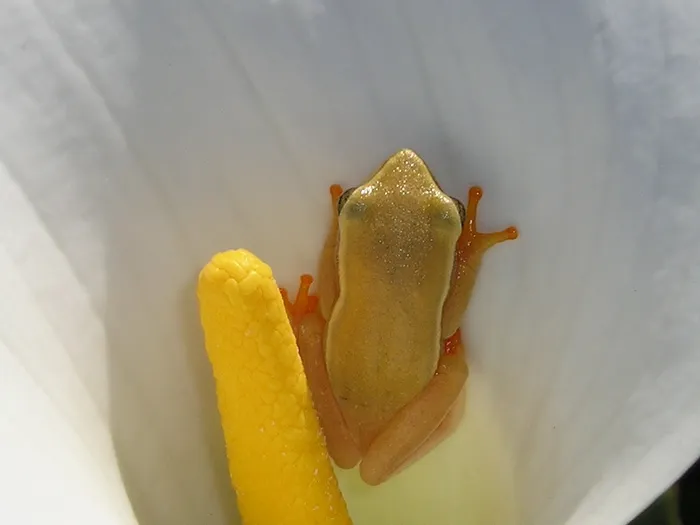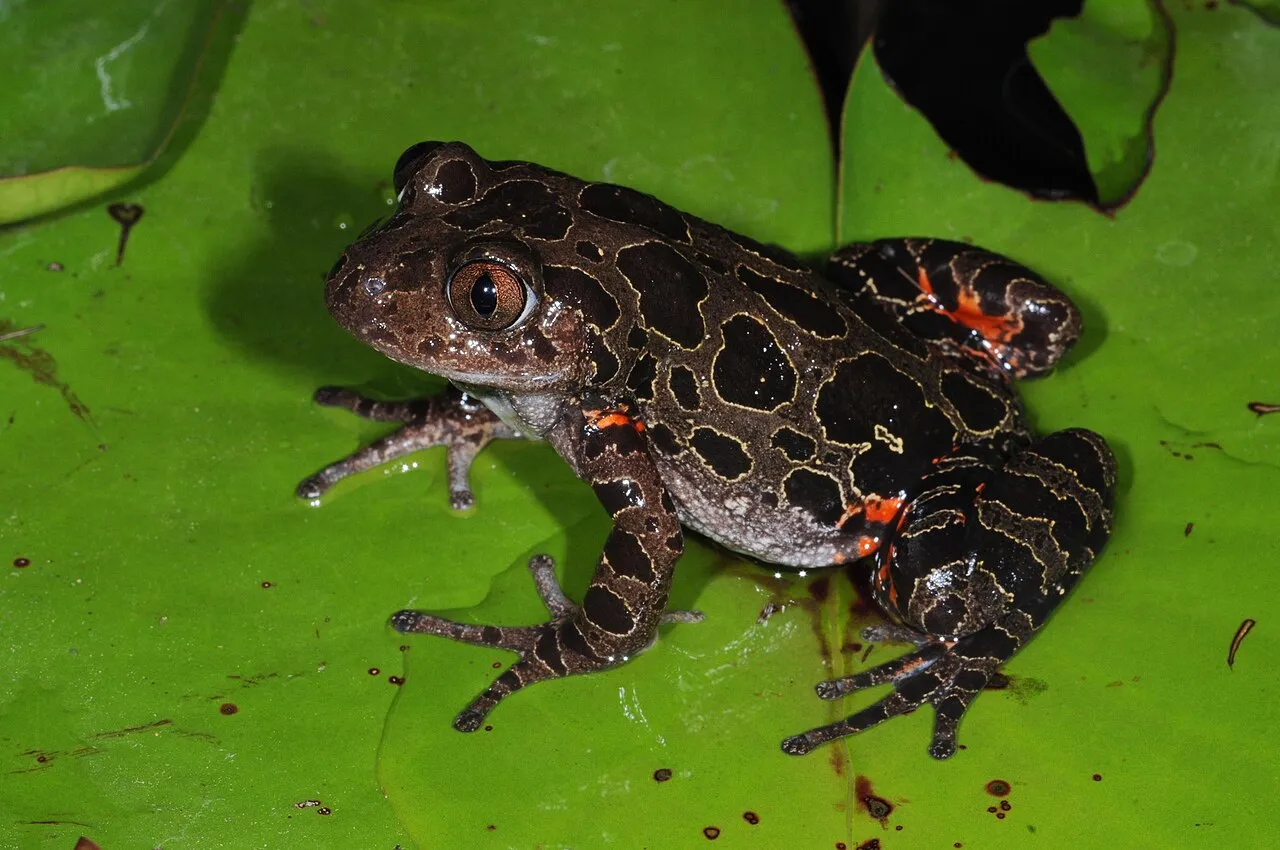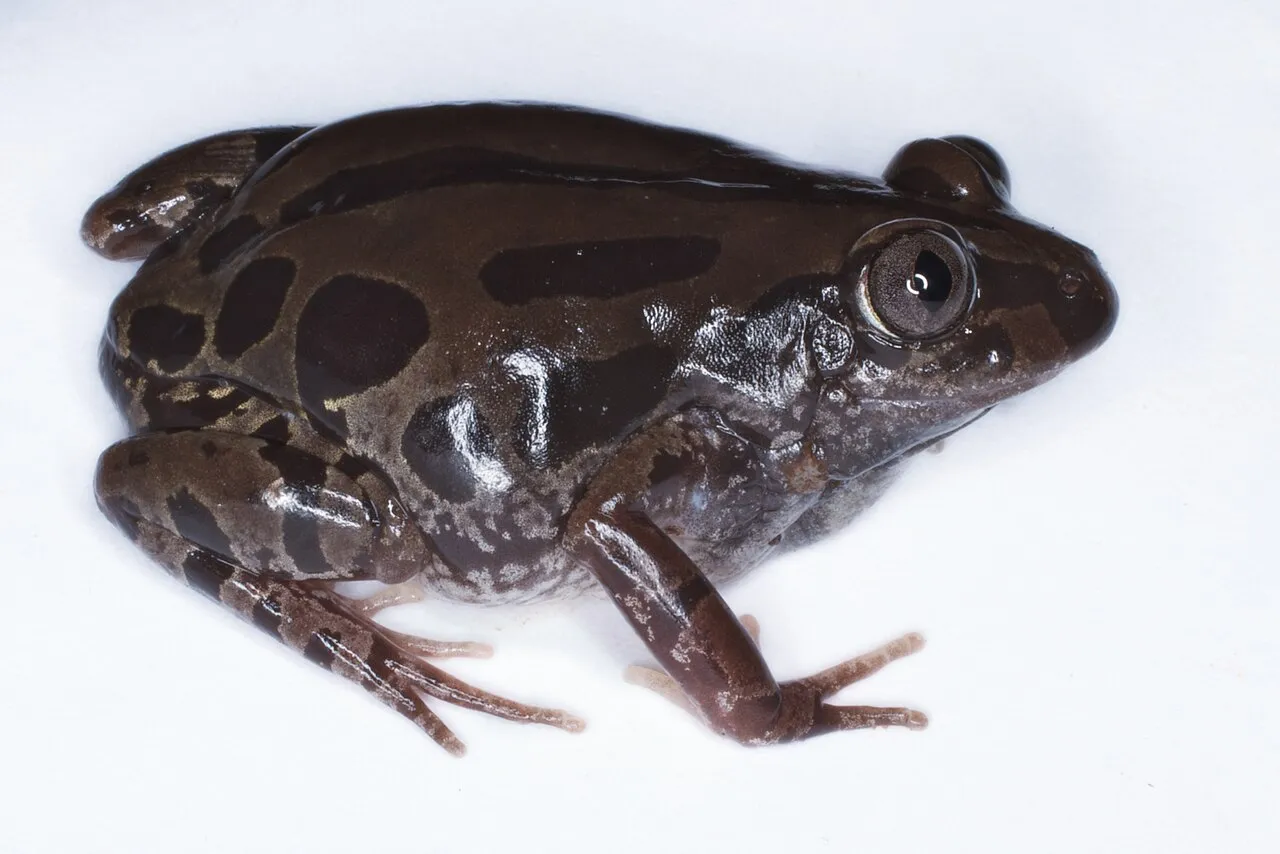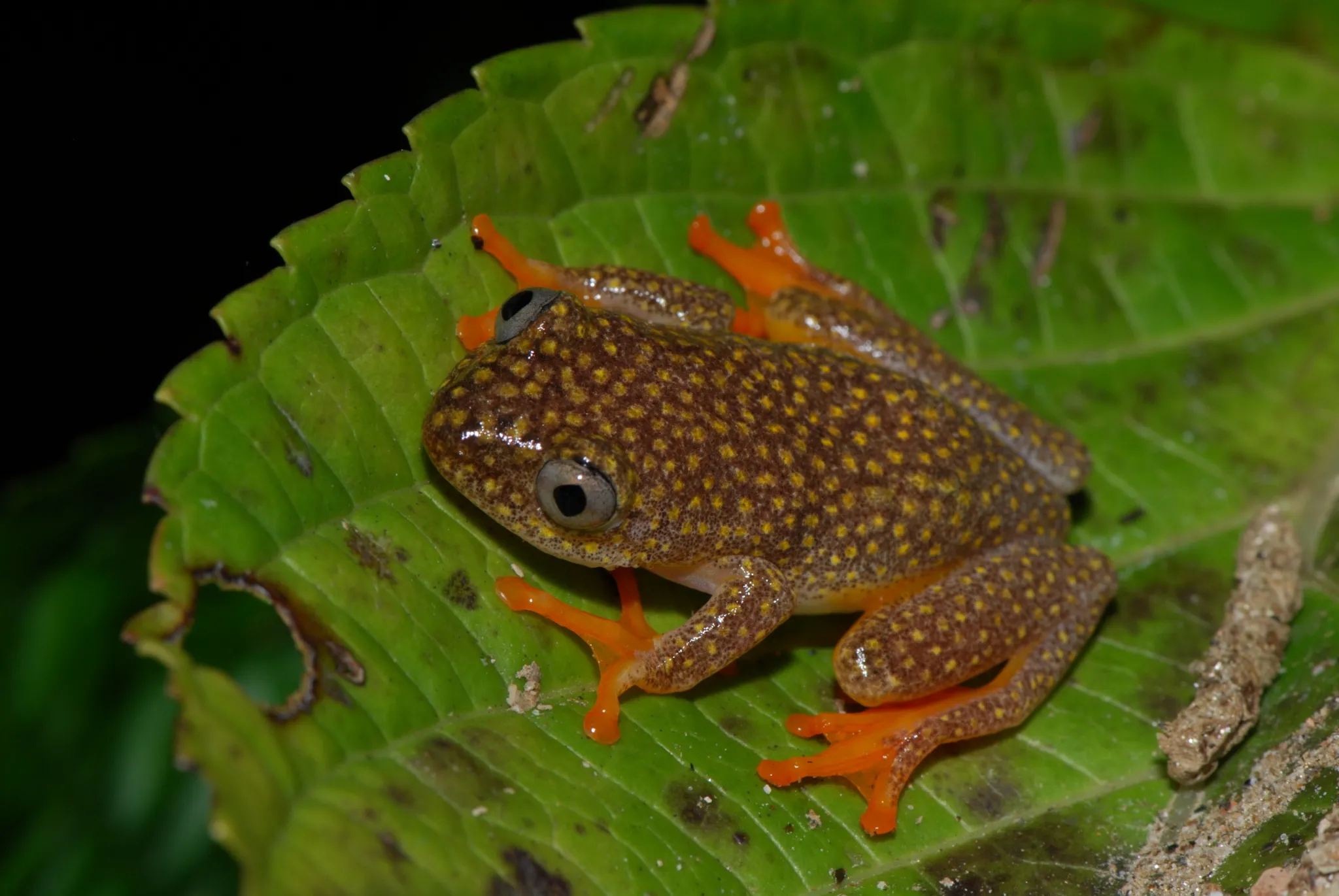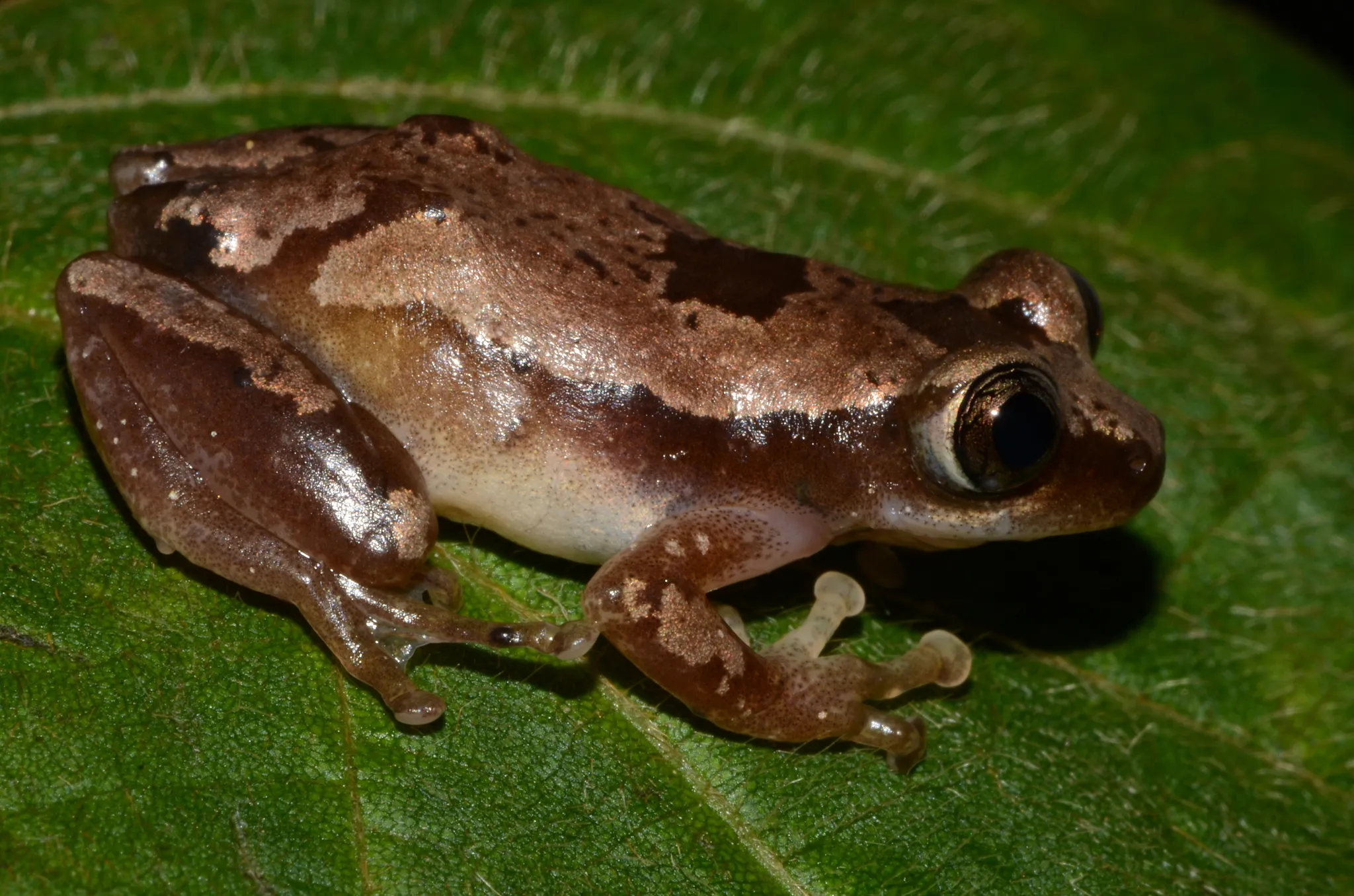
Afrixalus dorsalis, the brown banana frog, is a small treefrog of the family Hyperoliidae, found across West and Central Africa, from Guinea and Sierra Leone to Angola1.
Identification
Males measure 25 to 28 mm and females 26 to 30 mm2, snout to vent, figures given in the description of the newly described, smaller Afrixalus phantasma as a size comparison with this species.
Habitat and range
The species lives in lowland forest, shrubland, seasonally flooded grassland and freshwater marshes, as well as degraded former forest, gardens and ponds, and it also uses seasonally flooded agricultural land and canals and ditches1.
Behaviour and breeding
A. dorsalis belongs to the leaf-folding frogs of the genus Afrixalus, which, as in other members of the genus, lay their eggs in vegetation above water, often folding leaves around the eggs3.
Conservation
The IUCN Red List categorises Afrixalus dorsalis as Least Concern4, an assessment made in 2013. The chytrid fungus has been documented in a Nigerian population of the species, in Okomu National Park, though widespread deforestation appears not to threaten it: the species thrives in grasslands and degraded former forest1 and may be one of the few anurans in the region to benefit from it.
Similar species
Afrixalus phantasma, described after A. dorsalis, is smaller than A. dorsalis2 in both sexes, per the paper that first described it using A. dorsalis as a size comparison.