Peltophryne fustiger: Discovering Cuba’s Secretive Giant Toad#
Introduction#
In the dense tropical forests and hidden coastal areas of Cuba lives a creature cloaked in ecological mystery—the Peltophryne fustiger. Commonly known as the Cuban Giant Toad, though rarely encountered, this species captures the imagination of anyone fortunate enough to cross its path. With its cryptically colored skin, elusive behavior, and crucial role in the ecosystem, the Cuban Giant Toad epitomizes the rich biodiversity hidden within the fascinating Caribbean island nation.
Appearing almost mythological to those unfamiliar with its habits, Peltophryne fustiger exists at the intersection of wonder and science. Belonging to the Bufonidae family, this amphibian has intrigued scientists and naturalists alike due to its rare sightings and intriguing adaptations. As we journey through its habitats and unveil its secretive behavior, we uncover not only the unique biology of this fascinating species but also its importance in conservation and ecological stability.
Taxonomy and Classification#
Peltophryne fustiger belongs to the Bufonidae family, a diverse group commonly referred to as true toads. Within this family, the genus Peltophryne comprises robust, terrestrial amphibians primarily distributed across the Caribbean Islands. Named by Schwartz in 1960, P. fustiger shares its genus with other Cuban endemics such as Peltophryne peltocephala and Peltophryne florentinoi. Despite their similar ranges and morphological characteristics, slight distinctions in behavior, niche selection, and physical features allow each species in this genus to thrive in their own unique ecological spheres.
Careful classification and genetic studies have provided insights into their evolutionary relationships, painting a deeper picture of biogeographic evolution in the Caribbean islands. Such research strengthens our comprehension of how these amphibians adapted uniquely over thousands of years to become creatures uniquely suited to Cuba’s challenging and varied environments.
Natural Habitat#
Peltophryne fustiger shows remarkable environmental adaptability yet maintains specific habitat preferences. Endemic to Cuba, its geographic distribution primarily covers the humid, shady lowland forests and coastal fringes. These amphibians predominantly occupy regions within dense leaf-litter carpets or rocky terrain near rivers and freshwater streams. Within these microhabitats, the damp leaf litter and thick underbrush offer them perfect camouflage from predators and ideal conditions for moisture retention.
The Cuban forests, characterized by temperate humidity, are teeming microcosms wherein this toad thrives. Beneath the shade of mahogany trees and endemic Cuban palms, P. fustiger bides its daytime hours hidden from predators and human disturbances. During wet seasons, their distribution expands across temporarily flooded woodlands and low-lying areas, crucial periods in their seasonal activity patterns.
Immersing oneself into this environment, glimpsing between vines and ferns, a fortunate observer might notice the subtle shifting of leaves—a sign of the elusive Cuban Giant Toad’s hidden presence.
Physical Characteristics#
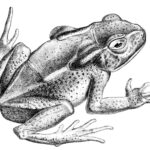
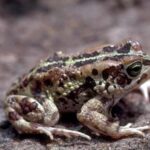
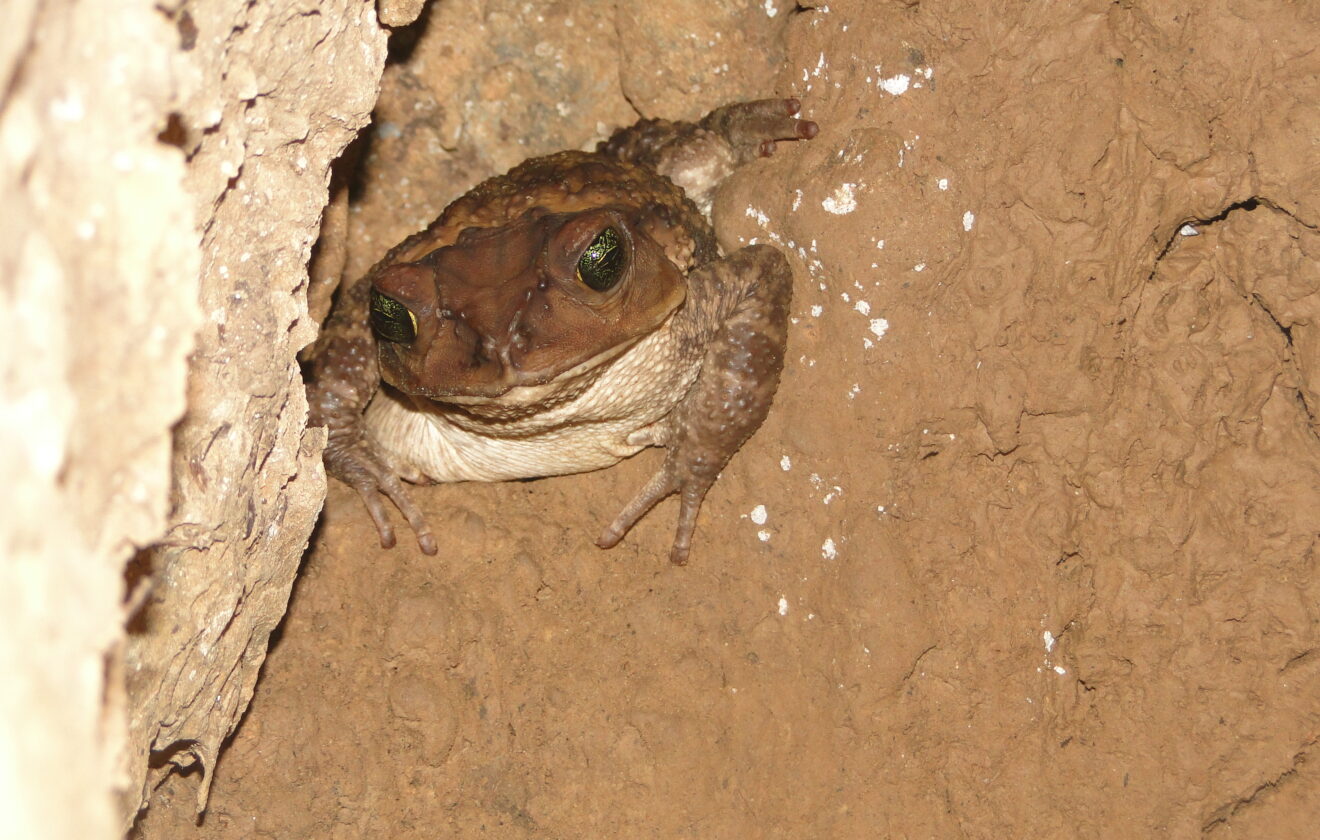
The Cuban Giant Toad distinguishes itself from other amphibians through its robust and somewhat imposing stature, reaching lengths commonly between 8 to 12 centimeters. A bumpy, rough-textured skin adorns its stout body, colored in hues blending perfectly with the forest floor—shades of olive, rust, brown, or gray dominate its skin pattern. Darker and lighter blotches intermingle effectively, making it extraordinarily adept at camouflage, essential for evading indigenous predators such as birds, snakes, and occasionally mammals.
A notable characteristic is their prominent cranial crests that run parallel between their eyes, adding both distinctiveness and protection. Large, bulging glands behind the eyes—parotoid glands—produce toxins effective against predation. One careful observer described their eyes as captivatingly golden with vertically elliptical pupils that glisten subtly under moonlight—a cryptic adaptations lending this amphibian impeccable nocturnal vision.
The muscular legs of P. fustiger are visibly adapted to terrestrial locomotion rather than jumping. Short-bursts of powerful hops enable them to navigate effectively through rooms of tangled roots, fallen logs, and rocky slopes, ensuring quick escape under predatory threats.
Behavior and Life Cycle#
Nocturnal Ambassadors of Cuba’s Forest Floor#
The moonlit nights in Cuba’s woodlands offer prime viewing windows into the largely nocturnal behavior of this cryptic species. As darkness envelops the forest, P. fustiger emerges from daytime refugia beneath leaf layers or logs to pursue insects, spiders, oligochaetes (worms), and small arthropods—constituting a carefully selected carnivorous diet critical for maintaining ecological balance.
Their hunting technique illustrates stealth and patience. Stationary ambush is often their preferred tactic; patiently awaiting the approach of unwary prey, they launch rapid, accurate feeding strikes, capturing prey with sticky, muscular tongues aimed with surgical precision. This feeding habit reduces unnecessary energy expenditure, critical for a relatively slow-moving amphibian.
Reproductive Wonders of the Rainy Season#
The onset of Cuba’s rainy months signals a vital time of reproduction for this gentle giant. Males gather around woodland pools, marshes, and flooded depressions, where resonant, melodic calls echo throughout the humid forests to attract females. Each male’s calls are distinct, constituting a powerful breeding chorus that maps out communal spawning sites.
After selecting their mates, females deposit thousands of gelatinous eggs among aquatic vegetation. This strategy improves survival rates for offspring in the face of predation pressure. Within a few days, tadpoles hatch, undergoing rapid growth metamorphosis, evolving from water-dependent larvae to miniature adult toads venturing onto land—continuing Cuba’s delicate ecosystem cycle.
Ecological Role#
Peltophryne fustiger remains a keystone organism within Cuba’s ecological tapestry. Their role as efficient insectivorous predators significantly contributes to insect population control. By adeptly consuming insects that might otherwise become agricultural or ecological pests, they provide natural pest management, supporting both biodiversity conservation and agricultural balance.
Simultaneously, the Cuban Giant Toad itself serves as prey, constituting an essential link within higher trophic levels of predatory birds, snakes, and mammals. Their dual ecological role underscores their importance as bio-indicator species, reflecting the health and sustainability of their broader habitats, guiding researchers toward meaningful environmental conservation strategies.
Threats and Conservation Status#
Like many species endemic to island ecosystems, the survival of Peltophryne fustiger is increasingly uncertain due to intensified threats. Habitat loss through agriculture conversion, forestry expansions, urbanization, and infrastructure development severely fragments critical habitats. Pollution and climate change exacerbate threats by altering rainfall patterns essential for breeding and larval development. Furthermore, introduced invasive species pose competitive pressures and direct predation threats.
Currently classified by the IUCN Red List as “Near Threatened,” comprehensive conservation measures involving habitat preservation, pollution control, and invasive species management are essential to prevent further declines.
Cultural and Scientific Significance#
The Cuban Giant Toad holds notable significance within the cultural narratives of the Cuban countryside, subtly represented as guardians of the forest floor and bearers of good fortune in local folklore. Scientifically, the study of their skin toxins has revealed potential biomedical applications, thus enhancing their importance beyond ecological values. As bio-indicators, their sensitivity to environmental change renders them invaluable in climate research studies conducted within Cuba and the Caribbean region.
Conclusion#
The Cuban Giant Toad, Peltophryne fustiger, exemplifies Cuba’s enigmatic biodiversity treasure trove, providing essential ecological services, fascinating biological adaptations, and important cultural symbolism. Ensuring their survival necessitates immediate, informed conservation actions and public awareness. To safeguard such remarkable species is to protect the very soul of biodiversity itself. We invite you, responsible nature enthusiasts and conservation advocates alike, to support active conservation programs and increase global awareness, preserving the irreplaceable unique wildlife heritage Cuba offers the world.