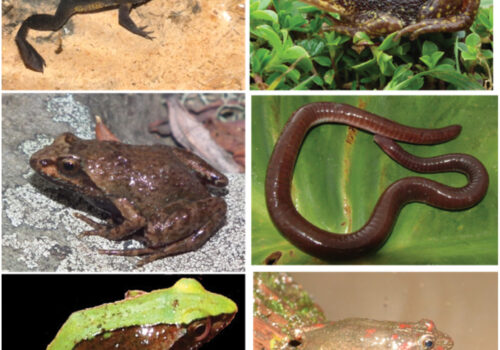
The Enigmatic Sarawak Dwarf Toad: Exploring the Fascinating World of Pelophryne saravacensis#
Hidden amidst lush leaf litter beneath towering rainforest canopies and nestled in secretive crevices within ancient tree hollows lives one of Southeast Asia’s most subtle yet remarkable amphibians—the Sarawak dwarf toad, scientifically known as Pelophryne saravacensis. Quietly contributing to the rich biodiversity of Borneo’s tropical ecosystems, this diminutive amphibian holds fascinating secrets beneath its humble exterior.
An inhabitant of shadowy, humid environments, P. saravacensis is frequently overlooked, its small stature and cryptic coloration seamlessly blending into the forest floor. Yet, it represents an integral facet of Borneo’s ecological tapestry, reflecting not only the incredible variety of natural life forms but also the intricate balance governing rainforests. Though small and seemingly insignificant, understanding and preserving Pelophryne saravacensis is essential in safeguarding the broader health of its ecosystem.
Taxonomy and Classification#
Belonging to the family Bufonidae—more popularly known as the true toads—Pelophryne saravacensis is a relatively lesser-known member of this large amphibian lineage. The genus Pelophryne itself consists of small, often cryptically-patterned species distributed across Southeast Asia. First described by the renowned British zoologist George Albert Boulenger in 1892, the Sarawak dwarf toad takes its name from Sarawak, Malaysian Borneo’s biologically rich region, indicative of its tight geographical association.
Within the interconnected web of Bufonidae, Pelophryne saravacensis shares its genus with a host of similarly sized and mannered congeners, including Pelophryne guentheri and Pelophryne brevipes. Examination of morphological traits and recent molecular studies have clarified its place within amphibian taxonomy, underscoring the importance of meticulous identification and encouraging better monitoring and conservation efforts.
Natural Habitat#
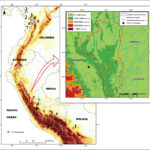
Pelophryne saravacensis is a creature intricately tied to its habitat—the tropical lowland and montane rainforests of Borneo, notably the Malaysian states of Sarawak and Sabah, and parts of Indonesian Kalimantan. Inhabiting altitudes ranging typically from 150 to over 1300 meters above sea level, its preferred habitats include pristine tropical forests with high humidity and consistent canopy coverage, which ensure stable moisture levels essential for the species’ delicate amphibian skin.
This specialized microhabitat is not merely a convenient home; it is fundamental to the species’ survival. Leaf litter and moss-covered logs provide not only concealment but a steady, abundant food supply of tiny arthropods such as ants, mites, and small beetles. The microclimate near forest streams or rocky outcroppings, with their constant humidity, provides ideal breeding sites. Here, ambient moisture prevents dehydration, a constant threat facing many small amphibians in tropical climates.
Observing these creatures demands patience and precision, often involving slow walks through dense vegetation, eyes scanning carefully amidst the mosses, fallen leaves, and damp undergrowth. Their habitats serve as small-scale ecosystems, complex worlds unto themselves, rich in biodiversity and ecological interactions.
Physical Characteristics#
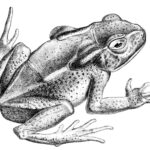
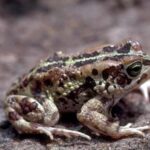
Upon encountering a Sarawak dwarf toad, one could readily mistake it for a fragment of foliage or forest detritus. At adulthood, P. saravacensis rarely exceeds 20 mm in length—approximately the size of a fingernail—making it one of Borneo’s smallest amphibians. Its small, squat body, short limbs, and gently rounded snout enhance its inconspicuous nature, seamlessly blending into the textured habitats it frequents.
A closer inspection reveals complex colorations ranging from earthy browns and dusky greens to shades reminiscent of rust and ochre. The skin, slightly granular to the touch, mimics the texture of its surroundings, making it an expert in camouflage. These specialized adaptations ensure not only protection from predators but efficient ambush predation—striking quickly and quietly at passing insects.
The eyes of P. saravacensis, relatively large for its body size, reflect the brilliance of adaptation. With their nocturnal activities, these amphibians rely heavily on vision to navigate dim environments, discern prey, and escape danger.
Behavior and Life Cycle#
Life for the Sarawak dwarf toad predominantly occurs under the protective veil of night. Emerging after dusk, these small amphibians silently patrol only small, localized territories amidst leaf litter and damp roots. They move stealthily, without dramatic leaps or flamboyant displays, characteristic of their reserved and careful demeanor.
Diet and Feeding Habits#
This species survives chiefly on a diet of miniature arthropods, which it captures deftly using rapid, accurate tongue-flicks. Its diet primarily consists of tiny insects and invertebrates plentiful beneath the forest canopy. Their feeding behavior reflects a well-adapted survival strategy—energy-efficient and effective, critical to the species’ longevity and viability within its habitat.
Reproduction and Maturation#
Reproductive behavior of the Sarawak dwarf toad remains somewhat cryptic, though anecdotal observations indicate that males undertake brief calling periods, producing soft, subdued vocalizations rather than loud choruses typical of other bufonids. Breeding occurs near slow-flowing streams and damp foliage, ensuring that developing eggs and larvae remain adequately hydrated and protected.
Female dwarf toads deposit small batches of gelatinous eggs discreetly in moist forest pockets or beneath mossy debris. Upon hatching, tadpoles complete their development either in quiet stream conditions or shallow pools, swiftly metamorphosing into small froglets that rapidly adopt terrestrial life. This quiet, inconspicuous lifecycle strategy highlights the importance of minimally disturbed environments for their prolonged survival.
Ecological Role#
Despite its minute size and quiet disposition, the Sarawak dwarf toad plays a vital role within its intricate web of rainforest interdependencies. They contribute significantly as predators of tiny arthropods—helping control insect populations and maintain delicate ecological balances. In turn, the dwarf toads themselves provide crucial nourishment to larger predators, including forest-dwelling snakes, larger amphibians, birds, and small mammals.
Moreover, like many amphibians, the Sarawak dwarf toad serves as an essential bioindicator species. Owing to their permeable skin and complex life cycles tied closely to aquatic environments and terrestrial habitats alike, they are particularly sensitive to environmental changes. The health of Pelophryne populations provides insights into subtle shifts in habitat quality, pollution levels, and ecosystem well-being overall.
Threats and Conservation Status#
Sadly, the habitats and populations of Sarawak dwarf toads increasingly find themselves under threat. Rapid deforestation for agricultural expansion (including palm oil plantations), logging activities, infrastructure projects, and overall habitat fragmentation encroach dangerously close. These disturbances alter essential microhabitat conditions—humidity, vegetation cover, and water quality—that directly impact the survivability of delicate amphibian species like P. saravacensis.
Although current data suggest stable populations in certain protected regions, the International Union for Conservation of Nature (IUCN) currently classifies Pelophryne saravacensis as “Least Concern,” largely due to insufficient targeted studies to quantify actual population trends comprehensively. This classification however does not diminish its vulnerability to ongoing ecological instability. Thus, rigorous monitoring, habitat protection, and targeted research remain paramount in ensuring the species continues to thrive.
Cultural and Scientific Significance#
Although smaller species such as Sarawak dwarf toads may not hold a significant place in human culture or traditional mythology, they play critical roles within scientific research. Their sensitivity to environmental stressors renders them invaluable indicators within studies on climate change impacts, habitat degradation, and conservation efficacy. Researchers continuously uncover how the species adapts or succumbs to shifting climates and changing bio-scapes, providing crucial data applicable broadly across conservation contexts.
Conclusion: Preserving the Subtle Beauty of Borneo’s Hidden Amphibians#
The Sarawak dwarf toad is a vivid example that greatness exists even in nature’s smallest, subtlest corners. By preserving their delicate existence, we contribute toward safeguarding the diverse ecosystems housing millions of plant and animal species teetering on a precarious balance. Ensuring protection for Pelophryne saravacensis is ensuring the survival and stability of Southeast Asia’s invaluable biodiversity troves.
Ultimately, engagement and awareness amongst nature enthusiasts, students, conservationists, and local communities will define the future of Borneo’s enigmatic dwarf amphibians. Join us in championing the humble Sarawak dwarf toad as a meaningful symbol of conservation resilience and ecological hope.