- Introduction: A Hidden Jewel of Caribbean Streams
- Taxonomy and Classification: The Unique Identity of <em>Peltophryne fluviatica</em>
- Natural Habitat: Secretive Inhabitants of Flowing Waters
- Physical Characteristics: Masters of Cryptic Camouflage
- Behavior and Life Cycle: Echoes in the Twilight
- Ecological Role: Guardians of Freshwater Health
- Threats and Conservation Status: A Vulnerable Life Amidst Threatened Waters
- Cultural and Scientific Significance: Amphibian Ambassadors and Ecological Insights
- Conclusion: A Call for Awareness and Action
Introduction: A Hidden Jewel of Caribbean Streams#
Beneath the lush canopy of the Caribbean’s forested streams, a quiet, unassuming amphibian leads a life woven intricately into its rushing freshwater habitats. Peltophryne fluviatica, commonly known as the Caribbean Stream Toad, is a remarkable yet rarely encountered species, appreciated by herpetologists and naturalists alike. Found exclusively in matting networks of rushing streams and tranquil creek banks, this elusive amphibian’s survival hinges upon clean waterways, dense vegetation, and delicate ecological balance.
While Peltophryne fluviatica may not dazzle observers with vivid colors or loud, showy displays, its understated charm belies a fascinating biology and an essential role in Caribbean freshwater conservation. Intriguingly, this species offers valuable insights into ecological indicators, representing a tangible measure of the health and integrity of natural stream ecosystems.
Taxonomy and Classification: The Unique Identity of Peltophryne fluviatica#
The Caribbean Stream Toad belongs to the family Bufonidae, commonly recognized as the true toads. Within this expansive amphibian family, it occupies the genus Peltophryne. This genus is particularly significant, being endemic primarily to Caribbean islands, harboring numerous species adapted to island conditions and specialized ecological roles.
Described scientifically first by Schwartz in 1972, Peltophryne fluviatica holds a unique place within its genus due to its distinct ecological specialization, being intricately adapted to riparian habitats. Among close relatives, such as Peltophryne lemur and Peltophryne guentheri, the Stream Toad is recognized as a specialist of flowing freshwater habitats rather than broader terrestrial niches.
Natural Habitat: Secretive Inhabitants of Flowing Waters#
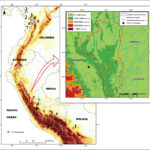
The habitat of Peltophryne fluviatica centers around freshwater streams and rivers weaving through dense Caribbean tropical forests. Its geographical scope is focused primarily within Haiti and the Dominican Republic, with strongholds noted particularly along specific upland stream systems. Elevation plays an important role, with documented encounters predominantly at mid-to-high elevation stream banks. Situated amidst thick vegetation, moss-covered stones, and damp leaf litter, these habitats create optimal living conditions for a species perfectly adapted for secretive, cryptic existence.
Fallen logs, submerged root systems, and banks laced with organic debris and leaf litter constitute typical microhabitats favored by this intriguing toad. Their dependency on humid, shaded forests ensures stable temperature regulation and affords protection against predators, environmental fluctuations, and dehydration. Frequently undetected by casual observers, their coloration seamlessly blends them with their surrounding environment—such elusive behavior makes encounters rare but unforgettable.
Physical Characteristics: Masters of Cryptic Camouflage#
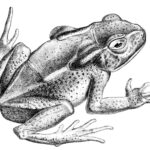
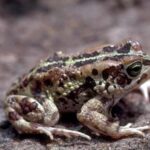
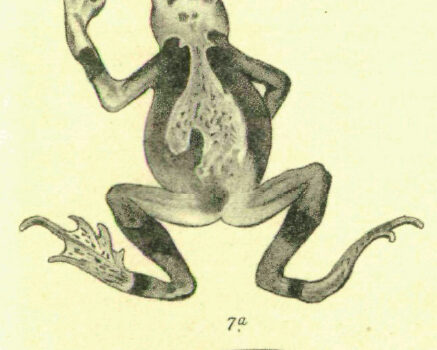
Though modest in size, measuring generally between 40 and 65 millimeters in length, Peltophryne fluviatica makes up for diminutive stature with impressive cryptic adaptations. A subtle mix of mottled browns, grays, and greens adorns its textured, wart-covered skin. These hues evoke the tones found within their mossy, leaf-covered habitat, rendering them almost invisible against the backdrop of a forested streambed.
Skin warts, characteristic of the Bufonidae family, assist with moisture retention and defense mechanisms. Small parotoid glands located behind their eyes produce bufotoxins which deter predators. Their eyes—dark, slightly protrusive, and horizontally elliptical—further assist in spotting predators and prey alike. The streamlined body and relatively long limbs equip P. fluviatica with adept swimming ability and agile maneuvering amidst the complex structure of forest streams.
Behavior and Life Cycle: Echoes in the Twilight#
A Hunter Under the Starlight#
Like many amphibians adapted to secretive, moisture-dependent lifestyles, the Caribbean Stream Toad becomes most active as daylight fades. Twilight brings forth a flurry of activity as these covert hunters leave their hiding places beneath the roots and logs. Their diet largely consists of an assortment of insects and small, stream-dwelling invertebrates—such as beetles, crickets, moths, and aquatic insect larvae. Armed with acute night vision and sensitive auditory capabilities, these amphibian predators methodically stalk and capture prey with swift, precisely calculated tongue strikes.
The Song of Courtship#
Breeding season typically coincides with periods of steady rainfall and rising humidity. Males congregate near suitable spawning sites, marked by gentler stream pools and softly rippling backwaters, to initiate vociferous choruses. A soft, melodious trill, almost musical to the ear, resounds along the banks—guiding females toward the source. Following successful courtship rituals, females lay gelatinous strings of eggs intricately attached to submerged tree roots, rocks, or aquatic vegetation.
From Tadpole to Terrestrial Wanderer#
The tadpoles of Peltophryne fluviatica are streamlined, possessing considerable tail fin development for navigating swiftly moving waters. They deftly manage riverine currents, feeding primarily on algae and microorganisms present on submerged surfaces. Metamorphosis into terrestrial toadlets is a particularly vulnerable period during which the individuals transition onto land, gradually adopting the amphibious lifestyle emblematic of adult toads.
Ecological Role: Guardians of Freshwater Health#
This toad species, due to its intricate linkage with freshwater systems, serves as a key biological indicator for stream ecosystems. Their flourishing populations can indicate pristine, chemically balanced waterways, while declining numbers often serve as early warnings of ecological disruption or habitat degradation.
Moreover, as insectivores, these amphibians exert effective control over insect and invertebrate populations, contributing significantly to the balance within their food webs. They also serve as prey for larger creatures including birds, reptiles, and small mammals, reinforcing their position as integral species whose disappearance would ripple notably through local ecosystems.
Threats and Conservation Status: A Vulnerable Life Amidst Threatened Waters#
Currently categorized by the IUCN Red List as Critically Endangered, Peltophryne fluviatica has experienced dramatic population reductions in recent decades due to various environmental threats. Habitat degradation via deforestation, agricultural runoff, irresponsible water extraction, and pollution drastically diminishes their fragile freshwater homes. Additionally, diseases such as Chytridiomycosis pose severe threats to amphibian populations globally, and the Caribbean Stream Toad is no exception.
Efforts addressing habitat conservation, stream restoration, and establishing protected riparian zones are essential. Conservation organizations have initiated targeted programs designed to monitor surviving populations, facilitating studies on their biology, ecology, and disease susceptibility, as well as advocating for stronger environmental policies safeguarding critical freshwater habitats.
Cultural and Scientific Significance: Amphibian Ambassadors and Ecological Insights#
While not widely renowned in local folklore or traditional beliefs, the presence of Peltophryne fluviatica holds potent symbolic significance as an environmental sentinel. To conservation societies and environmental researchers, this species highlights the urgent need for freshwater habitat restoration and careful environmental stewardship. Scientifically, research of this sensitive species provides vital information on how pristine waterways, ecosystem health, and amphibian survival intertwine—knowledge invaluable in ecological and conservation biology.
Conclusion: A Call for Awareness and Action#
Peltophryne fluviatica stands as a gentle guardian of Caribbean waterways—a symbol of what remains fragile yet invaluable in our natural world. Ensuring the survival of this unique amphibian is not merely an effort in conservation biology, but a commitment to preserving ecosystems that sustain us all. Every stream restored, every forest protected, safeguards not only an evolutionary marvel but a broader tapestry of biodiversity.
By spreading awareness and supporting conservation efforts, we can assure that future generations too will discover the elusive charm and significance of the Caribbean Stream Toad. Let the quiet trilling of this hidden gem be our beacon, reminding us constantly to nurture the waters, the forests, and the wild, beautiful lives they sustain.