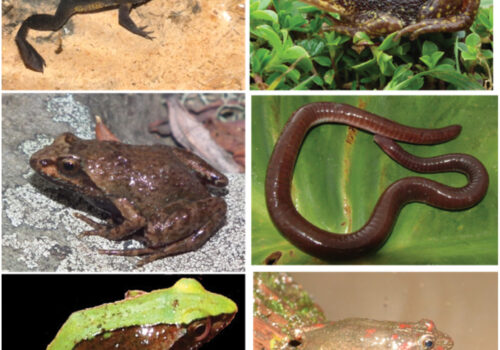
Pelophryne rhopophilia: Unveiling the Secretive Lives of the Mesmerizing Asian Toadlet#
Deep within lush, tropical rainforests, each twilight unleashes an orchestra of chirps, croaks, whistles, and hums. The forest pulses with hidden life, yet amidst the cacophony, one small and enigmatic amphibian dances the line between known and mysterious—the diminutive yet remarkable toadlet known to scientists as Pelophryne rhopophilia. Though small in size and easily overlooked, this intriguing species embodies the delicate beauty, ecological value, and evolutionary ingenuity of tropical amphibians.
So named from the Greek words “rhopalon” meaning club and “philos“, lover, reflecting an unusual fondness for club moss, this remarkable little toad harbors secrets we’re only beginning to unravel. Rarely glimpsed and challenging to study, Pelophryne rhopophilia invites us to explore not only its hidden world beneath the jungle canopy but also our own responsibility to protect fragile rainforests amid our changing planet.
Taxonomy and Classification#
Pelophryne rhopophilia, part of the Bufonidae family, represents a unique and fascinating group of amphibians commonly known as “flathead toads” or simply “toadlets”. Within the genus Pelophryne, these diminutive creatures bear resemblance to traditional toads, yet their smaller stature and specialized adaptations set them apart.
First scientifically described by Inger & Stuebing in 1996, this species has intrigued herpetologists due to its specialized ecological niche. Among the closely related species within Pelophryne, P. rhopophilia stands out with distinctive morphology and unique habitat preferences, fueling continuous curiosity among researchers.
Natural Habitat#
Geographical Distribution#
At home within limited, isolated pockets of Southeast Asia’s notoriously dense and humid rainforests, Pelophryne rhopophilia occupies regions primarily on the island of Borneo. This island—shared between Indonesia, Malaysia, and Brunei—serves as a biodiversity hotspot, hosting countless species whose lives remain enigmatic to science.
Preferred Microhabitats#
Uniquely adapted for life in damp, shaded microenvironments, Pelophryne rhopophilia spends much of its time entwined amid lush club mosses and thick leaf litter on the rainforest floor. Unlike some arboreal frogs that cling to the canopy above, these tiny toadlets thrive in the moisture-rich layers closest to the forest bed, rarely venturing far beyond their clusters of verdant, mossy hideaways.
The dim, continually moist environment beneath thick foliage suits the amphibian’s needs perfectly—providing protection from desiccation, ample food supplies, and protection from predators’ prying eyes. For Pelophryne rhopophilia, existence depends upon the balance maintained in this delicate niche: too much sunlight or dryness could spell disaster for this moisture-dependent species.
Physical Characteristics#
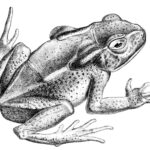
Measuring barely beyond an inch in total length, Pelophryne rhopophilia could easily go unnoticed by even diligent observers. Yet closer inspection reveals an astonishing beauty and complexity. Their bodies are finely adapted, showing exquisite camouflage to blend seamlessly with the mossy substrate that envelopes their entire world.
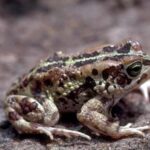
The skin, primarily shades of olive, grayish-green, or mottled brown, carries distinctive blotches and fine markings, reflecting the dappled light of their habitat. Their slightly flattened bodies and heads showcase nature’s creative genius—perfect for nestling undetectably among wet foliage, while their limbs, slender yet robust, allow graceful navigation through dense vegetation.
When predators approach, this toadlet’s primary defense is concealment and stillness. Their coloration and texture closely mimic surrounding moss and lichen, rendering them nearly invisible to passing predators. This supreme camouflage not only reflects evolutionary brilliance but also reminds us how interconnected morphology and habitat truly are.
Behavior and Life Cycle#
The behavioral repertoire of this discreet amphibian is both captivating and mysterious. Primarily nocturnal, Pelophryne rhopophilia spends daylight hours tucked away from sight. After dusk, they emerge quietly, exploring mossy pathways and leaf litter carpets in search of prey, predominantly small insects, mites, and other arthropods. Despite their size, these tiny hunters are efficient predators, ambushing their prey with swift, agile movements.
Mating Rituals and Reproduction#
When monsoon rains drench the forest, the hidden world of Pelophryne rhopophilia awakens dramatically. Males announce their intentions with distinctive, soft, buzzing calls, drawing females toward shallow pools, moss-laden cavities, or rain-filled plant leaves that serve as temporary nurseries. Observing this ritual is rare for scientific researchers, underscoring the elusive nature of this delightful species.
Females deposit tiny clusters of eggs, delicately placing them amidst damp moss or freshwater collected in epiphytic plants. There, guarded by the humid shade, the eggs quickly develop into small tadpoles. Unlike many amphibians whose tadpoles grow and transform in open bodies of water, Pelophryne rhopophilia‘s offspring benefit from concealed waters, receiving essential protection from predators and harsh climatic fluctuations.
This discrete and specialized reproductive strategy highlights the remarkable adaptations employed to survive the challenging conditions inherent in rainforest ecosystems.
Ecological Role#
Amid the intricate tapestry of tropical ecosystems, Pelophryne rhopophilia fulfills a critical role. As both predator and prey, it acts as an effective control agent of insect and arthropod populations. Simultaneously, it offers nourishment to larger predators such as snakes, birds, and small mammals, contributing significantly to biodiversity balance.
Furthermore, amphibians broadly serve as ecological indicators, reflecting the health of their environment. Due to their permeable skin and sensitivity to pollutants and environmental fluctuations, declining amphibian populations readily signal broader ecological crises. Monitoring the welfare and population dynamics of Pelophryne rhopophilia may enable conservationists to gauge rainforest health over time, empowering proactive habitat and species conservation measures.
Threats and Conservation Status#
Tragically, despite its intrinsic beauty and ecological significance, Pelophryne rhopophilia faces escalating threats in its native habitats. The rapid deforestation, habitat fragmentation, and agricultural expansion that continue to haunt Southeast Asian rainforests pose severe risks to delicate, niche-dependent species like this toadlet.
Human-Induced Challenges#
Logging, driven by demand for tropical timber and oil palm plantations, strips pristine forests of essential resources and protective layers vital for amphibian survival. Climate change further deepens threats, altering rainfall patterns, temperature regimes, and moisture-level predictability crucial for amphibian breeding success.
Currently, the International Union for Conservation of Nature (IUCN) classifies Pelophryne rhopophilia as “Data Deficient,” indicating that researchers still lack sufficient information on population sizes and trends. This designation emphasizes how urgently research, conservation funding, and habitat protection are needed to safeguard this understudied amphibian.
Cultural and Scientific Significance#
Although small and discreet, Pelophryne rhopophilia embodies symbolism reflective of the diversity and intricacy of tropical forests. Indigenous communities often uphold rich amphibian lore, recognizing their pivotal ecological roles through traditional practices and beliefs.
In science too, Pelophryne rhopophilia sparks curiosity about unique evolutionary adaptations, ecological connections, and potential biomedical relevance, showcasing not only biological diversity but also intrinsic value for humanity’s long-term wellbeing.
Conclusion#
Unassuming, cryptic, yet exceptionally adapted, Pelophryne rhopophilia richly merits our admiration and dedicated protection. It invites us to tread respectfully within these forest realms—to deeply appreciate both their inherent wonder and their crucial importance in sustaining biodiversity. Protecting species like this elegant toadlet means addressing habitat threats comprehensively and urgently—advocating vigorously for rainforest conservation and sustainable environmental stewardship.
Let us take inspiration from the shy, moss-loving rituals of this elusive but remarkable creature so attuned to its forest sanctuary. Our understanding, advocacy, and conservation action today ensure that tomorrow’s generations might still revel in discovering the hidden magic of species like Pelophryne rhopophilia—protecting the earth’s biodiversity treasure for years to come.