Poyntonophrynus vertebralis: Discovering Southern Africa’s Remarkable Dwarf Toad#
Under the sweeping skies of southern Africa, amid the rolling grasses and gentle undulations of savannah terrain, a modest yet fascinating amphibian quietly thrives. Poyntonophrynus vertebralis, commonly known as the Southern Dwarf Toad, may seem unassuming at first glance, but it hides beneath its humble exterior a captivating story of evolutionary survival, ecological interaction, and conservation significance. Barely larger than your thumbnail, this unique amphibian holds clues about the health of the delicate ecosystems it inhabits and offers researchers invaluable insights into the complex web of life.
At first glance, the Southern Dwarf Toad appears ordinary, blending effortlessly into its grassland surroundings. However, beneath the quiet camouflage lies a truly resilient survivor adapted to harsh conditions, marked by erratic rainfall and fluctuating temperatures. Numerous studies have shown that the presence—or absence—of this humble species serves as an ecological barometer, revealing insightful data about habitat health. Dive with us now into the little-known life of this beguiling amphibian and its important place in Southern Africa’s natural ecosystems.
Taxonomy and Classification#
The scientific journey into understanding Poyntonophrynus vertebralis begins with the meticulous organization of life. Belonging to the family Bufonidae, often called “true toads,” this species fits securely within the genus Poyntonophrynus, a group that collectively encompasses numerous dwarf toad species found throughout eastern and southern Africa.
Interestingly, prior to modern taxonomy classifying it under a separate genus, this amphibian was long grouped within the broadly inclusive genus Bufo. However, rigorous taxonomic revisions clarified that the dwarf toads from Africa, with their subtle morphological distinctions and specialized adaptive traits, warranted a classification of their own. Thus emerged the genus Poyntonophrynus, named in honor of renowned herpetologist John C. Poynton, whose groundbreaking works greatly advanced regional amphibian ecology and conservation.
Natural Habitat#
Geographically, Poyntonophrynus vertebralis occupies a specific but diverse swath of southern Africa. Predominantly found within South Africa, it is also recorded in adjacent regions of Namibia, Botswana, and Zimbabwe. This distribution illustrates a subtle reliance upon certain environmental conditions, primarily regions characterized by arid savannahs, open woodlands, and grassland mosaics punctuated by seasonal pools and temporary pans—ephemeral watery refuges vital to their survival.
Habitat Preferences#
The resilience of this species becomes clearer when examining its favored habitats. In landscapes prone to seasonal droughts and flooding, adaptability to fluctuating conditions is vital. Southern Dwarf Toads specifically frequent temporary water bodies for breeding purposes. Shallow depressions, natural pans, rainwater-holding ditches, and modest scrapes formed on the veld—with water that may only last days or weeks—become busy amphibian nurseries after rainstorms. After breeding, the toads dissipate across the landscape, seeking shelter beneath logs, leaf litter, rocks, or within termite mounds and rodent burrows, where they patiently await the next rains.
A Climate-Driven Existence#
The very rhythms of a dwarf toad’s life are governed by intermittent rains characteristic of its semi-arid home. Early spring through summer rainfall brings forth frantic bursts of amphibian activity. The air vibrates with the soft though insistent chorus of amorous males, keenly prepared to claim temporary aquatic territories. Thus, a careful balance arises between life, rainfall cycles, and survival strategies devised by Poyntonophrynus vertebralis.
Physical Characteristics#
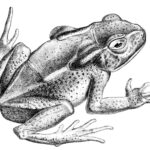
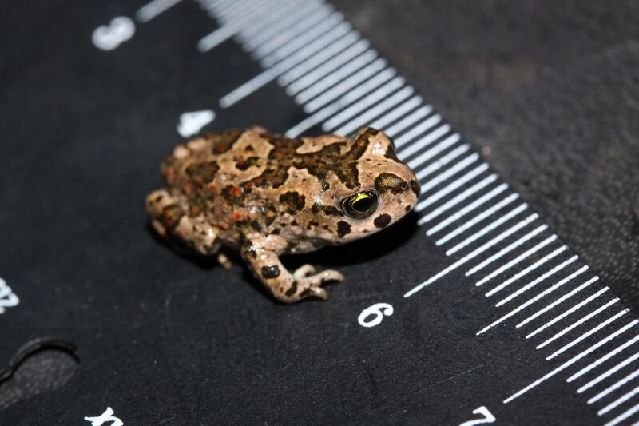
The Southern Dwarf Toad’s unassuming appearance is well suited to the art of stealth. Measuring only 20-30mm in length, adults rest easily within the palm of a human hand. They exhibit robust, squat bodies with short, muscular legs, adeptly built for hopping short distances and burrowing into soft substrates. The skin texture is characteristic of their family: rough and granulated, riddled with numerous small warts that further aid camouflage within earthy surroundings.
Coloration and Markings#
The vibrant diversity of their camouflage patterns is truly impressive. Predominantly earth-toned, these frogs vary from sandy-brown to olive-green and grey, sometimes speckled with darker spots or blotches. Notably, most individuals showcase a distinct dorsal vertebral line—hence the name vertebralis. This pale vertebral stripe that elegantly traces their back sets them apart from related species, serving as an identifying hallmark for field researchers and citizen scientists alike.
These inconspicuous frogs rely heavily on coloration and cryptic patterns for protection against predators; their morphologies and coloration adeptly mirror the varied textures of leaf litter and sandy soils they live amongst.
Behavior and Life Cycle#
The behavior of Poyntonophrynus vertebralis eloquently displays nature’s brilliance in adapting to seasonal unpredictability. They emerge rapidly after rainfall, often calling incessantly to attract mates to short-lived water pools. This synchrony ensures maximum reproductive success within the brief windows provided by passing seasonal showers.
Feeding Habits#
Southern Dwarf Toads are opportunistic feeders, predominantly consuming ants, termites, small beetles, and other insects that abound after wet spells. Rapidly flicking their adhesive tongues to capture prey, their voracious feeding helps balance insect populations, thus contributing substantively to controlling some of the grassland’s most prolific organisms.
Reproductive Wonders#
Reproduction occurs swiftly after rains. Large numbers congregate around temporary ponds, the males emitting their persistent, melodious calls. Females respond, leading to rapid courtship pairings. Eggs are laid in tangled strings, intricately woven through submerged grasses or aquatic vegetation. Amazingly, from egg to free-swimming tadpole requires merely a few days—a remarkable feat of rapid development ensuring tadpoles transform before water pools evaporate.
Tadpole development, equally swift, often allows juveniles to successfully disperse just days or weeks after temporary pools dry out. These carefully calibrated but dynamic life cycle adaptations underline the remarkable evolutionary pressures shaping survival strategies through environmental uncertainty.
Ecological Role#
The ecological role of Poyntonophrynus vertebralis, though subtle, is notably profound. As insectivorous amphibians, they regulate invertebrate populations, notably insects like termites and ants, which would otherwise dominate the grassland ecosystem. Conversely, they serve as essential prey for countless predators, from birds, snakes, and monitor lizards to small carnivorous mammals.
Additionally, due to their sensitivity to environmental disturbances, they often function as important bio-indicators, quietly alerting conservationists to ecosystem changes and reduced ecosystem health.
Threats and Conservation Status#
Despite currently being listed as “Least Concern” by the International Union for Conservation of Nature (IUCN), these dwarf toads are not immune to human-caused pressures. Habitat loss, rapid urbanization, pollution from agriculture, and the alteration of natural water drainage patterns threaten local populations. Climate change further exacerbates threats, potentially impacting rainfall patterns critical to their life cycle.
Fortunately, conservation initiatives—including the protection of seasonal wetlands and broader awareness campaigns promoting sustainable land-use practices—suggest hopeful paths toward ensuring their continued survival and ecological resilience.
Cultural and Scientific Significance#
While not broadly known in folklore or popular culture, amphibians like Poyntonophrynus vertebralis provide critical contributions to scientific and ecological understanding. Research into the survival strategies these diminutive amphibians use in unpredictable climates aids broader science-applications ranging from climate adaptation to conservation biology.
Conclusion: Celebrating the Southern Dwarf Toad#
Poyntonophrynus vertebralis may dwell in obscurity, yet its unassuming presence profoundly enriches southern African ecosystems. They captivate naturalist hearts, offer critical ecological services, and serve as reminders that even the smallest creatures wield significant influence on planetary health. Let us pause to appreciate, protect, and champion our miniature neighbors who quietly yet tirelessly support the vibrant tapestry of life around us.