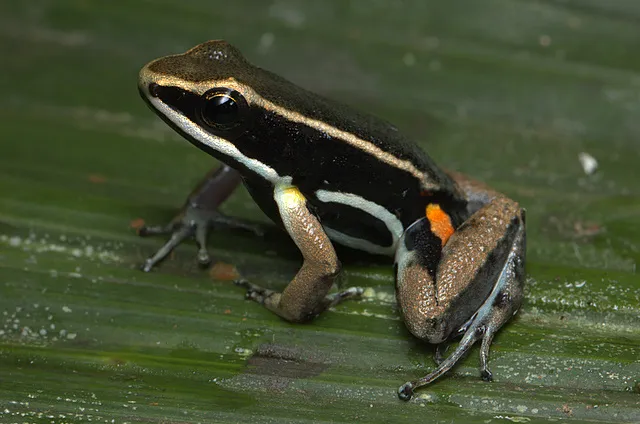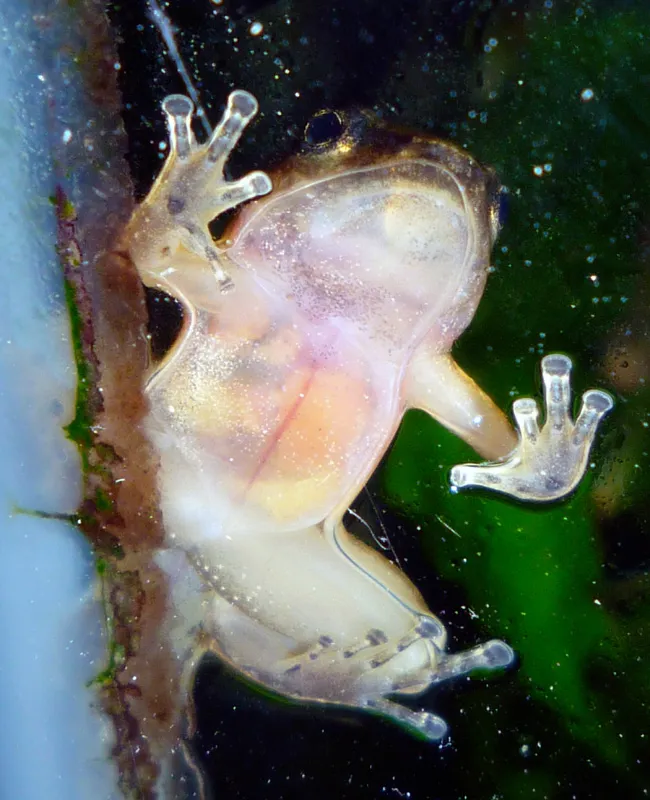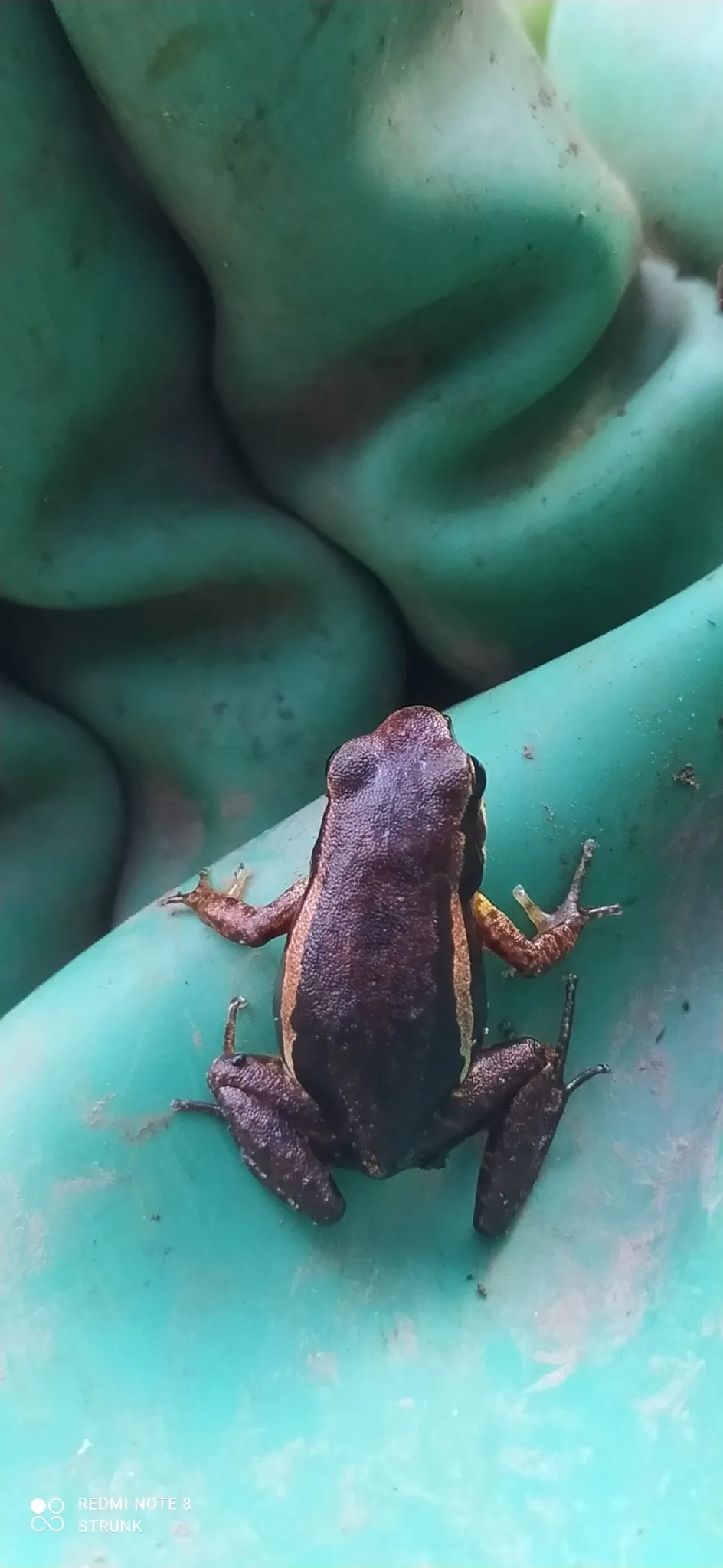
Allobates niputidea is a small frog in the family Aromobatidae, described in 2007 by Grant, Acosta-Galvis and Rada. The describers took the species name from the Spanish phrase “ni puta idea”, roughly “no idea at all”: Colombian herpetologists commonly apply it to small, brown frogs of unknown identity2. It is endemic to Colombia1.
Identification
Adult males measure 15.7–16.9 mm and females 16.4–18.0 mm2 snout–vent length in the original description; a Spanish-language account3 gives approximate figures of 17 mm for males and 18 mm for females.
Habitat and range
A. niputidea lives in forest where the trees do not exceed 20 m in height, no more than about 9 m from permanent streams, at elevations between 50 and 970 m above sea level in Colombia’s Magdalena Valley. A Spanish-language account3 gives a narrower range, 70 to 320 m, in the departments of Boyacá, Santander, Caldas and Antioquia. It has been recorded in three protected areas: Embalse Topocoro, Pauxi Pauxi ProAves and Cabildo Verde. The species does not tolerate habitat disturbance well1.
Behaviour and breeding
The adult male perches on the leaf litter and calls to the female frogs. Reproduction runs through larval development with a free-swimming tadpole stage, and young frogs have been seen near pools of water1.
Conservation
The 2019 IUCN assessment places the species as Least Concern4. The main threat is conversion of its habitat to land for livestock and agriculture, including both large cacao plantations and small farms growing cacao, avocado and banana; because those small farms use traditional agroforestry practices that avoid agrochemicals1, scientists do not count them as a threat to the species.