- The Leaf-Litter Guardian: Discovering the World of Rhaebo haematiticus
- Taxonomy and Classification
- Natural Habitat: Life in the Leaf Litter
- Physical Characteristics: Beauty in Subtlety
- Behavior and Life Cycle: Masters of the Forest Floor
- The Ecological Role: Quiet Guardians of Forest Balance
- Threats and Conservation Status: Preserving Delicate Balance
- Cultural and Scientific Significance: Tokens of Tradition and Discovery
- Conclusion: Guardians Worth Protecting
The Leaf-Litter Guardian: Discovering the World of Rhaebo haematiticus#
Deep within the tangled undergrowth of Central and South American tropical forests, concealed beneath layers of fallen leaves and moss-covered logs, a remarkable amphibian prowls silently through its moist realm. Meet Rhaebo haematiticus, commonly known as the South American Toad or Hematite Toad—a true guardian of the forest floor and a compelling character in nature’s endless narrative of adaptation and survival.
Nestled unobtrusively among decaying vegetation, this fascinating species reveals an intriguing tapestry of behavior, resilience, and ecological significance. Named for the subtle yet striking reddish hues adorning its body, reminiscent of polished hematite stone, the Hematite Toad embodies life’s delicate artistry amidst a relentless natural world. Let’s journey into the secretive life, biology, ecological contributions, and conservation story of this enchanting amphibian.
Taxonomy and Classification#
Before we delve into the lush greenery it calls home, let’s first understand the taxonomic lineage of Rhaebo haematiticus. Classified under the family Bufonidae, also known simply as “true toads,” this species is part of a distinguished lineage that spans numerous continents and ecosystems. Established scientifically in 1862 by noted herpetologist Edward Drinker Cope, the Hematite Toad finds its place comfortably among other terrestrial-dwelling amphibians.
Originally placed within the genus Bufo, recent systematics have reshaped the amphibian taxonomic landscape, granting Rhaebo status as a separate genus due to genetic and morphological distinctions. This species often shares close evolutionary ties with related species such as Rhaebo guttatus, also known as the Smooth-sided Toad, inhabiting similar ecosystems across tropical America. Such nuanced taxonomic refinement reminds us that beneath familiar amphibian forms lie complex evolutionary histories shaped by millennia of gradual adaptation and diversification.
Natural Habitat: Life in the Leaf Litter#
Unassuming at first glance, the Hematite Toad thrives across an extensive geographic range encompassing Costa Rica, Panama, Colombia, Ecuador, northern Peru, Venezuela, and northwestern parts of Brazil. Within this vast expanse, it shows a preference for moist, humid lowland tropical rainforests, acting as an elusive steward of the understory—the shaded, cooler layer close to the forest floor, rich with decomposing plant matter and teeming with invertebrate life.
A Microhabitat of Wonders#
Picture a typical scene from the toad’s world: canopies woven densely by towering emergent trees guide only scattered beams of sunlight downwards, casting dappled patterns across a carpet of leaves. Here, temperatures remain comfortably humid, with moisture preserved beneath these fallen leaves—an ideal habitat where the Hematite Toad can thrive. Decaying logs, roots entangled like intricate webs, and rich soils act as its perfect abode, providing both protective cover and abundant food.
The interconnectedness between Rhaebo haematiticus and its leaf-litter habitat is both profound and reciprocal. The toad finds comfort, food, and safe haven among the leaves, while simultaneously influencing decomposition and nutrient recycling processes by preying upon leaf-litter invertebrates, inadvertently maintaining a vibrant, healthy ecosystem beneath our feet.
Physical Characteristics: Beauty in Subtlety#
The Hematite Toad might not dazzle with vibrant, flashy colors like certain tree frogs, yet within subtle shades of browns, reds, and ochres lies an intricate elegance. Adults typically measure between 50 and 80 millimeters from snout to vent, with sturdy, squat bodies well-adapted for life amidst thick vegetation.
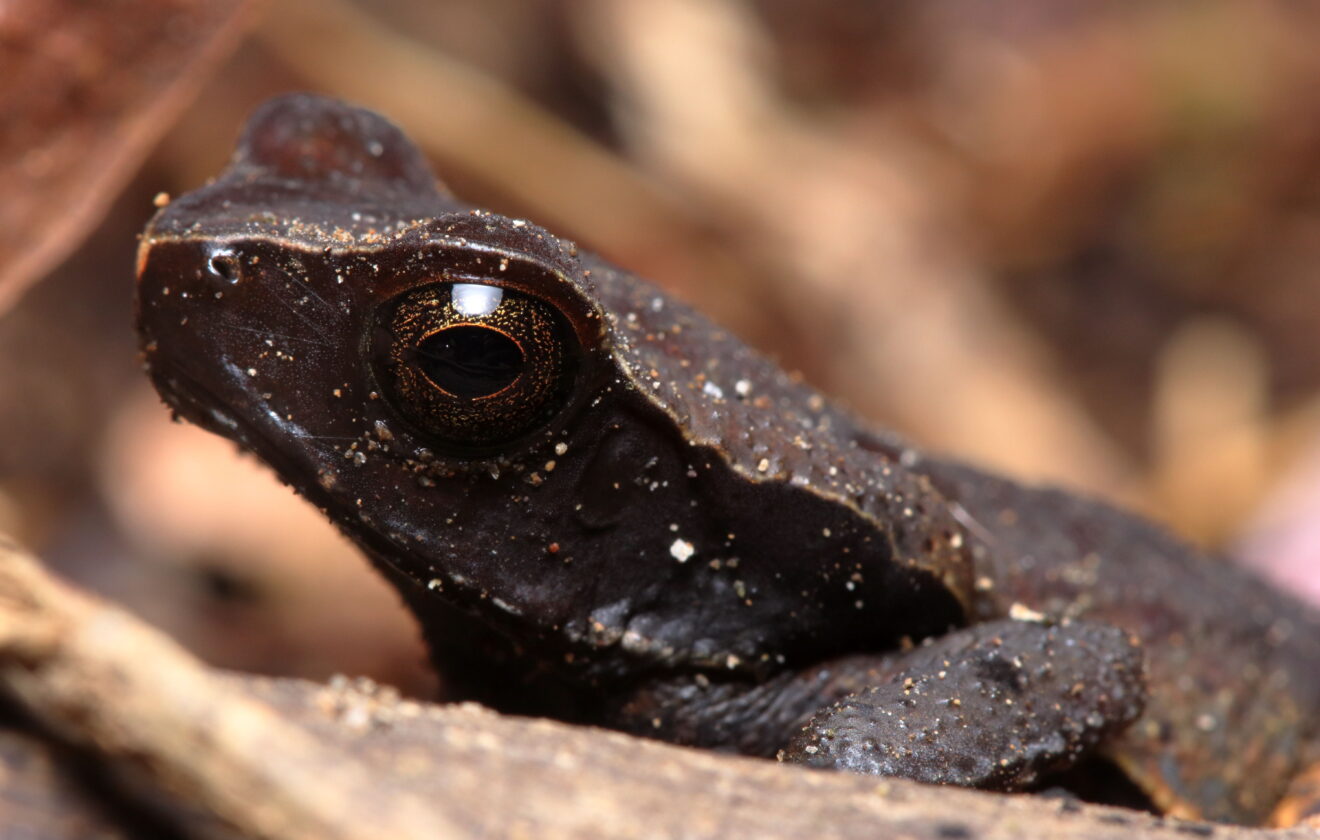
Their skin texture is rough yet delicate—remarkably camouflaged, mimicking the textures, shapes, and colors of leaf litter, essential for escaping predators. From rust-red to chocolate brown hues sprinkled with slight black speckles or blotches, the Hematite Toad’s coloration varies remarkably among individuals and populations. A striking trait is its reddish pigmentation—a reflection of iron oxide (hematite)—giving this species its evocative name.
Beneath this humble exterior lies a sophisticated biochemical defense—large parotoid glands behind its eyes secrete toxins to deter predators, highlighting an advanced evolutionary strategy. Sharp, golden-hued eyes not only grant excellent low-light visibility but hint at the Hematite Toad’s nocturnal lifestyle, perfectly attuned to darkness beneath dense foliage.
Behavior and Life Cycle: Masters of the Forest Floor#
Under the cover of nightfall, as forest sounds shift to a symphony of insects and mysterious nocturnal creatures, the Hematite Toad emerges from daytime concealment. This nocturnal lifestyle provides enhanced protection from visual predators and allows effective foraging as insects and other invertebrates become active. Its menu often includes ants, beetles, termites, and tiny arachnids—integral members within the leaf-litter ecosystem.
Mating Rituals: The Echoing Chorus#
When rainy seasons arrive, the Hematite Toad abandons its typically solitary lifestyle, congregating near shallow pools or streams to breed. Male toads produce a soft, resonant trill: an acoustic stage whisper enticing receptive females, often blended into a collective nighttime chorus shared by other amphibians. After mating, females deposit transparent gelatinous egg masses in calm water, typically camouflaging them to evade hungry predators.
Tadpoles are small and cryptic, cleverly adapted to evade predation thanks to their unremarkable coloration and swift movements. They feed voraciously on algae, organic debris, and microorganisms, quickly growing and eventually metamorphosing into miniature versions of terrestrial adults, at which point they join older generations in their leaf-litter habitat, continuing the life-cycle anew.
The Ecological Role: Quiet Guardians of Forest Balance#
Although often overlooked, the Hematite Toad holds a key ecological position within tropical forests. As predators of leaf-litter invertebrates, these amphibians regulate insect populations, controlling potential pest species and facilitating organic matter decomposition by indirectly supporting detritivorous invertebrates and fungi. Conversely, they act as prey for various predators, including larger amphibians, snakes, birds, and small mammals—effectively channeling energy flow within complex food webs.
Their sensitivity to environmental changes also offers valuable insights for biologists and conservationists, making them excellent ecological indicator species—living barometers of habitat health, quickly reflecting any subtle environmental disruptions, pollution problems, or habitat degradation.
Threats and Conservation Status: Preserving Delicate Balance#
Even though the Hematite Toad remains relatively widespread, rapidly increasing deforestation, habitat fragmentation, pollution, and emerging diseases such as chytrid fungus threaten the stability of their populations. This species currently maintains a classification of Least Concern by the IUCN, yet growing concerns like habitat loss and climate-change-induced environmental instability highlight how swiftly circumstances may change.
A heightened focus on preserving intact forest habitats, establishing nearby protected areas, and conducting regular population monitoring are crucial strategies moving forward. Initiatives such as captive breeding programs in zoological and research institutions are also valuable support systems ensuring genetic diversity and species resilience are sustained.
Cultural and Scientific Significance: Tokens of Tradition and Discovery#
Within certain indigenous traditions across Central and South America, amphibians often symbolize fertility, renewal, and rain-bringing spirits. While the Hematite Toad might lack widespread cultural symbolic status specifically, amphibians broadly maintain important mythological and ecological roles across different cultures that share their habitat range.
The toad’s intriguing biochemical defenses, primarily its toxin composition, have also sparked scientific interest, inspiring biomedical and biochemical investigations aimed at discovering novel, medically useful compounds or biological inspiration focusing on antimicrobial or other physiological properties.
Conclusion: Guardians Worth Protecting#
In the hushed stillness beneath dense tropical canopies, the Hematite Toad navigates a complex world where it maintains a quiet yet profound presence. Its story illuminates the vibrant interdependence among species and reminds us of Earth’s delicate interconnectedness. By better understanding, appreciating, and conserving species like Rhaebo haematiticus, we invest in protecting ecological health and biodiversity fundamental to our planet’s future.
Perhaps hidden beneath your next rainforest adventure’s footsteps lies one of these silent guardians. Let us tread lightly, learn eagerly, and champion efforts to protect the Hematite Toad and habitats they symbolize—a duty as enriching and fulfilling as the diverse forests they call home.