- Poyntonophrynus parkeri: Exploring the Secretive Life of Parker's Toad
- Taxonomy and Classification: A Toad by any Other Name
- Natural Habitat: Boulders, Savannah, and Twilight’s Veil
- Physical Characteristics: Subtle Beauty in Miniature
- Behavior and Life Cycle: Life in Quiet Persistence
- Ecological Role: The Subtle Thread in an Ecological Tapestry
- Threats and Conservation Status: Facing Challenges in Silent Survival
- Cultural and Scientific Significance: An Amphibious Muse in Ecological Understanding
- Conclusion: Celebrating a Quiet Amphibian Ambassador
Poyntonophrynus parkeri: Exploring the Secretive Life of Parker’s Toad#
Beneath the subtle hues of twilight within the hidden realms of Tanzania’s rocky savannas emerges a creature of quiet fascination—the understated yet profoundly intriguing Parker’s Toad (Poyntonophrynus parkeri). Small, unassuming, and often overlooked, this humble amphibian conceals a captivating natural history waiting to unfold beneath careful observation. As members of the Bufonidae family, Parker’s toads intriguing habits and significant roles reveal powerful connections weaving through the landscapes of eastern Africa.
While not renowned like certain charismatic wildlife mascots, Poyntonophrynus parkeri embodies a vital ecological role and a delicate barometer of environmental health. Before diving deeper into the hidden worlds of this tiny amphibian, here’s a quirky fact to pique your interest: unlike some boisterous amphibian cousins whose vocal symphonies orchestrate rainy season nights, Parker’s Toad prefers subtlety, often voicing scarcely more than gentle, rhythmic chirps—quiet notes easily lost against the symphonic dusk chorus of Africa’s wild evenings.
Taxonomy and Classification: A Toad by any Other Name#
Bathed in evolutionary connections that tell remarkable tales behind its modest appearance, Parker’s Toad is scientifically classified in the Bufonidae family, a broad group widely known as the “true toads.” Within this expansive lineage filled with an astounding diversity of amphibious life, Poyntonophrynus parkeri claims its own unique niche among the genus Poyntonophrynus. Named honorably after the distinguished herpetologist Hampton Wildman Parker, this toad’s binomial nomenclature gracefully links its tiny, hidden existence to historical milestones in zoological exploration.
Its genus comprises several similarly petite species nestled primarily across Sub-Saharan Africa, each adapted to intimate intricacies of their arid to semi-arid habitats. Within this intriguing group, Parker’s Toad distinguishes itself subtly through morphological nuances, genetic lineage, and focused ecological specializations.
Natural Habitat: Boulders, Savannah, and Twilight’s Veil#
To truly envision the natural habitat of Parker’s Toad demands an imaginative journey to the gently rolling landscapes of Tanzania, from vast swathes near Dodoma and Iringa to quiet terrains scattered across the southern reaches of the Great Rift Valley. Within these regions, Poyntonophrynus parkeri manifests a distinctive habitat affinity, favoring woodland-savannas and rocky terrains strewn generously with granite outcrops and secluded boulder piles—little fortresses granting refuge from piercing sun and predator alike.
Perfectly Tailored Microhabitats#
In the sheltering embrace of granite boulders, beneath flakes of peeling rock and nestled within miniature caves created by the foundational workings of geological time, Parker’s Toad thrives. These microhabitats offer consistent humidity, protection from predators, and heavy seasonal rains transform these intimate enclaves into transient but life-giving pool sanctuaries.
Within these rocky retreats, moisture persists longer after seasonal rains have vanished, providing vital refuge and nourishment in what is an otherwise challenging semi-arid environment. The affinity of Parker’s Toad for rocky granitic habitats underscores a profound connection to geological and hydrological subtleties often overlooked by casual observers appreciating the grandeur of Tanzania’s wilderness.
Physical Characteristics: Subtle Beauty in Miniature#
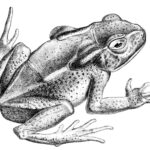
Parker’s Toad is humble yet surprisingly remarkable in terms of physical attributes. Adults are characteristically small, delicately formed toads, typically measuring between 20 to 30 millimeters from snout to vent. This unassuming stature, combined with their cryptic coloration ranging from mottled grays, browns, and subtle olive hues, provides exceptional camouflage against rock-strewn backdrops.
A Masterclass in Camouflage#
The textured warty skin—a trademark telltale of Bufonidae family relevance—facilitates further concealment, artfully blurring the boundary between amphibian and mineral. Their diminutive proportions, intricately detailed textures of their dorsal surfaces, and profound mottling patterns are prime evolutionary outcomes adapted seamlessly toward evasion of predators hunting through the rocks.
Additionally, underside pigmentation—usually lighter shades with limited freckling—creates a shadow-blurred effect. From above, Parker’s Toad easily blends into loose gravel, flaky granite, or weathered earth, effectively vanishing at the slightest hint of disturbance.
Behavior and Life Cycle: Life in Quiet Persistence#
In stark contrast to boisterous amphibian kin that announce themselves loudly through vibrant choruses, Parker’s Toad exhibits a quieter, reserved existence. Activity peaks during evening twilights and the moist early hours dusk and dawn presages; generally, these toads display strongly crepuscular habits, venturing from shelter under cover of fading daylight.
The Gentle Art of Predation#
As insectivorous specialists, their dietary constituents epitomize deliberate patience and quiet vigilance. Parker’s Toad carefully stalks—or patiently ambushes—small insects such as ants, beetles, and termites traversing familiar paths across rock and leaf litter. The toad’s hunting techniques reflect its discreet temperament: swift yet unobtrusive lunges capture small prey items, highlighting adaptive reflexes finely honed by an evolutionary timeline in challenging savanna landscapes.
An Amphibian Ballet of Reproduction#
Like most amphibians, Parker’s Toad’s reproductive ventures pivot dramatically around the appearance of seasonal rains, a climatic catalyst heralding procreation rituals. Males issue gentle, rhythmic trills—audible whispers emitted from concealed positions within miniature rocky pools. Unlike booming choruses associated with larger amphibians, these muted calls display refined reserve and subtlety. Females select mates based on nuanced evaluations of this gentle melody, leading to ephemeral courtships beneath moonlit granite alcoves.
The egg-laying takes place in transient small pools and rain-puddles, fleeting habitats destined to vanish with the sun’s resurgence. Following rapid hatching, tadpoles undergo ambitious development schedules, racing against an evaporative clock. The accelerated metamorphosis from aquatic larvae to terrestrial juveniles represents an evolutionary marvel—a survival tactic profoundly adapted to unpredictable rainfall events common throughout Tanzania’s semi-arid regions.
Ecological Role: The Subtle Thread in an Ecological Tapestry#
In ecosystems defined by sometimes harsh aridity interspersed by fleeting periods of moisture abundance, Parker’s Toad performs critical ecological services. As insect predators, they contribute significantly to pest regulation, undertaken silently and efficiently beneath notice. Additionally, their small stature places them at the nexus of food chains, making them crucial amphibian prey for various local predators including snakes, larger amphibians, birds, and small mammals.
Perhaps most significantly, as sensitive amphibians attuned intimately to environmental fluctuations, Parker’s Toad represents an ecological sentinel. Their subtle presence—and population fluctuations accompanying drought or increased anthropogenic landscape alterations—delivers an invaluable indicator regarding ecological health, particularly in fragile savanna environments where changes frequently yield profound biodiversity implications.
Threats and Conservation Status: Facing Challenges in Silent Survival#
The International Union for Conservation of Nature (IUCN) categorizes Parker’s Toad as Least Concern. However, subtlety of appearance and behavior should not imply immunity from threats. Habitat encroachment due to agriculture, intensive livestock grazing, and increasing human population pressures in Tanzania pose gradual yet persistent threats. Climate change, escalating both drought intensity and rainfall unpredictability, further threatens the small, isolated populations uniquely adapted to rainfall-driven life cycles.
Ongoing conservation efforts in Tanzania focus largely on habitat conservation, targeted research understanding species-specific habitat requirements, and population monitoring initiatives. Direct conservation actions often involve local community involvement, blending human livelihoods sustainably with amphibian requirements to ensure coexistence in shared landscapes.
Cultural and Scientific Significance: An Amphibious Muse in Ecological Understanding#
While relatively unknown culturally compared to charismatic African wildlife species, Parker’s Toad nonetheless serves as an important focal point in herpetological research. Studies targeting amphibian reactions to habitat disruption and climate change provide critical insights shaping broad-scale ecological initiatives throughout Tanzania and wider East Africa. Each carefully placed step closer toward comprehending Parker’s Toad and its ecological niche advances conservation-driven science profoundly.
Conclusion: Celebrating a Quiet Amphibian Ambassador#
In unveiling the multifaceted depth of Parker’s Toad, this overlooked amphibian resonates with understated ecological grandeur. Although quiet physically and metaphorically, Poyntonophrynus parkeri teaches us critical lessons in adaptation, resilience, and vulnerability amidst changing ecosystems. Supporting amphibian research and habitat conservation becomes thus paramount, ensuring these tiny toads continue silently guiding humanity toward better ecological stewardship across Tanzania’s beautiful yet delicate landscapes.