- Oreophrynella nigra: Secrets of the Enigmatic Black Toad of the Guiana Highlands
- Taxonomy and Classification
- Natural Habitat: Islands Above the Clouds
- Distinctive Physical Characteristics
- Behavior and Life Cycle: Survival on the Edge
- Ecological Roles: Delicate Pioneers of Tepui Ecosystems
- Threats and Conservation Status
- Cultural and Scientific Significance
- Conclusion: Protecting the Tepui Jewels
Oreophrynella nigra: Secrets of the Enigmatic Black Toad of the Guiana Highlands#
High atop the mist-shrouded tepuis of Venezuela and Guyana, a strikingly unique amphibian calls home; cloaked in a palette nearly as dark as obsidian, the Oreophrynella nigra, or black tepui toad, is a fascinating survivor from another time. With its intriguing biology, highly specialized habitat, and graceful adaptation to one of the world’s most isolated ecosystems, this obscure yet captivating frog embodies both nature’s remarkable creativity and its fragility.
Known scientifically as Oreophrynella nigra, this species draws rare glimpses from scientists and explorers venturing into its remote realm. These small amphibians have developed extraordinary adaptations, evolving within the confined borders of their tepui islands over millions of years—a process that inspires wonder and conservation urgency alike.
Taxonomy and Classification#
Oreophrynella nigra belongs to a fascinating lineage of bufonid frogs, characterized within the family Bufonidae—commonly known as true toads. Unlike many of their common relatives distributed wide and far across various ecosystems, the Oreophrynella genus remains restricted exclusively to high-altitude tepuis—tabletop mountains sculpted from ancient sandstone formations in northern South America. Within its genus, O. nigra holds a place of distinction, emblematic of evolutionary rarity connected intimately with its isolated mountaintop environment.
Oreophrynella, meaning “mountain-toad,” comprises only a small handful of recognized species, each highly endemic to their respective tepui plateaus. Sister species like Oreophrynella quelchii and Oreophrynella huberi represent similar isolated evolutionary paths, yet none captivate the imagination quite like the enigmatic and darkly alluring O. nigra.
Natural Habitat: Islands Above the Clouds#
The story of the Oreophrynella nigra cannot unfold without traversing the breathtakingly isolated and geologically astonishing landscapes of the Guiana Highlands. Known locally as tepuis, these majestic mountains rise vertically from surrounding rainforests and savannahs, crowned with extensive plateaus blanketed by cool, lush micro-forests, sparse shrublands, and misty bogs. Such intricate ecosystems bear similarity to nothing else on Earth, conferring to the tepuis their legendary reputation as “Lost Worlds.”
Geographic Range and Isolation#
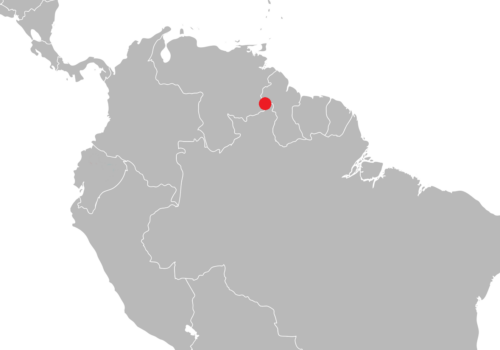
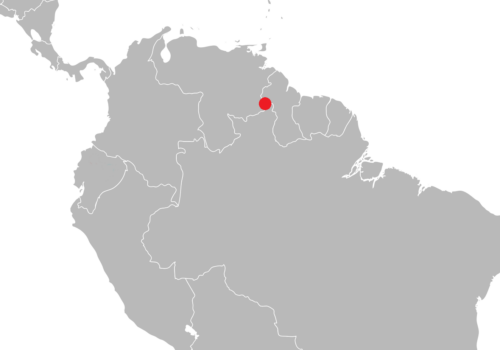
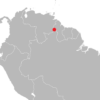
Endemic entirely to the high plateaus of the Guiana Shield, particularly Akope and Kukenán tepuis, Oreophrynella nigra’s evolutionary story has been shaped significantly by geographical isolation. Steep cliff faces several thousand feet high effectively isolate these amphibians, resulting in populations that evolved unique survival adaptations through millennia of separation.
Adaptations to an Unusual Environment#
Up at elevations ranging between 1,800 and 2,800 meters, these delicate beings endure cool temperatures, near-constant cloud cover, and high humidity. Their habitats consist of small, moisture-rich microclimates found near plants like bromeliads and pitcher plants, seemingly otherworldly flora adapted similarly to address the mountain challenges. The habitat’s intricacies provide clues to O. nigra’s mysterious success—small streams carve exquisite networks of miniature canyons through moss and lichen-covered stones, providing refuge for these amphibians amidst harsh tepui weather.
Distinctive Physical Characteristics#
A Closer Look at Oreophrynella nigra#
Capturing a glimpse of Oreophrynella nigra reveals intriguing details. They are notably diminutive, measuring approximately 20-27 millimeters in length, roughly comparable in size to the tip of an adult human’s thumb. Yet despite their modest stature, their appearance speaks volumes about their evolutionary history.
Their bodies exhibit remarkable robustness, displaying partially flattened forms that fit neatly within the rocky crevices they inhabit. Their skin texture—a fascinating depiction of nature’s artwork—ranges between rough and granular, harmonizing perfectly with the rugged tepui rocks.
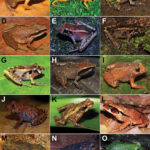
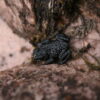
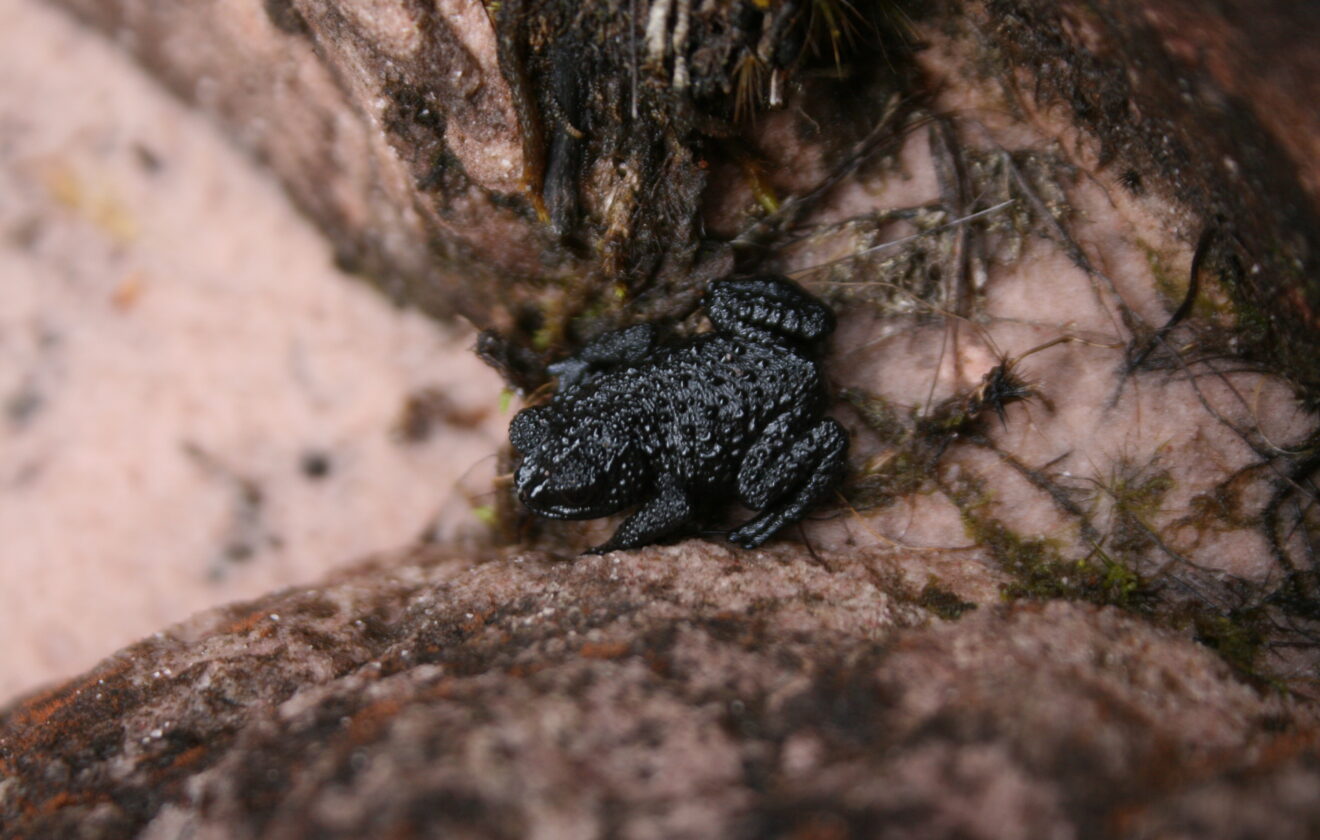
Perhaps the most captivating visual feature is the species’ stark, glossy black coloration, occasionally with subtle grayish hues or speckles. Such bold coloration, a rarity among amphibians known typically for their vibrant or cryptic camouflage, echoes the geological history of its rocky home. This darkness not only matches their rocky environments but likely aids in thermoregulation under the ever-present cloud cover and low sunlight conditions.
Besides their concealed ears and minimal vocal sac—adaptations to avoid the attention of potential predators—Oreophrynella nigra possess especially elongated fingers and toes, perfect natural climbing gear making them superb climbers, enabling confident navigation across vertical rock crevasses. Their digit pads produce adhesive-like secretions for better grip, a critical adaptation to their cliffside homes.
Behavior and Life Cycle: Survival on the Edge#
Living on islands surrounded by nearly impenetrable geographical barriers, the Oreophrynella nigra has shaped complex behavioral patterns, uniquely reliant on the tepui environments, resulting in behaviors significantly distinct from lowland amphibians.
Diet and Feeding Habits#
Oreophrynella nigra primarily feast upon a diet abundant in arthropods, predominantly ants, mites, tiny beetles, and other small insects thriving amidst diverse mossy crevasses. Precise ambush predators, these amphibians remain motionless, displaying impressive patience as prey unsuspectingly approaches. A rapid tongue extension quickly captures their miniature meal, fueling their survival in a nutrient-sparse mountain environment.
Mating and Reproductive Behavior#
Remarkably adaptive in harsh habitats where standing water bodies are scarce, Oreophrynella nigra exhibit direct development, bypassing entirely a free-living tadpole stage. Females lay small clutches of eggs, carefully positioning them in protected damp sites—often hidden beneath mossy layers or nestled within leaves of moisture-rich vegetation.
Males attentively guard these nests, warding off predators, fungal infection, and dehydration. When hatching occurs, fully developed froglets emerge directly from eggs into miniature miniature versions of their terrestrial adult forms. This direct adaptation perceivably evolved due to tepui conditions lacking permanent aquatic environments necessary for tadpole survival—incredible evidence of natural selection at play.
Ecological Roles: Delicate Pioneers of Tepui Ecosystems#
Oreophrynella nigra contribute significantly to maintaining their isolated mountaintops’ ecological balance. As voracious insectivores, these frogs regulate various arthropod populations, maintaining equilibrium within the sensitive tepui ecosystems addressed by few predators. In return, they become prey primarily to specialized mountain-dwelling birds and reptiles uniquely equipped to navigate the challenging tepui landscape.
Importantly, amphibians like Oreophrynella nigra serve as biological indicators, vulnerable among the first to register subtle ecological disruptions like climate shifts or contamination—factors magnified greatly in the restricted tepui habitats.
Threats and Conservation Status#
Challenges Facing Oreophrynella nigra#
Despite being chiefly shielded from human intrusion by isolation, Oreophrynella nigra still faces substantial threats. Climate change emerges as an increasingly potent disruptor; shifting cloud patterns and altered rainfall threaten intricate moisture cycles—key to the species’ survival. While locals rarely venture into these remote habitats, growing tourism poses significant disturbances, and occasional undocumented collection pressures amplify conservation concern.
IUCN Status and Conservation Efforts#
Presently, the International Union for Conservation of Nature (IUCN) categorizes Oreophrynella nigra as Vulnerable, highlighting habitat specificity and impending climate threats. International and local organizations now strive to combine preservation methods—minimizing tourism impact, improving educational awareness, and advocating supportive conservational legislation that protects these extraordinary habitats.
Cultural and Scientific Significance#
Representing evolutionary wonders, Oreophrynella nigra fascinates biologists and conservationists, offering insights into specialization within isolated terrestrial habitats. Efforts to study this species consequently contribute vastly to genetic research, climate adaptation modeling, and examinations into evolutionary biology.
Culturally, indigenous peoples inhabiting surrounding lowlands regard the tepuis as sacred homes of spirits. While Oreophrynella nigra itself holds minimal direct cultural prominence, it symbolizes a potent reminder of nature’s capacity to evolve life forms uniquely adapted to exacting conditions.
Conclusion: Protecting the Tepui Jewels#
The compelling tale of Oreophrynella nigra illustrates nature’s spectacular innovation and enduring adaptability. Their survival, however, hangs delicately in the balance, a reminder that safeguarding isolated ecosystems is paramount.
We must actively preserve the mesmerizing tepuis and the remarkable black frog dancing quietly within them. By raising awareness, advocating passion-driven conservation, and deepening our scientific exploration, perhaps we may ensure Oreophrynella nigra continues its quiet evolution uninterrupted—a celebration of life’s undying creativity and resilience above South America’s misty clouds.