- Nectophrynoides tornieri: Secrets of Tanzania’s Viviparous Forest Toad
- Introduction: Meet the Unforgettable Nectophrynoides tornieri
- Taxonomy and Classification: Placing a Frog of Unusual Biology
- Natural Habitat: Into the Misty Mountains of Tanzania
- Physical Characteristics: Beauty in Subtle Adaptation
- Behavior and Life Cycle: Remarkably Adapted to Terrestrial Life
- Ecological Role: A Keystone in Miniature Form
- Threats and Conservation Status: Challenges in a Changing Environment
- Cultural and Scientific Significance: Amphibian Wonders and Human Imagination
- Conclusion: Embracing Conservation for a Marvelous Little Toad
Nectophrynoides tornieri: Secrets of Tanzania’s Viviparous Forest Toad#
Introduction: Meet the Unforgettable Nectophrynoides tornieri#
Within the lush, emerald forests, woven through the mist-shrouded slopes of Tanzania’s Eastern Arc Mountains, lives a creature whose life unfolds not in ponds or lakes, but remarkably, on land. Known to science as Nectophrynoides tornieri, Tornier’s forest toad stands apart among amphibians as one of the world’s rare viviparous frogs—meaning it gives birth not to eggs, but fully developed miniature toadlets.
Just imagine: a silent twilight in the thick montane forests near the peaks of the Udzungwa or Uluguru Mountains. Amidst the rustling leaf litter, a delicate form moves gracefully, blending effortlessly into its shadowy surroundings. Tiny yet highly adapted, this frog is not merely fascinating—it symbolizes the intricate ecological web and closed evolutionary niches in isolated mountain ecosystems.
Taxonomy and Classification: Placing a Frog of Unusual Biology#
Nectophrynoides tornieri belongs to the Bufonidae family, a group commonly referred to as “true toads.” But traditional taxonomy steps aside in wonder at this species’ reproductive uniqueness. The genus Nectophrynoides is famous among herpetologists for its viviparity—an adaptation rare among amphibians and utterly fascinating to science. While most frogs and toads lay eggs that hatch externally, members of this genus produce offspring already fully formed, bypassing the vulnerable aquatic tadpole stage. Within this remarkable group, Tornier’s forest toad stands out, showcasing the evolutionary possibilities driven by isolated habitats and selective pressures.
Natural Habitat: Into the Misty Mountains of Tanzania#
Highly specialized and confined geographically, Nectophrynoides tornieri inhabits the biodiverse Eastern Arc Mountains of Tanzania, particularly scattered in regions like the Uluguru, Usambara, and Udzungwa Mountains. These ancient massifs are exceptionally rich in endemic species, forged over millions of years of isolation and evolutionary divergence. With altitudes typically ranging between 300 and 2000 meters, these areas form dense, moist, montane forests cloaked often in ghostly fog and eccentric mists—environments perfectly suited to life as delicate and moisture-dependent as that of a fragile amphibian.
The forest toad thrives beneath rich canopies, amongst fallen leaves and moss-carpeted stones, where the humidity remains consistently high. These microhabitats provide sanctuary from potential predators and desiccation—an ever-present threat to amphibians with their porous, sensitive skin. Chilled streams and dripping foliage are intertwined here; water is abundant but rarely pooled, making the evolutionary shift to terrestrial birth sensible and adaptive.
Physical Characteristics: Beauty in Subtle Adaptation#
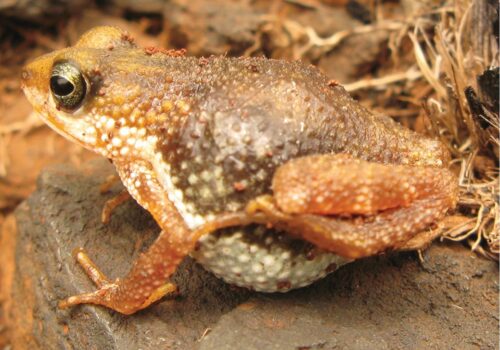
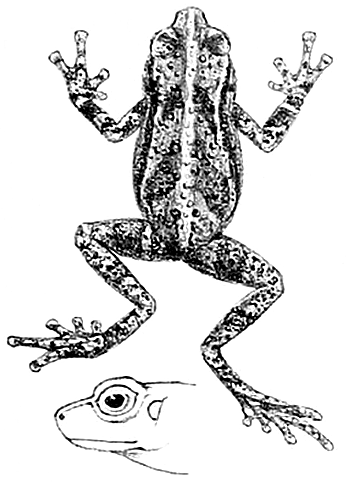
Nectophrynoides tornieri is modest in size, typically ranging from just 20 to 30 millimeters in length, barely surpassing the tip of a human thumb. Such diminutive stature helps it disappear effortlessly into forest leaf litter and rocky terrains. Its skin, textured and bumpy rather than sleek, is colored in shades of earthy browns or mossy greens, often interspersed with subtle patterns of dark spots or lighter lines.
These understated colors offer extraordinary camouflage, essential to the toad’s survival, enabling it to blend seamlessly amongst dead leaves and damp, moss-covered rocks. While its cryptic coloration might be described as modest, upon closer inspection, there is an exquisite, delicate beauty in every carefully sculpted bump and mottled pattern. Such adaptations, products of millions of years of evolution, clearly signify nature’s creative and practical genius.
Behavior and Life Cycle: Remarkably Adapted to Terrestrial Life#
As dusk settles upon these tropical highland forests, Nectophrynoides tornieri emerges quietly for its nightly search for food. Predominantly insectivorous, it feeds on a diet composed primarily of small invertebrates such as ants, termites, springtails, mites, and small beetles. Hunting stealthily, it ambushes its tiny prey, snapping them up rapidly with a sticky tongue faster than human eyes typically follow.
Viviparous Wonders: Terrestrial Reproduction#
The most extraordinary facet of its behavior, however, lies in its reproductive biology. Unlike the iconic image of frogs and toads laying massive batches of gelatinous eggs in ponds, this small toad bypasses the aquatic environment entirely. Courtship rituals are subtle; gentle calling noises serve to attract mates in the secrecy of leaf litter and clandestine crevices.
Female Tornier’s forest toads nurture fertilized embryos within their bodies throughout a remarkable gestation period. During this time, embryos receive direct nourishment through the mother’s reproductive tract—an unprecedented approach among amphibians. Born as tiny replicas of their parents, these infants then begin life immediately equipped for the perils of terrestrial living. This astonishing life-history adaptation protects vulnerable offspring, removing dependence upon seasonal ponds and safeguarding them from aquatic predators—a classic and elegant evolutionary response to their unique mountain habitats.
Ecological Role: A Keystone in Miniature Form#
Despite its unassuming stature, Nectophrynoides tornieri plays a significant role in sustaining ecosystem balance within these richly complex montane forests. As predators, they substantially contribute to controlling insect populations, thereby maintaining the health and balance of forest vegetation and microbial communities. Strikingly, these tiny amphibians are also invaluable prey for various predatory birds, reptiles, and mammals, allowing nutrients and energy to cycle succinctly and efficiently throughout the ecosystem.
Perhaps most notably, amphibians like Tornier’s toad act as bioindicators, accurately signaling the overall health of their environments. With highly permeable skin and sensitivity to ecological shifts, they are among the earliest species to indicate environmental decline caused by problems such as pollution, climate change, and habitat degradation.
Threats and Conservation Status: Challenges in a Changing Environment#
Like many amphibians globally, Nectophrynoides tornieri faces increasing pressure from human activities and ecological changes. Chief among these threats is habitat fragmentation and destruction—primarily from agriculture, commercial logging, and encroaching human settlement. Climate change further complicates their survival, altering rainfall patterns and moisture availability, jeopardizing their finely tuned ecological niches.
The International Union for Conservation of Nature (IUCN) currently classifies Nectophrynoides tornieri as Vulnerable, highlighting the urgency for conservation action to prevent further population decline. Numerous Tanzanian and international conservation efforts are in place, involving habitat preservation, reforestation programs, education and awareness initiatives, and sustainable agriculture practices in local communities.
Cultural and Scientific Significance: Amphibian Wonders and Human Imagination#
Though not widely featured in folklore or mythology, Nectophrynoides tornieri possesses growing significance within conservation and scientific circles. Its unique viviparity opens new pathways for research into evolutionary biology, reproductive physiology, and paleobiogeography. This fascinating species vividly illustrates the astonishing range of adaptations amphibians have developed over eons, helping ignite public curiosity and support for broader conservation goals.
Conclusion: Embracing Conservation for a Marvelous Little Toad#
At first glance, Tornier’s forest toad seems modest, nondescript even. Yet beneath its humble exterior lies an extraordinary evolutionary story—one filled with adaptation, innovation, and vulnerability. As nature enthusiasts, conservationists, and curious humans fascinated by the diversity of life, we have an ethical imperative to safeguard such wonders of adaptation and preservation.
Today, more than ever, supporting initiatives that protect the habitats of Nectophrynoides tornieri and its sister species is essential. By conserving these vibrant mountain rainforests, we ensure not only the survival of exquisite creatures like Tornier’s forest toad but also countless other remarkable organisms sharing its incredible ecosystem.
Join the cause; explore, educate, and advocate so that the whispering forests of Eastern Tanzania will resonate with life—of frogs, forests, and the richness of biological diversity—for generations to come.