- The Mysterious and Endangered Kihansi Spray Toad (Nectophrynoides asperginis): A Journey into Tanzania's Unique Amphibian
- Taxonomy and Classification
- The Hidden Realm: Natural Habitat of the Kihansi Spray Toad
- Distinctive Appearance and Adaptations
- A Unique Life Cycle—Overcoming the Need for Tadpoles
- Behavior and Survival Tactics in a Misty Wonderland
- The Kihansi Spray Toad as an Ecological Indicator
- The Close Call: Threats to Survival and Near-Extinction
- Rescuing a Species: Hope and Conservation Efforts
- A Symbol of Hope for Biodiversity Conservation
The Mysterious and Endangered Kihansi Spray Toad (Nectophrynoides asperginis): A Journey into Tanzania’s Unique Amphibian#
Nestled in a shimmering curtain of mist at the foot of Tanzania’s Udzungwa Mountains lies a frog that almost vanished into extinction, a hidden jewel known as the Kihansi Spray Toad (Nectophrynoides asperginis). Barely the size of a thumbnail, this enchanting amphibian thrives nowhere else on Earth but in the spray-drenched vegetation of the Kihansi Gorge. Remarkably adapted to life in the delicate haze of cascading waterfalls, its unique biology and precarious existence tell a story of nature’s fragile balance—and humanity’s urgent duty in preserving that balance.
With its intriguing reproductive adaptations and dramatic brush with extinction, the Kihansi Spray Toad has not only fascinated herpetologists but also stirred conservationists into intensive, passionate efforts to reclaim what was almost irrevocably lost. Let’s step into the moist haven of this remarkable amphibian, exploring its hidden world, biology, threats, and what its story can teach us about stewardship and recovery.
Taxonomy and Classification#
Before delving into the secrets of its survival, understanding where the Kihansi Spray Toad fits within the amazing tapestry of life is essential. Scientifically classified as Nectophrynoides asperginis, it belongs to the Bufonidae family, commonly referred to as “true toads.” Yet, the genus Nectophrynoides heralds its members as far from typical amphibians. Notably, these toads exhibit something extraordinary—direct development, bypassing the aquatic tadpole stage entirely.
Closely related species in its genus share similarly intriguing adaptations; many are also rare and restricted to tiny geographical pockets, hinting at evolutionary specialization and niche habitat utilization. Among its closest cousins are species like N. viviparus and N. tornieri, amphibians also famous for their unique reproductive strategies and limited distribution.
The Hidden Realm: Natural Habitat of the Kihansi Spray Toad#
The Kihansi Spray Toad’s existence is intricately woven into its unique habitat–the microclimate created by the majestic Kihansi Falls within Tanzania’s Udzungwa Mountains. Residing on rocky ledges and fern-encrusted vegetation constantly bathed in fine spray, this charming amphibian has developed life-history traits utterly dependent on this humid, mist-drenched environment.
Picture standing beneath cascading waters surrounded by dense vegetation saturated in mist. It feels almost primeval, a watercolor dreamscape fringed by rich, lush foliage bathed in perpetual spray. Here, amid clusters of moss and small flowering plants, the tiny Kihansi Spray Toads dart among glistening droplets, a perfect synergy between them and the micro-habitat forged by roaring water.
But the authenticity of this fragile paradise hinges exclusively upon an exact combination of temperature, humidity, and airflow conditions generated by the waterfall’s spray. The invasion or alteration of this specialized habitat spells disastrous implications for the survival of its sensitive residents. It is precisely because of these remarkably specialized ecological requirements that the toad’s fate has been entangled with the currents and ripples of human endeavors.
Distinctive Appearance and Adaptations#
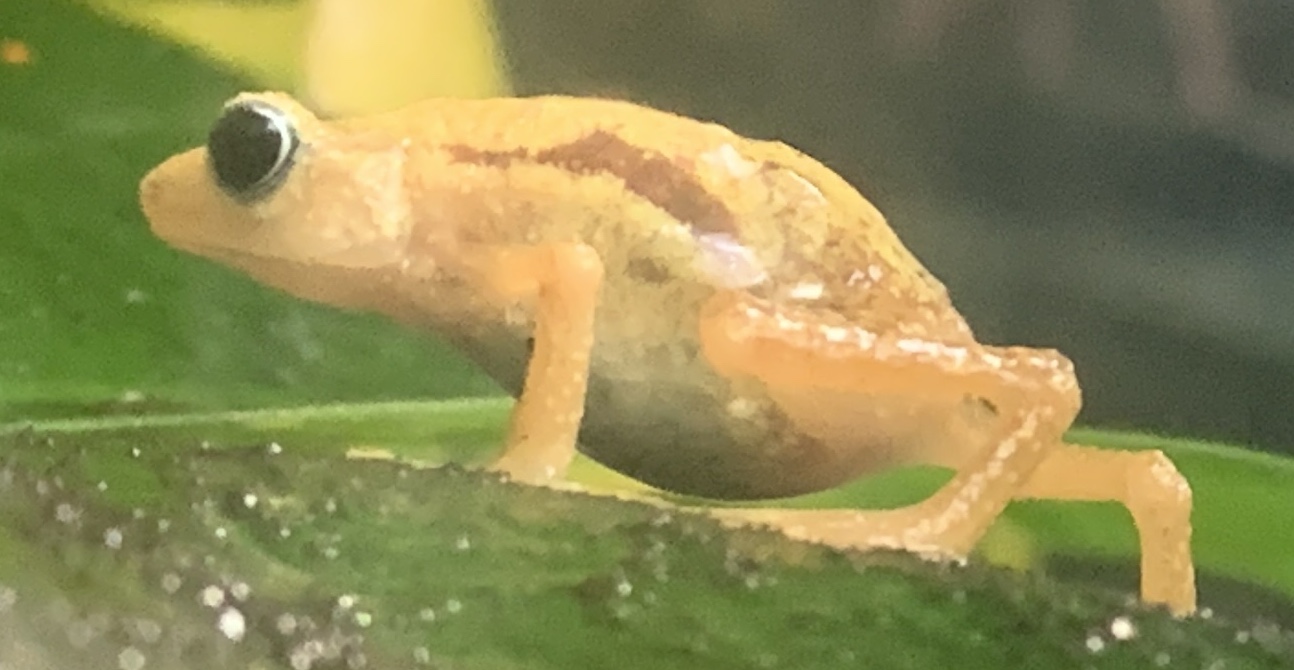
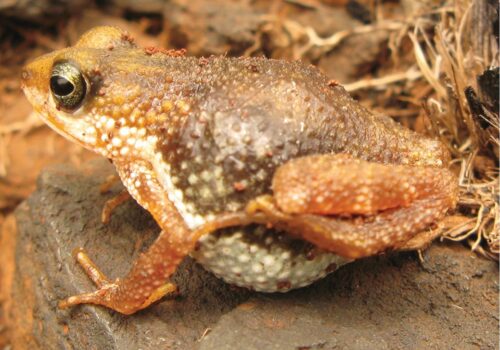
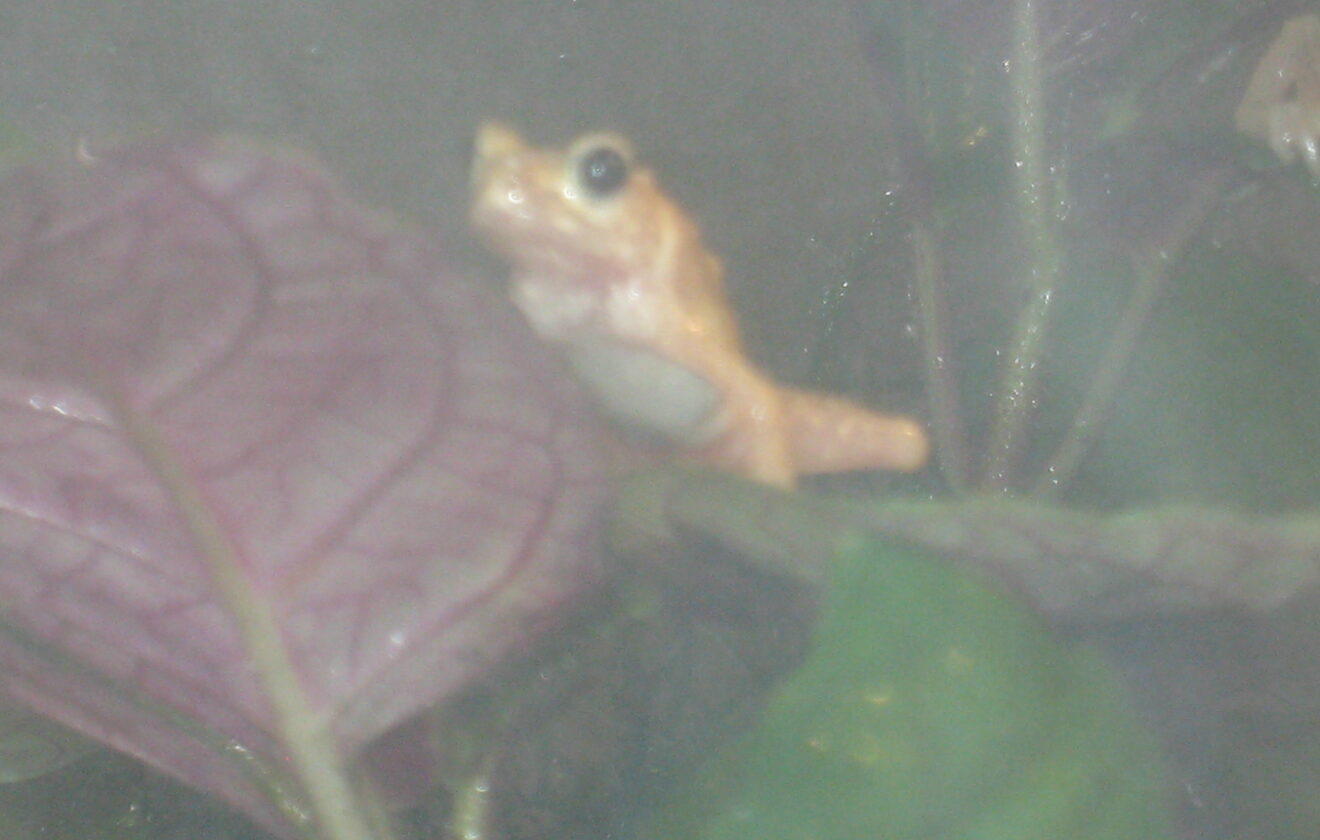
Weighing scarcely more than a few grams and measuring around two centimeters at most, the Kihansi Spray Toad is diminutive yet mesmerizing. Its diminutive size, flattened body, and a distinctive texture featuring minute glandular warts immediately distinguish it from many of its amphibious relatives.
Typically colored shades of amber, golden-yellow, or rich mustard, their tone subtly shifts and blends perfectly within their spray-filled surroundings. Tiny dark blotches speckle their yellowish backs—nature’s impeccable camouflage against a backdrop of wet rock and vegetation misted by droplets.
Beyond mere appearance, their physical adaptations speak directly to their niche. Their textured skin allows effective water absorption, incredibly critical for such animals living devoid of standing water bodies. This ensures continuous hydration from the rich moisture offered by their environment. Unlike their aquatic and terrestrial cousins, these toads have evolved a life utterly dependent on airborne moisture, yet ironically possess extremely limited tolerance to changes in the composition or consistency of their habitat.
A Unique Life Cycle—Overcoming the Need for Tadpoles#
One of the most compelling biological marvels of the Kihansi Spray Toad is its method of reproduction. Unlike the classic amphibian life cycle—complete with eggs laid in quiet pools transforming into tadpoles—the Kihansi Spray Toad engages in direct development. Females give birth to live offspring, fully formed miniature copies of the adults, skipping entirely the aquatic tadpole stage that defines life for other frog species.
In fascinating displays of reproductive flexibility, these remarkable females hold their developing young within their bodies, shielded from external risks until the offspring emerge as miniature replicas, directly adapted to the misty environs in which they must immediately thrive. The intricacies of such biological specialization underscore just how delicately evolved and adapted this species is to its highly specific environment.
Behavior and Survival Tactics in a Misty Wonderland#
The Kihansi Spray Toad is largely diurnal, active primarily during daylight when insects are abundant. With its swift, delicate movements, it hunts tiny arthropods—flies, mites, and leafhoppers—among damp plants and rocks. Their rapid, precise leaps are well-attuned to navigating the intricate network of narrow branches, ferns, and slippery pebbles making up their habitat.
Periodic male choruses softly echo through the spray-zone; romantic courtship in wet whispers rather than the boisterous cacophony associated with larger amphibians. Vocalizations among males primarily serve to establish territories and attract females, low chirping calls weaving subtly beneath the constant roar of waterfall spray. Upon mating, females carefully nurture developing embryos internally, providing immediate maternal protection.
The Kihansi Spray Toad as an Ecological Indicator#
Despite its tiny size, the health of the Kihansi Spray Toad populations represents an important ecological marker. Its exclusive dependence upon exact environmental conditions makes it particularly sensitive to changes in water quality, climate, and habitat structure. Thus, the Kihansi Spray Toad acts as a barometer species—a living testament to the complexity and health of Tanzania’s rich montane ecosystems.
The toads, being insectivorous, play a subtle yet vital role in controlling insect populations and contributing to ecological balance. Conversely, their decline clearly signposts underlying damage to ecosystems stressing the urgency in addressing habitat degradation, pollution, or global climate changes immediately.
The Close Call: Threats to Survival and Near-Extinction#
Alarmingly, this delicate micro-universe unraveled remarkably fast due to construction of the Lower Kihansi Hydroelectric Dam in the late 1990s and early 2000s. This ambitious human project dramatically altered the waterfall’s flow and subsequently decimated critical water-spray habitats. Combined with an outbreak of the deadly fungal pathogen Batrachochytrium dendrobatidis (chytrid fungus), this severely disrupted the delicate biological balance.
Consequently, the population plunged drastically, resulting in the species being declared extinct in the wild by 2009, gaining grim attention as a symbol of human environmental impact.
Rescuing a Species: Hope and Conservation Efforts#
But as powerful as humanity’s capacity is to damage nature, it also possesses an incredible gift of redemption. Realizing the loss, conservationists sprang to action, rallying a global effort involving captive breeding programs, habitat restoration, and rigorous research. Institutions across Tanzania and institutions abroad began intensive breeding initiatives, slowly nurturing populations back from the brink.
Thanks to these monumental efforts, several reintroductions began from 2012 onwards. Carefully-engineered spray systems restored micro-habitats, breathing renewed life back into the Kihansi Gorge. Today, cautious optimism surrounds the species’ revival narrative, showcasing just how powerful conservation actions—and people’s hearts united for nature—can truly become.
A Symbol of Hope for Biodiversity Conservation#
The Kihansi Spray Toad, small and fragile, has become an emblematic story of ecological loss and hope. It reminds us poignantly that nature’s smallest creatures can deliver powerful messages to the human conscience. Tanzania’s beloved amphibian proves to us that actions matter immensely in conservation.
Our choice—to act urgently, to intervene wisely, and to restore habitats—can transform troubling trends of extinction into inspiring tales of recovery. Thus, this little spray-dependent frog becomes a symbol of determination, care, and ultimately, redemption.
May the legacy of Nectophrynoides asperginis continue to encourage us to cherish and preserve nature’s delicate balance—for every lost species diminishes not only our ecosystems, but ourselves as well.