- Nannophryne Variegata: Exploring the Intriguing Life of the Eden Harbour Toad
- Taxonomy and Classification: Understanding the Eden Harbour Toad’s Lineage
- Natural Habitat: Life on the Edge of the Southern Hemisphere
- Physical Characteristics: A Portrait in Colors and Patterns
- Behavior and Life Cycle: Survival in an Unpredictable Home
- Ecological Role: Small Amphibian, Big Impact
- Threats and Conservation Status: Protecting a Quiet Existence
- Cultural and Scientific Significance: An Understated Representative of Patagonia
- Conclusion: Celebrating the Exceptional Eden Harbour Toad
Nannophryne Variegata: Exploring the Intriguing Life of the Eden Harbour Toad#
Hidden amidst the rugged landscapes of Patagonia and Tierra del Fuego rests a diminutive yet fascinating amphibian whose unobtrusive presence belies its ecological importance and profound adaptability: Nannophryne variegata, commonly known as the Eden Harbour Toad. This markedly resilient toad thrives in the ever-changing, often harsh environments found at South America’s southernmost extremes. Beyond its remarkable ability to endure Patagonia’s challenging conditions, Nannophryne variegata is strikingly beautiful, with an enchanting mosaic of colors and patterns that captivate wildlife enthusiasts and researchers alike.
Yet, despite its charisma and ecological significance, the story of this amphibian remains largely untold. Compared to its well-known tropical relatives, its quiet existence in remote, windswept habitats ensures that it often slips beneath conservation attention. Through a deeper journey into the world of Nannophryne variegata, we uncover surprising secrets, explore a wondrous life history, and learn why this unassuming toad deserves appreciation and protection in the fragile ecosystems it inhabits.
Taxonomy and Classification: Understanding the Eden Harbour Toad’s Lineage#
Nannophryne variegata belongs to the Bufonidae family—commonly known as true toads—recognized widely for their warty skin and terrestrial lifestyles. Classified within the genus Nannophryne, it is closely related to other small-bodied, terrestrial toads inhabiting the cool temperate and subantarctic regions of South America.
The taxonomic tale of this species is intriguing, reflecting evolving scientific understanding. Initially classified under the genus Bufo, subsequent genetic and morphological research led to clearer demarcations, assigning this species officially to the more appropriate genus Nannophryne. Closely related to species such as Nannophryne apolobambica and Nannophryne corynetes, Nannophryne variegata represents a vital component of amphibian biodiversity in the southern confluence of the New World.
Natural Habitat: Life on the Edge of the Southern Hemisphere#
The geographic range of Nannophryne variegata reveals a species beautifully adapted to daunting environments far removed from the humid tropics often imagined as the heartland of amphibian diversity. Primarily occupying the southern tip of South America, from Chile’s austral regions to Argentina’s Tierra del Fuego archipelago, this species has carved out an ecological niche in habitats often dismissed as too bleak or inhospitable for amphibians.
Connectivity with Patagonia’s Wild Landscapes#
These amphibians favor cool, moisture-retaining environments characterized by rugged terrain, rocky slopes, open grasslands, peat bogs, and wet coastal forests. With a pronounced tolerance to the damp cold and fluctuating seasonal climates typical of these latitudes, the Eden Harbour Toad thrives where few other amphibians dare linger. Its life cycle closely intertwines with seasonal variations in precipitation and temperature, allowing it to utilize temporary water pools and damp crevices sheltered among rocks and vegetation.
Weathering severity has honed resistance, resulting in remarkable adaptations. Nuggets of evolutionary ingenuity, such as cryptic coloration for camouflage and behavioral strategies to avoid predation or temperature extremes, attest to the resilience inherent in these diminutive toads.
Physical Characteristics: A Portrait in Colors and Patterns#
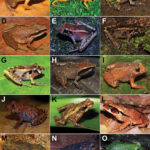
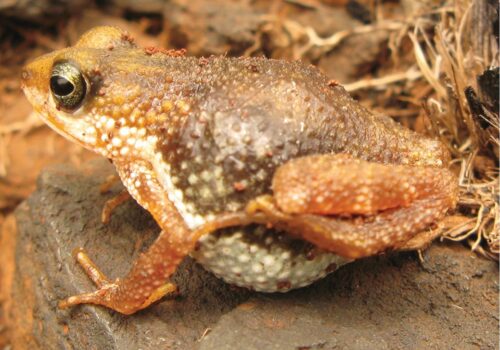
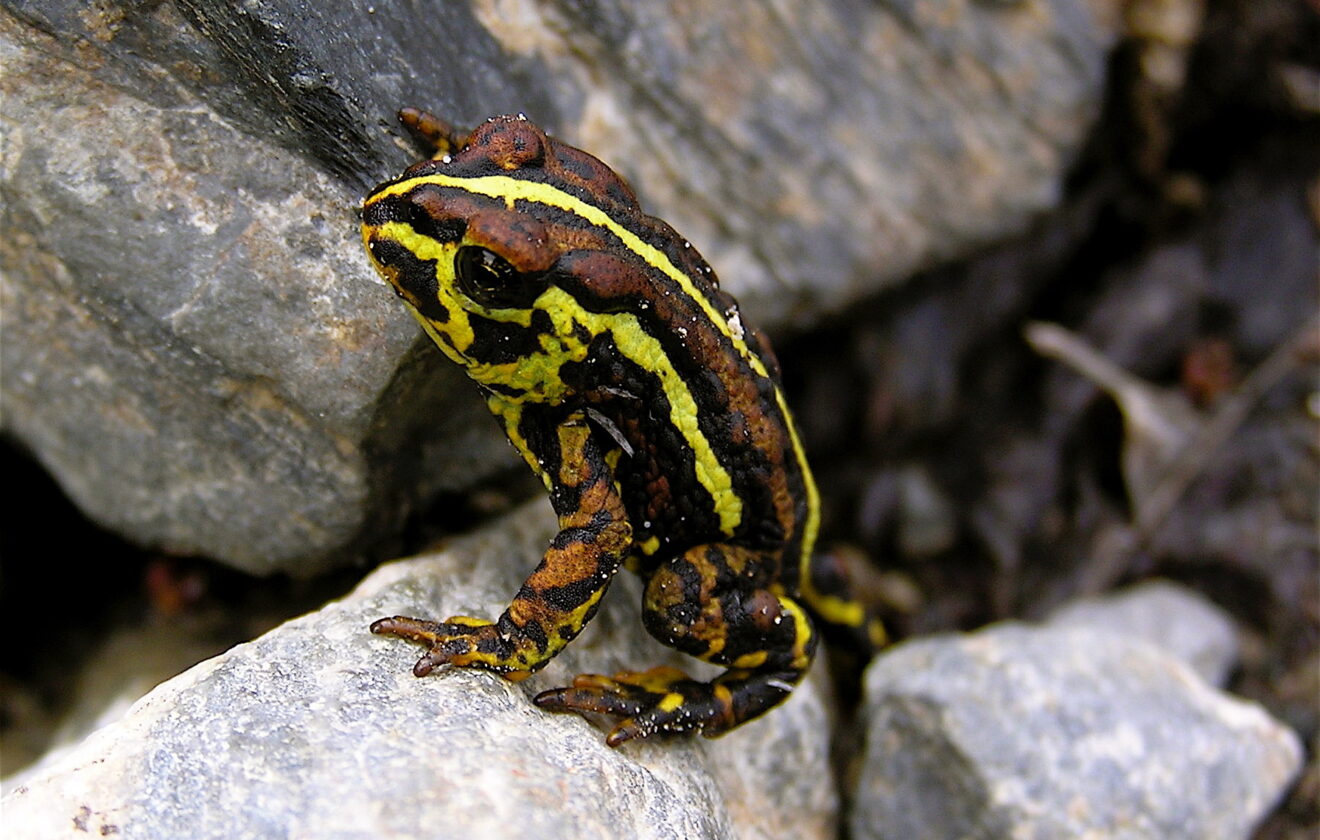
Though modest in size—typically measuring just 2 to 4 centimeters—Nannophryne variegata boasts an expressive visual display. Its dorsal skin is richly patterned with mottled blotches in varying shades of olive, brown, grey, and ochre, beautifully interspersed with occasional hues of russet or dusky orange. These colors weave together seamlessly into an intricate tapestry, enabling exceptional camouflage amid the lichens, mosses, and rocks blanketing Patagonia’s forests and tundra-like grasslands.
The toad’s texture matches the subtle hues; it has a rough, granular surface peppered with numerous wart-like glands. Small, round paratoid glands sit behind the eyes, subtly hidden yet packed with mild toxins that discourage potential predators. Reduced limbs and broad heads further enhance their squat, modest appearance, reflecting their grounded, terrestrial lifestyle.
Masters of Camouflage: Survival Through Appearance#
The rich coloration and patterning fulfill multiple ecological roles. Primarily, the elaborate skin patterns enhance camouflage, providing these tiny amphibians considerable protection from myriad predators, such as skuas, gulls, rodents, and larger amphibians. Simultaneously, these colorations communicate warnings—deterring predators from attacking and providing these gentle, soft-bodied amphibians a critical buffer for survival.
Behavior and Life Cycle: Survival in an Unpredictable Home#
Living at the southern edge of amphibian distribution brings distinct challenges. Thus, beyond their physical adaptations, Eden Harbour Toads exhibit unique behavioral and reproductive strategies apt for their temperamental ecosystems.
Foraging Tactics and Dietary Preferences#
Like most toads, Nannophryne variegata is insectivorous, subsisting primarily on small invertebrates. From ants to beetle larvae, spiders to tiny worms—these amphibians employ sit-and-wait ambush strategies to obtain nourishment. Blending into surroundings, they await with infinite patience, relying on quick reflexive tongue movements to swiftly capture unsuspecting prey upon proximity.
The Remarkable Reproduction and Parental Strategies#
Breeding occurs seasonally, coinciding with increases in rainfall and ambient humidity. With characteristic subtlety, males congregate around small temporary ponds, shallow puddles, and damp vegetative patches, emitting gentle, melodic calls to attract females across windswept expanses.
Females deposit gelatinous egg masses in sheltered depressions or shallow water bodies. Larvae quickly mature into tadpoles uniquely adapted for rapid metamorphosis—an adaptation critical to survival amid swiftly-drying environments. After brief larval stages, juveniles emerge fully adapted to terra firma, mirroring miniature versions of adults.
Ecological Role: Small Amphibian, Big Impact#
Though modestly sized and often overlooked, Eden Harbour Toads play essential ecological roles in the ecosystems of southern Chile and Argentina. As consumers of numerous invertebrates, they exert significant influence upon local pest populations. Simultaneously, these amphibians become prey themselves for various native wildlife, sustaining ecological balance.
Moreover, being sensitive and responsive to environmental changes, they serve as indicator species. Sudden declines or shifts in their populations act as crucial warnings of underlying environmental problems such as habitat degradation, pollution, or climate change.
Threats and Conservation Status: Protecting a Quiet Existence#
Despite their adaptability, Nannophryne variegata faces numerous threats reflective of broader environmental challenges in its limited and fragile habitats. Habitat loss due to increasing human development, urbanization, agriculture, livestock grazing, and infrastructure expansion emerges as an alarming challenge. Added climate change implications compound problems, altering rainfall patterns and seasonal temperature variations upon which these small amphibians highly depend.
The International Union for Conservation of Nature (IUCN) currently classifies Nannophryne variegata as “Least Concern”; however, conservationists emphasize the necessity of vigilance. Protection of broader ecosystem integrity through sustainable land management, research-driven habitat protection, and educational outreach remain essential components for future conservation success.
Cultural and Scientific Significance: An Understated Representative of Patagonia#
Though culturally less ubiquitous than tropical amphibians, Eden Harbour Toads contribute quietly yet meaningfully in local traditions depicting permanence, adaptability, and resilience amid harsh conditions. Scientifically, they offer research opportunities unraveling amphibian survival strategies under extreme environmental constraints, further illuminating biodiversity’s adaptive capacities.
Conclusion: Celebrating the Exceptional Eden Harbour Toad#
Nannophryne variegata stands as a testament to adaptation’s beautiful possibilities, thriving at the margins in ecosystems often neglected or overlooked. Educating ourselves and others about their ecological roles, behaviors, and conservation needs guarantees better stewardship of these incredible amphibians and the rich biodiversity they symbolize.
Through dedicated protection efforts, scientific exploration, and fostering appreciation for these enchanting creatures, we can ensure the timeless presence of the Eden Harbour Toad, a humble ambassador of southern Patagonia’s intricate natural legacy.