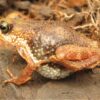
- Nannophryne corynetes: Exploring the Mysterious Andes Toad of South America
- Taxonomy and Classification
- Natural Habitat: A Highland Specialist
- Physical Characteristics: Adaptations for Andean Living
- Behavior and Life Cycle: High-Altitude Wonders
- Ecological Role: Guardians of Mountain Streams
- Threats and Conservation Status: Navigating a Precarious Existence
- Cultural and Scientific Significance: Reflections of Biodiversity and Traditional Beliefs
- Conclusion: Protecting a Mountain Ambassador
Nannophryne corynetes: Exploring the Mysterious Andes Toad of South America#
Hidden deep within the rugged high-altitude landscapes of the Peruvian Andes dwells a creature whose presence often eludes even the most astute naturalists: the Nannophryne corynetes. Known commonly as the Abra Malaga Toad or simply the Andean Toad, this fascinating amphibian maintains an existence precariously balanced between obscurity and intrigue. With its distinctive adaptations and elusive habits, this small toad provides valuable insights into ecosystems that few humans regularly observe. Indeed, the story of Nannophryne corynetes is one that resonates deeply, illuminating broader narratives in biodiversity, adaptability, and conservation urgency.
Taxonomy and Classification#
Upon cursory glance, Nannophryne corynetes may appear simply as just another small, inconspicuous amphibian. Yet, taxonomically speaking, it serves as an intriguing subject of study. Belonging to the family Bufonidae, known colloquially as the “true toads,” Nannophryne corynetes occupies a small but fascinating genus, Nannophryne, which was delineated to accommodate species adapted to unique high-altitude environments in South America.
The genus Nannophryne is relatively limited, existing solely within specific mountainous regions. Nannophryne corynetes itself was formally described only in 1972 by esteemed herpetologist John D. Lynch, underscoring both the relatively recent scientific discovery and ongoing obscurities about its life history and ecological importance. Closest relatives include other specialized Andean toad species, each remarkable in their adaptations for survival in harsh environments characterized by cooler temperatures, lowered oxygen availability, and variably moist conditions.
Natural Habitat: A Highland Specialist#
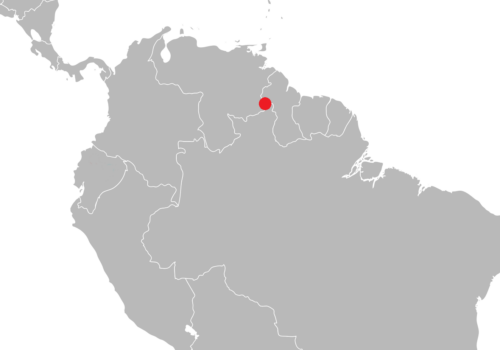
The tale of Nannophryne corynetes unfolds exclusively in high-elevation regions of southern Peru, often exceeding altitudes above 3,000 meters. A specialist of the Andean montane cloud forests and alpine shrubland known as “puna,” this toad finds sanctuary in an environment most would deem inhospitable.
These montane habitats are uniquely characterized by dramatic shifts in temperature, atmospheric oxygen content, humidity, and often intense UV radiation. Amidst the rugged peaks, rocky crags, and dwarf shrubs typical of its territory, the Nannophryne corynetes emerges stealthily. Favoring moist microhabitats near streams, seepages, and wet areas around rocky outcrops, this amphibian has adapted beautifully to utilize the sparse ecological niches available.
Its habitat selection is intimately tied to moisture availability—it is seldom found far from sources of fresh-flowing or standing water tucked between rocks or within vegetation. The deeply embedded relationship between this species and its environment underscores the critical role that precise habitat conditions play in its survival and reproductive success.
Physical Characteristics: Adaptations for Andean Living#
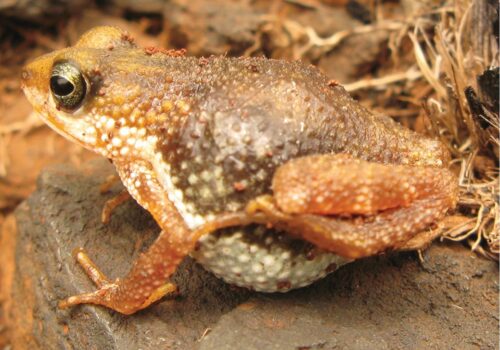
While it may seem modest in size, typically measuring no more than 35 to 45 millimeters in length, the Nannophryne corynetes bears adaptations unique to its high-altitude home. Its sturdy, compact morphology and short limbs are ideal traits for maneuvering through crevices and traversing the rocky terrain that defines its environment.
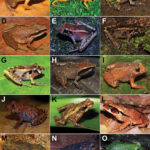
Its skin, characterized by a rough, granulated texture, serves both for camouflage and moisture retention. Hue variation ranges from muted olive to grayish-brown, often intricately speckled or mottled with darker pigmentation. These careful concealing colors provide crucial protection against sharp-eyed predators and, coupled with its diminutive build, make the Abra Malaga Toad nearly invisible amongst alpine grasses, lichens, and stones.
Notably, the species exhibits marked sexual dimorphism—males typically bearing enlarged vocal sacs useful in amplifying their calls during breeding season. Furthermore, subtle structural characteristics, such as well-developed glands along their dorsum, hint at possible defensive adaptations, perhaps producing toxins deterring potential predators.
Behavior and Life Cycle: High-Altitude Wonders#
Feeding Habits#
Nannophryne corynetes maintains a nocturnal lifestyle, emerging under the cover of darkness to feed. Its prey primarily consists of small invertebrates abundant amidst moss-covered rocks and damp vegetation. Adapted to precise microhabitat niches, the Abra Malaga Toad effectively exploits insects, arachnids, and other small terrestrial arthropods, thereby playing a critical ecosystem role in balancing insect populations.
Breeding and Development#
The onset of breeding coincides typically with periods of increased rainfall, characteristic of the Andean wet season. During such times, male Nannophryne corynetes gather around shallow pools and gently flowing streams, engaging in a chorus of faint, melodious calls that echo hauntingly through the high-altitude nights.
Mating involves males clasping females in amplexus—a common amphibian reproductive behavior—leading to the deposition of gelatinous egg clutches within shallow, sheltered water bodies. Notably adapted for rapid larval development in high-altitude, seasonally constrained ecosystems, tadpoles metamorphose swiftly, transitioning from aquatic larvae to terrestrial juveniles in record times, thus maximizing their chances of survival before pools evaporate.
Ecological Role: Guardians of Mountain Streams#
Though often overlooked, Nannophryne corynetes carries the delicate mantle of a key ecological indicator. As amphibians, their permeable skin and biphasic life-cycles intimately link them to both terrestrial and aquatic ecosystems, making them particularly susceptible to environmental changes. Their sustained presence often signifies healthy ecosystems, whereas declines can serve as early warnings of deteriorating ecological conditions.
Additionally, positioned delicately in the food web, these toads serve as essential prey items for an array of predators including birds of prey and small mammals, alongside their role in regulating invertebrate populations. In maintaining this balance, these small creatures quietly uphold the ecological harmony within their delicate high-altitude ecosystems.
Threats and Conservation Status: Navigating a Precarious Existence#
Like many unique species inhabiting specialized niches, Nannophryne corynetes faces ongoing threats primarily associated with habitat destruction and alteration. Intensive agriculture, infrastructure expansion, and deforestation in adjacent mountain foothills and valleys significantly fragment and degrade its natural habitats. Furthermore, shifts in regional climate patterns threaten to disturb moisture regimes and develop conditions unfavorable for the species’ precise ecological needs.
Currently listed by the International Union for Conservation of Nature (IUCN) as Data Deficient, less is known about current population trends than would be ideal for adequate conservation assessments. However, ongoing research efforts are actively addressing existing knowledge gaps, allowing conservationists to better tailor protective measures for these remarkable amphibians.
Cultural and Scientific Significance: Reflections of Biodiversity and Traditional Beliefs#
In traditional Peruvian Andean cultures, amphibian species often quietly hold symbolic significance. Toads, in particular, frequently figure as symbolic intermediaries between terrestrial and aquatic realms, representing balance, fertility, and transformation. While specific cultural stories centered on Nannophryne corynetes may not yet have entered widespread narrative, understanding local attitudes toward amphibians broadly guides effective conservation outreach and community education.
From a scientific standpoint, Nannophryne corynetes offers tremendous research potential, providing insights into high-altitude adaptation, physiology under environmental stressors, and broader climate change impacts on specialized wildlife.
Conclusion: Protecting a Mountain Ambassador#
Amidst the mysterious folds of Andean mountains, Nannophryne corynetes continues its quiet existence, deeply adapted yet remarkably unknown. Each revelation about its ecology not only deepens our appreciation of biological diversity but also underscores the urgency to protect fragile ecosystems from mounting threats.
Collectively, conservationists, researchers, and the global public must embrace stewardship for delicate beings like the Abra Malaga Toad. After all, understanding and safeguarding such emblematic, sensitive species defines our ethical imperative to care for the intricate, vulnerable web of life.
Explore, educate, and advocate—let our awareness and compassion lead to meaningful conservation outcomes for this humble Andean wonder.