- Mertensophryne micranotis: Discovering the Secretive Life of the Tiny-Eared Toad
- Taxonomy and Classification: Understanding the Heritage of Mertensophryne micranotis
- Natural Habitat: Life Among East African Forests and Woodlands
- Physical Characteristics: The Subtle Elegance of an Adapted Amphibian
- Behavior and Life Cycle: Secretive Living in a Complex World
- Ecological Role: Small Creature, Big Impact on Forest Ecosystems
- Threats and Conservation Status: Challenges of Survival in an Ever-Changing World
- Cultural and Scientific Significance: Quiet Witness of Forest Health
- Conclusion: Protecting the Subtle Wonders of the Forests
Mertensophryne micranotis: Discovering the Secretive Life of the Tiny-Eared Toad#
In the dappled sunlight filtering through dense foliage, nestled among moss-covered rocks and hidden beneath fallen leaves, lives a small, unassuming amphibian—one whose quiet presence belies its ecological significance. Known scientifically as Mertensophryne micranotis, this elusive little toad is often overlooked, yet it plays a crucial role in the ecosystems it inhabits. Commonly referred to in English as the “Tiny-Eared Toad,” this species intrigues scientists and naturalists alike for its discreet nature, distinctive appearance, and subtle ecological role.
While countless nature enthusiasts marvel at vividly colored poison dart frogs or the resonant calls of tree frogs in tropical forests, the modest Mertensophryne micranotis lives quietly, close to the ground, harmonizing subtly yet indispensably with its surroundings. Only with close observation can we begin to understand just how extraordinary this little amphibian truly is.
Taxonomy and Classification: Understanding the Heritage of Mertensophryne micranotis#
Belonging to the vast order Anura—commonly comprising frogs and toads—Mertensophryne micranotis falls clearly within the toad family Bufonidae. Unlike its brightly-colored or large-bodied cousins, this small, earth-colored amphibian embodies subtlety rather than showiness.
First described scientifically by Loveridge in 1925, it has since captured the interest of herpetologists intrigued by subtle variations among closely-related species. Within the genus Mertensophryne, the Tiny-Eared Toad shares certain morphological characteristics with similar African species found in the same genus, including delicate limbs, rough granular skin, and notably reduced tympana (eardrums)—from which its common name “micranotis,” meaning “small-eared,” originates.
Taxonomic clarity is particularly significant, as accurate identification can inform conservation and monitoring efforts, helping scientists recognize habitat changes and population shifts in sensitive ecosystems where this diminutive amphibian resides.
Natural Habitat: Life Among East African Forests and Woodlands#
Inhabiting lush, subtropical and tropical forests scattered along the coastal and inland regions of eastern Africa, Mertensophryne micranotis favors habitats where humidity remains constantly high and the earth is kept moist by rainfall, streams, and dew. This species ranges predominantly within Tanzania and Kenya, where biodiversity thrives.
Habitat Preferences and Adaptations#
Preferring elevations below 1000 meters, this species has evolved for life on the forest floor. Here, among leaf litter, fallen logs, and soft damp soil, the Tiny-Eared Toad weaves quietly through the debris like a tiny shadow, expertly camouflaged against predators and human eyes alike.
The moist forest environment provides both shelter and sustenance. Shade from thick canopies and dense undergrowth maintains comfortable humidity and temperatures optimal for amphibian life. During the dry seasons or shorter spells of weather extremes, the little toad relies on the sheltering layers of leaf litter, burrowing just below the surface to retain moisture and moderate body temperature, awaiting the rains that reinvigorate its landscape.
Physical Characteristics: The Subtle Elegance of an Adapted Amphibian#
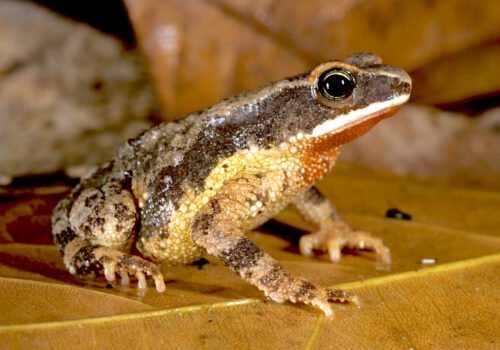
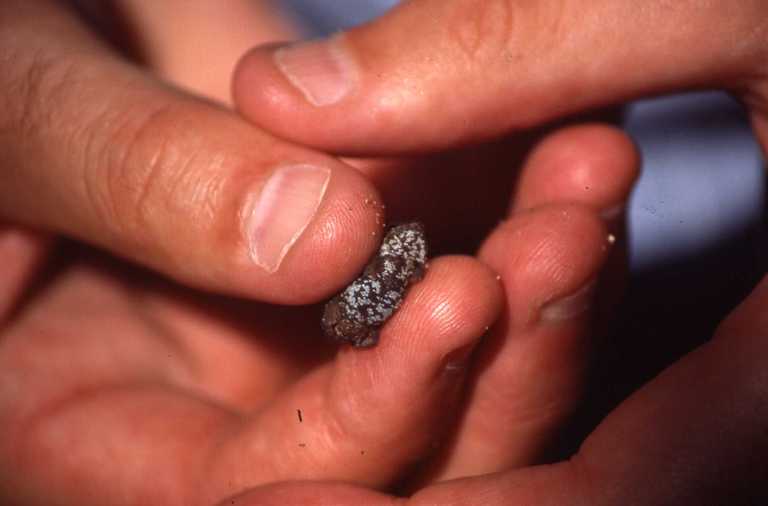
At first glance, the Tiny-Eared Toad doesn’t immediately catch the casual observer’s eye. Measuring mere centimeters long—typically around 2 to 3 centimeters—its small stature is easy to dismiss against the vibrant backdrop of a tropical woodland. However, closer inspection reveals intricate adaptations shaped over thousands of years to perfect its ecological niche.
Appearance and Camouflage#
Its dorsal coloration varies across shades of brown, olive, and even subtle hues of gray or reddish-brown, lending mastery of camouflage. Granular skin textures mimic small clods of soil, clinging detritus, and small pieces of bark; combined effectively, these features render the little amphibian nearly invisible amid forest leaf litter and dark loamy earth of its habitat.
As the name implies, its ears, or tympana, are notably reduced, presenting as subtle depressions or occasionally entirely hidden beneath skin folds. This reduced auditory organ, while rare among many frogs and toads, complements its secretive lifestyle, relying on vibrations through the soil or subtle visual cues rather than loud vocalizations to interact with its environment.
Powerful hind limbs designed for quick hops enable escape from predators, including birds, small mammals, and larger amphibians. Its delicate digits are agile, yet adept at burrowing—skills essential for survival in a competitive, predator-rich environment.
Behavior and Life Cycle: Secretive Living in a Complex World#
Mertensophryne micranotis is primarily nocturnal, emerging from hidden shelters under cover of darkness when humidity peaks and temperatures moderate. Through nights in Tanzanian or Kenyan forests, one might glimpse fleeting shadows hopping delicately along moist trails or retreat quickly if disturbed. The Tiny-Eared Toad exhibits patient, methodical foraging behaviors, hunting for small insects, ants, termites, and tiny arthropods leveraging sharp eyesight adapted to low-light conditions.
Reproduction and Development#
After periods of heavy rainfall, the seasonal abundance of temporary shallow pools and streams triggers breeding behaviors. Remarkably quiet compared to their relatives—less reliant on loud mating calls—males instead stage subdued choruses and movements near ephemeral water bodies to attract females.
After choosing a mate, females lay strings of gelatinous eggs delicately attached to submerged vegetation or floating debris. The tadpoles that hatch just days later must rapidly mature, racing against time to metamorphose before these temporary pools evaporate, revealing perseverance unique to life in environments with pronounced wet-dry cycles. Their larval stage lasts a short few weeks, wherein they scrape organic matter and algae from underwater surfaces, quickly developing legs and lungs adapted perfectly for terrestrial survival awaiting them post-metamorphosis.
Ecological Role: Small Creature, Big Impact on Forest Ecosystems#
Though humble in appearance and modestly sized, Mertensophryne micranotis provides invaluable services to its habitat. As predators, these tiny toads keep insect populations in balance, indirectly serving as regulators of pest species. In turn, they provide necessary sustenance for other forest inhabitants, playing their roles in complex food webs sustaining biodiversity ecosystem-wide.
As amphibians, they serve as highly sensitive bioindicators. Their porous skin readily absorbs contaminants from water and air, quickly indicating environmental disturbances such as pollution, pesticide use, or habitat degradation. Monitoring their populations assists conservationists and governments in identifying early signs of ecological changes in vital forest habitats.
Threats and Conservation Status: Challenges of Survival in an Ever-Changing World#
Currently assessed by the International Union for Conservation of Nature (IUCN) as Least Concern, the Tiny-Eared Toad faces relatively fewer immediate threats compared to many other amphibian species. Nevertheless, caution remains necessary. It is vulnerable to habitat loss and forest fragmentation largely driven by expanding human settlements, agriculture, logging, and road-building which disrupts essential moisture-rich habitats.
Pollutants from agriculture, especially pesticides and fertilizers, pose increasing threats. These pollutants quickly permeate amphibians’ sensitive skin, causing significant harm or population declines. Climate change imposes additional concern, altering rainfall patterns and increasing frequencies of drought, jeopardizing breeding habitats and survival during the drier months.
Cultural and Scientific Significance: Quiet Witness of Forest Health#
While less culturally prominent than larger, more flamboyant amphibians appearing in traditional folklore, Mertensophryne micranotis possesses essential scientific significance. It has increasingly garnered scientific attention as forest health indicators, subtly announcing environmental alterations invisible to human observation but devastating to wildlife reliant on delicate balance.
Researchers continually seek understanding from species such as this tiny toad, unlocking nature’s secrets for understanding broader ecological concerns. In doing so, they ensure future conservation strategies remain grounded in empathy, awareness, and commitment toward species whose silent declines might otherwise remain unnoticed until too late.
Conclusion: Protecting the Subtle Wonders of the Forests#
The secret life of Mertensophryne micranotis is a reminder of Earth’s quiet wonders, often concealed beneath bustling ecosystems. Its survival depends heavily on recognizing its intrinsic value and ecological significance. As nature enthusiasts or conservation advocates, our responsibility is clear—support conservation efforts, protect forest habitats, and cherish all amphibians ranging from the vibrant to the humble species like the Tiny-Eared Toad.
By appreciating creatures great and small, we acknowledge the interconnectedness of life—each species vital, each deserving of protection. Let us champion this secretive little ecosystem sentinel, too often overlooked, yet playing its role quietly and indispensably in maintaining life’s delicate harmony.