Meet Melanophryniscus vilavelhensis: Brazil’s Marvelously Mysterious Amphibian#
Nestled discreetly among the lush forests and tranquil waterways of southern Brazil dwells a creature so tiny and reclusive, few have ever laid eyes upon it. Yet its vivid coloration and remarkable adaptations compel fascination among those fortunate enough to witness its fleeting presence. Known to science as Melanophryniscus vilavelhensis, this diminutive toad embodies a story of remarkable survival, ecological intimacy, and conservation urgency.
Although scarcely larger than a thumbnail, the beauty and uniqueness encoded into the genetic fabric of Melanophryniscus vilavelhensis are as vast and intricate as any larger and better-known wildlife star. Commonly found in only a restricted region within the Brazilian state of Santa Catarina, this tiny amphibian reminds us how diversity in nature often thrives in extraordinary complexity at the smallest scales.
Taxonomy and Classification#
Melanophryniscus vilavelhensis belongs to the Bufonidae family, more commonly known as true toads. Within this extensive family, the genus Melanophryniscus includes small, vibrantly colored toads endemic to South America, predominantly found across Argentina, Paraguay, Uruguay, and Brazil. This genus, characterized by small body sizes, bright aposematic (warning) coloration, and potent skin toxins, has intrigued researchers for decades due to its evolutionary adaptations and ecological niches.
Within its genus, Melanophryniscus vilavelhensis represents a recently described species, formally recognized in scientific literature only as recently as 2007. Its discovery underscored how biodiversity hotspots like Brazil harbor far more hidden treasures awaiting scientific inquiry – a compelling reminder of how much is still unknown even amidst intensively studied biological regions.
Natural Habitat#
This particular amphibian exclusively inhabits subtropical grasslands and humid Atlantic forest remnants of southern Brazil, specifically within Vila Velha State Park in Paraná state. Here, amidst scattered rock formations, temperate grasslands, and lushly forested features, these toads navigate a patchwork mosaic landscape defined by proximity to freshwater streams and temporary pools formed by sporadic rainfall.
Vila Velha’s ecosystems embody a complex interplay between grassy expanses and isolated forest islands, providing a unique combination of shelter and moisture that Melanophryniscus vilavelhensis finds ideal. In this habitat, ancient sandstone formations dominate the region, creating niches where moisture collects, providing miniature refuges for breeding and hiding from predators. The toad’s presence testifies to remarkable habitat specificity and hints at a life intricately adapted to certain precise ecological conditions.
Observing them in the wild demands both patience and timing. Often hidden beneath leaf litter, moss-covered stones, or damp logs during the hotter daytime hours, they become active primarily in humid twilight—especially after heavy rainfall when moisture lingers in vegetation. This nocturnal emergence is a prime time for the toad’s hunting habits and reproductive activities, providing a fleeting glimpse into its uniquely secretive routine.
Physical Characteristics#
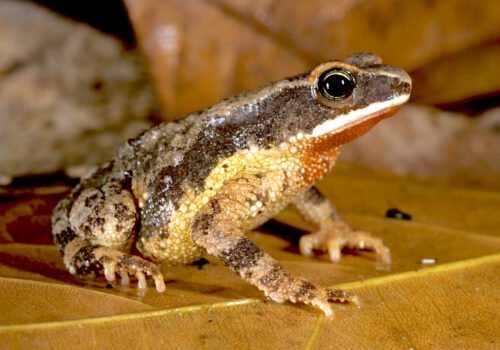
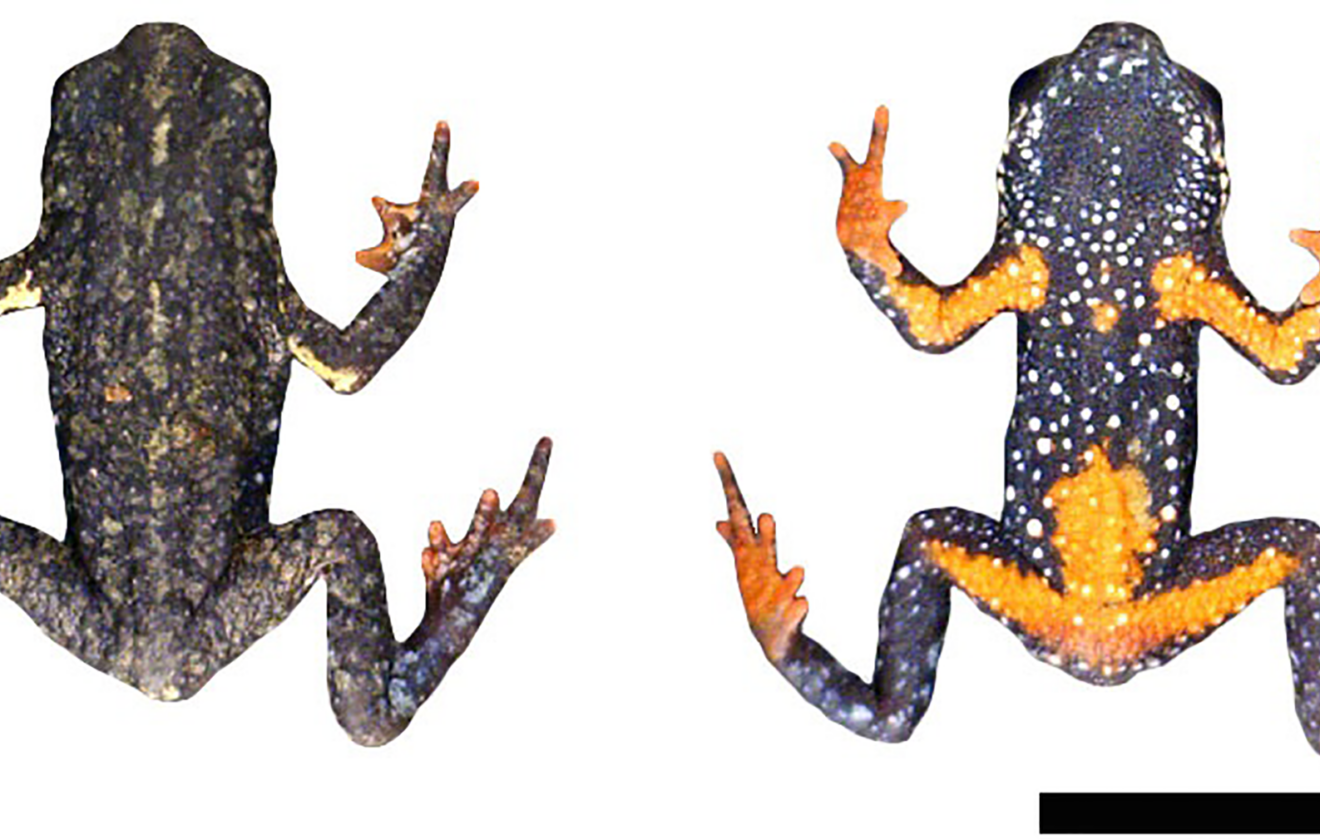
At first glance, Melanophryniscus vilavelhensis‘s striking appearance captivates observers, despite its minuscule size of barely two centimeters in length. Remarkably vibrant, its skin color displays dazzling contrasts of reddish-orange hues against a background of deep black, flamboyantly accented by yellow spots sprinkled delicately along its flanks and limbs. This aposematic coloration—a biological phenomenon wherein bold patterning indicates toxicity—perfectly encapsulates how such tiny creatures confidently inhabit rainforest ecosystems fraught with natural threats and hungry predators.
Beneath the bright colors lies profound evolutionary adaptations—the skin glands produce potent alkaloid toxins designed as chemical defenses against predators. While harmless to humans (unless ingested), these substances serve to dissuade birds, reptiles, and mammals tempted to perceive these minuscule amphibians as a tasty morsel.
Their plump and compact bodies help maintain crucial moisture reserves during drier periods. Their eyes, relatively large in proportion, allow for a heightened perception of environmental movements and potential prey, vital for such small predators competing on the forest floor.
Behavior and Life Cycle#
A frog rarely observed in action, Melanophryniscus vilavelhensis leads a solitary, secretive life. Its habits are predominantly nocturnal and terrestrial. Preferring to avoid open exposure to sunlight and potential predators, these toads cautiously navigate their nocturnal world, thoroughly concealed beneath dense layers of decaying vegetation or within rocky crevices.
Feeding Habits and Predatory Behavior#
This species primarily preys upon tiny invertebrates—ants, beetles, termites, and mites—that abound on the humid rainforest floor. Employing a keen visual sensitivity and quick tongue reflexes, they opportunistically catch prey passing unaware near their concealed retreats. Its predation habits help balance insect populations, attesting to their intricate ecological role as predators in their ecosystem.
Breeding Behaviors and Tadpole Development#
Reproduction famously coincides with seasonal rains that fill natural pools and small water pockets in the soil or rocky depressions. Both males and females exhibit fascinating behaviors: males issue subtle, high-pitched, melodious chirps enticing females into short-lived but energetic gatherings near water sources. After mating, females lay gelatinous clusters of eggs, carefully hidden in shallow pools and isolated puddles to minimize predation.
Emerging tadpoles grow quickly, transitioning from fully aquatic herbivores feeding on algae and detritus into terrestrial carnivorous juveniles within mere weeks. Rapid development is essential, as temporary ponds quickly evaporate, placing evolutionary pressure favoring rapid metamorphosis—a remarkable survival feat for these diminutive creatures.
Ecological Role#
Despite its small physical presence, Melanophryniscus vilavelhensis wields considerable ecological importance. Predating insects and invertebrates, the species contributes significantly to balancing populations of prey organisms, while simultaneously acting as prey itself for larger animals such as birds, snakes, and mammals.
Additionally, this species functions as a reliable ecological indicator: its presence or absence within ecosystems serves scientists as vital signals upon the health of local habitats. Sensitive to habitat alteration, water quality, and environmental pollutants, declines or disappearances of these species ring critical alarm bells, alerting researchers to subtle but pressing ecosystem disturbances and operational gaps in conservation strategies.
Threats and Conservation Status#
With an extremely limited distribution range and high habitat specificity, Melanophryniscus vilavelhensis faces essential conservation challenges. Principal threats include habitat fragmentation, agricultural expansion, urbanization pressure, pesticide usage, and climate change altering rainfall patterns and thus their breeding pools. Perhaps most alarming, amphibian chytrid fungus—a deadly pathogen devastating amphibian populations worldwide—represents another potent hazard.
According to the International Union for Conservation of Nature (IUCN), this species has been assessed as Vulnerable, emphasizing urgent conservation requirements and further intensive studies to understand their population dynamics, improve habitat preservation measures, and mitigate identified threats effectively.
Cultural and Scientific Significance#
For local communities around Vila Velha, although rarely encountered due to its secretive behavior, the species holds symbolic significance as an emblematic species uniquely tied to this special landscape. Scientifically, this tiny amphibian constitutes an invaluable genetic reservoir exhibiting fascinating evolutionary adaptations concerning toxicity, coloration, and rapid developmental biology—providing a profound opportunity for in-depth research into evolution, ecology, and conservation biology.
Conclusion#
The intricately woven details of life traced in Melanophryniscus vilavelhensis reveal a humbling reminder: the smallest voices often possess the loudest ecological and environmental lessons. By exploring and protecting such specialized species, we not only preserve biodiversity but also embrace opportunity—to listen carefully, learn deeply, and act decisively in safeguarding our shared heritage.
For those inspired by the colorful journey of this remarkable amphibian, we urge continued exploration, education, support for amphibian conservation organizations, and personal action to protect habitats worldwide. True nature appreciation arises not merely through admiration but from active stewardship, responsibility, and passionate advocacy.