Melanophryniscus tumifrons: Exploring the Life of Argentina’s Fascinating Toadlet#
In the lush wetlands and grasslands of Argentina lives a small yet enchanting amphibian that’s as vividly colored as it is mysterious. Melanophryniscus tumifrons, commonly known as the tumifrons toadlet, is a species of small toad whose existence beautifully encapsulates the delicate balance of nature’s ecosystems. Despite its diminutive size, this uniquely patterned creature holds extensive importance—not only scientifically, but ecologically as well.
Belonging to the colorful genus Melanophryniscus, often referred to as the South American redbelly toads, the tumifrons toadlet is adorned in bold shades of blacks, reds, yellows, and greens that seem almost jewel-like against the muted tones of its habitat. Though captivatingly beautiful to naturalists and wildlife photographers, these vivid colors also serve as nature’s warning sign—a vivid signal to predators that this tiny amphibian harbors potent toxins within its delicate skin.
Yet beyond its striking appearance lies a remarkable story about survival, adaptation, ecological relationships, and, sadly, conservation concerns. Join me as we journey into the fascinating world of Melanophryniscus tumifrons, and discover why protecting this seemingly insignificant toadlet could help safeguard an entire ecosystem.
Taxonomy and Classification#
The tumifrons toadlet, Melanophryniscus tumifrons, belongs to the family Bufonidae, one of the largest amphibian families commonly known as the true toads. More specifically, it occupies a place within the unique genus Melanophryniscus, notable for their dramatically colored skins and potent chemical defenses. This genus itself contains some 30 species, all geographically restricted primarily to southern South America.
Historically, the scientific understanding of the Melanophryniscus genus has been evolving steadily, with molecular genetic research helping scientists fine-tune their knowledge about its origins, species delineation, and phylogenetic relationships. Melanophryniscus tumifrons, first described by the renowned Argentine naturalist Philippi in the late 19th century, has provided researchers a valuable window into amphibian evolution, adaptation mechanisms, and toxin development.
Natural Habitat#
Melanophryniscus tumifrons can be primarily found in Argentina’s subtropical and temperate coastal regions. Historically reported in provinces such as Buenos Aires, Córdoba, and Entre Ríos, the species inhabits grasslands, floodplains, wetlands, and shallow, temporary waterbodies formed after heavy rains. These transient habitats provide the optimal breeding grounds and abundant feeding opportunities for the toadlets and their developing tadpoles.
One particularly captivating aspect of the tumifrons toadlet’s ecology is its dependence upon ephemeral water systems—pools formed seasonally after rains. These temporary water habitats offer safety from many aquatic predators typically found in permanent bodies of water, creating a secure sanctuary for larval development. Yet, the fleeting nature of these temporary pools means timing is everything. Frogs must breed strategically, laying eggs that will hatch quickly and develop fully before the moisture evaporates.
Beyond breeding pools, adult individuals are often connected closely to moist grasslands and leaf-litter-covered zones, habitats vital for their foraging and hiding purposes. Rich with insects and other small arthropods, these ecosystems ensure a steady food supply, sustaining the delicate food web in which Melanophryniscus tumifrons plays a crucial role.
Physical Characteristics#
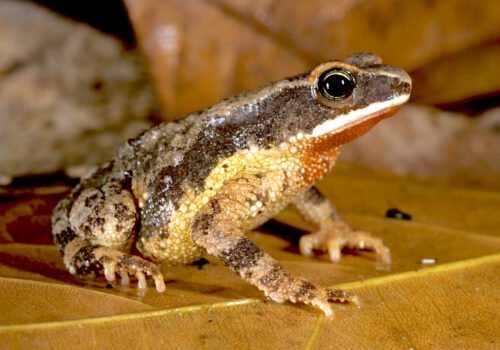
Small yet spectacular, Melanophryniscus tumifrons rarely exceeds 25 millimeters (approximately one inch) in length, categorizing it among some of the smaller Bufonidae members. Its dorsal surface is vividly patterned with contrasting colors, presenting a mosaic of black interspersed with brilliant reds, yellows, oranges, and sometimes hints of green. This mosaic-like patterning is both visually delightful and serves a critical adaptive function — aposematic coloration that boldly proclaims the potent toxins this small amphibian carries.
The skin texture contributes further to the animal’s uniqueness: endowed with glandular warts and bumps, these morphological traits house secretions of alkaloid toxins, skillfully deterring potential predators. Interesting adaptations such as enlarged parotoid glands on the neck produce potent chemical deterrents capable of repelling larger predators such as snakes, mammals, and birds, allowing this tiny creature to thrive despite its small stature.
Evolution has enabled Melanophryniscus tumifrons to exploit its bright coloration and toxicity, successfully turning an otherwise vulnerable small amphibian into a formidable survivor in the natural world.
Behavior and Life Cycle#
Feeding and Foraging Habits#
Like its fellow amphibians, Melanophryniscus tumifrons demonstrates insectivorous diets, consuming smaller arthropods such as ants, mites, small beetles, springtails, and even spiders that traverse their leaf-litter habitats. Employing excellent vision and opportunistic hunting strategies, this toadlet can accurately snap up prey with remarkable speed and efficiency, essential traits since its prey choices tend to move quickly and unpredictably through the leaf litter.
Interestingly, the consumption of specific insects—particularly ants—plays a significant role in determining levels of alkaloid toxins present in Melanophryniscus tumifrons’ skin, showcasing the complex web between food sources, toxicity, and predator interactions.
Breeding and Reproductive Strategies#
During rainy seasons, temporary pools become loud choruses of calling males, producing distinctive, nasal vocalizations aimed at attracting females. Females, selected carefully by males, deposit their eggs in shallow pools, contributing to bursts of aquatic life.
The tadpole phase is notably brief since ephemeral pools soon vanish. The rapid development of the tadpoles, reflect adaptation to their short-lived habitats, necessitating growth from egg to froglet swiftly, sometimes in mere days. Fully metamorphosed juveniles thereafter migrate outwards from pools, blending seamlessly into surrounding leaf litter habitats to continue their life stages on land.
Ecological Role#
The role played by Melanophryniscus tumifrons within their ecosystems is multidimensional, impacted both by their predation of many invertebrates and their status as food sources for larger organisms that have developed resistance or immunity to their toxins. These adaptive frogs contribute significantly to insect and arthropod control, serving important regulatory functions within their grassland and coastal environments.
Furthermore, the sensitivity of Melanophryniscus tumifrons to environmental change renders it a valuable bioindicator species, meaning scientists can monitor its populations to understand overall ecosystem health, water quality, and integrity of habitat.
Threats and Conservation Status#
Currently categorized as a Near Threatened species according to IUCN Red List assessments, Melanophryniscus tumifrons faces a suite of human-driven threats including habitat destruction due to agriculture, urbanization, drainage of wetlands, and climate change. Alterations in rainfall patterns and intensification of drought periods threaten the temporary pools upon which these amphibians depend.
Additionally, pollution and pesticide runoff into temporary pools and sensitive habitats create risks for the larval and adult populations. Amphibian diseases, especially chytrid fungus (Batrachochytrium dendrobatidis), have also become a concern, potentially driven by global spread and compounded by weakened immunity through environmental stressors.
Conservation measures targeted specifically at Melanophryniscus tumifrons remain limited but would ideally include habitat preservation, restoration initiatives, and the education of local communities regarding these frogs’ ecological value and protection measures.
Cultural and Scientific Significance#
Though perhaps not widely known in popular culture, Melanophryniscus tumifrons offers substantial contributions to scientific inquiry, particularly in toxinological research. Scientists explore the unique chemical defenses produced by this species, finding potential applications in medical fields, such as developments of novel analgesics or therapeutic compounds.
Additionally, local folklore occasionally attributes symbolic meanings to brightly-colored amphibians like the tumifrons toadlet, viewing them as representations of ecological balance and health indicators, subtly influencing conservation narratives within local communities.
Conclusion: A Tiny Marvel Worth Our Attention#
From its striking coloration, intricate ecological role, fascinating life cycle adaptations, and compelling conservation narrative, Melanophryniscus tumifrons proves itself to be an amphibian deserving of our understanding, appreciation, and protection. As anthropogenic pressures mount, awareness and education about fragile amphibian species such as this becomes more paramount than ever.
By learning and sharing the story of the tumifrons toadlet, we become active participants in its preservation, safeguarding not just a single species, but the vibrant ecosystems it represents. Let us ensure this tiny amphibian continues to grace Argentina’s wetlands and grasslands, a lasting reminder of nature’s intricate, delicate, and beautiful tapestry.