- Secrets of the Red-Bellied Toad: Exploring the Fascinating World of Melanophryniscus rubriventris
- Taxonomy and Classification
- Discovering Its Natural Habitat
- Physical Characteristics: A Small Jewel in Nature’s Palette
- Intriguing Behavior and Life Cycle
- An Integral Part of the Ecosystem
- Conservation Challenges and Efforts for Protection
- Cultural and Scientific Importance
- Conclusion: Preserving a Natural Wonder
Secrets of the Red-Bellied Toad: Exploring the Fascinating World of Melanophryniscus rubriventris#
Amidst the lush landscapes and hidden streams of Argentina, a small, brightly colored amphibian thrives, largely unnoticed by the world at large. Melanophryniscus rubriventris, commonly known as the Red-Bellied Toad, is a living jewel of South America, its vivid coloration and intriguing biology silently narrating a story of evolution and survival. Bearing the scientific moniker Melanophryniscus rubriventris, this species belongs to the Bufonidae family yet defies many expectations typically associated with “toads.” Whether you’re a nature enthusiast, student of biology, or conservation advocate, journey with us into the vibrant existence of this charming amphibian and discover why its survival matters to ecosystems—and to us.
Taxonomy and Classification#
Melanophryniscus rubriventris belongs to the Bufonidae family—an assemblage of anurans widely known as true toads. Within this family, the genus Melanophryniscus stands apart with its striking coloration and unique toxin-producing glands. Unlike the stereotypical dull-brown appearance often associated with toads, Melanophryniscus species dazzle observers with spectacular color contrasts. Closely related species within this fascinating genus include Melanophryniscus montevidensis and Melanophryniscus stelzneri—all of whom share the family’s noteworthy characteristic of secreting potent defensive toxins from their brightly-hued skin.
Discovering Its Natural Habitat#
Geographic Range and Distribution#
The Red-Bellied Toad is predominantly found in the temperate mountainous regions of Argentina, primarily within the provinces of Córdoba and San Luis. The altitudinal range of this species typically spans from around 800 to 1,500 meters above sea level, where humid grasslands, rocky streamsides, and seasonal wetlands create an ideal home. Fog frequently cloaks these landscapes, lending the habitat an almost mythical quality suitable for such a vividly colored creature.
Habitat Preferences#
Melanophryniscus rubriventris thrives in semi-aquatic environments encountered in humid grasslands, moist meadows, and near shallow, clear streams shaded by native vegetation. After seasonal rains, temporary pools provide critical breeding grounds where the tadpoles develop quickly before their ephemeral homes dry out. The abundant vegetation near these waterbodies offers shelter and hunting grounds, enabling a delicate balance between camouflage and visibility—essential for both predator avoidance and prey capture.
Here the toad’s existence blends seamlessly with seasonal patterns. Each rainy phase awakens a cycle of activity—feeding, breeding, and growth—followed by periods of dormancy or reduced visibility during dry spells. These cycles make the amphibian an insightful indicator species, offering subtle clues to environmental health within these fragile ecosystems.
Physical Characteristics: A Small Jewel in Nature’s Palette#
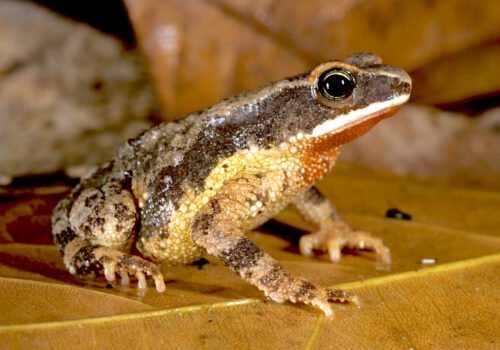
Witnessing Melanophryniscus rubriventris in its natural setting for the first time often produces gasps of admiration. Measuring roughly 2 to 3 centimeters in length, the tiny amphibian might seem diminutive at first glance, but its vivid colors are impossible to overlook. The above side of its body is boldly patterned in rich black and deep reds, while its namesake bright-red, orange, or yellow belly contrasts dramatically.
The brilliant colors serve as nature’s signal—scientifically known as aposematism—an unmistakable warning to potential predators. This luminous warning is sincere, reflecting the potent defensive toxins secreted from specialized glands throughout their skin. Predators quickly learn that such vibrant creatures represent danger and typically avoid them in future encounters, a powerful survival strategy fine-tuned by generations of natural selection.
The toad’s compact form and sturdy limbs allow adept navigation through dense vegetation and across uneven terrain. Webbed hind feet assist in swimming through shallow pools during breeding periods, but these are compact enough to facilitate terrestrial movements deftly. Their large, expressive eyes, located high on their heads, give them an excellent vantage point for spotting prey and threats alike.
Intriguing Behavior and Life Cycle#
Diet and Feeding Habits#
Melanophryniscus rubriventris adopts a generalist feeding strategy, preying primarily upon small invertebrates—ants, termites, beetles, and various insect larvae—that abound within their grassy habitats. Utilizing ambush tactics, these toads patiently await prey, their stillness interrupted only by a sudden, powerful leap accompanied by a quick snap of their sticky tongues. They consume sizable quantities of prey, often feeding abundantly during the rainy season to build reserves before lean periods.
Reproduction and Development#
For the Red-Bellied Toad, breeding is intricately tied to seasonal rains and the emergence of temporary pools. A sequence begins each year as warmer weather and heavy rainfall induce males to congregate around these ephemeral aquatic habitats, resonating in chorus with rhythmic, high-pitched calls, designed to attract receptive females.
Upon mating, females lay strings of gelatinous eggs in shallow, protected waters. The dark tadpoles hatch quickly, racing against time as their transient home progressively shrinks with evaporative forces. Remarkably adapted to accelerate development, the tadpoles swiftly complete metamorphosis, emerging as miniature versions of the adults while there is still water available. Soon thereafter, juvenile toads move onto land, taking refuge within nearby vegetation to continue their journey into adulthood.
An Integral Part of the Ecosystem#
Though small, Melanophryniscus rubriventris fulfills a vital ecological role. As predators, they regulate insect populations, controlling potential pest species and maintaining equilibrium within the local food-webs. In turn, despite their defenses, the frogs indirectly support avian and reptilian predators by contributing to ecological diversity and stability. As sensitive bioindicators, shifts in Red-Bellied Toad populations can signal broader changes occurring throughout their habitat, driven by environmental fluctuations or disturbances.
Conservation Challenges and Efforts for Protection#
Identifying Threats#
Despite their resilience and adaptability, Melanophryniscus rubriventris faces growing threats to their survival. Habitat destruction resulting from agriculture, urbanization, and infrastructure projects uproots the delicate ecosystems these species depend upon. Pollution from pesticides and herbicides contaminates breeding waters, endangering egg and tadpole survival rates. Climate change exacerbates drought conditions, reducing the availability of temporary pools vital for reproduction, further pressuring these vulnerable populations.
Conservation Status and Efforts#
In recognition of these mounting threats, the International Union for Conservation of Nature (IUCN) currently lists Melanophryniscus rubriventris as Near Threatened, highlighting the necessity for ongoing monitoring and habitat conservation initiatives. Encouragingly, local groups have begun dedicating efforts toward habitat preservation, restoration of aquatic ecosystems, and education campaigns aimed at local communities. By raising awareness of this charismatic amphibian’s ecological significance, these initiatives represent essential steps toward safeguarding its stable future.
Cultural and Scientific Importance#
The vibrant coloration and toxin production of Melanophryniscus rubriventris have long intrigued researchers, leading to scientific studies examining the chemical properties and medicinal potential of their toxins. Such substances often contribute significantly to biomedical understanding, promising avenues for developing new treatments or therapeutic solutions.
Culturally, these vividly colored toads captivate both local communities and visitors alike, sometimes assuming symbolic importance reflecting regional heritage or folklore traditions. In an increasingly urbanized world, species like Melanophryniscus rubriventris foster deeper connections between people and the natural environments they share, underscoring the cultural value inherent in biodiversity preservation.
Conclusion: Preserving a Natural Wonder#
In the verdant heights and mist-laden landscapes of Argentina dwells Melanophryniscus rubriventris, an amphibious marvel whose vibrant colors and fascinating behavioral adaptations illuminate the intricate beauty of natural biodiversity. While seemingly humble, these frogs play irreplaceable roles in their ecosystems, embodying the delicate balance of life’s interconnectedness.
As their habitats suffer mounting pressure from human activities and climatic impacts, each of us possesses the power—and responsibility—to ensure this stunning creature thrives for generations to come. By championing habitat conservation, supporting local initiatives, and fostering greater understanding of this singular amphibian, we can collectively safeguard the precious existence of Melanophryniscus rubriventris, preserving the beauty, fascination, and vital ecological role they represent in our ever-changing world.