Exploring the Enigmatic Melanophryniscus peritus: The Jewel of South American Wetlands#
Hidden within the lush grasslands and humid marshes of South America, a small yet vibrant figure hops through damp foliage, signaling life and vitality beneath its tiny feet. Meet the Melanophryniscus peritus, commonly referred to as the Uruguayan Redbelly Toad—a marvel of vivid coloration, surprising adaptations, and ecological importance. Despite its small stature, this distinctively marked toad plays an outsized role within its ecosystem and captures the imagination of both scientists and nature enthusiasts alike. From its breathtaking colors that warn predators of its potent toxicity to its unique breeding habits in ephemeral pools, this amphibian embodies the profound beauty and fragility of our planet’s biodiversity. Join us on a journey through South America’s wetlands and grasslands as we uncover the fascinating story of Melanophryniscus peritus.
Taxonomy and Classification#
Melanophryniscus peritus resides within the diverse amphibian family Bufonidae, which comprises all species commonly referred to as “true toads.” Within this family, the genus Melanophryniscus stands out due to its remarkable vivid coloration patterns, often boldly contrasting black with bright reds, yellows, and oranges, signaling their toxic nature to potential predators. Described scientifically by Caramaschi and Cruz in 2011, Melanophryniscus peritus is one of the newer recognized members of this intriguing genus, which currently encompasses nearly 30 known species spread throughout southeastern Brazil, Uruguay, Paraguay, and northern Argentina.
Closely related species within the genus—including Melanophryniscus montevidensis, Melanophryniscus cambaraensis, and others—provide fascinating context for researchers seeking to understand evolutionary strategies among small, toxin-producing amphibians living in similar ecosystems with subtle environmental variances.
Natural Habitat#
Geographic Range and Distribution#
Melanophryniscus peritus is predominantly found in certain parts of Uruguay and southern Brazil, thriving specifically within the unique ecosystems of Rio Grande do Sul, Brazil, and regions of northern Uruguay. These cherished amphibians gravitate towards open grasslands, wetlands, marshes, and ephemeral water bodies created seasonally through rainfall, highlighting their evolutionary dependence on delicate hydrological patterns. Their habitats sit at moderate elevations and usually feature gently undulating landscapes dotted with occasional shrubs, grasses, and clusters of temporary water pools—perfect environments for breeding and feeding.
Habitat Preferences and Ecosystem Interactions#
Unlike many amphibians that favor continuous water bodies, Melanophryniscus peritus has adapted exceptionally well to ephemeral habitats, temporary ponds, and marshes that fill with water during rainy seasons and dry up entirely during drier periods. These temporary pools and wetlands support the toads’ breeding cycles and larval development. Captivatingly, this species actively seeks shallow depressions, pools collecting rainwater, and marshy areas scattered with emergent vegetation like grasses, sedges, and aquatic plants, which not only provide shelter but also food and breeding habitats essential for sustaining their populations.
These unique habitats are inherently fragile—small disturbances can drastically impact their suitability for the amphibian’s survival. The toad’s adaptation to these environmental conditions highlights its remarkable ecological specialization, but also renders it vulnerable to significant threats like habitat degradation and climate change-related drought.
Physical Characteristics#
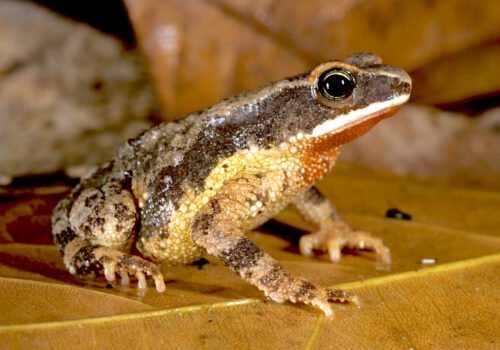
A true jewel of South American grasslands, Melanophryniscus peritus captivates admirers immediately with its striking coloration. Generally small-sized, adults measure in at just under 25 millimeters in length, making them delightfully petite. Their smoothly rounded bodies feature predominantly deep black or dark-brown dorsal coloration juxtaposed strikingly with vividly colorful patterns of red, orange, and yellow on their bellies and limbs—hence the common name “Redbelly Toad.” These color combinations aren’t merely visually appealing; they’re core to their survival strategy.
This vibrant palette functions as an unmistakable aposematic warning—indicating to potential predators their potent chemical defenses. Their skin secretes toxic alkaloids synthesized from prey items they consume, particularly ants and mites. Such toxins discourage predation, ensuring fewer natural predators despite their appealing appearance. Additionally, subtle morphological features enhance their environmental adaptability. Short, powerful limbs enable quick movement across damp terrain; the slightly rough texture of their skin assists in moisture retention; their impressive yet tiny lungs are perfectly adapted for oxygen exchange in humid, oxygen-rich marsh habitats.
Behavior and Life Cycle#
Dietary Habits and Hunting Behavior#
Melanophryniscus peritus primarily feeds on small arthropods, predominantly ants, mites, beetles, and spiders abundant within their grassy habitats. Their hunting technique is relatively straightforward yet fascinating to observe. Exhibiting heightened patience and stealth, these tiny amphibians position themselves in optimal prey-rich spots within grass and foliage, waiting motionlessly for unsuspecting insects to come within striking distance. Once prey approaches within range, their sticky tongues flick out with remarkable speed and precision, capturing and swiftly consuming the insect.
Breeding and Developmental Strategies#
The onset of rainy seasons triggers an instinctual drive within Melanophryniscus peritus to seek ephemeral pools suitable for breeding. Males congregate around these pools, broadcasting high-pitched mating calls that ripple through humid air, captivating the ears of listening females. The acoustic chorus, a defining event of their brief breeding season, is not only an enchanting moment in nature but also an ecological signal of the ecosystem’s health.
Following successful pairing, females deposit clusters of small eggs onto submerged vegetation or directly into shallow water. Tadpoles emerge shortly after and must rapidly undergo their metamorphosis. Given the transient nature of their aquatic habitats, tadpoles develop quickly, relying on abundant food sources like algae and detritus. Within weeks, delicate limbs form, tails recede, and metamorphosis completes rapidly—enabling the toadlets’ transition onto land before water pools dry completely. This fast-paced life cycle illustrates the incredible adaptive specialization linked to ephemeral habitats.
Ecological Role#
Though small in size, Melanophryniscus peritus accomplishes significant ecological tasks within its habitat. Primarily functioning as predator and prey, these amphibians help regulate insect populations, particularly ants and mites, thus contributing indirectly to the ecological balance of their grassland homes and aiding vegetation health.
Simultaneously, their toxic nature influences predator behavior. Birds, snakes, and larger mammals in their habitats learn avoidance through toxic experiences, indirectly shaping these predator-prey dynamics. Moreover, their sensitivity to environmental changes positions them as excellent bioindicator species. Scientists studying local habitat health closely monitor populations of Melanophryniscus peritus, recognizing that changes in their population, distribution, or health often signify larger environmental issues at play.
Threats and Conservation Status#
Despite their ecological importance and adaptations, Melanophryniscus peritus faces several notable threats. Habitat degradation—caused predominantly by agricultural expansion, urbanization, and wetland drainage—represents the leading challenge. The fragile balance needed for their ephemeral breeding habitats can be easily disturbed by human activities, reducing available habitat considerably.
Another looming challenge is climate change, resulting in increasingly inconsistent rainfall patterns and prolonged droughts. Such climatic shifts severely compromise the existence of ephemeral pools necessary for reproduction. Pollution and pesticide runoff from agriculture further compound these threats, significantly affecting health, breeding success, and overall survival.
Currently classified as “Data Deficient” by the IUCN due to limited available information regarding exact population trends, ongoing research emphasizes the critical importance of habitat conservation and continuous population monitoring. Collaborative efforts, including habitat restoration, public education initiatives, and scientific studies to identify conservation priorities, are essential to safeguarding Melanophryniscus peritus into the future.
Cultural and Scientific Significance#
Local indigenous cultures in southern Brazil and Uruguay regard many brightly colored frogs with respect and awe, associating them symbolically with fertility, renewal, and rain. Although specific traditional beliefs surrounding Melanophryniscus peritus remain undocumented, similar species within the genus are often viewed with cultural reverence.
Scientifically, these toads provide critical insights into the evolution of defensive toxins in amphibians, ecological adaptation to transient habitats, and the impacts of environmental change. Their toxins continue to fuel medical research aimed at understanding complex biochemical pathways potentially useful in pharmacology.
Conclusion#
Melanophryniscus peritus symbolizes the delicate harmony between species and habitat, a shining example of evolutionary wonder and ecological specialization. As dedicated guardians of Earth’s biodiversity, we share a responsibility to protect these charismatic toads and their remarkably specific, yet vulnerable homes. Every effort, no matter how small, counts. Learning more, spreading awareness, and actively supporting wetland habitat conservation are essential steps toward ensuring the continued existence and flourishing of Melanophryniscus peritus—the colorful gems of South America’s fragile grasslands and wetlands.