- Meet Melanophryniscus milanoi: The Remarkable Jewel of South America's Wetlands
- Taxonomy and Classification: Understanding Melanophryniscus milanoi
- Natural Habitat: Where the Red-Bellied Jewel Resides
- Physical Characteristics: The Charm and Elegance of Milan's Red-Bellied Toad
- Behavior and Life Cycle: A Look at Their Enchanting Lives
- Ecological Role: Stewards of Healthy Ecosystems
- Threats and Conservation: Safeguarding the Red-Bellied Jewel
- Cultural and Scientific Significance
- Conclusion: A Call to Action for Our Tiny Red-Bellied Guardians
Meet Melanophryniscus milanoi: The Remarkable Jewel of South America’s Wetlands#
In a hidden corner of South America, nestled within the lush grasslands and moisture-rich habitats of Argentina, there thrives a tiny but extraordinary creature—a vibrant frog whose very existence underpins the beauty, fragility, and urgent call for conservation inherent in our natural world. Meet Melanophryniscus milanoi, an exquisitely colored amphibian member of the Bufonidae family, whose discovery in 2015 inspired awe among scientists and naturalists alike. Despite its recent entrance into scientific literature, this living jewel quickly captivated hearts worldwide, becoming not merely a fascinating subject of herpetology but also a profound symbol of environmental sensitivity and resilience.
This little amphibian holds more than colorful skin or peculiar habits. Melanophryniscus milanoi stands as a sentinel species, quietly warning us about the profound impacts of habitat loss, pollution, and climate instability—pressures that today threaten so many ecosystems around the globe. But before we delve into conservation concerns, let us first journey into the remarkable life, story, and secrets of the beautiful creature known as the Milan’s Red-bellied Toad.
Taxonomy and Classification: Understanding Melanophryniscus milanoi#
Melanophryniscus milanoi belongs to the diverse toad family Bufonidae, within a particularly fascinating genus known as Melanophryniscus. This genus comprises small-bodied, brightly patterned, predominantly toxic frogs often referred to colloquially as “red-bellied toads,” or “poison frogs,” owing to their vibrant belly markings and toxic skin secretions.
Taxonomically speaking, these amphibians reflect evolution’s artistry in diversity. An essential characteristic of the genus is its biodiverse distribution throughout southern Brazil, Argentina, Paraguay, and Uruguay. Discovered just a few years ago, in 2015 by Baldo et al., Melanophryniscus milanoi quickly gained recognition as a distinct species due to morphological, colorational, genetic, and ecological evidence, differing notably from its close relative, Melanophryniscus tumifrons and others within the genus. Named after the Milan family in gratitude for their long-standing support for biodiversity conservation efforts, the taxonomy of this frog reflects not only biological discovery but heartfelt recognition and gratitude.
Natural Habitat: Where the Red-Bellied Jewel Resides#
The species primarily inhabits Argentina’s Mesopotamic savanna, a distinctive grassland and seasonal wetland ecosystem defined by its intricate mosaic of grasses, reeds, shrubs, and ephemeral pools. Their specific habitat—characterized by temporary ponds, shallow marshes, and seasonally moist grasslands—is crucial, shaping virtually every aspect of this creature’s ecology and way of life.
A Land Governed by Water and Seasonality#
The Mesopotamic savanna’s intense seasonal fluctuations between dry and rainy periods govern the very rhythm of existence for M. milanoi. In the wet season, shallow pools and seasonal marshes fill swiftly, awakening a chorus of amphibian life. These temporary aquatic environments provide essential breeding grounds, replenishing life annually. During dryer months, these vibrant amphibians adapt by retreating under leaf litter, beneath stones, or within moist cracks—patiently awaiting nature’s next deluge.
Remarkably adapted to this dynamic environment, the red-bellied toad exemplifies how amphibians act as sensitive barometers of ecological health, revealing much about the subtle shifts occurring within their habitats. Degradation, drought intensification due to climate change, and the draining of wetlands cast dark clouds over the prospects of survival for these colorful sentinels.
Physical Characteristics: The Charm and Elegance of Milan’s Red-Bellied Toad#
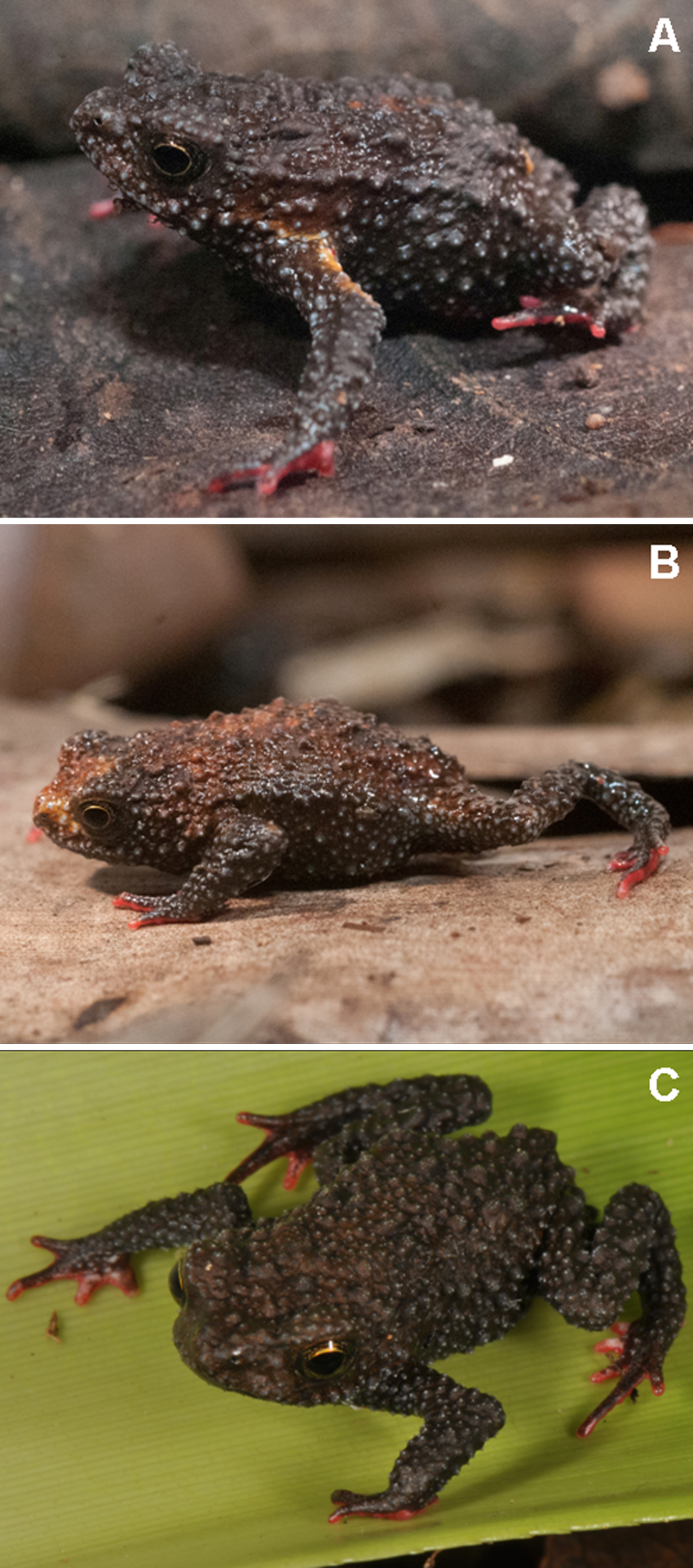
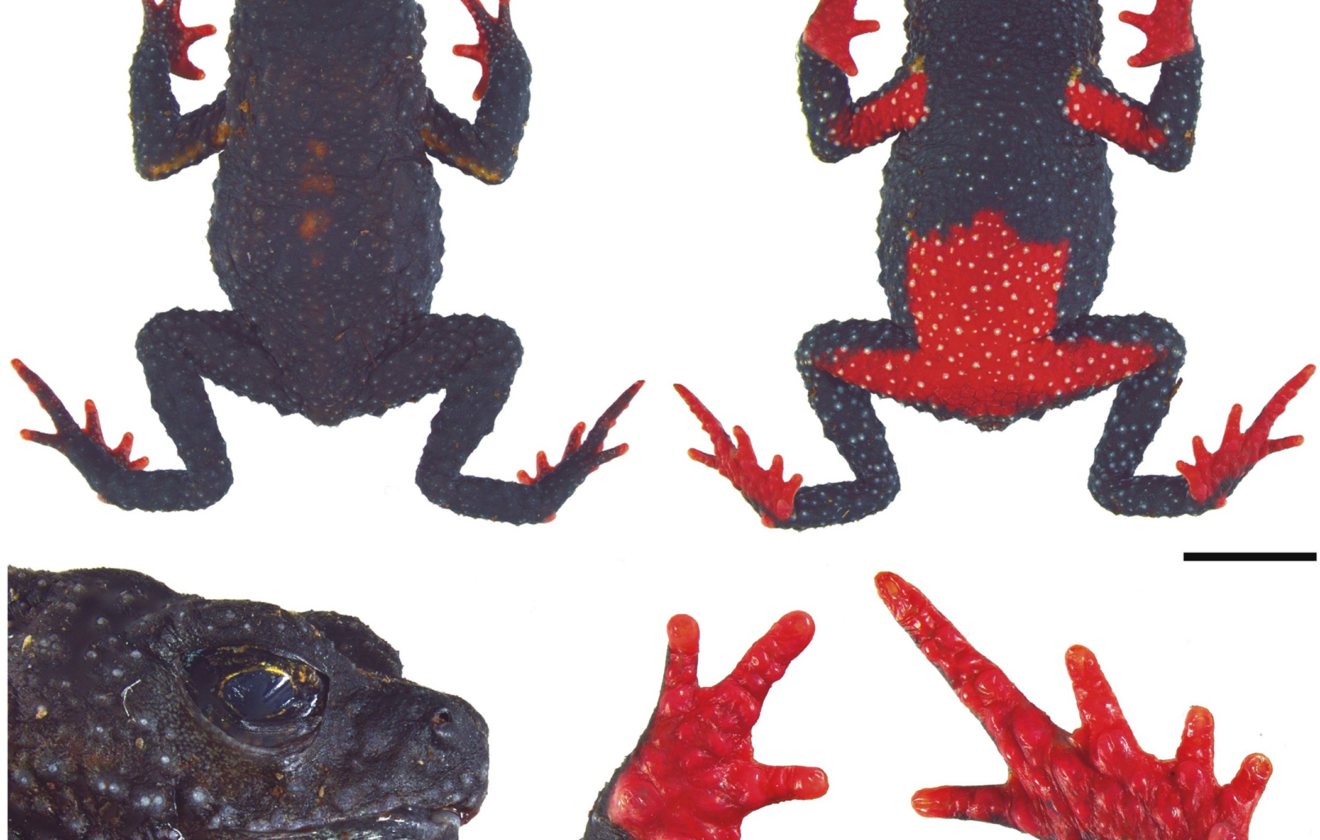
If beauty alone could safeguard an animal’s future, then Melanophryniscus milanoi would undoubtedly have little to fear. Compact, stout yet delicately proportioned, this species reaches an average length between 20 to 24 mm—roughly matching the size of a thumbnail. But what it lacks in size, it more than compensates in vibrant coloration and striking patterns that provide a crucial evolutionary edge.
A Mosaic of Marvels: Coloration and Markings#
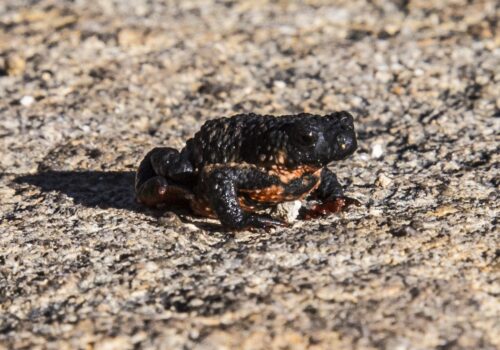
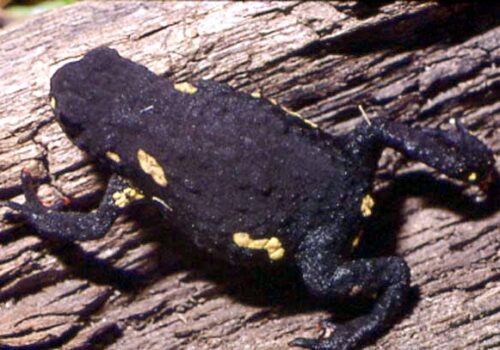
The dorsal skin of this intricate toad ranges from deep blacks to subtle earth tones, often interwoven gracefully with contrasting bright yellow, orange, or red patches. Their ventral surfaces glow vividly with rich hues of red or orange, providing them with their iconic, common designation: Milan’s Red-bellied Toad.
This distinct, aposematic coloration serves as a conspicuous warning to would-be predators. Tiny glands embedded throughout their skin secrete potent alkaloid toxins, deterring predators from making M. milanoi their next snack. Evolutionarily, this brilliant adaptation speaks volumes—color and chemical defenses harmonizing beautifully, safeguarding their survival within a dangerous natural world.
Behavior and Life Cycle: A Look at Their Enchanting Lives#
Like many amphibians, the life and behavior of Melanophryniscus milanoi are intimately intertwined with water. After seasonal rains awaken isolated pockets of moisture and pools visible across the landscape, these frogs fervently gather, each one answering an ancient call—breeding season.
From Egg to Tadpole: The Cycle of Life#
Male frogs position themselves vocally around temporary pools, employing clear resonant calls to attract females. A gentle chorus rises alongside evening moisture, echoing distinctively across the grassy savannas. Encounters lead soon after to amplexus—an embrace wherein females deposit clusters of gelatinous eggs into temporary pools that soon swarm with tiny tadpoles. These tadpoles rely upon rapid development, racing against drying water supplies to metamorphose into independent juveniles within several short weeks. Their rapid growth and swift life cycles are beautiful testaments to evolutionary adaptation in watery realms defined mostly by uncertainty.
Diet and Predation#
Adult frogs possess a diet predominantly composed of ants, beetles, termites, and small invertebrates that traverse their habitat. Their sticky tongues strike with incredible precision, allowing them to feed efficiently within their competitive ecosystems. Yet their duty extends beyond merely feeding themselves. As consumers and prey alike, they become integral to maintaining the natural balance, ensuring the health and vibrancy of the ecosystems they call home.
Ecological Role: Stewards of Healthy Ecosystems#
Due to their sensitivity toward environmental change, amphibians such as Melanophryniscus milanoi serve an indispensable ecological function as bioindicators. Their permeable skin quickly absorbs toxins, and their lifecycle depends on healthy aquatic systems—making these vibrant creatures vital contributors in monitoring habitat quality and environmental stability.
Equally, they control insect populations, moderating potentially harmful species that could proliferate uncontrollably should amphibian populations collapse. These tiny amphibians, therefore, perform remarkably big jobs, quietly safeguarding biodiversity in ways far more critical than their diminutive stature might imply.
Threats and Conservation: Safeguarding the Red-Bellied Jewel#
Sadly, the news surrounding many frog species today is uncomfortably grim, and Melanophryniscus milanoi is no exception. Accelerating habitat destruction driven by agricultural expansion, contamination by agrochemicals, climate change-induced drought, and increased fragmentation of the landscape create immense stress, pushing populations ever more perilously to extinction’s edge.
Conservation Measures and Outlook#
Though currently assessed by the IUCN as “Data Deficient” due to limited comprehensive studies, preliminary findings give scientists reasonable cause for concern. Imminent conservation actions should focus on detailed ecological surveys, habitat protection, and educational programs among local communities and stakeholders—initiative efforts critical in securing the toad’s future.
Cultural and Scientific Significance#
In addition to ecological importance, this frog carries symbolic resonance, representing nature’s beauty and fragility. Scientifically, it opened new avenues for exploration in amphibian evolution, adaptation, and toxicology studies, adding significantly to herpetological knowledge.
Conclusion: A Call to Action for Our Tiny Red-Bellied Guardians#
In encountering Melanophryniscus milanoi, we embrace an illuminating perspective: even small creatures wield tremendous ecological and symbolic significance. Understanding their enchanting biology, appreciating their ecological roles, and recognizing their conservation plight should inspire not passive admiration but proactive involvement. Championing their habitats, supporting scientific research, and promoting public awareness becomes vitally essential.
Let’s pledge to safeguard these small but magnificent ambassadors of biodiversity. For through their survival and vibrancy, nature can indeed, in its quiet but powerful language, remind us deeply of our intertwined destinies and responsibilities as stewards of our shared planet.