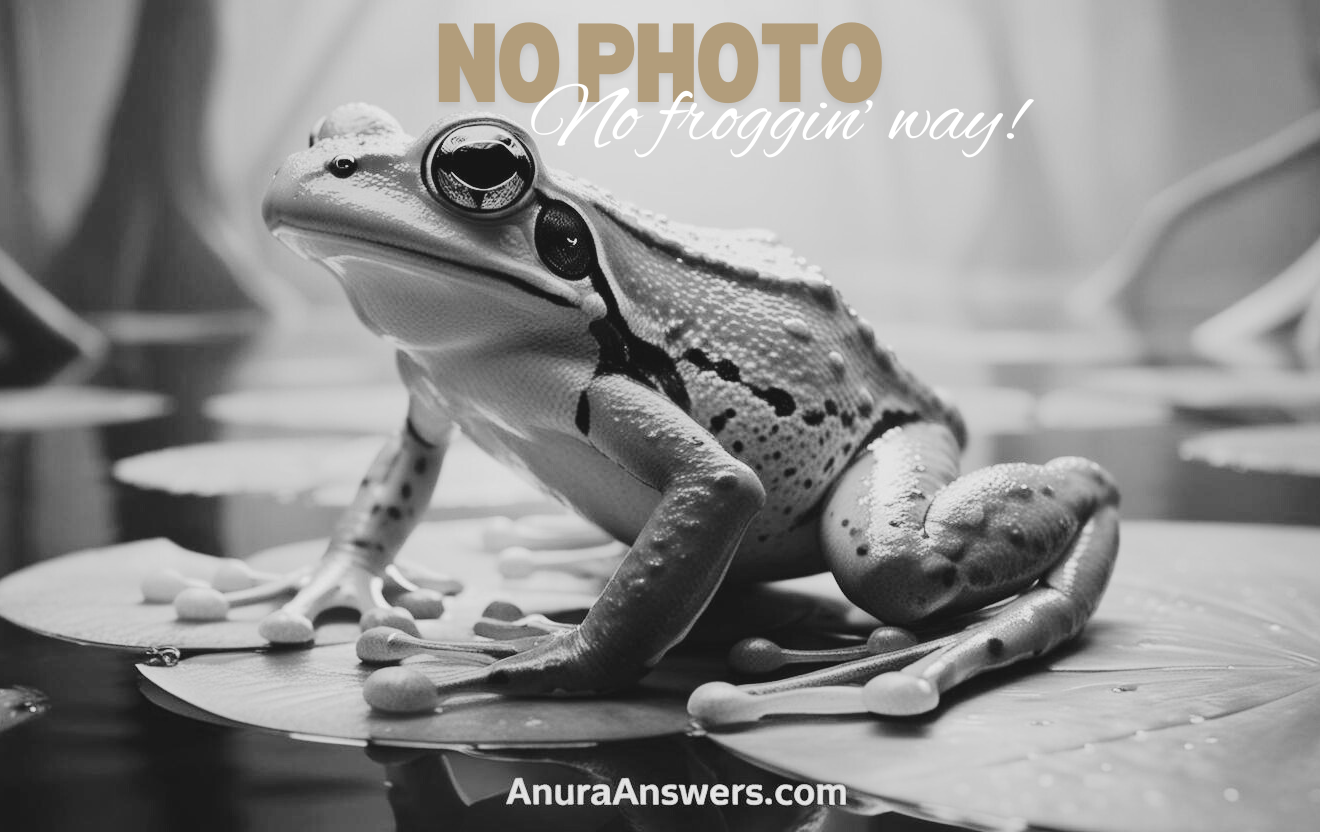
- Melanophryniscus macrogranulosus: Discovering the Remarkable Granular Toad of South America
Melanophryniscus macrogranulosus: Discovering the Remarkable Granular Toad of South America#
In the misty subtropical forests of southern Brazil, nestled among ferns, mosses, and ancient rock formations, exists a creature as intriguing as it is rare. The Melanophryniscus macrogranulosus, affectionately known as the Granular Toad, thrives in secret pockets of habitat that many have overlooked. This small, vibrantly marked amphibian, part of the Bufonidae family, is a testament to nature’s evolutionary creativity. Renowned among herpetologists and conservationists for its distinctive characteristics, elusive behaviors, and precarious conservation status, this tiny yet captivating frog tells a grand story of ecological balance, adaptation, and vulnerability.
Taxonomy and Classification#
Melanophryniscus macrogranulosus belongs to the Bufonidae, a diverse family comprising over 600 species of toads recognizable by their warty textures and rounded features. Specifically falling under the genus Melanophryniscus, macrogranulosus shares lineage with several closely related species known collectively as South American Redbelly Toads. This genus is highly revered among naturalists for its vibrant colors, potent toxins, and adaptability to specific and often isolated ecological niches.
First described scientifically by Braun in 1973, the Granular Toad derived its distinctive species name—”macrogranulosus,” meaning “large granular”—from its uniquely textured skin. These coarse, granular bumps aren’t merely superficial adornments; they have evolved as specialized glands essential for its survival strategies, offering critical protection against predators through powerful skin toxins.
Natural Habitat#
Geographical Range and Distribution#
The Granular Toad’s known habitat spans a very restricted region within the Brazilian states of Rio Grande do Sul and parts of southern Santa Catarina. This amphibian’s distribution is particularly limited, confined to altitudinal grasslands, moist rocky enclave habitats bordering subtropical forests, and wetlands linked to the Atlantic Forest biome. Such ecosystems—often characterized by humidity, cooler microclimates, and dense vegetation—offer ideal conditions necessary for this amphibian’s survival.
A Fragile and Specialized Environment#
Unlike some more broadly distributed relatives, Melanophryniscus macrogranulosus demands highly specific microhabitats for breeding and foraging. The toad predominantly occurs near temporary pools, slow-moving streams, and seepages amidst exposed rocky terrain and marshy grasslands. Their close reliance on these temporary freshwater habitats, which form seasonally after rainfall, makes this species particularly susceptible to habitat loss and climate-induced shifts in precipitation patterns.
Physical Characteristics#
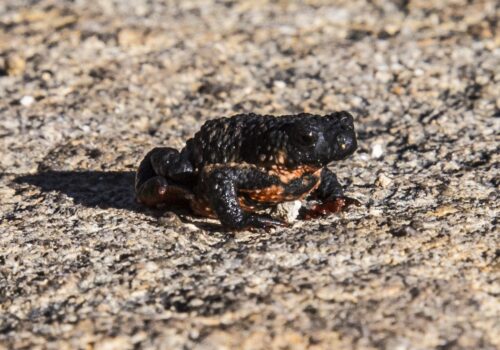
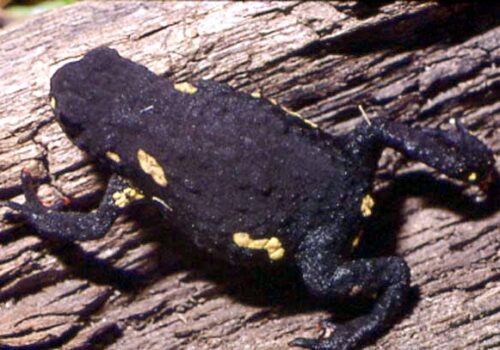
Encountering the Granular Toad for the first time could be considered a visual indulgence. Relatively diminutive, measuring around 2 to 4 centimeters in length during adulthood, these toads command immediate attention with their striking color variations, usually a beautiful mosaic of vivid reds, bright yellows, splashes of orange, and deep, contrasting blacks. It is this combination of coloration and texture that distinguishes Melanophryniscus macrogranulosus from other toads. Its granular lumps—spotted effectively along its dorsal body surface—produce alkaloids, chemical compounds that offer protection from predation.
This vibrant coloration is a textbook example of aposematism—a biological adaptation in which conspicuous markings signal danger or unpalatability to potential predators. Evolution has thus shaped this toad to leverage a powerful chemical defense, its visual presence loudly communicating potential toxicity.
Behavior and Life Cycle#
Diet and Hunting Strategies#
The Granular Toad is a highly adapted insectivore, displaying a keen preference for small insects and arthropods like ants, beetles, tiny spiders, and mites. It employs the classic strategy utilized by many other amphibians, patiently waiting to ambush prey, a method suited to their moist and sheltered habitats. These toads possess excellent camouflage despite their brilliant coloring, making clever use of leaf litter, moss-covered stones, or patches of vegetation to effectively disguise their presence before striking swiftly and accurately.
Mating Calls and Breeding Behavior#
Beneath the cover of rainy nights between spring and early summer, groups of Granular Toads convene at breeding sites. Male Melanophryniscus macrogranulosus advertise their presence with soft, rhythmic vocalizations. These short, insect-like calls resonate softly from abundant moist vegetation near shallow pools of freshly deposited rainwater. The females, responding to these gentle croaks, approach the males to initiate amplectic breeding.
Reproduction and Tadpole Development#
After successful mating, females deposit clusters of eggs anchored to underwater vegetation or directly onto submerged rocky surfaces. In merely a matter of days, tiny black tadpoles hatch from these gelatinous eggs, swimming freely in the temporary pools. The ephemeral nature of their watery nurseries places definitive time constraints on their developmental phase, and within approximately one month, these tadpoles metamorphose into small juvenile toads poised to venture onto dry land, initiating the next delicate chapter of their often-hidden lives.
Ecological Role#
Melanophryniscus macrogranulosus plays a critical ecological role beyond its size and stature. Serving simultaneously as both a predator and prey, it embodies and maintains an essential position within the food web. Through regulating insects and arthropod populations, it indirectly supports the stability and health of local vegetation.
On the flip side, their tadpoles and juveniles provide nutrition to a diverse range of terrestrial and semi-aquatic predators. Bird species, reptiles, and, occasionally, larger amphibians all incorporate these tiny amphibian meals into their diets. Moreover, the presence—or absence—of these toads reflects broader environmental health, acting as indicators of ecosystem vitality.
Threats and Conservation Status#
Current Conservation Challenges#
Despite their resilience against predation due to their chemically potent defenses, the Granular Toad finds itself increasingly threatened by external pressures. The detrimental effects of habitat destruction stemming primarily from agriculture, logging, urbanization, and infrastructure development have significantly reduced available habitats.
Additionally, global climate change escalates these threats by altering rainfall patterns, undercutting their particular requirement for seasonally forming breeding pools. Moreover, pesticide runoff from nearby agricultural land contaminates waterways critical to their reproduction, threatening both egg viability and tadpole survival.
International Response and Conservation Status#
Recognizing its vulnerability, the International Union for Conservation of Nature (IUCN) classifies Melanophryniscus macrogranulosus currently as “Endangered.” Conservation authorities in Brazil and international research groups strive toward preserving these unique microhabitats, effectively integrating environmental education, community engagement, and legal protection measures within regional conservation strategies.
Cultural and Scientific Significance#
While the Granular Toad may not command widespread cultural mythos like larger, more charismatic mammalian or avian species, it is gaining recognition among South American Indigenous communities and local populations. Their vibrant appearance often sets them apart somewhat mystically—small, vividly colored bringers of seasonal rain, a symbolic bridge between nature’s cycles and humanity.
Scientifically, research into the potent alkaloids produced by their skin glands has provided valuable insights for medical and pharmaceutical applications, including potential developments of novel compounds beneficial in drug discovery. Such revelations hold promise not only for medicine but also in highlighting the intrinsic value of seemingly obscure species.
Conclusion: Protecting the Granular Toad and Its Realm#
The Granular Toad (Melanophryniscus macrogranulosus), small yet astonishingly complex, underscores the importance of conserving even the tiniest niches within our vast ecosystems. It stands as a vivid reminder of how specialized and fragile life truly is, dependent upon subtle ecological balances that mankind holds power both to safeguard and to disturb.
Join the effort to preserve the habitats of this vibrant amphibian—and countless others sharing its space—by supporting local and global conservation projects, advocating sustainable land practices, and deepening understanding of this extraordinary planet we all share. We must recognize that safeguarding small wonders like the Granular Toad is ultimately a profound act of self-preservation, deeply enriching our common humanity by caring for the incredibly diverse tapestry of life around us.