- Melanophryniscus langonei: Discovering the Secrets of an Enigmatic Amphibian
- Taxonomy and Classification: A Little Frog, a Complex Story
- Natural Habitat: Deep Mysteries Beneath Forest Canopies
- Physical Characteristics: Striking Colors for Survival
- Behavior and Life Cycle: A Subtle Life Beneath Leaves
- Ecological Role: Small but Significant
- Threats and Conservation Status: Facing an Uncertain Future
- Cultural and Scientific Significance: Amphibian Ambassadors of the Forest
- Conclusion: Championing the Secretive Wonders of Amphibian Life
Melanophryniscus langonei: Discovering the Secrets of an Enigmatic Amphibian#
Amongst the leafy exuberance and hidden trails of South America’s subtropical habitats, an extraordinary tale unfolds—one involving an amphibian few have encountered. This narrative belongs to Melanophryniscus langonei, a small but quietly captivating frog perhaps unknown to many, but which plays an unexpectedly significant role in its ecosystem. With its striking coloration, specialized habitat requirements, and fascinating behaviors, this diminutive species symbolizes both the richness and fragility of its subtropical domain.
Named in honor of distinguished Uruguayan herpetologist José Langone, Melanophryniscus langonei belongs to a group often referred to colloquially as “redbelly toads.” Despite its obscure status outside specialized circles, its rarity and ecological sensitivity make understanding and preserving this frog an urgent conservation priority.
Taxonomy and Classification: A Little Frog, a Complex Story#
Belonging to the family Bufonidae, renowned for its diversity of toads with varying degrees of toxicity and unique behaviors, Melanophryniscus langonei finds itself comfortably nestled within the genus Melanophryniscus. This genus, characterized by colorful, tiny frogs adapted to a humid lifestyle amidst leaf litter and saturated forest floors, includes some of the most charismatic and ecologically sensitive amphibians of South America.
Melanophryniscus langonei is closely related to other vibrantly colored species within its genus, a group recognized by amphibian experts as vital bioindicators. Its taxonomic classification is crucially linked not only to distinguishing subtle physical differences but also to appreciating its isolation as a unique evolutionary lineage adapted perfectly to its environmental niche.
Natural Habitat: Deep Mysteries Beneath Forest Canopies#
Hidden away in regions of southern Brazil and Uruguay, specifically in the coastal subtropical rainforests of the Atlantic Forest biome, Melanophryniscus langonei inhabits moist, shaded microhabitats characterized by dense foliage, leaf litter, and proximity to small streams. Amidst these humid corridors, where mist dapples leaves in patterns of ephemeral beauty, the amphibians await quietly, integrating seamlessly into the mosaic floor of their lush environment.
This species’ preference for habitat tends toward humid lowlands and rocky outcrops near forest streams, indicating a vital link between subtle hydrological regimes and forest vegetation. Finding this elusive creature in the wilderness requires patience and luck, owing to its cryptic habits and diminutive size. Conservationists underscore the crucial necessity to preserve these microhabitats, as drastically altered land uses pose profound threats for habitat specialists like Melanophryniscus langonei.
Physical Characteristics: Striking Colors for Survival#
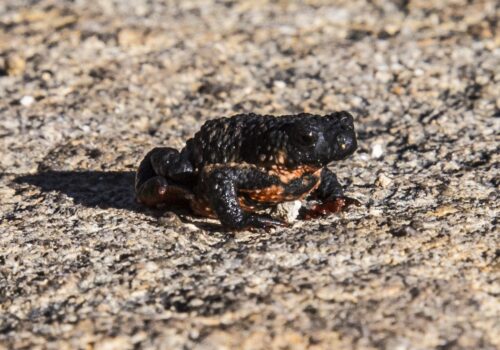
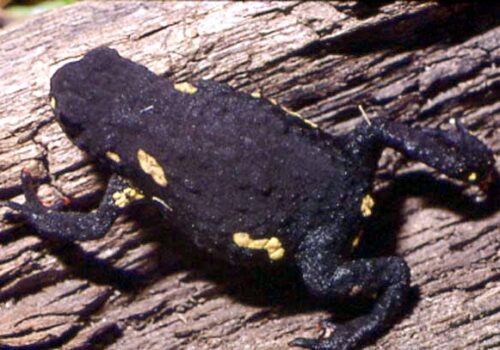
Possessing appearances that are as stunning as they are functionally adapted, Melanophryniscus langonei immediately commands one’s attention due to its vivid color palette. Typically measuring just around 2 centimeters in adult length, this amphibian is markedly small, yet impresses instantly due to its bright splashes of coloration.
Contrary to what might seem an aesthetic indulgence, vibrant red and orange markings scattered across a predominantly dark dorsal and black ventral body surface perform crucial roles in survival. These dazzling hues function as aposematic warnings—immediate visual cautions signaling to predators that this tiny amphibian harbors potent alkaloid toxins within its skin glands. Such vividness serves as biological insurance, ensuring predators learn vividly dangerous lessons from attempted predation.
Melanophryniscus langonei’s skin texture is granular, scattered with small glandular protrusions producing alkaloid toxins, acquired through dietary preferences of certain arthropods like ants and mites. This interconnected diet and toxin mimicry not only establish an evolutionary advantage but also highlight the fragile interdependence between biodiversity and ecological integrity.
Behavior and Life Cycle: A Subtle Life Beneath Leaves#
Life within forest leaf litter shows an amphibian adapted expertly to elusive behavior. Melanophryniscus langonei employs cryptic habits, remaining still and hidden during daylight hours and emerging quietly amid the twilight shadows for feeding and reproductive activities. Primarily insectivorous, it stalks ants, mites, termites, and small arthropods using stealth and agile responses rather than sheer speed or strength.
Reproduction and Parental Strategies#
The arrival of rainy, humid seasons signals breeding. During these richly humid nights, males vocalize distinctively soft, brief calls to attract mates. Unlike the powerful choruses of larger amphibians, these calls deemphasize volume in favor of subtlety, matching their discrete behavior. Females lay small clusters of eggs deposited discreetly in shallow temporary breeding pools or watery depressions hidden beneath vegetation.
Tadpoles develop rapidly, as ephemeral breeding habitats necessitate rapid maturity before water resources vanish in the drier months. The survival of offspring thus intricately threads through environmental balance, with even slight alterations to seasonal cycles markedly affecting reproductive success.
Ecological Role: Small but Significant#
In forests where each life form contributes delicately arranged pieces within the ecosystem puzzle, the role of Melanophryniscus langonei emerges clearly as both predator and prey. Feeding primarily on arthropods, this frog helps control insects populations that could otherwise explode unchecked and disrupt forest ecosystems.
Conversely, while protected by warning colors, juveniles or weaker individuals inevitably serve as prey to certain adapted predators equipped—and brave enough—to deal with their toxins. Birds, in particular, with specialized predation strategies, occasionally include redbelly toads in their diet. Consequently, Melanophryniscus langonei occupies a noteworthy position, inextricably woven into the fabrics of food webs and cycles of energy within its subtropical range.
Threats and Conservation Status: Facing an Uncertain Future#
Despite their adaptive beauty and intricate evolutionary relationships, these frogs are increasingly confronted by profound challenges. Habitat destruction due to rapid urbanization, agricultural expansion, climate change effects altering rainfall patterns, and pollution rank among significant threats endangering population stability.
Official assessments by conservation bodies, notably the International Union for Conservation of Nature (IUCN), currently list Melanophryniscus langonei under the category of “Near Threatened.” However, due to ongoing pressures and mounting evidence of habitat decline, conservation experts signal this as potentially becoming endangered without proactive management.
In response, scientists and conservationists strive toward targeted habitat protection, captive breeding programs, and ecological restoration efforts. Emphasis on habitat connectivity facilitates natural movements of populations, ensuring genetic diversity crucial for species resilience. Environmental education campaigns additionally aim at engaging local communities, fostering recognition and respect towards the irreplaceable ecological role frogs occupy.
Cultural and Scientific Significance: Amphibian Ambassadors of the Forest#
Amphibians across cultures symbolize transformation, adaptability, or renewal—often aligning perfectly with ecological metaphors emerging from their actual natural cycles of metamorphosis. Melanophryniscus langonei, while not widely renowned outside scientific circles, exemplifies powerful storytelling potential around subtropical forests’ beauty, fragility, and complexity.
Scientifically, this species offers compelling insights into chemical ecology due to alkaloid toxins absorbed through their specialized arthropod diets. Research focusing on these biochemical aspects promises potential discoveries in medicine and pharmacology, further elevating conservation urgency. As sentinels sensitive to changes in climate, pollution, and disease, amphibians provide critical indicators of environmental health, underlining why protecting Melanophryniscus langonei ensures ecosystem safety beyond amphibian conservation alone.
Conclusion: Championing the Secretive Wonders of Amphibian Life#
Small, cryptic, yet remarkably adapted to life in specific subtropical habitats, Melanophryniscus langonei holds within its tiny heart an immense ecological significance. Understanding the full complexity of its biology, threats, and importance delivers powerful insights necessary for inspired conservation action. Each life-saving step we take involving amphibian preservation reverberates hugely across entire ecosystems—and ultimately, within our shared planetary story.
When next exploring forested subtropics, consider these elusive frogs patiently navigating their hidden lives. Become their advocate by engaging in conservation initiatives, educating others, and supporting habitat protection efforts. Tiny, secretive, yet invaluable—the story of Melanophryniscus langonei is yours now to share and safeguard for future generations.