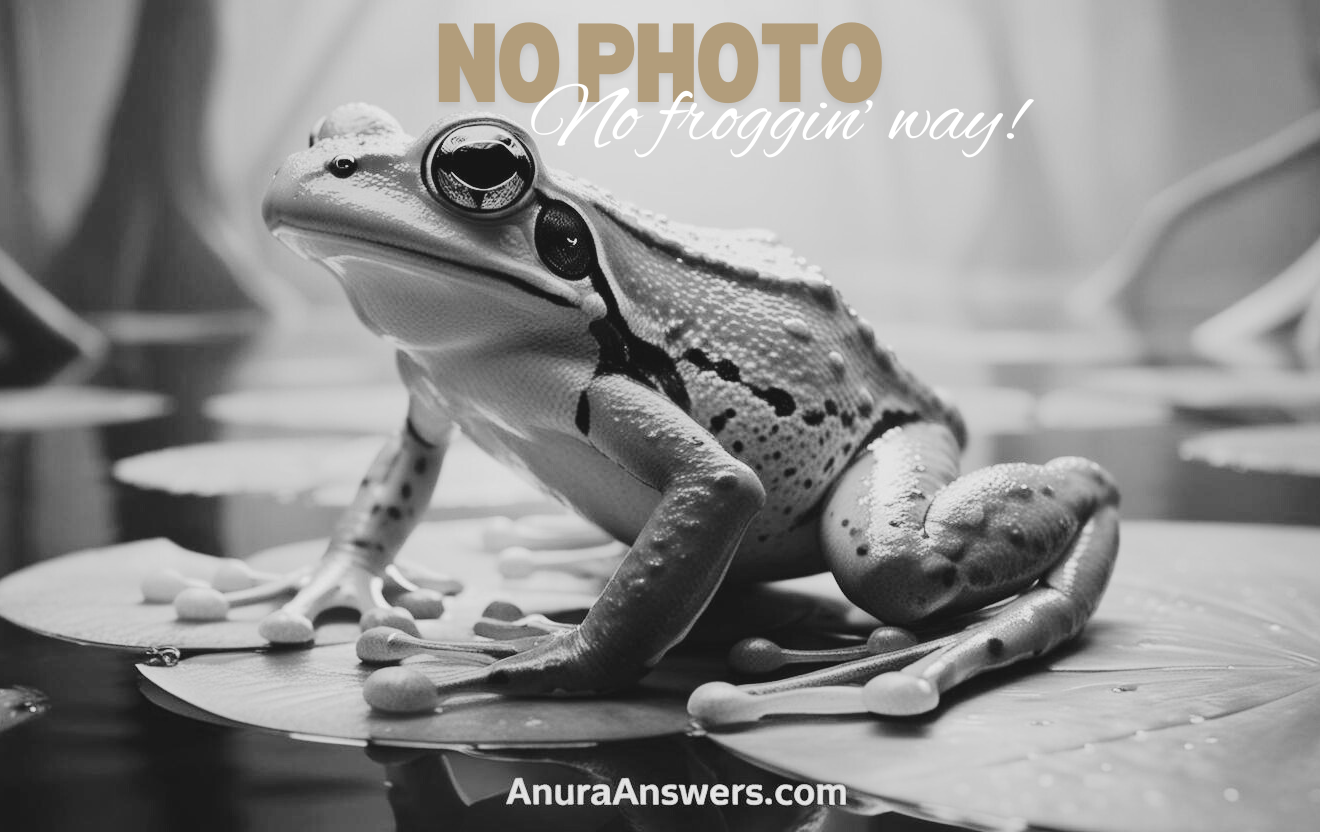
- Splashes of Gold: The Enigmatic World of the Melanophryniscus fulvoguttatus
- Taxonomy and Classification: A Jewel in the Tree of Life
- Natural Habitat: Forest Floors Alive with Colors and Sounds
- Physical Characteristics: Nature's Colorful Warning Signs
- Behavior and Life Cycle: Tiny Dancers of the Forest Floor
- Ecological Role: Interconnected Threads of Nature's Weave
- Threats and Conservation Status: Fragility Amidst a Changing World
- Cultural and Scientific Significance: Beyond Beauty, a Window into Ecology
- Conclusion: Protecting the Vibrant Splendor of Melanophryniscus fulvoguttatus
Splashes of Gold: The Enigmatic World of the Melanophryniscus fulvoguttatus#
Hidden beneath the dense vegetation and moist leaf-litter of South America’s enchanted landscapes lurks a creature so alluring and vividly adorned that few who glimpse it can resist pausing to stare. Melanophryniscus fulvoguttatus, the unmistakable yet mysteriously shy frog, offers an extraordinary snapshot of nature’s creativity and resilience. Known colloquially as the “Splendid Red-belly Toad,” this vibrant amphibian lights up the ground beneath tropical canopies with jewel-like spots of marigold-yellow and fiery crimson—warning would-be predators of its potent poison while charming curious naturalists.
Belonging to the Bufonidae family, the genus Melanophryniscus comprises frogs distinguished by their small size, intricate patterns, and pronounced aposematic coloration. But among its captivating cousins, Melanophryniscus fulvoguttatus stands apart—its flamboyant markings telling a striking tale of biology, evolution, and survival in a world threatened by ecological upheaval.
Taxonomy and Classification: A Jewel in the Tree of Life#
To truly understand the significance of Melanophryniscus fulvoguttatus, we must first place it within nature’s vast and intricate tapestry. It finds its place within the Class Amphibia, Order Anura—frogs and toads—and Family Bufonidae, a diverse group known for characteristic glandular skin that produces potent toxins.
The genus Melanophryniscus itself is relatively small, containing around thirty distinct species, all native and restricted to South America. Melanophryniscus fulvoguttatus was first described scientifically in 1937 and remains a fascinating subject for amphibian researchers and conservationists alike.
Closely related species, such as Melanophryniscus stelzneri and Melanophryniscus orejasmirandai, share similar defensive mechanisms and striking coloration, highlighting an evolutionary arms race between predators and prey that spans millennia.
Natural Habitat: Forest Floors Alive with Colors and Sounds#
Venture into the humid and verdant forests of southeastern Brazil, northeast Argentina, Paraguay, or Uruguay, and you enter into the realm of Melanophryniscus fulvoguttatus. This small but captivating amphibian thrives in subtropical to tropical moist lowland forests and shrublands, often favoring areas near slow-moving streams or wetlands where humidity remains high.
Within this mosaic of habitats, the frog prefers the moist, leaf-litter-covered ground, hiding beneath logs, stones, or fallen vegetation. Here, beneath the protective veil of leaves, the vibrant frog patiently waits—hidden yet alert—making occasional appearances after heavy rains signal breeding opportunities.
The habitat’s rich humus and fallen organic matter provide not just shelter but also an abundant source of tiny arthropods, essential nutrients, and microorganisms critical for the frog’s survival. The continual moisture ensures the delicate skin of Melanophryniscus fulvoguttatus remains adequately hydrated, thereby fulfilling the amphibian’s permeable-skin-dependent respiration.
Physical Characteristics: Nature’s Colorful Warning Signs#
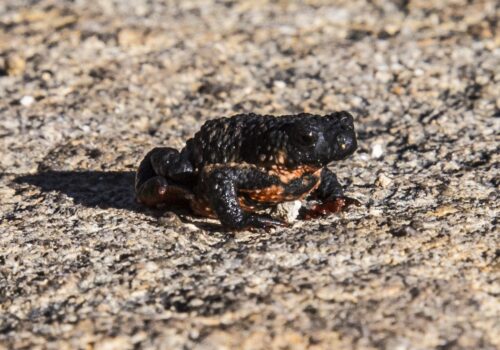
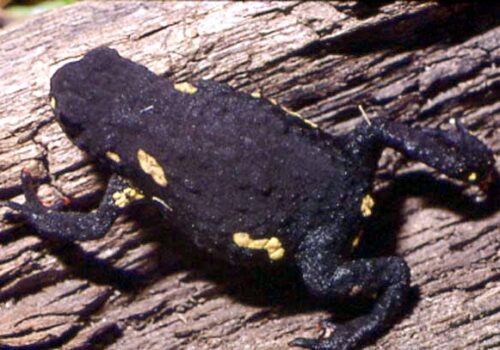
The Melanophryniscus fulvoguttatus is a living embodiment of nature’s genius. Averaging merely 2.5 centimeters in length, it is an amphibian of modest size but extraordinary visibility. Its skin, a tapestry of glossy black punctuated by prominent yellow-orange spots and fiery red markings on its underside, offers both beauty and strategic survival advantage.
This vibrant coloring is a classic example of aposematic or warning coloration. Brightly marked skin sends a clear message to potential predators—these frogs are toxic. Specialized granular skin glands produce sophisticated alkaloid toxins that taste bitter and induce illness in predators ill-informed enough to sample them, thereby deterring further predation.
Interestingly, their potent toxins are sequestered from the insects they consume, primarily ants and mites rich in alkaloids, demonstrating an intriguing biochemical relationship between predator, prey, and the surrounding ecosystem.
Behavior and Life Cycle: Tiny Dancers of the Forest Floor#
Melanophryniscus fulvoguttatus tends to live a secretive existence, spending most daylight hours nestled within damp vegetation or beneath hidden shelters. At dusk, under cover of twilight, these little dancers awaken, setting forth to hunt their preferred fare of small arthropods, exhibiting swift and accurate tongue maneuvers to secure prey almost invisibly amid leaf litter.
Reproduction: Rainy Nights and Courtship Calls#
With the onset of heavy seasonal rains, the forest resonates with the soulful vibrato of male frogs, diligently calling from elevated perches such as leaves or fallen logs, hoping their vocal prowess will attract discerning females. Their melodic calls—distinctive high-pitched whistles—echo softly through the night, creating an acoustic symphony unique to these secluded habitats.
After successful attraction, mating pairs enter amplexus, a characteristic amphibian embrace that ensures the male fertilizes eggs as the female releases them. Females lay clusters of eggs attached to aquatic vegetation or submerged debris in shallow forest pools and slow-flowing streams. Delicate and vulnerable, the eggs hatch into tadpoles that spend weeks developing in these tranquil aquatic nurseries before metamorphosing into miniature replicas of their brightly adorned parents.
This cycle of birth, transformation, and emergence metamorphoses dozens of tiny larvae into the flamboyant forest inhabitants that enchant even seasoned naturalists.
Ecological Role: Interconnected Threads of Nature’s Weave#
While small in stature, Melanophryniscus fulvoguttatus fulfills essential roles within its environment. Primarily insectivorous, it serves as a critical biological control agent, maintaining ecological balance by regulating arthropod population densities. Simultaneously, its participation in local food webs feeds larger predators capable of navigating its chemical defenses, including specific snakes and birds armed through evolutionary adaptation.
Additionally, Melanophryniscus fulvoguttatus plays an invaluable role as an ecological indicator species. Due to their permeable skin, amphibians are particularly sensitive to environmental disturbances and pollutants; declines in frog populations often ring alarm bells regarding ecosystem health, making them key species within conservation monitoring and research programs.
Threats and Conservation Status: Fragility Amidst a Changing World#
Despite its powerful defensive toxins, the presence and survival of the Melanophryniscus fulvoguttatus is increasingly under threat. Deforestation driven by agriculture and expanding urban centers, alteration of rivers and streams, pesticide use altering its arthropod-based diet, and climate change impacting rainfall patterns collectively threaten habitat availability and quality.
This myriad of threats means Melanophryniscus fulvoguttatus, along with numerous amphibian companions, faces uncertain futures. Though currently listed as Least Concern by the International Union for Conservation of Nature (IUCN), ongoing habitat degradation suggests an urgent need to maintain vigilance and reaffirm conservation priorities.
Cultural and Scientific Significance: Beyond Beauty, a Window into Ecology#
While perhaps not achieving the folklore prominence of larger or more charismatic animals, the beautiful Melanophryniscus fulvoguttatus holds quiet yet profound significance. Indigenous communities often associate frogs with rainfall and health—symbols of life-giving water and purity. Meanwhile, scientists study this colorful species to explore extraordinary toxin chemistry, potentially uncovering novel compounds beneficial in medicine, pharmacology, and biological research.
Research into Melanophryniscus fulvoguttatus significantly enhances our understanding of food-chain dynamics, toxin sequestration, and the evolutionary complexity within amphibian defenses, illuminating yet another facet of biodiversity.
Conclusion: Protecting the Vibrant Splendor of Melanophryniscus fulvoguttatus#
As humans continue to shape landscapes and resource consumption patterns exert pressures on delicate ecosystems, species like Melanophryniscus fulvoguttatus call upon us as ambassadors of balance and stewardship. Glossy, golden-yellow gems hidden within the leaf litter remind us of nature’s diversity, depth, and delicate interconnectedness.
Let us advocate fervently for conservation initiatives safeguarding their precious habitats, promoting education and awareness, and supporting government and community action to secure the futures of these brilliantly patterned amphibians. After all, to save the splendid Melanophryniscus fulvoguttatus is not merely a matter of protecting one species—rather, it is a statement of commitment to preserving the rich tapestry of nature’s living heritage, which sustains and nurtures us all.