- Introduction: Encountering Argentina's Enigmatic Amphibian
- Taxonomy and Classification
- Natural Habitat: Life in Argentina's Subtropical Grasslands
- Physical Characteristics: A Marvel of Nature’s Palette
- Behavior and Life Cycle: Rituals of Survival
- Ecological Role: A Crucial Cog in Nature's Machinery
- Threats and Conservation Status: Fighting for Survival
- Cultural and Scientific Significance: Recognizing Nature's Treasures
- Conclusion: Safeguarding a Fragile, Vibrant Jewel
Introduction: Encountering Argentina’s Enigmatic Amphibian#
Hidden amidst the verdant subtropical forests and grasslands of northern Argentina dwells a tiny amphibian that shimmers in hues of ebony, amber, and vermilion—Melanophryniscus estebani. Commonly known as Esteban’s Redbelly Toad, this small yet remarkable frog captivates nature enthusiasts and herpetologists alike, distinguished not only by its striking coloration but also its fascinating biology, intricate life cycle, and ecological importance.
First described scientifically in 2008, the species has quickly become emblematic of the vibrant biodiversity inhabiting the threatened landscapes of Argentina. Specializing in subtle yet vitally important ecological roles, this alluring amphibian exemplifies the incredible adaptations that life employs in specialized niches. Immerse yourself now in the secretive world of Melanophryniscus estebani, where nature’s beauty and ingenuity intertwine vividly.
Taxonomy and Classification#
Though relatively new to science, Melanophryniscus estebani quickly secured its rightful position within the Bufonidae family, commonly referenced as “true toads.” Yet, within this family, these captivating creatures differ significantly from traditional toad stereotypes, displaying delicate features, captivating colorations, and unique ecologies.
The genus Melanophryniscus is small, vibrantly colored, and primarily South American, noted particularly for their striking color contrasts and potent toxins. Relatives such as Melanophryniscus stelzneri and Melanophryniscus montevidensis share close evolutionary links and similar ecological roles, collectively illuminating our understanding of specialized amphibian adaptation in South American habitats. With only about 30 recognized species in the genus, each discovery—including Melanophryniscus estebani—helps conservationists prioritize regions for urgent protection.
Natural Habitat: Life in Argentina’s Subtropical Grasslands#
The province of Corrientes in northern Argentina, situated within the region known as Mesopotamia—named for its river-bordered geography—provides the perfect refuge for Melanophryniscus estebani. Specifically, these brightly ornamented amphibians have been observed thriving in the humid grasslands, savannas, and transitional vegetated areas near gentle streams.
The landscapes they occupy are characterized by an intricate mosaic of wetlands, open grasslands, and forest islands, all woven together into a network of distinctly subtropical environments. Rich in rainfall and seasonal temperature variations that fluctuate between humid summers and mild winters, these carefully balanced ecosystems furnish precisely what these unique frogs require.
Esteban’s Redbelly Toad demonstrates a notable reliance upon temporary puddles, flooded meadows, and small pools left by receding floods, commonly selecting locations camouflaged by lush vegetation. These ephemeral water bodies represent life-giving windows of opportunity, as they provide crucial habitats for critical reproductive events.
Physical Characteristics: A Marvel of Nature’s Palette#
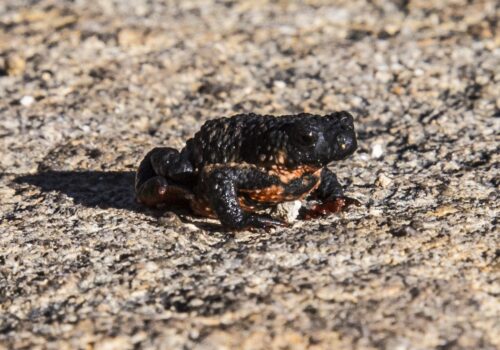
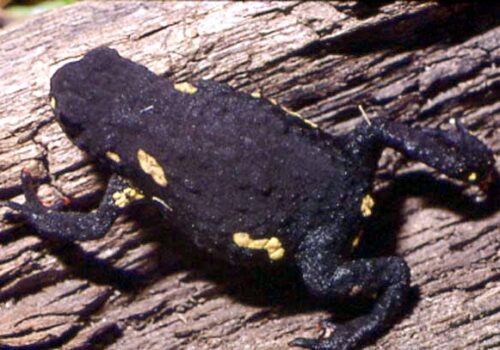
At first glance, Melanophryniscus estebani immediately impresses observers through its dazzling coloration. Measuring only two to three centimeters in length at adulthood, this small toad proudly exhibits a vivid interplay of black pigmentation juxtaposed against vibrant shades of orange, yellow, and crimson on its ventral surface. This intense coloration, especially on their undersides and limbs, serves as a clear aposematic (warning) signal—a natural billboard reflecting their potent poison glands and potency.
The dorsal side typically is marked by deep black, textured skin adorned with subtle granular bumps, offering extra camouflage in shadow-dappled grasslands. The contrast between dark upper halves and brightly colored undersides delivers both protective and regulatory purposes. Black dorsal pigments safely blend the frogs into their shaded habitats from above, while the bold reds and oranges warn terrestrial predators of their chemical defenses once detected from below.
Their short, sturdy limbs and compact bodies support a life close to the ground, adapting them skillfully to maneuver quickly among dense grasses and undergrowth. Large, round eyes accentuate their expressive appearance and provide keen sight that detects the smallest prey and potential predators among their dense habitat vegetation.
Behavior and Life Cycle: Rituals of Survival#
Feeding Habits and Diet#
Melanophryniscus estebani, like most toad species, feeds predominantly upon a variety of insects and small invertebrates. Their diets prominently feature ants, beetles, and tiny orthopterans. Their robust yet agile physiques equip them with the necessary swiftness and efficiency, permitting effective hunts amongst the sheltering grass blades of their chosen habitat. Highly opportunistic, they also make meals of mites and tiny arachnids, dependent on seasonal pulses of prey populations.
Mating and Reproductive Rituals#
Reproduction unfolds dramatically following heavy seasonal rains. The temporary wetlands formed after precipitation events cue males into starting a symphony of unique mating calls. These choruses—high-pitched and repetitive trills—echo through the grasslands, drawing receptive females toward the water’s edge.
Males nestle themselves strategically along shallow margins, quickly clasping onto receptive females in a tight embrace known scientifically as amplexus. Females release small numbers of pigmented eggs into water clusters, attaching them gently onto submerged plants. Tadpoles consequently hatch within days, dependent purely upon algae and plant detritus available in these temporary pools. Tadpole development is rapid, usually concluding before their small habitats dry, ensuring juveniles metamorphose and hop into nearby grasses, restarting the wide-ranging cycle of their Frog life.
Defense Mechanisms and Toxicity#
When threatened, these small amphibians employ chemical warfare strategically—specialized glands on the skin release milky secretions containing alkaloid toxins sourced from their insect prey. The bright warning colors quickly remind predators of the potential harm their ingestion could cause, protecting the frogs from predation. This symbiotic relationship between prey insects and frogs demonstrates the delicate interconnected balance within their ecosystem.
Ecological Role: A Crucial Cog in Nature’s Machinery#
Though humble in size, Melanophryniscus estebani serves multiple essential ecological functions. As insectivores, they help regulate populations of potential crop pests and other insects within their natural habitats, contributing significantly towards balance.
Furthermore, their distinctive sensitivity to habitat changes makes them excellent “indicator species,” reflecting the broader health of their fragile and valuable ecosystems. Any decline in their populations often signals environmental degradation attributable to pollution, climate change shifts, or habitat disruption.
Inconspicuously, this small amphibian actively participates in energy transformations and nutrient cycling within Argentina’s subtropical ecological webs. They serve as prey occasionally to specialized predators resilient to their toxins—particularly certain species of snakes, avian predators, and even select mammals that evolved evolved immunity or resistance to their defenses.
Threats and Conservation Status: Fighting for Survival#
The specialized habitats inhabited by Melanophryniscus estebani face constant human-induced pressures. Agricultural expansion, fumigation chemicals used in farming practices, drainage of wetlands, and urban development continue to fragment and degrade their ecosystems.
Officially assessed as “Vulnerable” by the International Union for Conservation of Nature (IUCN), the species faces escalating risks due to habitat alteration and climate-induced drought frequency and intensity. Ongoing conservation programs include monitoring population numbers, protecting key critical habitats within Corrientes Province, and educating local communities about sustainable land use practices crucial to the species’ ongoing survival.
Cultural and Scientific Significance: Recognizing Nature’s Treasures#
While smaller amphibians like Melanophryniscus estebani inhabit limited geographic regions and thus seldom hold broad cultural prominence, they have cultivated scientific fascination ceaselessly. As carriers of synthesized toxins from insects, they supply invaluable insights into ecological interactions, evolutionary biology, chemical ecology, and toxicology research. Unlocking mysteries within their biology may potentially lead to new pharmacological developments, further exemplifying their hidden value for human societies, too.
Conclusion: Safeguarding a Fragile, Vibrant Jewel#
With intricate beauty, a specialized lifestyle, and essential ecological roles, Melanophryniscus estebani exemplifies nature’s talent for creating remarkable adaptations worthy of protection and admiration. In understanding and promoting awareness around the species’ plight and ecological contexts, we contribute meaningfully to broader wildlife conservation and biodiversity preservation efforts.
Let us lend our voice, vision, and action in defending the evolving symphony of nature where even the tiniest amphibians build foundational harmony.