Melanophryniscus devincenzii: The Enigmatic Painted Toad of South America#
Hidden in the mist-laden grasslands and wetlands of South America, the tiny yet charismatic Melanophryniscus devincenzii—commonly known as Devincenzi’s toad—offers nature enthusiasts and conservationists alike a glimpse into one of amphibian conservation’s most intriguing stories. Bearing vivid colors that evoke artistic masterpieces, these remarkable frogs provide striking evidence of nature’s delicate balance between beauty and survival. Yet beyond their striking appearance, these amphibians underscore key ecological roles in their habitats, acting as vibrant sentinels within environmental conversations. So diminutive they could perch comfortably upon your fingertip, Devincenzi’s toads embody nature’s paradox, balancing fragility with resilience.
Named to honor the distinguished Uruguayan naturalist Garibaldi J. Devincenzi, Melanophryniscus devincenzii sits firmly within scientific fascination. With its uniquely patterned skin and potent chemical defenses, it is a creature that defies its own small stature. Let’s journey together deep into the fascinating world of this tiny, colorful toad, exploring its biology, habitat, behaviors, and the profound importance it holds for ecological health and conservation efforts in South America and beyond.
Taxonomy and Classification#
Melanophryniscus devincenzii belongs to the family Bufonidae, more familiarly known to us as true toads. Yet, unlike the typical drab-brown garden toad, this member of the genus Melanophryniscus is noted for vibrant colors reminiscent of tropical poison frogs. The genus Melanophryniscus contains several similarly colored toads primarily inhabiting South American grasslands and marshes. Within this family, it has become a star species due to the distinctiveness of its coloration and potent alkaloid toxins.
First described scientifically by Klappenbach in 1968, the species forms a close kinship with other members of the genus, distinguished by subtle variations in size, pattern, and chemical composition. However, it’s precisely these subtle distinctions in morphological characteristics, vocalizations, and distribution that fascinate researchers and require careful consideration in conservation strategies.
Natural Habitat#
The windswept pampas and grasslands of Uruguay, northern Argentina, and southern Brazil provide the essential refuge for Devincenzi’s toad. In these rolling landscapes, Melanophryniscus devincenzii thrives predominantly in damp environments—open grasslands, marshes, temporary pools, and flooded plains. These habitats offer perfect breeding grounds and ample food sources, creating a dynamic living mosaic essential for the species’ survival.
Distribution and Ecology#
Though primarily concentrated in Uruguay and adjacent regions of Argentina and Brazil, the species’ geographic range remains fragmented and patchy, reflecting its intricate relationship with wetland habitats. Seasonal flooding influences dispersal patterns significantly, as these amphibians rely on ephemeral pools for breeding. Such pools appear after heavy rains, and as waters ebb, these transient wetlands teem with life. Here, concealed beneath tufted grasses and aquatic vegetation, Devincenzi’s toads live their secretive lives.
The frogs cleverly exploit their habitat; they remain concealed by day beneath fallen leaves, mosses, logs, or grassy tussocks to avoid desiccation and predation. Emergence typically occurs after rainfall or high humidity events, heightening their visibility and activity as they resume feeding or breeding behaviors under the protection of twilight.
Physical Characteristics#
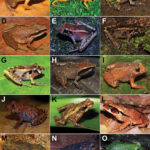
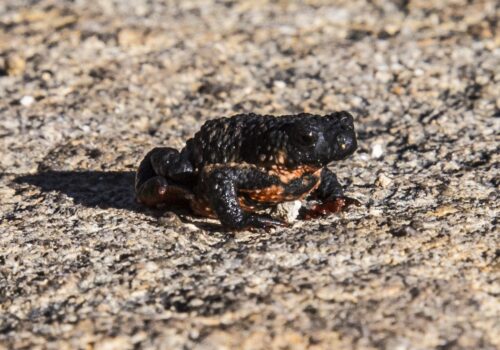
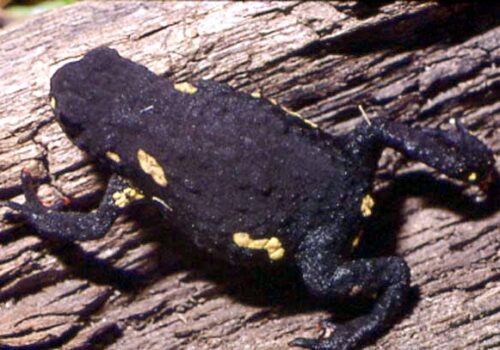
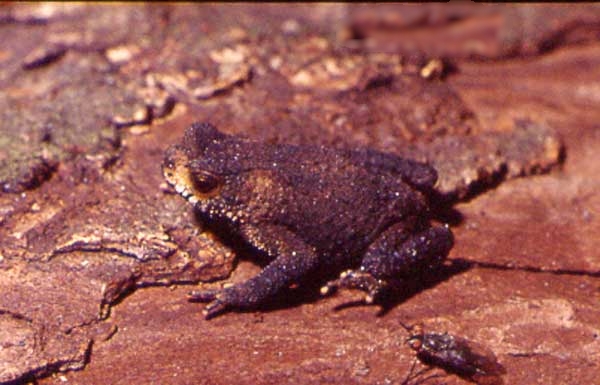
Devincenzi’s toad might perplex those expecting the familiar appearance of common toads. Measuring merely 20–30 millimeters at adulthood, they stun observers with skin patterns evocative of miniature artworks. Each frog’s dorsal surface reveals a vibrant mosaic, exhibiting hues ranging from fiery reds and rich yellows to stark black pigmentation—an evolutionary warning palette indicative of its toxic chemical defenses.
The underside often contrasts sharply, showcasing bright splashes of orange and occasional spots assisting in confusing predators that attempt an attack from beneath. Their somewhat rough, glandular skin contributes notably to dispersing toxins, synthesized from the prey they ingest, primarily ants and mites. This particular hunting habit enriches their skin with alkaloids borrowed from their prey, reinforcing their chemical arsenal against predators.
Adaptations and Survival Strategies#
Melanophryniscus devincenzii’s striking appearance isn’t mere beauty; it is a poignant adaptation evolved in response to predator pressures. The vibrant coloration serves as a potent warning—aposematic coloration—to birds, reptiles, and small mammals. Predators, once experiencing the distasteful or toxic effects from their potent alkaloids, quickly learn to avoid consuming similarly colored individuals again.
Moreover, their small size and cryptic habits allow them to burrow into soil crevices or vegetation, minimizing water loss during prolonged dry spells. Their relatively robust bodies and thick limbs give them excellent jumping strength to swiftly evade predators, complementing their passive chemical defenses with impressive active escape maneuvers.
Behavior and Life Cycle#
With the onset of the rainy season, Melanophryniscus devincenzii embarks on its most critical and lively phase: reproduction. During the humid evenings following rains, males congregate around ephemeral water bodies, inflating vocal sacs to produce distinctive yet subtle mating choruses designed to attract females from cover.
Female selection within this species heeds various acoustic, tactile, and probably chemical cues emitted by males. Following successful pairings, fertilization is external, with females releasing eggs into temporary pools, carefully positioned amid aquatic plants, stems, or on flooded grass blades. These locations provide optimal concealment, protection against desiccation, and predation resistance.
Tadpole to Adult: A Delicate Journey#
Tadpole development undergoes rapid acceleration to utilize the short-lived aquatic habitats. Within mere weeks—from hatching and feeding voraciously on algae, microbes, and detritus—tadpoles begin metamorphosing into small juvenile toads, equipped already with striking coloration and preliminary stores of defensive chemicals derived from maternal investment and early dietary choices.
Juveniles quickly move away from natal pools into the dense vegetation, embarking on terrestrial lifestyles that characterize adult existence. Their early independence, coupled with survival skills ingrained in developmental stages, provides initial protection against predation risk and habitat loss, yet many challenges remain to adulthood.
Ecological Role#
Despite its tiny stature, Melanophryniscus devincenzii exerts an outsized ecological impact within its habitat. Firstly, as consumers of ants, mites, and small soil-dwelling invertebrates, they help regulate insect populations and contribute to maintaining a balanced soil ecosystem. They indirectly assist plant health and vitality by controlling insect herbivory and pest damage.
Conversely, these toads also represent essential prey items within food webs, supporting biodiversity and sustaining predator populations, provided those predators exhibit toxin resistance or adaptation. Furthermore, their sensitivity to environmental degradation—including habitat loss, pollutants, and climate-induced shifts—positions them as key indicator species, revealing broader environmental treatments critical to ecosystem assessments.
Threats and Conservation Status#
Currently classed as a species of conservation concern, Melanophryniscus devincenzii suffers profound threats reflective of broader amphibian declines worldwide. Habitat destruction from agriculture-intensive practices, urbanization draining wetlands, pesticide contamination, and changes in rainfall and temperature patterns substantially affect toad populations. Additionally, diseases like chytridiomycosis present significant concerns, employing devastation among amphibian populations globally.
Conservation Initiatives#
Encouragingly, conservation action continues across their range, emphasizing habitat protection, restoration of critical wetlands, and public education. Uruguayan, Argentinian, and Brazilian conservationists increasingly advocate sustainable agriculture, strengthened legislation, and community engagement to create corridors of protected wetlands enabling the species’ sustainable persistence.
Cultural and Scientific Significance#
While perhaps less prominently featured in folklore compared to other amphibians, Melanophryniscus devincenzii presents intriguing research prospects in chemical ecology. Scientists study their alkaloids for potential pharmacological application and as ecological indicators. This species’ vibrant biology illuminates environmental health insights, climate impacts, predator-prey dynamics, and evolutionary processes shaping its unique existence.
Conclusion#
Melanophryniscus devincenzii epitomizes nature’s genius in both dazzling beauty and strategic survival adaptations. Preserving these enigmatic frogs means upholding entire ecosystems and safeguarding biodiversity at large. Let their vibrant stories inspire within us the desire to protect the fragile tapestry they inhabit: an inspiration to champion biodiversity conservation everywhere.