- Meet Melanophryniscus cupreuscapularis: The Enigmatic Copper-Shouldered Toad of the Atlantic Forest
- Taxonomy and Classification: A Jewel in the Family Bufonidae
- Natural Habitat: Within the Dense Foliage of the Atlantic Rainforest
- Physical Characteristics: Brilliant Patterns and Intricate Defenses
- Behavior and Life Cycle: Tiny Warriors of the Forest Floor
- Ecological Role: Small But Significant Contributors
- Threats and Conservation Status: Standing Guard Over a Vulnerable Toad
- Cultural and Scientific Significance: Charismatic Ambassador of Amphibian Conservation
- Conclusion: Celebrating & Conserving Nature’s Copper-Tinted Wonder
Meet Melanophryniscus cupreuscapularis: The Enigmatic Copper-Shouldered Toad of the Atlantic Forest#
Hidden within the lush greenery of one of Earth’s most biodiverse hotspots—the Atlantic Forest of South America—lives a small yet remarkable amphibian. Bearing a name suggestive of crafted metal accents, Melanophryniscus cupreuscapularis, commonly known as the Copper-Shouldered Toad, is as fascinating as it is enigmatic. Often overlooked amid the vibrant tapestry of rainforest wildlife, this charismatic species harbors secrets that captivate herpetologists and nature enthusiasts alike.
At first glance, this tiny amphibian may seem humble, residing unobtrusively in damp leaf litter or nestled between moss-covered stones; yet its biology, striking appearance, and ecological importance inspire both wonder and conservation urgency. In a rapidly changing world, understanding and protecting species like Melanophryniscus cupreuscapularis becomes increasingly critical.
Taxonomy and Classification: A Jewel in the Family Bufonidae#
The Copper-Shouldered Toad belongs to the Bufonidae family, a diverse group of amphibians known generally as true toads. Within this family sits the genus Melanophryniscus, renowned among herpetologists for vibrant colors, specialized habitats, and complex chemical defenses. Officially named Melanophryniscus cupreuscapularis, the Latin identifies the species distinctly: “cupreus” meaning coppery and “scapula” referencing the shoulders, vividly depicting the prominent copper-colored markings for which it is named.
First described scientifically in 1961 by Albertina P. Carvalho—a dedicated Brazilian herpetologist whose painstaking fieldwork unveiled many hidden wonders—this species provides vital context within the wider Melanophryniscus genus. Relatives such as Melanophryniscus admirabilis and Melanophryniscus atroluteus share similarly bold colorations and toxin-derived defense mechanisms, fostering continual academic interest and ecological understanding.
Natural Habitat: Within the Dense Foliage of the Atlantic Rainforest#
Delving deep into the Atlantic Forest—the richly biodiverse biome spanning parts of Brazil, Argentina, and Paraguay—one encounters habitats as exquisite as the species they shelter. Here, amid sprawling expanses of lush greenery, mist-laden valleys, and cascading mountain streams, the Copper-Shouldered Toad finds sanctuary. This species is primarily distributed in southern Brazil, particularly in the states of Santa Catarina, Paraná, and Rio Grande do Sul, inhabiting subtropical and temperate forest environments.
Preferring above all moist terrestrial microhabitats, Melanophryniscus cupreuscapularis thrives in damp leaf litter, near moss-laden stones, and on the forest floor’s humid understory. These microclimate niches offer shelter, food sources, and breeding grounds, illustrating the species’ delicate adaptation to a relatively narrow ecological window. Although notably resistant to some environmental fluctuations, disruptions like deforestation or prolonged drought severely restrict their suitable habitats, putting the species at considerable ecological risk.
Physical Characteristics: Brilliant Patterns and Intricate Defenses#
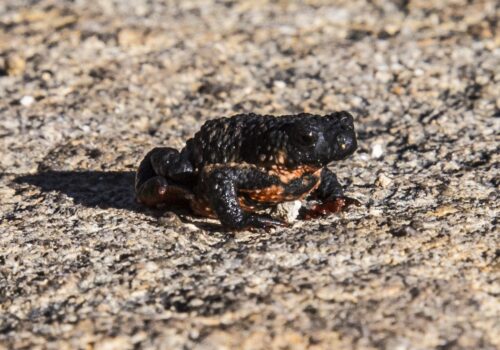
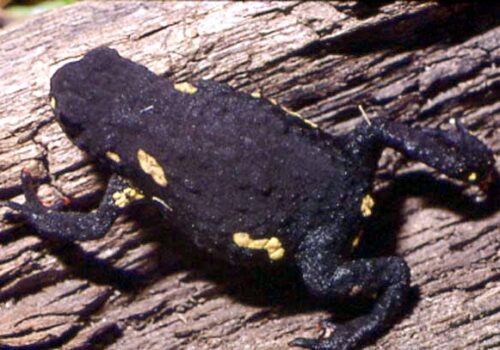
A truly splendid figure nestled in the forest undergrowth, the Copper-Shouldered Toad seldom reaches more than 25 mm in length. Despite its diminutive size, its aesthetic qualities command attention. The body displays vibrant coloration that is nothing short of remarkable: predominantly dark black or deep brown hues highlighted dramatically by distinctive copper-toned patches upon the shoulders. This striking display is not merely ornamental; it serves a vital purpose, warning potential predators of a potent chemical defense.
Distinctive from more familiar “warty” toads, Melanophryniscus cupreuscapularis exhibits smoother, glossier skin, lightly textured yet richly coloration-rendered. Specialized glandular skin structures produce toxins as a defense mechanism, remarkably potent alkaloids aimed at deterring predators. These famously bright “aposematic” colorations send clear, universally understood signals within the animal kingdom: caution is advised, behind aesthetically pleasing colors lies danger!
Moreover, its small size and cryptic behavior offer supplementary defense—often, its copper shoulder markings blend effortlessly with leaf litter, moss, and decaying wood. Together, these visual cues and chemical deterrents form a comprehensive defensive strategy, showcasing sophisticated evolutionary adaptation in even the smallest organisms.
Behavior and Life Cycle: Tiny Warriors of the Forest Floor#
A Day in the Life: Predatory Strategies and Daily Movements#
Unlike tree-dwelling dart frogs known to entertain visitors with dynamic leaps and vivid displays, Melanophryniscus cupreuscapularis quietly inhabits leaf-strewn confines of the forest floor. Active primarily during significant humidity or rainfall episodes, this species’ adventurous activities—though modest—are crucial to forest ecosystems. Their diets revolve mainly around small terrestrial arthropods, such as ants, mites, beetles, and springtails. Possessing keen sensory abilities and agile tongues, they swiftly capture prey, helping to regulate arthropod populations within their miniature territories.
The Dance of Life: Breeding Season and Tadpole Development#
Breeding in this species typically follows heavy rainfalls—nature’s consistent cues upon which the time-sensitive amphibians intricately rely. Males, triggered by rainfall or shifts in temperature and moisture, emit gentle trilling calls as invitations to females. Courtship lends an auditory ambiance to damp leaf-littered floors; when a female selects a mate, pairs swiftly move toward shallow, temporary pools devoid of predators, ensuring reproductive success and safety.
Egg-laying occurs swiftly in these ephemeral bodies of water, the female carefully depositing clusters of eggs soon fertilized by the waiting male. The tadpoles, with streamlined bodies suited to swiftly moving waters and dynamic pools, develop at rapid rates—a necessity in the fleeting nature of their watery birthplace. Interestingly, scientists have observed unique parental investment forms within related species, an area of behavioral research potentially applicable to this enigmatic species as well.
Ecological Role: Small But Significant Contributors#
In ecological terms, amphibians like the Copper-Shouldered Toad serve as vital bioindicators, providing critical insights into ecosystem health. Sensitive skin, dependency on moisture, and dietary specialization make them excellent indicators of subtle environmental changes frequently not discernible otherwise. Increasing or declining frog populations frequently mirror forest habitat quality, warning ecologists of atmospheric pollutants, chemical runoff, or climate-induced shifts before extensive harm occurs throughout the broader ecosystem.
Further, their regulatory role within forest microecosystems is undeniable. Being both prey and predator, Melanophryniscus cupreuscapularis maintains arthropod populations in healthy equilibrium, providing food sources for larger predators such as reptiles, birds, and mammals. This ecological linkage ensures continued resilience and health within biodiversity-rich forest habitats.
Threats and Conservation Status: Standing Guard Over a Vulnerable Toad#
The current conservation status of Melanophryniscus cupreuscapularis, according to the International Union for Conservation of Nature (IUCN), is Near Threatened. While not yet critically endangered, looming threats continue to endanger populations. Habitat fragmentation represents the primary danger, as deforestation fragments once continuously lush Atlantic forests. Agricultural expansion, cattle grazing, road development, and urban encroachment steadily claim forests, pushing this agile yet fragile species into shrinking isolated habitats.
Climate change exacerbates pressures on amphibians worldwide, and the Copper-Shouldered Toad is no exception; within increasingly unpredictable rainfall and temperature shifts lay daunting challenges. Recent initiatives address these severe conservation issues, encompassing protected habitat redesigation, careful ecological assessments, and community education to promote habitat stewardship and protection of these unique species and habitats.
Cultural and Scientific Significance: Charismatic Ambassador of Amphibian Conservation#
While culturally not widely known outside scientific circles, Melanophryniscus cupreuscapularis garners significance within research communities. Experts keenly study its unique alkaloid secretions, examining potential pharmacological applications enriching human medicinal endeavors—a striking example of biodiversity’s untapped value.
Additionally, conservation communicators often spotlight such striking species as ambassadors for broader amphibian and habitat conservation campaigns, drawing public attention to rainforest conservation efforts.
Conclusion: Celebrating & Conserving Nature’s Copper-Tinted Wonder#
Encapsulating natural beauty within its small, copper-adorned body, Melanophryniscus cupreuscapularis serves as both biological wonder and cautionary emblem—the quiet guardian against complacency. Exploring its life invites renewed dedication toward ensuring future generations witness these remarkable toads thriving.
Together, readers, conservationists, and communities worldwide carry responsibility toward safeguarding narratives such as these. By supporting conservation efforts, spreading awareness, and respecting habitats, we can ensure the Copper-Shouldered Toad—and countless wildlife wonders like it—continue decorating our planet amidst the ever-changing tapestry of biodiversity.