- Introduction: A Tiny Jewel Hidden in South America's Grasslands
- Taxonomy and Classification: Understanding Melanophryniscus atroluteus
- Natural Habitat: Life Among the Grasses and Wetlands
- Physical Characteristics: A Toad Clad in Bold Warning Colors
- Behavior and Life Cycle: Adaptations Buried in Rain and Mud
- Ecological Role: A Vital Cog in a Dynamic Ecosystem
- Threats and Conservation Status: Safeguarding a Precious Amphibian Gem
- Cultural and Scientific Significance: Beyond Ecological Importance
- Conclusion: Protecting Nature's Hidden Wonders
Introduction: A Tiny Jewel Hidden in South America’s Grasslands#
Amid the subtropical grasslands and humid wetlands of South America, there thrives a diminutive yet captivating amphibian, distinguished by patterns as bold as they are beautiful. Melanophryniscus atroluteus, commonly known as the black-and-yellow toad or Uruguay Redbelly Toad, stands out from its grassy surroundings not just because of its vibrant colors but also due to its ecological significance and intriguing biology. Although small, rarely exceeding 2.5 centimeters, this species serves as a fascinating ambassador for its habitat, illustrating just how intricate and interconnected nature’s tapestry truly is.
Belonging to the Bufonidae family—the true toads—Melanophryniscus atroluteus possesses a repertoire of peculiar behaviors, impressive adaptations, and noteworthy ecological roles. Its story is one of natural wonder, resilience, and sadly, looming conservation concern. Join us as we delve into the hidden world of this remarkable toad, unraveling its biology, habitat, and the reasons why safeguarding its survival holds significance far beyond what first meets the eye.
Taxonomy and Classification: Understanding Melanophryniscus atroluteus#
Melanophryniscus atroluteus was first scientifically described in 1902 by renowned zoologist George Albert Boulenger. Positioned within the expansive Bufonidae family, this species belongs to the Melanophryniscus genus, a unique group notable for bright aposematic (warning) coloration and potent toxins. Closely related species within the genus, such as Melanophryniscus montevidensis and Melanophryniscus stelzneri, share many of the distinctive features that characterize this group, including vibrant coloration and defensive chemical secretions.
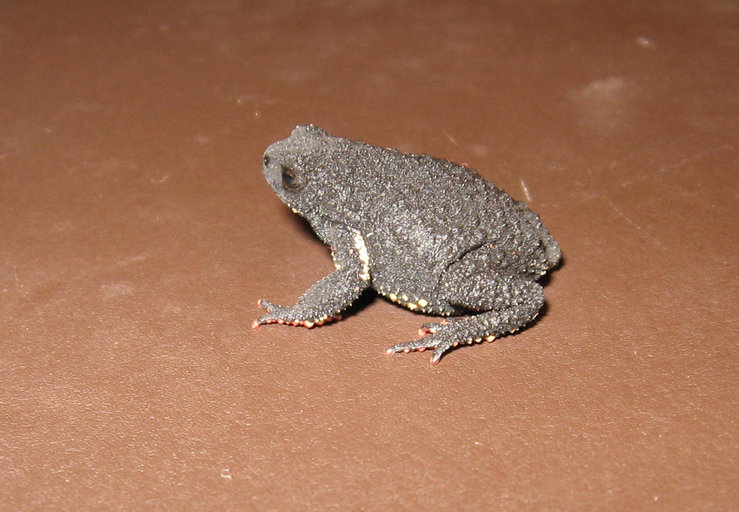
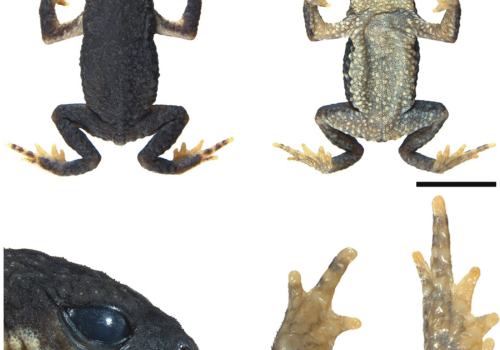
Identifying Melanophryniscus atroluteus involves examining its characteristic black dorsal coloration punctuated vividly by bright yellow or red markings. These distinctive patterns not only classify it taxonomically but also speak eloquently to its adaptation as an amphibian specifically evolved for survival in a world full of potential predators.
Natural Habitat: Life Among the Grasses and Wetlands#
The distribution of Melanophryniscus atroluteus is relatively localized, occurring predominantly across southern Brazil, Uruguay, and some regions within northeastern Argentina. In these subtropical locales, they favor grasslands, savannas, wetlands, and temporary pools that form after seasonal rains. Such habitats provide optimal conditions for breeding and development, as well as a rich array of insect prey necessary for their diet.
Habitat Preferences: Secretive Dwellers of Temporary Pools#
Unlike many amphibians, which rely on permanent water bodies for their survival, Melanophryniscus atroluteus is expertly adapted to transient water sources. Temporary ponds and flooded grasslands, formed mainly by rainfall and seasonal flooding, offer optimal breeding grounds. Following heavy rains, hundreds of these toads emerge from hiding to breed, laying their eggs in shallow, short-lived pools. These seasonal wetlands, significant habitats often overlooked in conservation policies, form a core component of the species’ reproductive success.
The vegetation within these lush habitats provides essential shelter from predators and the intense subtropical sun. Dense grasses, low shrubs, and wildflowers create areas of shade and moisture that enable Melanophryniscus atroluteus to regulate their temperature and moisture levels effectively, both crucial for their survival as amphibians with sensitive, permeable skin.
Physical Characteristics: A Toad Clad in Bold Warning Colors#
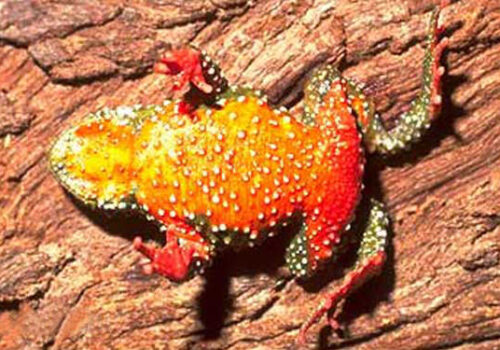
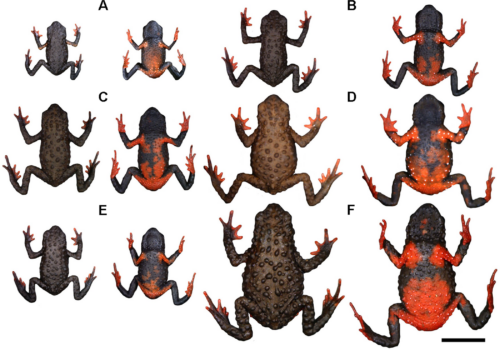
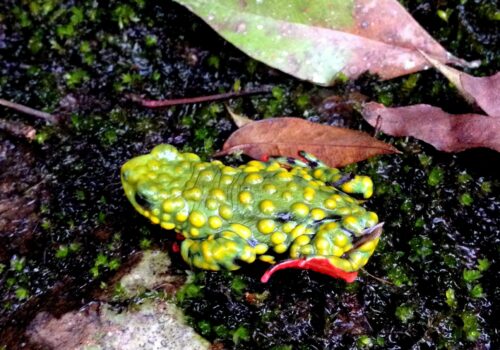
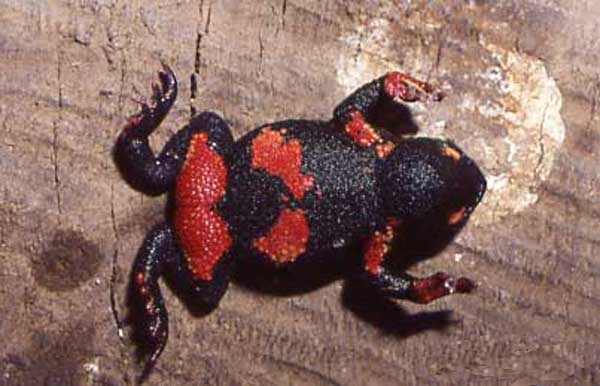
Melanophryniscus atroluteus is unmistakable in its appearance. Its diminutive size measuring between 20–25 millimeters places it among the smaller toads. However, what it lacks in size, it makes up for in striking coloration. The dorsal surface is typically black, contrasting vividly with yellow, orange, or even red blotches, spots, or stripes. The ventral side is equally striking, often decorated with bright red or yellow hues.
The coloration of Melanophryniscus atroluteus is not merely aesthetic; it serves a crucial evolutionary purpose as aposematic coloration. By boldly advertising its presence, this tiny toad sends an unmistakable signal to predators: “beware, I am not worth your trouble.” Such vibrant colors strongly correlate with toxins stored within glands across the toad’s skin, making it distasteful—and sometimes lethal—to unwary predators.
Specifically adapted granular glands beneath the skin secrete potent alkaloid toxins acquired from dietary ants and invertebrates. The ability to sequester these toxins effectively contributes significantly to their defense strategy, enhancing their survival in regions filled with potential predators ranging from birds and mammals to larger amphibians.
Behavior and Life Cycle: Adaptations Buried in Rain and Mud#
Life as a Melanophryniscus atroluteus revolves closely around rainfall cycles. Predominantly terrestrial, the species lives largely hidden within leaf litter, soil crevices, and beneath vegetation for most of the year. However, the advent of seasonal rains transforms them from elusive terrestrial dwellers into congregations of breeding individuals, vocalizing and competing for mates.
Feeding Habits and Diet#
These diminutive amphibians sustain themselves primarily with small invertebrates, focusing on ants, mites, springtails, and sometimes beetles and termites. Surprisingly aggressive hunters, they capitalize on their camouflage and await unsuspecting prey passing near their concealed positions before swiftly extending sticky tongues to snatch their targets with astonishing precision.
Breeding Rituals and Development#
The onset of heavy rains triggers mass breeding aggregations, leading to remarkable choruses of vocalizations resonating through the wetlands. Males call confidently, attempting to attract females while warding off rivals fiercely. Females, upon selecting mates, deposit eggs in clusters within shallow pools or among submerged aquatic vegetation. Tadpoles hatch shortly thereafter, rapidly developing in ephemeral waters, an adaptation that allows for rapid population turnover within brief windows of time.
Ecological Role: A Vital Cog in a Dynamic Ecosystem#
Melanophryniscus atroluteus, though small and seemingly inconsequential, holds immense ecological significance. As predator and prey, their existence intricately ties into their ecosystem’s health. By preying heavily upon ants and small arthropods, they regulate insect populations. In turn, they serve as prey for various avian species, reptiles, and mammals tolerant of their toxicity or adept at avoiding poisonous glands.
Crucially, their specialized biological adaptations also position them as indicator species. Highly sensitive to environmental changes—from contaminants to habitat destruction—their declining populations signal deeper ecological trouble, offering a natural alarm to conservationists and ecologists alike.
Threats and Conservation Status: Safeguarding a Precious Amphibian Gem#
The International Union for Conservation of Nature (IUCN) classifies Melanophryniscus atroluteus as ‘Least Concern,’ given its relatively broad distribution. However, conservationists warn of increasing threats from habitat conversion, agriculture, pesticides, and climate change. Increased drought frequency linked to global climate shifts may severely impact their breeding success, thus threatening the viability of future populations.
Moreover, the removal of temporary wetlands for agriculture and urbanization engenders significant habitat loss. Awareness and habitat preservation initiatives are crucial for safeguarding the ecological balance Melanophryniscus atroluteus helps maintain.
Cultural and Scientific Significance: Beyond Ecological Importance#
In indigenous folklore of regional communities, vibrant amphibian species sometimes embody symbols of fertility, renewal, or rain indicators. Although specific cultural references to Melanophryniscus atroluteus themselves are scarce, the genus’s potency and coloration have attracted scientific curiosity, particularly concerning toxin research. Their skin-derived alkaloids hold potential for future biomedical discovery, highlighting the importance of protecting even small, obscure species like this tiny toad.
Conclusion: Protecting Nature’s Hidden Wonders#
Melanophryniscus atroluteus epitomizes the profound wonder and fragile interconnectedness of natural ecosystems. Its striking beauty, specialized biology, and critical ecological roles underscore the urgency of protecting their habitats from encroaching threats. By understanding the importance of these fascinating creatures—and the grave implications their loss would carry—we become equipped to act responsibly and sustainably, ensuring their continued existence and abundance for generations to enjoy.
Let us commit to conserving subtropical wetland habitats—safeguarding species like Melanophryniscus atroluteus, whose vivid patterns of black and yellow may delight the eye, and whose survival profoundly benefits ecosystems, human communities, and our shared natural heritage.