- Introduction: Encountering Melanophryniscus alipioi
- Taxonomy and Classification: Understanding Its Place in the Biodiversity Puzzle
- Natural Habitat: Lost within Brazil's Highland Ecosystems
- Physical Characteristics: Nature’s Vivid Warning Sign
- Behavior and Life Cycle: Cryptic Lives beneath the Moss
- Ecological Role: Indicator Species and Balance Keepers
- Threats and Conservation Status: A Species on the Edge
- Cultural and Scientific Significance: Small Amphibian, Large Legacy
- Conclusion: Preserving the Jewel of Brazil’s Highlands
Introduction: Encountering Melanophryniscus alipioi#
In the mist-covered highlands of southeastern Brazil, nestled among lush vegetation and dew-glazed rock formations, lives a small yet vibrant toad coated in bold shades of red, black, and yellow. Known scientifically as Melanophryniscus alipioi, this fascinating amphibian is often unnoticed by casual observers but treasured by researchers and conservationists alike. Its brilliant coloration is far more than mere decoration—it serves as a poignant warning of lethal toxins secreted from its skin glands, marking it unmistakably as a creature best admired at a respectful distance.
Interestingly, M. alipioi is not just a vivid amphibian species—it’s also a beacon of ecological awareness, highlighting the delicate environmental balance within Brazil’s unique Araucaria forests and highland ecosystems. By studying and protecting this enigmatic species, we ultimately contribute to safeguarding an entire web of life reliant upon these fascinating habitats.
Taxonomy and Classification: Understanding Its Place in the Biodiversity Puzzle#
The small yet dazzling Melanophryniscus alipioi belongs to the Bufonidae family, commonly known as the “true toads.” Within this amphibian family, the genus Melanophryniscus comprises a specialized group of small, vividly colored toads notable for their skin toxins. This genus includes around 30 identified species, most of which inhabit regions in southern Brazil, Uruguay, Argentina, and Paraguay. Melanophryniscus alipioi itself was first described scientifically by Langone, Segalla, Bornschein, and de Sá in 2008, making it a relatively recent entry to the catalogs of herpetology.
While closely related to other species within its genus, M. alipioi distinguishes itself through unique behavioral tendencies and habitat requirements. Understanding its taxonomy is more than an academic curiosity; it plays a critical role in identifying the distinct ecological needs and pressures faced by this amphibian. Correct classification guides meaningful conservation measures, ensuring targeted protection of its threatened habitats.
Natural Habitat: Lost within Brazil’s Highland Ecosystems#
Melanophryniscus alipioi is found exclusively in a confined and richly biodiverse region—the mountainous terrains of Paraná state, Brazil. Here, nestled among the misty peaks, valleys, and plateaus at altitudes ranging between 700 and 1,500 meters, these vividly marked toads live a cryptic existence amid moss-covered rocks and humid grasslands.
Araucaria Forests and Highland Meadows#
The species is intricately linked to the Araucaria forest biome, where towering Brazilian pine trees, giant ferns, and a patchwork of dense understory vegetation cover the mountain slopes. Within this unique ecosystem, these tiny creatures navigate dense moss carpets, rocky outcrops, and damp leaf litter. Such moist, temperate microhabitats serve as perfect breeding grounds, providing sufficient moisture levels and suitable places to deposit eggs.
Water bodies, such as shallow temporary pools or slow-moving streams created by rainfall and seasonal transitions, become vital breeding sites, while terrestrial habitats provide shelter and abundant insect prey. However, their confined existence to such specific, fragile ecosystems places the species at significant risk from habitat loss, underlining an urgent need to protect their rich yet vulnerable homeland.
Physical Characteristics: Nature’s Vivid Warning Sign#
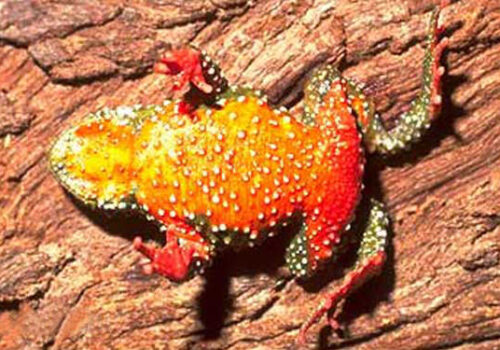
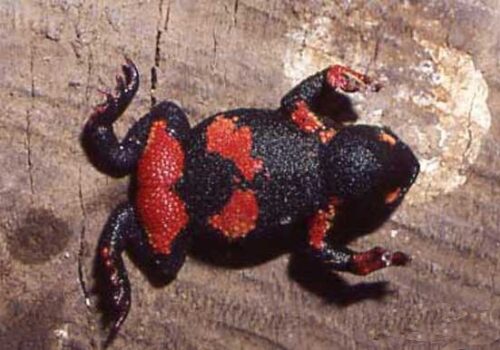
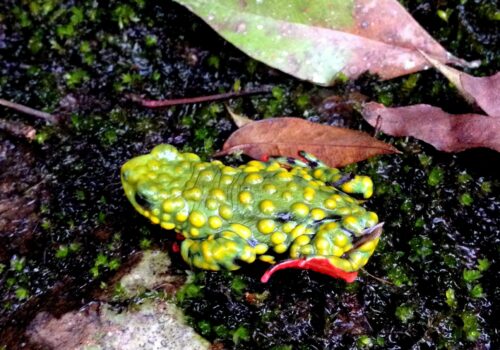
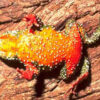
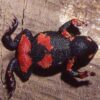
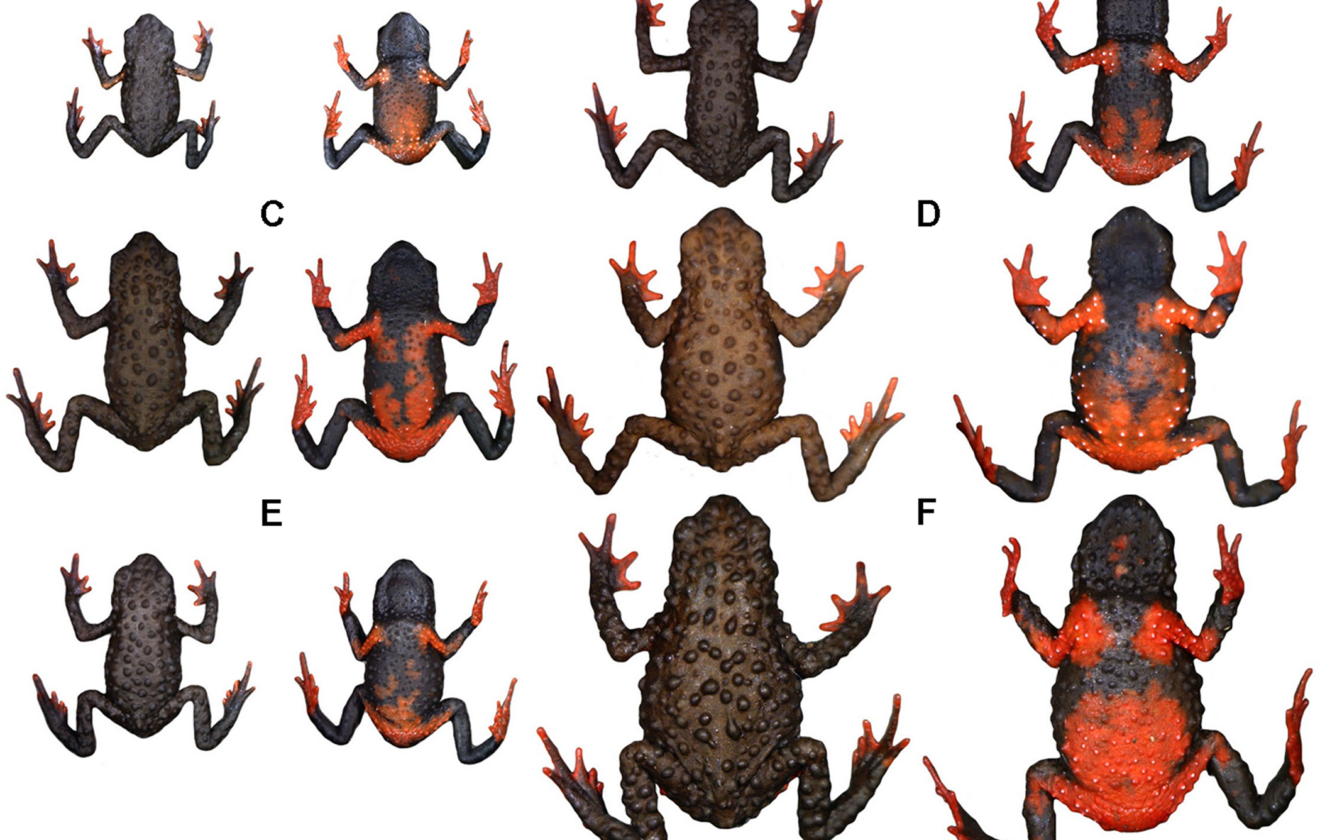
The extraordinary coloration of Melanophryniscus alipioi makes it unquestionably one of nature’s most evocative toads. Adults measure around 20 to 25 millimeters, smaller than your thumb’s top segment, yet what they lack in size, they compensate dramatically in appearance. Their glossy black base coloration contrasts strikingly with patches or blotches of vibrant red and orange, splashes of brilliant yellow around the legs, and sometimes white spots across their ventral side.
This palette of vivid colors serves as an aposematic (warning) signal—a genetic artwork styled by evolutionary processes to caution potential predators. Within their skin glands lie toxic alkaloids derived from dietary sources, a potent defense mechanism safeguarding them from a host of would-be attackers. Birds, mammals, and reptiles that have learned from painful encounters wisely steer clear of brightly colored amphibians such as M. alipioi.
Behavior and Life Cycle: Cryptic Lives beneath the Moss#
The daily lives of these diminutive amphibians remain mostly hidden beneath a veil of moss and leaf litter. Primarily nocturnal, the toads venture forth during humid or rainy nights, precisely when their prey insects become most active. Their substantial diet primarily consists of ants, mites, and other small arthropods found readily amidst the forest floor and rocky crannies. Their keen eyesight, nimble reflexes, and sticky tongues help them capture prey efficiently in rapid, precise strikes.
Breeding Rituals: The Dance of Discovery#
When seasonal rains transform the forest floor into interconnected shallow pools, the reproductive period of M. alipioi begins. Males gather around temporary water pools, advertising their readiness with soft, melodious calls resonating quietly—almost a whispered chorus in the dense vegetation. Females arriving, responding to these subtle songs, choose mates based on the quality of their calls and perhaps territorial vigor, though precise mate selection dynamics remain intriguing focal points of ongoing field research.
Following egg deposition in shallow, ephemeral pools, tadpoles undergo rapid developmental cycles due to the short-lived nature of their aquatic nurseries. Tadpoles must swiftly adapt to their unpredictable, temporary habitats, transforming into miniature replicas of adult toads within weeks. Thus begins the terrestrial stage of their cryptic lives, perpetuating a vital cycle essential to these fragile ecosystems.
Ecological Role: Indicator Species and Balance Keepers#
Melanophryniscus alipioi fills an ecological niche of impressive complexity. As predator and prey alike, these animals act as critical links within their native habitats. They actively control invertebrate populations by feeding predominantly on ants and mites, thus maintaining the delicate balance among insect communities putting pressure on native plant life systems.
Contrastingly, as vulnerable prey for certain specialized predators adapted to their toxins (such as particular snakes or predatory insects), they provide nourishment within specialized predator-prey webs, further highlighting their integrated roles. Furthermore, their impressive sensitivity to environmental alterations makes them superb bioindicators. Declines in their populations often signal broader environmental shifts, alerting ecologists to potential problems brewing within these viscerally beautiful, yet critically imperiled habitats.
Threats and Conservation Status: A Species on the Edge#
Despite its charismatic charm, M. alipioi currently faces daunting threats, most directly in the form of habitat degradation, deforestation, and climate change. A limited geographic distribution inherently restricts the species’ ability to migrate or adapt to rapid environmental transformations. Human-driven activities—logging, agriculture expansion, and urbanization—continue to fragment its habitat, while climate irregularities disrupt rainfall patterns crucial to their breeding cycles.
Currently classified as Vulnerable by the IUCN Red List, Melanophryniscus alipioi urgently needs targeted conservation interventions. Habitat protection, strict monitoring protocols, and education initiatives that raise community awareness stand as vital strategies in the fight against looming threats, providing very real opportunities to reverse this concerning trajectory.
Cultural and Scientific Significance: Small Amphibian, Large Legacy#
While not yet extensively embedded in regional cultural folklore, the species’ stunning colors and hidden existence capture the imaginations of herpetologists, naturalists, and ecotourists alike. Scientifically, the presence of unique biochemical adaptations—specifically potent alkaloids—has significant research relevance, potentially guiding medical breakthroughs following careful study of these delicate creatures and their toxin-producing glands.
Conclusion: Preserving the Jewel of Brazil’s Highlands#
As lovers of nature and custodians entrusted with Earth’s biodiversity, we recognize that every species, however small, holds immense intrinsic value. Melanophryniscus alipioi embodies a beautiful synthesis of evolutionary brilliance, ecological importance, and compelling conservation urgency. Protecting it means safeguarding much more—the lush habitats, dynamic ecosystems, and delicate connections that bind life together.
Together, we have the power to uphold conservation strides. Through active awareness, responsible engagement, and tangible conservation efforts, we can ensure that the vibrant, enigmatic presence of Melanophryniscus alipioi endures not just today, but far into the future.