- Discovering Leptophryne cruentata: The Enigmatic Bleeding Toad of Indonesia's Forests
Discovering Leptophryne cruentata: The Enigmatic Bleeding Toad of Indonesia’s Forests#
In the lush, damp depths of Indonesia’s forests, hidden beneath the dense canopy and moss-covered stones, lives an enigmatic amphibian whose peculiar characteristics have both bewildered and fascinated naturalists. Leptophryne cruentata, commonly known as the Bleeding Toad due to its distinctive red markings, is a remarkable little creature exhibiting fascinating adaptations and intricate interactions with its environment. Its scientific nomenclature may hint at a gory spectacle, yet this toad’s crimson patches are neither injury nor affliction — but a captivating defense forged across generations.
Despite its diminutive stature, Leptophryne cruentata holds immense ecological significance, playing a vital role as both predator and prey within its habitat. Tragically, this unique species faces mounting threats, its habitat shrinking under the pressures of human encroachment and climate alterations. Beyond ecological value, it symbolizes biodiversity’s resilience in the increasingly fragile ecosystems of Southeast Asia.
Taxonomy and Classification#
Scientifically categorized within the family Bufonidae—the true toads—Leptophryne cruentata finds itself sharing its lineage with many noteworthy amphibians globally. Its genus name, “Leptophryne,” derives from Greek origins meaning “slender” and “toad,” referencing its notably agile and petite physique atypical among traditionally sturdy-bodied Bufonids. The species epithet “cruentata” intriguingly translates as “blood-stained,” a clear nod to the scarlet patterns lacing boldly across its otherwise earthy-colored skin.
This unique taxonomic path reflects physical adaptations and evolutionary divergences from its cousins in the region. Close genetic relatives include Leptophryne borbonica; however, distinct morphological features and coloration set Leptophryne cruentata apart as an immediately recognizable species within its habitat.
Natural Habitat#
Geographical Range and Distribution#
Predominantly native to the Indonesian islands of Java, Sumatra, and Bali, Leptophryne cruentata enjoys a limited yet ecologically significant presence. It favors the moist, moss-covered forest floors near slow-moving streams and clear waterfalls nestled in dense tropical and subtropical rainforests. Within such environments, temperature and humidity remain relatively stable, creating ideal microclimates critical to its remarkable biology.
Environment and Microhabitats#
Carefully adapted to dense forest habitats, this amphibian thrives in spaces where dappled sunlight filters softly through the leafy canopies, casting gentle patterns onto fern-garnished floors. Streamside areas not only provide essential moisture but also support abundant insect populations upon which these small, sensitive amphibians depend. Rotting logs, leaf litter, and rock crevices serve as vital shelter, protecting them from predators and harsh weather fluctuations.
The habitat preferences of Leptophryne cruentata underline its pivotal relationship with forest integrity and freshwater quality. Their presence often indicates a thriving ecosystem, serving as trustworthy bioindicators for researchers monitoring environmental health.
Physical Characteristics#
The Vibrant Appearance of the Bleeding Toad#
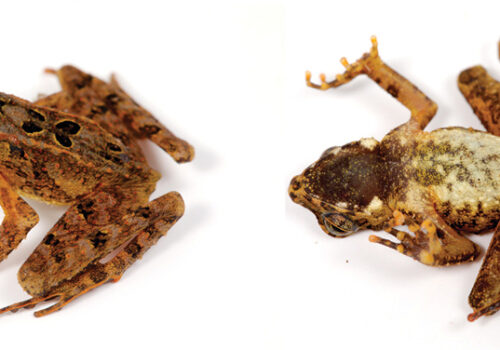
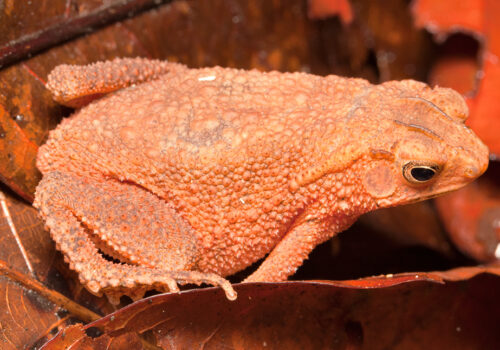
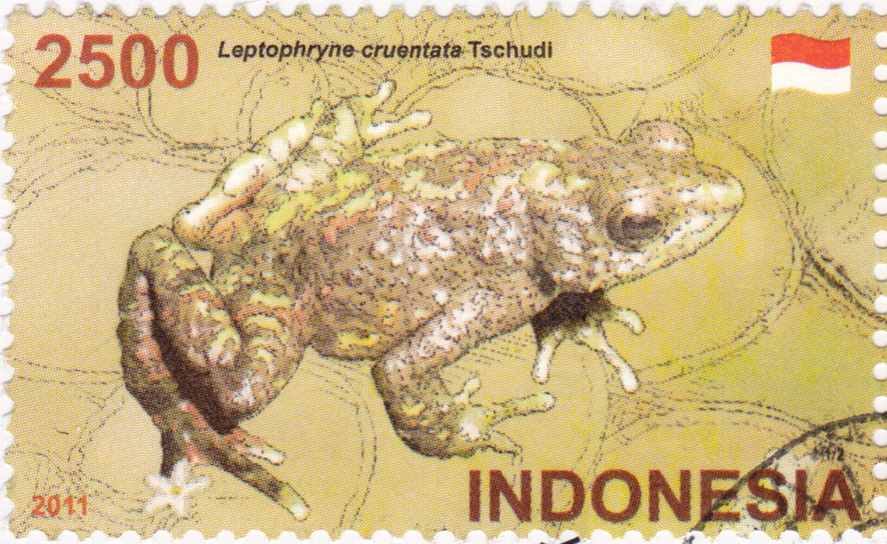
The Bleeding Toad hardly goes unnoticed. Its small, slender form rarely exceeds a modest 4 centimeters in length, yet it commands immediate attention with vivid coloration patterns. Covered predominantly by shades of dark brown, gray, or olive-green, it wears intricate patterns of bright, blood-red spots that contrast dramatically with its earthy skin tones. Some individuals exhibit almost artistic red blotching along their limbs and back — a hauntingly beautiful characteristic ensuring instant recognition among amphibian enthusiasts.
This arresting appearance serves a significant evolutionary function. The bold patches of red warn potential predators of the toad’s potent chemical defenses. When threatened, glands beneath its skin secrete toxins discouraging attackers — a vital survival mechanism in an environment where predators are every bit as diverse and formidable as prey. Even its agile, slender body shape and powerful hind-limb muscles reflect adaptations for swift escape into hidden crevices and protective leaf litter.
Behavior and Life Cycle#
Feeding Habits and Predation Techniques#
As twilight descends upon the forests, Leptophryne cruentata emerges from daytime shelters to hunt. Utilizing impressive stealth and patience, it preys primarily on small rainforest-dwelling insects, including ants, beetles, termites, and tiny crustaceans that populate forest floor ecosystems. Its feeding technique involves sudden bursts of motion and powerful tongue strikes, quickly securing and devouring unsuspecting prey items. This nocturnal lifestyle reduces competition and exposure to diurnal predators, ensuring survival in environments teeming with biodiversity.
Breeding Behavior and Lifecycle#
Bringing forth a new generation is an enchanting spectacle for observers fortunate enough to witness it. During the rainy season, males begin their nightly chorus, producing soft, melodious calls echoing gently through dense vegetation, enticing females toward carefully chosen breeding sites beside clean, flowing streams. Larger stones, covered in moisture and frequently splashed by cascading waters, offer prime territory for mating rituals.
Upon copulation, the female lays gelatinous eggs in quiet waters or sheltered pools amid rocks and vegetation, relying on clean streams and steady temperatures to promote successful development. Tadpoles develop rapidly, feeding primarily on algae and organic debris, gradually metamorphosing into miniature versions of the charismatic adults. Juveniles quickly disperse upon developing limbs, transitioning to terrestrial habitats that match adulthood patterns.
Ecological Role#
Ecologically crucial, the Bleeding Toad often serves as both predator and prey, weaving intricately into the tapestry of biodiversity. By consuming insects, it performs valuable ecological functions such as pest control and nutrient cycling through its diet-based energy transfer. Simultaneously, the species occupies a central place in complex food webs, becoming prey to snakes, birds, and larger amphibians within their microhabitats. Its reliance on pristine streams highlights its role as an essential indicator species – signaling environmental disturbance or water pollution swiftly through lapse in population health or abundance.
Threats and Conservation Status#
Challenges in Habitat and Population Declines#
Unfortunately, Leptophryne cruentata endures serious threats, positioning it amongst Indonesia’s vulnerable amphibian species, according to the IUCN Red List. Habitat destruction driven by deforestation, agricultural expansion, logging, and increasing urbanization fragments its suitable habitats, while the spread of diseases such as chytridiomycosis compounds existing environmental pressures. Climate change exacerbates these challenges, altering rainfall patterns and subsequently impacting crucial breeding cycles. This perfect storm of threats catalyzes increasingly alarming declines in populations across its range.
Ongoing Conservation Efforts#
Conservationists, researchers, and community advocates are establishing efforts toward saving this species’ habitats by creating awareness, promoting sustainable practices, and safeguarding freshwater ecosystems essential for its survival. Local environmental organizations encourage reforestation, stream restoration, pollution reduction projects, and introduce educational programs addressing the importance of biodiversity conservation, with Leptophryne cruentata as a charismatic flagship.
Cultural and Scientific Significance#
Across many communities within its range, amphibians represent symbols of purity, fertility, and renewal, often included subtly within traditional folklore and narratives. While Leptophryne cruentata specifically may not dominate folklore, its distinctive appearance and importance in ecological storytelling illuminate the richness of Indonesia’s biodiversity heritage, encouraging local pride and mindfulness of conservation.
Additionally, scientific studies centering around the unique toxins secreted by this species present possibilities in biomedical research. Investigating the potential medicinal applications of such chemical compounds illustrates yet another facet of ecological connectivity, reinforcing the importance of maintaining healthy populations of amphibians like Leptophryne cruentata for present and future generations.
Conclusion: A Call for Appreciation and Action#
Hidden beneath Java’s thick foliage, beneath Sumatra’s dense canopies, behind Bali’s cascading waterfalls, lives an animal as beautiful as it is crucial. Leptophryne cruentata, painted vividly in red, symbolizes both vulnerability and resilience. It commands awe and reveals delicate connections in nature’s intricate tapestry. However, the future of this amphibian rests largely in human hands, hinging upon meaningful engagement, deeper awareness, and collective actions toward sustainable coexistence.
As readers and enthusiasts of wildlife, our deepening understanding of the Bleeding Toad can inspire more comprehensive protective measures, sustainable decisions, and lasting support for conservation. Now, more than ever, recognizing and protecting the wonders of our natural world becomes imperative. Join us in advocating and acting for Leptophryne cruentata—an amphibian undoubtedly small in size but immeasurable in value and significance.