- Exploring the Mysteries of Leptophryne borbonica: The Elegant Frog of Southeast Asia
- Taxonomy and Classification of Leptophryne borbonica
- Natural Habitat: Where Does the Leptophryne borbonica Thrive?
- Physical Characteristics: The Artistry of Evolution
- Behavior and Life Cycle: Navigating Life's Challenges
- Ecological Role: Guardians of the Forest
- Threats and Conservation Status
- Cultural and Scientific Significance
- In Closing: Celebrating the Cross-backed Frog's Place in Nature
Exploring the Mysteries of Leptophryne borbonica: The Elegant Frog of Southeast Asia#
In the verdant rainforests of Southeast Asia, among cushions of moss and creeping roots, dwells a creature both elusive and remarkable—the Cross-backed Frog, scientifically known as Leptophryne borbonica. Hidden within the dense foliage and shady cascades of freshwater streams, this amphibian species stands as a silent testimony to the rich biodiversity and ecological harmony of rainforest habitats. Despite being diminutive, it casts a considerable shadow in terms of ecological importance and intrigues both scientists and nature enthusiasts alike.
Just imagine picking through dense greenery, the air thick with mist and the heady aroma of damp earth, as the gentle chorus of chirps and croaks accompanies your trek. Suddenly, amid intricate patches of leaves and stones, a subtle movement reveals itself—a tiny frog, colored in vibrant patterns yet blending seamlessly into its environment, reminding us of nature’s impeccable artistry.
The Leptophryne borbonica is not just another amphibian—it is a precise indicator of forest health, an extraordinary example of evolutionary adaptation, and a focal species essential to conservation dialogues in the region. So, dive with us into the wondrous life journey of this enchanting creature and uncover its role in the grand tale of life in Southeast Asia’s forests.
Taxonomy and Classification of Leptophryne borbonica#
The Cross-backed Frog belongs to the family Bufonidae, commonly known as “true toads.” Although commonly known as a toad, Leptophryne borbonica exhibits many characteristics more reminiscent of typical frogs, contributing to ongoing discussions among herpetologists about frog and toad distinctions.
The genus Leptophryne includes a small number of species, among which Leptophryne borbonica is notably prominent for its unique markings and behavior. First described scientifically by Tschudi in 1838, it possesses defining morphological features that separate it distinctly from closely related species.
In understanding taxonomy, we glimpse the hidden connections this amphibian has with a broader diversity of life. Its placement within the Bufonidae family reminds us of evolution’s finely woven web, where each organism balances on delicate threads of genetic lineage.
Natural Habitat: Where Does the Leptophryne borbonica Thrive?#
Venturing into the humid forests of regions such as Java, Borneo, Sumatra, and peninsular Malaysia, one can find the Cross-backed Frog in pristine mountain streams, peat swamp forests, and humid lowland rainforests. Preferring cool, moisture-rich habitats, these elegant amphibians are specialists, reliant upon clear freshwater streams for their reproduction, and dense vegetation for protection.
Far from being generalists, they position themselves within specific niches that provide essential resources and protection. The waters they select for breeding are typically slow-moving, shallow, and relatively shaded—conditions perfect for their tadpoles to flourish. Higher altitudes and habitats hidden beneath thick canopy cover, untouched by extensive human activity, foster thriving populations of Leptophryne borbonica.
Imagine such a habitat: sunlight delicately filters through layers of tropical leaves above, illuminating crystalline streams flowing over smooth stones and fallen trees. Ferns and moss-covered branches frame every crevice, creating a cool sanctuary entirely apart from human disturbance—a perfect realm for this diminutive species.
Physical Characteristics: The Artistry of Evolution#
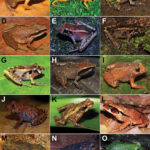
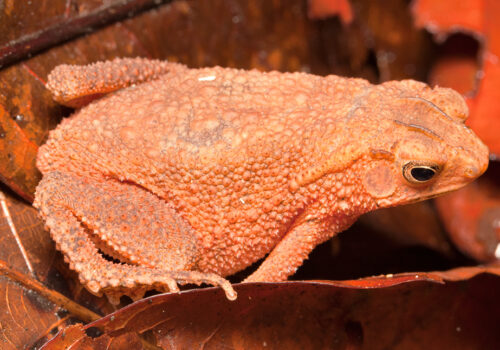
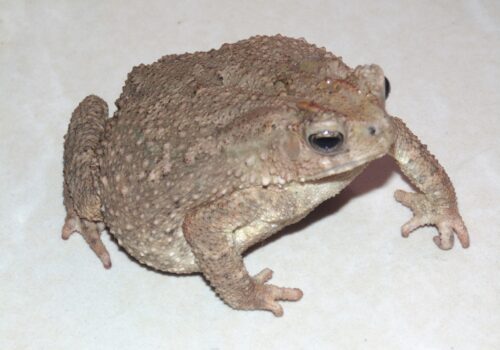
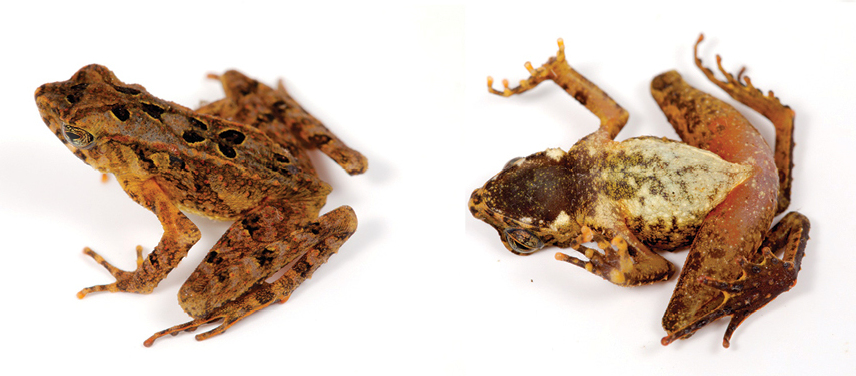
Seldom exceeding 4 centimeters in length, the Cross-backed Frog presents itself as a portrait of miniature artistry. Its most distinguishing trait, giving rise to its common name, is a unique, beautifully patterned dorsal coloration. Intricate black and gold markings dance rhythmically across its back in cross-shaped patterns, splendidly contrasting against its lighter belly and darker limbs. This coloration is more than mere aesthetic beauty—it plays a crucial defensive role, aiding perfectly in camouflage amongst leaf litter and lichen-covered stones.
The skin texture appears slightly granular yet delicate, with small warts common to the Bufonidae family sprinkled subtly across its form. Its eyes, incredibly expressive for such a compact amphibian, carry large irises indicating its nocturnal tendencies, built for precision during night-time hunting.
These physical characteristics, molded impeccably by millennia of natural selection, facilitate its survival and reproductive success. Notably, skin glands secret mild toxins, deterring potential predators, demonstrating evolution’s endless inventiveness in protecting this elegant, yet fragile, species.
Behavior and Life Cycle: Navigating Life’s Challenges#
Diet and Hunting Tactics#
The Cross-backed Frog’s diet principally comprises small terrestrial invertebrates, including ants, termites, beetles, and various insects typical in rainforest leaf litter. Employing ambush-style hunting techniques, the frog remains motionless beneath foliage, awaiting the perfect opportunity to strike. Its feeding mechanism, involving rapid tongue extension and impeccable timing, epitomizes the amphibian adaptation for precision and efficiency.
Mating Rituals and Reproduction#
Like most of their frog relatives, the breeding season motivates males to converge in choruses along freshwater streams, their soft yet distinctive calls permeating the humid night air. These melodious notes invite females, initiating sophisticated rituals that increase the colony’s reproductive success.
Females lay elongated strings of eggs in clear, shallow waters. These eggs, enveloped delicately in protective gelatinous layers, quickly develop into tadpoles. Tadpoles exhibit unique adaptations suited to their aquatic habitats—tail-fins designed for maneuverability in gentle currents and mouthparts crafted for grazing gently upon aquatic vegetation.
Gradually, through metamorphosis, limbs appear, lungs develop, and finally, mature frogs emerge, ready to explore life on land. Witnessing this metamorphosis is akin to watching evolution unfold in fast-forward—a breathtaking testament to life’s resilience, continuity, and adaptability.
Ecological Role: Guardians of the Forest#
While small in stature, Cross-backed Frogs significantly impact their ecosystem, performing important roles as predators, prey, and environmental indicators. As predators, they manage populations of invertebrates, helping maintain ecological balance.
Simultaneously, Leptophryne borbonica is prey for various snakes, birds, mammals, and larger stream predators like crustaceans. Thus, their presence firmly integrates them into complex ecological networks that sustain tropical biodiversity.
Perhaps most compellingly, they are excellent bio-indicators. Their sensitivity to water quality and temperature fluctuations makes them crucial contributors in assessing ecosystem health, guiding conservation strategies, and raising environmental alarms when habitats become compromised.
Threats and Conservation Status#
Despite their resilience, these delicate amphibians face threats primarily from habitat loss caused by extensive deforestation, agriculture expansion, and urban development. Climate change also poses challenges, disrupting rainfall patterns and stream quality crucial for amphibian survival.
The International Union for Conservation of Nature (IUCN) classifies Leptophryne borbonica as “Least Concern,” meaning populations are currently stable. Nevertheless, this classification doesn’t negate the mounting pressures affecting certain local populations, making awareness and proactive habitat conservation critical for the frog’s long-term survival.
Current conservation initiatives prioritize habitat preservation, education, and active monitoring efforts across Southeast Asian territories. By engaging local communities in conservation education and habitat restoration projects, conservationists aim to uphold stable frog populations and ensure ongoing forest vitality.
Cultural and Scientific Significance#
In regions where Leptophryne borbonica resides, local cultural narratives often assign amphibians roles in natural folklore, symbolic of purity, fertility, or environmental integrity. Though not as prominently featured as larger wildlife species, amphibians like this frog play vital symbolic roles that foster environmental stewardship among local communities.
Scientific inquiry also benefits significantly from studying frogs such as Leptophryne borbonica. Their unique toxin glands, reproductive adaptations, and sensitivity to environmental changes continue to inform new paths for biochemical research, environmental monitoring, and climate science.
In Closing: Celebrating the Cross-backed Frog’s Place in Nature#
Leptophryne borbonica encapsulates the vibrant complexity of Earth’s biodiversity. This humble amphibian’s journey, intricately intertwined with delicate ecosystems, reminds us of our collective responsibility in safeguarding nature’s interconnected tapestry. By uncovering the stories these creatures whisper softly through their existence, we are compelled to act, respect, and cherish that which sustains not only frogs, but life itself.
It is our calling—as conservationists, enthusiasts, and stewards—to ensure that future generations can hear and witness the gentle calls and graceful movements of the Cross-backed Frog within Southeast Asia’s timeless rainforests.