- Unveiling Laurentophryne parkeri: The Hidden Jewel of the Amphibian World
Unveiling Laurentophryne parkeri: The Hidden Jewel of the Amphibian World#
Tucked within the lush, mysterious forests of South America lies a frog so rare and cryptic that few outside the scientific community have heard its name: Laurentophryne parkeri. To stumble upon this elusive creature in its native environment is exceedingly rare, yet even the briefest encounter leaves a lasting impression. With its gentle eyes, intricate markings, and behavior as peculiar as it is fascinating, Laurentophryne parkeri stands as a testament to the incredible diversity and wonder of amphibian life.
Known sometimes affectionately as Parker’s Tree Toad or simply Parker’s frog, this species seems like nature’s carefully kept secret—an obscure gem hidden in misty rainforests far from civilization. But beyond its secretive charm lies a creature whose very existence highlights essential truths about biodiversity, ecological health, and our shared responsibility to understand and protect the natural world.
Taxonomy and Classification#
The frog known scientifically as Laurentophryne parkeri belongs to the family Bufonidae—a family broadly familiar to most nature enthusiasts as the “true toad” family. While many members of Bufonidae exhibit stout builds and earth-bound behavior, this species presents a unique exception with its peculiar arboreal habits, placing it in a realm of profound interest among biologists.
The genus name “Laurentophryne” is itself a nod to distinguished Belgian herpetologist Raymond Laurent, whose painstaking contributions greatly enhanced our understanding of amphibian diversity. The specific name “parkeri” honors renowned British herpetologist Hampton Wildman Parker, thus bearing tribute to pioneers who illuminated the secrets of amphibian biology.
The taxonomic distinctness of Laurentophryne parkeri elevates its importance significantly within scientific circles. Its closest relatives, belonging typically to a variety of toad forms scattered across South American habitats, suggest an intriguing evolutionary story worthy of deeper examination and conservation priority.
Natural Habitat#
Misty Realms of Andean Rainforests#
Venture deep into the foothills and slopes of the subtropical Andes—the rugged terrain of Bolivia, particularly in Cochabamba Department—and you enter the shadowy, emerald world of Laurentophryne parkeri. Here, the frog thrives amidst moist montane forests between altitudes of roughly 1,800 to 2,600 meters, relying wholeheartedly on pristine, shaded habitats blanketed by clouds and mists that curl gently through the trees.
Their habitats consist primarily of pristine forests, featuring an abundance of ferns, bromeliads, moss-laden branches, and tranquil water bodies tucked between the soft expanse of forest litter and the dense canopy overhead. The microclimate created by this balance—mist, humidity, cooler temperatures—nurtures these tiny amphibians perfectly, allowing them intricate interplay with their rainforest milieu.
If one walks quietly amidst these cloud-drenched forests, one might catch calm glimpses of these frogs, often resting still among leaves or clambering quietly among vines and low vegetation, subtly demonstrating their favor for arboreal habitats.
Physical Characteristics#
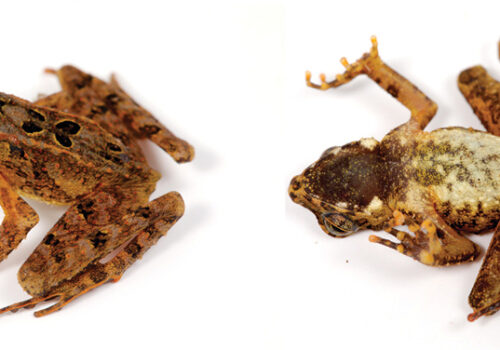
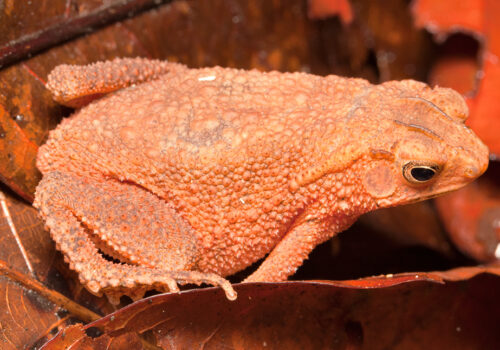
What first captures attention about Laurentophryne parkeri is its subtle, mysterious beauty—quietly captivating rather than ostentatiously colored. As a small species, adults rarely exceed several centimeters in length, with females generally slightly larger than males. Their sturdy but compact build reflects their adaptation to an arboreal existence, as limbs appear strong and dexterous, suitable for careful climbing among vegetation.
The coloration is cryptic yet attractive in its simplicity; hues of soft brown intermixed with subtle greens and yellows, often patterned gracefully on the dorsum, mimic the delicate hues of mosses, lichens, and leaves, perfectly camouflaging them within their dense habitat. Skin texture is slightly granulated, lending to their inconspicuous and thoroughly amphibious aesthetic. Their large, expressive eyes, adapted for nocturnal vision, provide a captivating gaze and reinforce their quietly charming demeanor.
Notably, their underside possesses lighter shades, sometimes presenting delicate cream patterns. Such natural camouflage, coupled with their cryptic behavior, highlights their evolutionary history as an adaptive response to predation pressure and the necessity of stealth.
Behavior and Life Cycle#
Quiet Predators: The Hunt Beneath Forest Canopies#
By twilight and into nightfall, when the clouds roll silently through wooded slopes, Laurentophryne parkeri awakens from slumber, emerging softly onto leaf platforms and low shrubs. Patiently, they wait, adept at ambushing small insect prey attracted by moisture and forest blooms. Mosquitoes, gnats, small spiders, ants, and sometimes tiny beetles constitute their primary diet, caught with skillful, rapid strikes of their sticky tongues.
Their behavior during feeding is notably patient and methodical, underscoring the gentle yet deliberate nature of these arboreal frogs. Predators watching through the darkness find little chance, as these tree-dwelling amphibians remain ever on guard, always aware of lurking dangers posed by nocturnal snakes and small mammals.
Mating Rituals and Tadpole Development#
With the onset of the rainy season, sparking life anew throughout the Andean cloud forests, males initiate their soft but penetrating calls—a gentle chorus echoing in the moist swirls of evening mist. Calling from favored perches snuggled within dampened ferns or vines, their quiet melodies guide females to hidden mating pools and temporary water bodies formed by recent rain.
The female lays her small, gelatinous clutch of eggs carefully beneath overhanging vegetation or near small forest pools. Tadpoles subsequently flourish within temporary pools and quiet forest puddles, feasting upon algae, microorganisms, and detritus. This hatchling phase reflects the utmost delicacy and reliance on ephemeral and permanent freshwater habitats—a balance that sustains the extraordinary biocycle of these marvelous amphibians.
In a short span, tadpoles morph dramatically, limbs emerging as tails recede, and culminating in fully developed juvenile frogs, ready to assume their roles within the intricate rainforest matrix.
Ecological Role#
As a silent steward and vanguard of ecosystem health, Laurentophryne parkeri plays multiple understated yet critical ecological roles. Functioning as both predator and prey, the species intricately bridges numerous trophic levels within Andean ecosystems. By consuming abundant insect populations, they significantly contribute to controlling potential pest insects, thereby sustaining a balanced forest ecosystem.
Simultaneously, their presence provides nourishment for keen-eyed predators such as forest snakes, birds, and mammals. Their survival hinges precariously upon the stability of forest ecosystems. Consequently, their health and population densities often reflect broader fortune or danger facing regional ecosystems. Thus, frogs like Laurentophryne parkeri assume heightened significance as ecological indicators, early-warning messengers signaling disturbances to fragile habitats.
Threats and Conservation Status#
The Fragility of Cloud Forest Refuges#
Amid growing anthropogenic pressures from habitat destruction, agricultural encroachment, deforestation, climate fluctuations, and pollution, the habitats supporting Laurentophryne parkeri have become increasingly imperiled. Human-induced landscape alteration severely impacts freshwater availability and quality, transforming naturally pristine habitats into fragmented remnants unsuited to delicate amphibian reproduction cycles.
Currently, Laurentophryne parkeri is designated as Vulnerable by the International Union for Conservation of Nature (IUCN), a status denoting significant risks and a dwindling population. As biologists and conservationists race against the clock to protect vital habitats, holistic conservation methods—ecosystem protection, awareness building, and careful management—emerge as crucial solutions in safeguarding this species’ continued existence.
Cultural and Scientific Significance#
Though relatively unknown outside scholarly circles, species like Laurentophryne parkeri carry profound implications within both cultural and scientific contexts. Beyond scientific interest derived from their evolutionary uniqueness, they embody the awe-inspiring biodiversity of tropical ecosystems, resonating deeply within indigenous cultural narratives of the Andean region as symbols of life, balance, and delicate interconnectedness.
Moreover, frogs such as these serve as invaluable indicators of climate change and habitat integrity, aiding scientific research dedicated toward understanding environmental changes. Every discovery, behavior noted, or survival observed underscores the indispensable ecological character of these beautifully complex animals.
Conclusion: Embracing Responsibility for the Hidden Wonders#
The humble story of Laurentophryne parkeri invites us toward deeper reflection and action. By safeguarding its mysterious forest realms and advocating passionately for amphibian conservation, we ensure these hidden jewels keep thriving—allowing future generations to discover and appreciate the extraordinary diversity and wonder of our natural world.
As caretakers of planetary biodiversity, our collective commitment to conservation shapes the legacy we leave behind, ensuring the amphibia’s quiet chorus continues to whisper its gentle, inspiring story within our forests for generations to come.