- Exploring the Secretive World of Kenyaphrynoides vulcani: Kenya's Volcanic Toad in the Misty Highlands
- Taxonomy and Classification
- Natural Habitat: The Mystical Highlands of Kenya
- Physical Characteristics: Subtle Mastery of Camouflage
- Behavior and Life Cycle: Quiet Drama in Misty Enclaves
- Ecological Role and Importance
- Threats and Conservation Status: Safeguarding Kenya’s Volcanic Toad
- Cultural and Scientific Significance: An Amphibian Ambassador
- Conclusion: Celebrating Kenya’s Unique Amphibian Heritage
Exploring the Secretive World of Kenyaphrynoides vulcani: Kenya’s Volcanic Toad in the Misty Highlands#
In the mist-covered slopes of Kenya’s highland forests, amidst lush greenery and volcanic soils, lives one of Africa’s most elusive amphibians—the Kenyan volcano frog, scientifically named Kenyaphrynoides vulcani. Unlike many of its more flamboyantly colored relatives, this humble frog may not immediately grasp your attention with vivid colors or dramatic displays. Yet, the subtle beauty, remarkable adaptations, and unique habitat needs of this small amphibian create a compelling story of evolution, resilience, and vulnerability.
Known locally as the “toad of the volcanoes,” this frog is intricately tied to a highly specialized ecosystem—one heavily influenced by volcanic activity and the cool embrace of high-altitude forests, where life often hovers beneath low-hanging clouds. An indicator of ecosystem health, the Kenyan volcano frog quietly signals the condition and changes in its fragile environment, often unnoticed but profoundly essential.
Taxonomy and Classification#
The Kenyan volcano frog, Kenyaphrynoides vulcani, belongs to the family Bufonidae—the true toads—and is unique, standing alone within its own distinctive genus, Kenyaphrynoides. First scientifically documented in the mid-20th century, the species occupied a specialized niche that initially baffled amphibian taxonomists. Today, it remains a standalone representative of evolutionary specialization, closely related to other East African bufonids but distinct enough in its physical and ecological characteristics to warrant its own genus.
This intriguing amphibian highlights the evolutionary wonder that occurs when isolation, geographic conditions, and specialized resources collide. While superficially similar to other toads around the world, the closer one looks, the clearer the uniqueness of this species becomes, showcasing nature’s ability to shape new life forms from ancient blueprints.
Natural Habitat: The Mystical Highlands of Kenya#
Kenyaphrynoides vulcani is endemic specifically to Kenya’s volcanic highlands—especially around regions like Mount Kenya and Aberdare Range—where altitudes range from about 2,000 to 3,400 meters above sea level. Enveloped by misty mountains, cool forests, and fertile volcanic ash, this environment provides a distinctly nurturing yet challenging habitat for amphibian life.
Misty Forest Floors and Cool Streams#
Venturing into their habitat is like stepping into a hidden realm suspended in perpetual twilight. Moss-covered trees stretch their limbs towards the cloudy heavens, ferns glisten with droplets of moisture, and dense foliage hums with the sounds of insects—a veritable paradise for small insectivores like our frog. The humidity stays persistently high, thanks to cloud cover combined with frequent rainfall, dew, and mist.
Along forest streams, partially hidden underneath decomposing leaf litter, volcanic rocks, and damp mosses, Kenyan volcano frogs craft their secretive microhabitats. Here, protected from daytime predators and ultraviolet rays, the moisture-critical conditions necessary for their sensitive, permeable skin are perfectly maintained.
Adaptations Shaped by Volcanic Activity#
The underlying volcanic geology not only provides rich nutrients sustaining lush vegetation but also creates specific structural conditions for breeding pools. Rainwater gathers in shallow volcanic depressions forming transient pools essential for egg laying. Without continuous moisture, or if these pools disappear due to changing climatic conditions, the very survival of this species becomes compromised.
Physical Characteristics: Subtle Mastery of Camouflage#
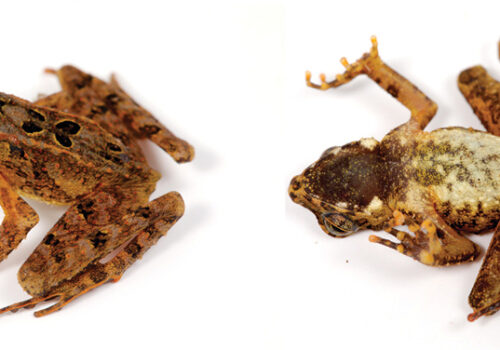
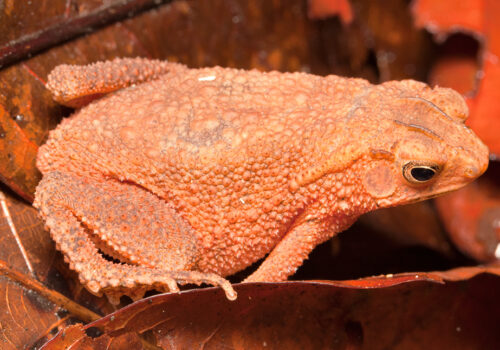
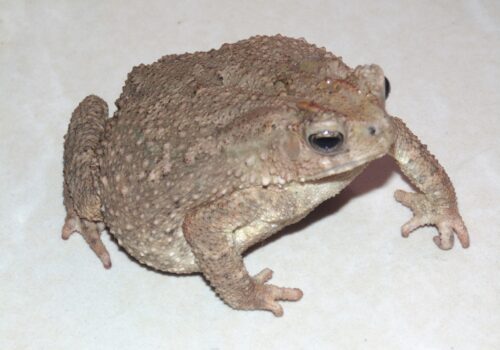
If born of fire, this gentle amphibian seems paradoxically understated in appearance. Typically small, averaging around 4 centimeters in length as adults, it appears more rounded and less slender than many other frogs. Its robust, squat body is covered in minute, granular warts—a typical Bufonidae trait. Their skin, predominantly brown or grey, mimics perfectly the shades and textures of their forest floor setting.
Upon close examination, subtle patterns emerge: delicate mottling or speckling in shades slightly lighter or darker than their dominant color, allowing the frog to blend seamlessly with its environment. Such effective camouflage protects them from various predators, including birds, snakes, and small carnivorous mammals, making them nearly impossible to detect unless they move.
Their eyes, rounded and expressive, hold a meticulous watchfulness, ever alert to dangers and ready to react swiftly. Interestingly, their toes and fingers have slightly enlarged pads, adaptations valuable for gripping slippery rocks and clinging securely to moss-covered branches and logs, aiding movement in their moist habitat.
Behavior and Life Cycle: Quiet Drama in Misty Enclaves#
Deep in the Shadows: Feeding and Predation#
Kenyaphrynoides vulcani is predominantly nocturnal, a trait designed by evolution to further safeguard against predation and desiccation. At night, they venture from hiding spots beneath fallen leaves, moss, or logs, hopping quietly along the forest floor in search of insect prey—small beetles, ants, spiders, and moth larvae, all abundant in this humid environment. With lightning-speed tongue strikes, their hunting approach is swift and efficient, leaving unsuspecting insects oblivious until the last quick moment.
A Subtle Romance: Courtship and Breeding#
Each breeding season witnesses a quiet yet significant drama. Unlike louder tropical frogs whose nocturnal concerts fill the night, Kenyan volcano frogs opt for gentle, subdued calling, perhaps to evade attracting predators. Breeding typically occurs during rainy seasons—when temporary pools form from heavy rains—offering a perfect amphibian nursery.
Males patiently stake out select breeding pools, softly emitting occasional melodic croaks to court approaching females. After careful selection, females lay strands of gelatinous eggs—numbering in tens individually rather than thousands—attached securely to submerged vegetation or rock edges. Mom Nature’s strategy here focuses on higher quality individual care rather than mass quantity, ensuring higher survival chances for fewer eggs in this harsh mountain environment.
Tadpole Transformation: Metamorphosis in Mountain Pools#
From eggs hatch tiny translucent tadpoles, reliant upon algae and other aquatic microorganisms for nourishment. This tadpole stage, vulnerable and delicate, demands optimal environmental conditions—particularly stable water temperature and sufficient dissolved oxygen. Within weeks, under ideal conditions, they gradually sprout legs and resorb their tails, emerging miniature versions of their adult selves ready to brave terrestrial life.
Ecological Role and Importance#
Within their mmountain ecosystems, Kenyaphrynoides vulcani occupy a critical ecological niche as insect predators, helping naturally manage insect populations and keeping minor forest pests in check. Simultaneously, they provide sustenance to larger predators, thus maintaining ecological balance within the highland food web. Crucially, sensitive as they are to changes in climate and habitat conditions, volcano frogs function as biological indicators—warning signs households would respect—alerting conservationists to subtle yet important signals of environmental degradation.
Threats and Conservation Status: Safeguarding Kenya’s Volcanic Toad#
Currently classified as Endangered on the IUCN Red List, this frog faces numerous threats—habitat destruction primarily driven by human encroachment, agriculture, and logging, as well as indirect effects of climate change affecting rainfall patterns and temperatures essential for breeding.
Conservation plans now emphasize protection of critical habitats recognizing that ensuring the survival of this humble amphibian equates directly to preserving larger interconnected ecosystem health. Local groups and international institutions work together, implementing strategies like restricted logging, controlled eco-tourism, restoration of degraded forest areas, and public education aimed at sustaining both human livelihoods and wildlife.
Cultural and Scientific Significance: An Amphibian Ambassador#
Culturally, though quietly tucked away in highlands not prominently featured in folklore, this frog embodies raw nature’s power and subtlety among local communities. Scientifically, it symbolizes the invaluable knowledge provided by studying specialized amphibian adaptations, environmental sensitivities, and our complex interconnected ecosystem relationships.
Conclusion: Celebrating Kenya’s Unique Amphibian Heritage#
If nature’s great drama often unfolds unseen and unheard, Kenyaphrynoides vulcani exemplifies such quiet narratives perfectly—small amphibian lives intricately bound to their volcanic homeland and fragile balance of life. Understanding and valuing these frogs encourage us, as nature enthusiasts and conservationists, to support actions preserving Kenya’s precious biodiversity. Safeguarding amphibians like the volcanic toad highlights the interconnectedness of all life—and reminds us of our profound responsibility to the wild.