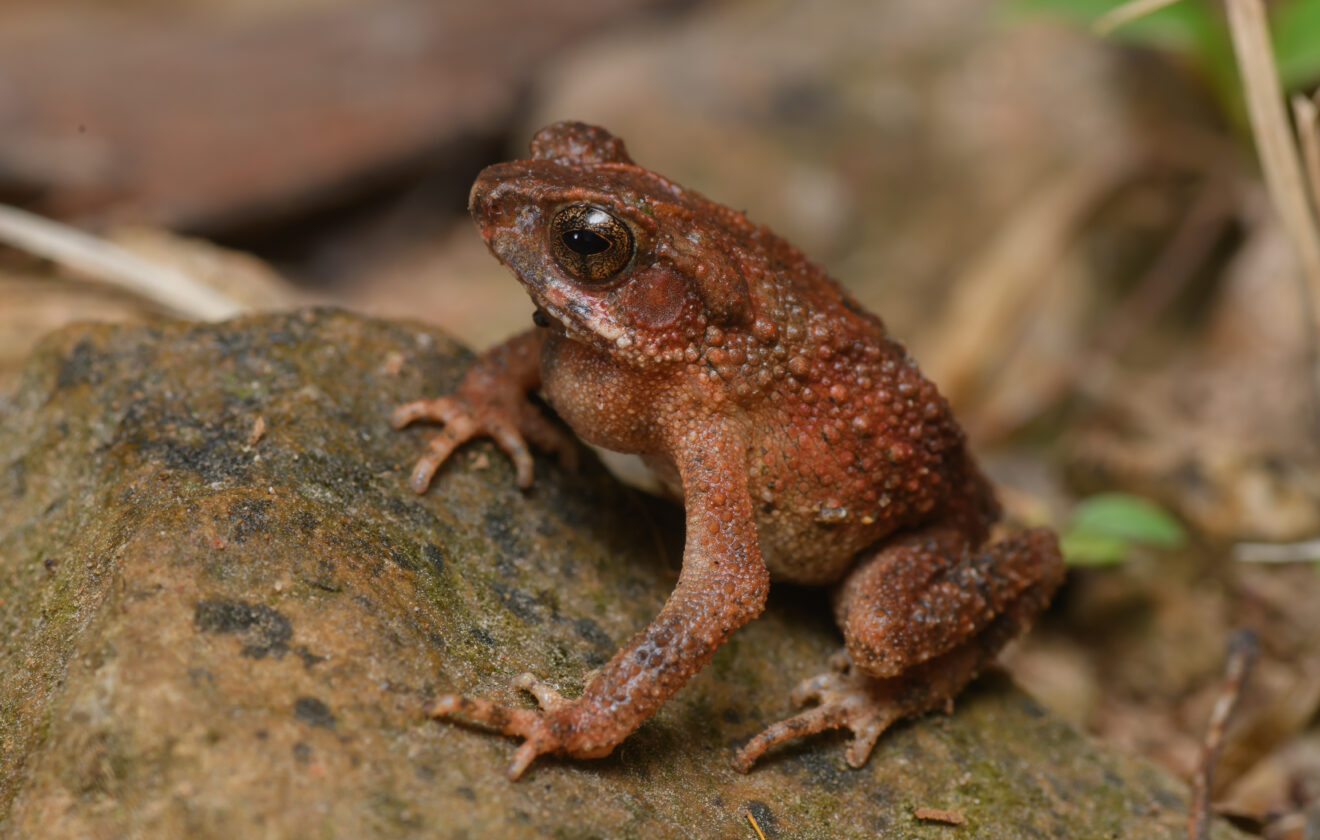
The Dwarf Toad Revealed: Exploring the Secret Life of Ingerophrynus parvus#
Introduction#
Hidden in the lush undergrowth of Southeast Asia’s rainforests, small eyes peep through fallen leaves and tangled roots, patiently watching and waiting. It’s here, cloaked by the forest’s perpetual shadow and humidity, that we encounter an unassuming amphibian, scarcely noticed yet profoundly fascinating—the dwarf toad, scientifically known as Ingerophrynus parvus.
While much attention often gravitates toward the vibrant poison dart frogs of tropical regions, species like I. parvus, modest in coloration yet enigmatic in their quiet behavior, hold their own charm and ecological significance. Shrouded in obscurity and discreet in their habits, these tiny amphibians are critical members of their delicate ecosystems, beautifully adapted to a life of careful concealment and vigilant watchfulness.
But why dedicate our attention to this small, inconspicuous frog? Within its humble appearance lies a remarkable adaptation story, intriguing behavioral patterns, and vital ecological roles, all threatened by the relentless encroachment of human activity. Join us as we delve deeper into the intricate world of Ingerophrynus parvus, uncovering secrets only the patient observer can fully appreciate.
Taxonomy and Classification#
Ingerophrynus parvus, more commonly referred to as the dwarf toad, belongs to the Bufonidae family—a widespread group of true toads. Initially assigned under the broad genus Bufo, ongoing taxonomic studies have since refined our understanding, placing this species in the genus Ingerophrynus. This genus encompasses several Asian toads sharing uniquely adapted characteristics suited to their humid, tropical environments.
The genus name Ingerophrynus honors the distinguished American herpetologist Robert F. Inger, whose lifelong work illuminated our understanding of Southeast Asian amphibians. The species designation ‘parvus’, meaning ‘small’ in Latin, aptly signifies the diminutive size characteristic of this intriguing amphibian.
Closely related species within the genus include Ingerophrynus macrotis and Ingerophrynus divergens, yet subtle morphological features and distributional differences distinguish I. parvus distinctly within the group.
Natural Habitat#
Ingerophrynus parvus inhabits the diverse tropical forests of Southeast Asia—specifically, areas across Thailand, Malaysia, Singapore, Indonesia (Sumatra), and Brunei. Within these lush realms, it favors pristine, undisturbed rainforest habitats, especially those characterized by dense foliage, moist leaf litter, and proximity to fresh water sources.
On the forest floor, amongst carpets of decaying leaves, fallen branches, and tangled roots, this diminutive creature thrives. The constant humidity and temperature moderation provided by forest canopies create ideal micro-climates essential for moisture retention, asthma-sensitive amphibian skin, and the survival of tiny larvae and juveniles.
Unlike some more conspicuous amphibians, the dwarf toad is a master of disguise and restraint, intricately entwined with its habitat—almost indistinguishable from its surroundings. Seeking refuge beneath fallen bark and decomposing vegetation, these frogs maintain their delicate moisture balance, evade potential predators, and patiently await their unsuspecting prey.
Physical Characteristics#
At first glance, the dwarf toad may not seem remarkable: adult individuals rarely exceed a mere 26 mm in length. Its compact form, however, so precisely and elegantly adapted to its environment, commands scientific admiration. This small stature is the basis for their easy concealment and the foundation of their common name.
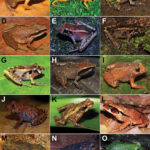
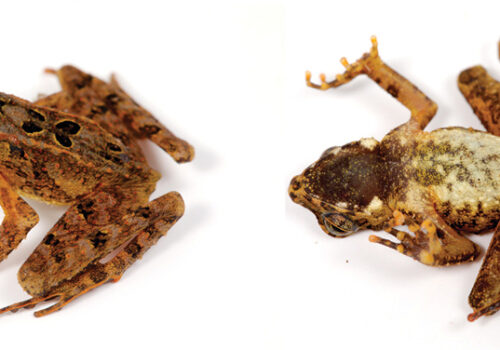
The dorsal coloration of I. parvus often ranges from earthy browns and grays to warm tan, reflecting the leaf litter and soil substrates it inhabits. Small dark markings or subtle mottling can frequently be observed adorning its skin, adding further camouflage amidst woodland debris. The ventral side, typically lighter, exhibits softer hues tinged with creamy yellows or whites.
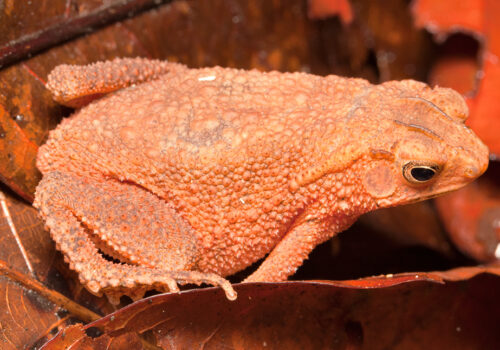
Distinctively, the skin possesses a finely textured, somewhat rugged appearance; small tubercles, or tiny raised bumps, speckle the surface, serving both as camouflage enhancements and protective adaptations. Another notable feature—the paratoid glands, situated just behind their eyes, are modestly sized, secreting mild toxins critical for defense against potential predators.
Behavior and Life Cycle#
Feeding and Foraging Habits#
In the shadowy microhabitats of Southeast Asian rainforests, the dwarf toad operates primarily as a nocturnal hunter—emerging from shelter as day gives way to night. Driven by a keen sense of smell and detection of slight movements, it consumes a diet mainly comprising small invertebrates, including ants, termites, mites, spiders, and other tiny forest-floor dwellers.
These discreet ambush predators adopt patient hunting tactics, relying on stealth and precise tongue strikes rather than aggressive pursuit. Their feeding strategy helps maintain invertebrate populations, indirectly serving vegetation health by controlling detritivores and other insects crucial to ecosystem regulation.
Mating and Reproduction#
The rainy season signals the awakening of reproductive instincts in I. parvus. Males, equipped with soft yet identifiable croaks, congregate around small forest pools and rain-filled depressions to beckon prospective mates. While lacking the elaborate choruses and vibrant display seen in other amphibian counterparts, dwarf toad courtship clinics are distinct in their simplicity—‘soft serenades’ born of necessity rather than flamboyance.
Following successful mating encounters, females deposit jelly-like egg masses in sheltered, shallow pools, ensuring protection and optimal development conditions. Tadpoles hatch after a few days, swiftly adapting to their aquatic environments, feeding primarily on plant materials, algae, and detritus, and transitioning, in due course, through a fascinating process of metamorphosis. Soon, transformed into miniature adult forms, juveniles gradually venture onto land habitats, perpetuating this subtle yet captivating life cycle.
Ecological Role#
Despite their modest size and unobtrusive lifestyles, Ingerophrynus parvus plays a critical ecological function in Southeast Asian rainforests. Serving dual positions as both predator and prey, their dietary actions help regulate invertebrate populations, indirectly influencing processes ranging from soil quality and decomposition rates to predator-prey dynamics higher up in the food web.
Furthermore, amphibians like the dwarf toad serve as indicator species—sensitive barometers for the overall health of the rainforest ecosystem. Changes in their population numbers and conditions often precede broader ecological shifts, offering essential clues for conservationists and researchers striving to maintain ecological balance and biodiversity integrity.
Threats and Conservation Status#
Presently listed by the International Union for Conservation of Nature (IUCN) as a species of “Least Concern”, the dwarf toad nonetheless faces increasing threats exacerbated by deforestation, habitat fragmentation, agriculture expansion, pollutants, and climate changes that collectively reduce their safe havens and breeding grounds.
Rapid urbanization and logging significantly alter their carefully balanced environments, fragmentating forests into isolated patches—each a diminishing ecological island cut off from essential genetic interchange and resource access.
Cultural and Scientific Significance#
Unlike more ostentatious amphibians, dwarf toads rarely feature prominently in local folklore or mythology, remaining softly enigmatic in human consciousness. Nonetheless, scientifically, their presence continually enriches our understanding—from ecological studies on rainforest health indicators to toxin research exploring novel compounds with medical potential.
The quiet existence of dwarf toads symbolizes the overlooked depth and richness within biodiversity—reminding humanity that even seemingly insignificant wildlife contributes meaningfully to web-of-life integrity.
Conclusion#
As we observe quiet stars of the rainforest floor, such as the diminutive Ingerophrynus parvus, we come to appreciate that concealed beneath humble appearances lie extraordinary tales waiting discovery. With ecosystems under stress, these stories grow increasingly endangered. Ensuring the conservation and appreciation of tiny amphibians urges improved stewardship and broader awareness.
We invite passionate conservationists, curious students, and nature enthusiasts alike to further explore, champion protection measures, and participate in informed discussions to safeguard the dwarf toad—an ambassador of unnoticed beauty and quiet ecological strength.