- The Hidden Wonders of Ingerophrynus divergens: Exploring Borneo's Lesser-Known Toad Treasure
- Taxonomy and Classification
- Natural Habitat: A Realm Between Terrestrial and Aquatic Ecosystems
- Physical Characteristics: Camouflaged Beauty Within Subtle Details
- Behavior and Life Cycle: Quiet Lives Lived With Cunning Precision
- Ecological Role: A Small Creature With Broad Ecosystem Influence
- Threats and Conservation Status: Navigating Modern Challenges
- Cultural and Scientific Significance: Deepening Our Understanding of Tropical Life
- Conclusion: Safeguarding a Quietly Extraordinary Amphibian
The Hidden Wonders of Ingerophrynus divergens: Exploring Borneo’s Lesser-Known Toad Treasure#
Amid the lush, thriving rainforest valleys and winding streams of Southeast Asia, life flourishes in endless diversity— from towering dipterocarp giants to tiny insects bustling underfoot. Yet within this vibrant wilderness, hiding quietly beneath leaf litter and shaded vegetation, creeps a small, captivating amphibian well-deserving of attention: Ingerophrynus divergens, commonly known as the divergent forest toad or Bornean river toad.
Often overlooked beside its flashier amphibian cousins, Ingerophrynus divergens harbors ecological significance, remarkable behaviors, and fascinating adaptations—quietly compelling wildlife biologists and conservationists alike. If you’ve yet to hear the gentle trills and encounter the subtle magnificence of this resilient survivor, prepare to become enchanted by one of Borneo’s most compelling yet least-celebrated inhabitants.
Taxonomy and Classification#
Scientifically named Ingerophrynus divergens, this amphibian species belongs to the family Bufonidae, more commonly called true toads. The members of Bufonidae span the globe and count over 500 species. Within Bufonidae lies the diverse genus Ingerophrynus, which includes around a dozen distinctive species, each adapted to the unique environments of Southeast Asia.
The genus name itself honors esteemed herpetologist Robert Frederick Inger, a pioneer whose decades of research illuminated Southeast Asia’s amphibian and reptile biodiversity. The species epithet “divergens” suggests divergence or departure—a hint at specific morphological features setting this creature apart, notably its unique cranial crests and limb structure.
Close relatives, including Ingerophrynus parvus and Ingerophrynus quadriporcatus, share overlapping ranges across Southeast Asia’s rainforests. However, I. divergens claims distinct adaptations perfecting its own ecological niche and subtly differentiating itself from kin.
Natural Habitat: A Realm Between Terrestrial and Aquatic Ecosystems#
Ingerophrynus divergens inhabits distinct yet fragile island forest ecosystems on Borneo—spanning regions within Malaysia, Indonesia, and Brunei. Its habitat includes lowland tropical rainforests, humid and moist foothills, and riparian zones alongside gently flowing streams. These verdant landscapes offer abundant hiding spots among leaf litter, fallen logs, and root tangles atop damp organic soils.
Strolling through a typical habitat, one might glimpse thorny palms, towering fig trees draped in mosses, and numerous herbs that provide cover and rich feeding grounds for insect life—prime hunting territory for this small yet capable predator. At night, atmospheric moisture saturates the air, enveloping the habitat in a gentle mist that facilitates the amphibian’s cutaneous respiration and regulates its delicate hydration requirements.
This intricate relationship between moisture, temperature balance, shelter, and food resource availability highlights why Ingerophrynus divergens depends strongly on intact forest habitats. Stream habitats offer not only vital hydration but are crucial breeding sites, echoing nightly with the quiet chorus of courting individuals. Habitat integrity directly correlates with the toad’s survival, reproductive success, and overall population health.
Physical Characteristics: Camouflaged Beauty Within Subtle Details#
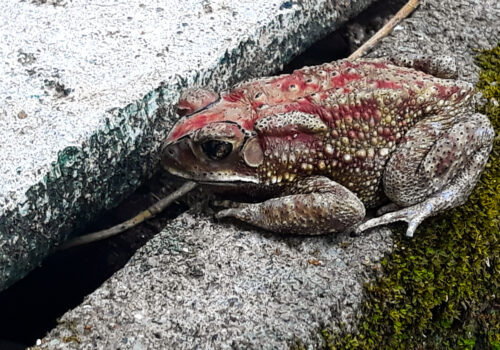
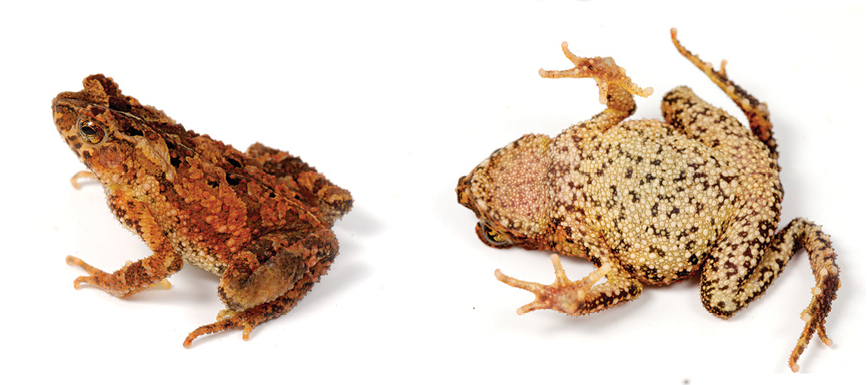
With adults typically measuring just 35 to 50 millimeters in length, Ingerophrynus divergens presents as small, robust-bodied, and beautifully adapted to a secretive lifestyle. Their compact bodies, rounded snouts, and proportionately short, stout limbs equip them perfectly for life at ground level. Unlike some brightly colored tropical frogs that advertise toxins through vivid hues, this humble amphibian subtly blends into its surroundings, sporting earth-toned colorations ranging from olive-brown and grayish-green shades to deep russet and reddish-brown.
Closer inspection reveals distinctive dark markings, fine warty-textured skin, and a faint vertebral ridge running prominently down its back. Notably, its parotoid glands—paired, raised glands behind its eyes—produce defensive toxins deterring predators. The cranial crests that inspired its name diverge prominently behind its eyes, offering species-specific identification markers prized by researchers.
Its coloration blending seamlessly into leaf litter and bark-covered ground demonstrates remarkable camouflage. On forest floors carpeted in leaf litter, discerning their hidden forms can challenge even seasoned herpetologists—rewarding the patient observer with an exciting and gratifying wildlife sighting.
Behavior and Life Cycle: Quiet Lives Lived With Cunning Precision#
Nocturnal Hunters of Tiny Prey#
As dusk blankets the rainforest, signaling activity change, Ingerophrynus divergens emerges from daytime shelters beneath leaves, logs, and root cavities. Nighttime excursions prioritize feeding, typically on small insects such as ants, beetles, spiders, termites, and other arthropods inhabiting the forest floor ecosystem. Armed with a sticky tongue and quick reflexes, this ambush predator efficiently snatches prey with impressive accuracy. Its diet subtly contributes to controlling populations of these abundant invertebrates, thus maintaining ecological balance.
Reproduction: A Delicate Cycle Reliant Upon Water#
As seasonal rains announce favorable breeding conditions, male toads congregate near streams and shallow pools, gently amplifying their quiet calls into a collective murmur. Females, called close by, choose suitable mates based on complex acoustic cues, initiating amplexus—the mating embrace during which fertilization externally occurs, eggs deposited in water where tadpoles begin their aquatic lives.
Tadpoles swiftly become small but significant ecosystem players, grazing algae and organic detritus, consequently enhancing water quality and nutrient cycling. Metamorphosis transforms them within weeks into miniature replicas of their terrestrial parents, concluding an extraordinary life cycle closely intertwined with Borneo’s seasonal rhythms.
Ecological Role: A Small Creature With Broad Ecosystem Influence#
Ingerophrynus divergens occupies a critical ecological niche, its roles extending far beyond simply being predator to insects. Serving as prey for snake, bird, and mammalian predators, the toad becomes part of the indispensable food web essential to tropical forest health. Moreover, these creatures also act as vital indicator species—canaries in a proverbial coal mine—revealing subtle changes to habitat quality, climatic conditions, or environmental pollutants that may indicate broader ecosystem shifts.
In maintaining insect populations, cycling nutrients, and indicating environmental quality, this diminutive toad becomes an essential actor whose disappearance would far exceed its small stature in ecological impact.
Threats and Conservation Status: Navigating Modern Challenges#
Currently classified as “Least Concern” by the International Union for Conservation of Nature (IUCN), Ingerophrynus divergens holds stable populations across reasonably widespread distributions. Nonetheless, the species faces significant threats posed by relentless deforestation and habitat fragmentation driven by logging, agriculture expansion (especially oil palm plantations), and infrastructure development across Borneo.
Climate change, shifting rainfall patterns, and increased frequency of drought potentially threaten breeding cycles, tadpole survival, and habitat quality. Vigilant monitoring and proactive habitat conservation efforts—such as responsible land use planning, protected area establishment, and sustainable forestry practices—continue to emerge as vital components safeguarding Ingerophrynus divergens‘s future.
Cultural and Scientific Significance: Deepening Our Understanding of Tropical Life#
To indigenous Bornean communities, amphibians often symbolize ecological balance, rainfall cycles, and even local medicinal properties. Although specific traditional narratives of Ingerophrynus divergens remain poorly documented, amphibians generally carry cultural significance across many communities, meriting further ethnobiological research.
On a scientific front, this species serves as a valuable representative of amphibian biodiversity and adaptive strategies within rapidly changing tropical rainforest environments. Study of their toxic secretions might yield discoveries relevant in medical or pharmaceutical contexts, highlighting why every species warrants preservation beyond intrinsic biodiversity value.
Conclusion: Safeguarding a Quietly Extraordinary Amphibian#
Though small in stature and elusive in habit, Ingerophrynus divergens significantly enriches Borneo’s extraordinary biodiversity mosaic. Celebrating this species requires appreciating subtle beauty, extraordinary adaptations, and quiet service underpinning ecosystem health.
In safeguarding creatures like Ingerophrynus divergens, we pledge ourselves guardians of biodiversity writ large. The call to action extends beyond curious exploration—becoming advocates committed not only to individual species survival but the flourishing life tapestry of Southeast Asian forests.
Let us cherish, foster curiosity, and ensure the survival story of this remarkable amphibian reverberates powerfully, resonating amid Borneo’s increasingly fragile wilderness.