- Discovering the Fascinating World of Ingerophrynus claviger: The Enchanting Bornean Crested Toad
- Taxonomy and Classification: Understanding the Bornean Crested Toad
- Natural Habitat: Life Amidst Borneo's Green Curtains
- Physical Characteristics: Crafted by Nature's Brushes
- Behavior and Life Cycle: From Secretive Hunter to Watchful Parent
- Ecological Role: An Integral Player in the Forest Symphony
- Threats and Conservation Status: Guardians of a Vulnerable Future
- Cultural and Scientific Significance: Lessons Beyond the Leaf Litter
- Conclusion: Advocating for the Bornean Crested Toad
Discovering the Fascinating World of Ingerophrynus claviger: The Enchanting Bornean Crested Toad#
Nestled amidst the lush, verdant landscapes of Borneo’s tropical rainforests, a certain amphibian makes its inconspicuous way across damp, leaf-covered forest floors. Camouflaged perfectly against the earthy backdrop, the Bornean Crested Toad, scientifically known as Ingerophrynus claviger, moves quietly beneath the shadowy canopies. At first glance, it may seem unassuming, yet beneath its modest appearance lies a fascinating ecology and a remarkable adaptation story worth exploring.
From the intricacies of its behavior to its critical role in the ecosystem, this often-overlooked amphibian is a testament to nature’s quiet brilliance. Let us embark on an immersive exploration into the captivating life of Ingerophrynus claviger, unraveling the ecological puzzle this humble species helps complete.
Taxonomy and Classification: Understanding the Bornean Crested Toad#
The Bornean Crested Toad (Ingerophrynus claviger) belongs to the class Amphibia, order Anura, and family Bufonidae—the true toads. Classified within the genus Ingerophrynus, this particular species highlights distinct morphological and ecological characteristics that separate it from closely related species within the genus.
Named after noted American herpetologist Robert F. Inger, the genus Ingerophrynus is home to several unique Southeast Asian toads known for their cryptic appearance and fascinating behaviors. Often compared to Ingerophrynus divergens, a geographically neighboring species, I. claviger showcases unique crest structures and color patterns providing meaningful distinctions critical for accurate classification.
Natural Habitat: Life Amidst Borneo’s Green Curtains#
The enchanting island of Borneo, known globally for its incredible biodiversity, serves as the exclusive homeland to Ingerophrynus claviger. Thriving predominantly in lowland tropical forests, this amphibian has evolved specifically to inhabit the leaf litter that thickly carpets the shaded forest floor. Countries hosting this species include the Malaysian states of Sabah and Sarawak, Indonesia’s Kalimantan, and Brunei Darussalam, regions identified with vibrant ecosystems offering ideal conditions for diverse amphibian life.
Specifically, the Bornean Crested Toad prefers damp, shaded microhabitats near slow-moving streams, peat swamps, and freshwater marshes. Amidst decomposing vegetation and moss-covered logs, it finds not only shelter from predators but a wealth of food resources essential for survival. Intrinsically linked to moisture-rich environments, the species typically seeks refuge in humid nooks under fallen leaves or beneath forest debris during daylight, emerging after rainfall or at dusk to commence its nocturnal activities.
Physical Characteristics: Crafted by Nature’s Brushes#
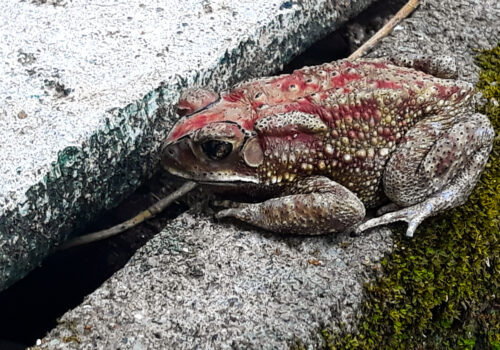
At first, spotting Ingerophrynus claviger may prove difficult, the harmonious blending of brownish-green hues and sandy tones creating an expert camouflage against Borneo’s leaf-laden soil. Adult specimens typically measure between 40 to 60 millimeters, sporting a stout, compact physique that is characteristically “toad-like.”
Perhaps what makes this species truly distinctive is the presence of noticeable cranial crests and wart-like glandular structures dotting its back, emphasizing its rugged yet fascinating appearance. These protrusions are not purely ornamental—each gland holds tiny reservoirs of mild toxins meant to deter hungry predators.
Its large, prominent eyes peer keenly from beneath crested ridges, advantageous for spotting movement in dimly lit habitats. The short limbs and dexterous digits assist in carefully navigating the uneven terrain of forest floors, aiding agile movements through leaf litter and low vegetation. Each adapted trait tells a survival story, shaped by thousands of evolutionary cycles within its native rainforest home.
Behavior and Life Cycle: From Secretive Hunter to Watchful Parent#
Feeding Habits and Daily Behavior#
As night falls over Borneo’s jungles, Ingerophrynus claviger stirs. Primarily nocturnal, these toads spend their nights actively pursuing prey, guided by their acute senses and stealthy movements. Their diet primarily consists of various invertebrates, including ants, beetles, fruit flies, spiders, and small earthworms.
Using a well-developed visual sense combined with receptive tactile and chemical cues in its environment, this feeding strategy proves highly effective. In an instant, a flick of the sticky tongue captures prey with astonishing accuracy, a vital skill perfected by countless nights of evolutionary refinement.
Breeding and Reproductive Insights#
When it comes to reproduction, the rainy season marks a period of increased activity among these amphibians. Male Ingerophrynus claviger produce soft yet resonant mating calls, echoing gently through moist night air to attract receptive females. Following successful courtship calls—the chorus escalating into harmonious nocturnal symphonies—mating occurs near water bodies, typically shallow pools or gently flowing streams.
Female toads meticulously choose safe, predator-free spots to deposit gelatinous strings of eggs. Within days, these eggs hatch into aquatic tadpoles, equipped for survival in Borneo’s nutrient-rich water systems. During their metamorphosis into terrestrial adults, they undergo dramatic physical changes, gradually developing lungs, limbs, and the ability to venture onto the forest floor, completing an impressive and transformative life cycle.
Ecological Role: An Integral Player in the Forest Symphony#
Every creature contributes harmoniously to nature’s interconnected orchestra, and Ingerophrynus claviger, too, finds itself an integral contributor. As vital predators of invertebrates and pests, these amphibians maintain ecological balance within their habitats, controlling insect populations that could otherwise spike uncontrollably.
Yet, their role does not end there. They themselves become essential links in the food web, feeding an array of predators, including snakes, birds, and even larger amphibians. Furthermore, as amphibians highly sensitive to environmental fluctuations, the health and prevalence of I. claviger populations can be valuable indicators of ecosystem health, subtly revealing habitat changes before more evident signs emerge.
Threats and Conservation Status: Guardians of a Vulnerable Future#
In recent decades, rampant deforestation, agriculture expansions, and habitat fragmentation have emerged as prominent threats facing Ingerophrynus claviger. Large-scale palm oil plantations further exacerbate the loss and degradation of their natural living spaces, diminishing suitable habitats and motile corridors these amphibians desperately need for survival.
While not currently listed as critically endangered by the IUCN Red List, ecologists consider them a vulnerable species due to their narrow habitat preferences and sensitivity to environmental changes. To ensure viable populations thrive into the future, increasing efforts in habitat restoration, stringent conservation policies, and community education initiatives highlighting amphibian conservation are critical.
Cultural and Scientific Significance: Lessons Beyond the Leaf Litter#
Interestingly, many indigenous communities within Borneo’s rainforest regions have long held amphibians like Ingerophrynus claviger in cultural esteem, often considering amphibians as symbolic harbingers of rain or seasonal changes. Scientifically, they represent valuable study organisms offering insights into amphibian conservation challenges, toxin research, and climate-induced fluctuations within forest ecosystems.
Conclusion: Advocating for the Bornean Crested Toad#
The unseen saga unfolding every moment beneath the moisture-laden forests of Borneo highlights an incredible, albeit subtle species. The life journey of Ingerophrynus claviger illuminates some of nature’s finest evolutionary adaptations—teaching observers interconnectedness, resilience, and fragility all at once. By understanding and communicating the remarkable ecology and threats these amphibians face, we can become passionate advocates protecting their essential homes.
Join the thriving movement of nature enthusiasts, conservationists, educators, and informed citizens worldwide who advocate tirelessly for amphibian preservation. Let us ensure creatures like the Bornean Crested Toad continue their subtle, invaluable roles within nature’s beautifully intricate tapestry—a tapestry we all have the responsibility to protect.