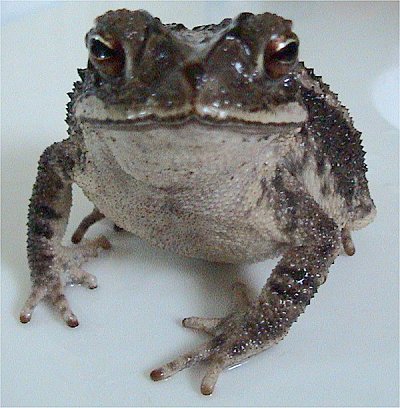
The Gulf Coast Toad (Incilius valliceps): Nature’s Subtle Sentinel#
In twilight’s delicate hour, when shadows stretch across the rich, humid landscapes of Mexico and the Gulf coast of the United States, a subtle chorus punctuates the darkness. Among the sounds of crickets and rustling vegetation, a deep, resonant trill emerges, signaling the nocturnal awakening of one of North America’s most quietly remarkable amphibians—the Gulf Coast Toad, Incilius valliceps.
A humble amphibian often overlooked beside its brighter cousins, the Gulf Coast Toad is nonetheless a vital link in the delicate ecological chain. It is at once a familiar sight and mysterious neighbor; while prevalent as a species, its complex biology and crucial ecological role remain hidden from the eyes of casual observers. To truly appreciate this modest creature, we must journey into its world—the humid subtropical secrets of its home—and discover the intricate tapestry of life woven around this amphibian sentinel.
Taxonomy and Classification#
The Gulf Coast Toad, scientifically known as Incilius valliceps, belongs within the diverse amphibian family Bufonidae, commonly referred to as the “True Toads.” Originally described by Wiegmann in 1833, its classification has undergone various refinements as modern molecular taxonomy sheds new light on evolutionary relationships across amphibian species.
Within the genus Incilius, this species shares ancestry with several closely related toads, distinguished often by subtle morphological features and biogeographic distributions. Researchers recognize partial geographic overlaps with related species such as Incilius nebulifer, which, in the past, was considered part of the same grouping. Yet, detailed genetic analyses now support its standing as a distinct species, revealing deeper evolutionary branches within these outwardly similar animals.
Natural Habitat#
Geographic Range#
The Gulf Coast Toad thrives primarily in Mexico, Belize, Guatemala, Honduras, and the southern United States, including regions of Texas and Louisiana. It occupies a broad band of territory along the warm, humid Gulf Coast, hence its common name. Incilius valliceps is both adaptable and hardy, reasonably tolerating human-altered landscapes; thus, it is commonly encountered in suburban gardens, agricultural zones, and urban edges alongside its native wilderness locales.
Preferred Habitats and Microhabitats#
This adaptable amphibian favors warm, moist environments. It is most comfortable in habitats boasting abundant ground cover, fallen logs, rocks, and dense leaf litter—perfect hiding spots that allow them to remain hidden from predators during the day. Their ideal habitats include tropical and subtropical forests, mixed deciduous woodlands, grasslands, savannas, and riparian vegetation along marshes or small ponds.
Yet, the Gulf Coast Toad has also become adept at utilizing disturbed habitats, like backyards and gardens, provided sufficient moisture and shelter exist. They readily burrow into the damp soil beneath plant debris, protecting themselves from daylight heat and predators alike.
Physical Characteristics#
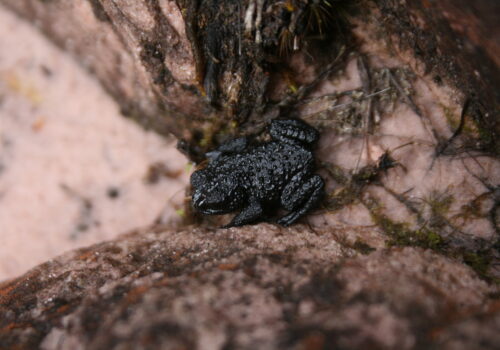
Incilius valliceps embodies a typical “true toad” form, an image perhaps conjured first when imagining a classic amphibian. Adults usually measure between two to five inches (5 to 12 centimeters) long, with females typically larger than males—a common pattern known as sexual dimorphism. In hand, their skin is noticeably dry and warty, presenting a textured mosaic of earthy tones that seamlessly blends with their leaf-laden environments.
The coloration can vary individually, but usually includes shades from gray-brown to olive, tan, or reddish-brown. Distinctively, a prominent whitish or cream-colored stripe runs centrally down the back, enhancing their natural camouflage among dry leaves and soil. Specialized cranial crests, raised and bony ridges behind their eyes, enhance their distinctive profile. These prominences offer a distinguishing feature for identification from similar toads sharing overlapping habitats.
Beyond their natural cryptic coloration, the skin houses glands that release bufotoxin—and though relatively mild compared to some tropical species, the toxin acts as a potent defense mechanism, deterring potential predators and safeguarding these small animals from various threats.
Behavior and Life Cycle#
Nocturnal Ambushers#
Nighttime is when Incilius valliceps awakens. Under cover of darkness and cool evening temperatures, it emerges from its daytime burrow to hunt for insects and invertebrates. Using its large, sensitive eyes, the toad scans surroundings methodically, patiently awaiting passing prey—quickly seizing beetles, ants, moths, spiders, crickets, and other arthropods.
The hunting strategy is ambush predation: rather than actively chasing prey, the Gulf Coast Toad sits quietly, awaiting the perfect moment before extending its sticky tongue rapidly to catch a quick meal. This efficient predation method aligns with their energy-conserving nocturnal habits, minimizing energy expenditure and maximizing their feeding opportunities.
Breeding Rituals under Starlit Skies#
The rainy season signals the breeding period for Gulf Coast Toads. Heavy rains and rising humidity prompt males to converge on breeding ponds or shallow watery areas, where they produce a resonant chorus—a deep, rolling trill—to attract females.
Female Gulf Coast Toads select mates based on vocal attractiveness. Once paired, the male grasps the female behind her forelimbs in an embrace called amplexus. This couple remains connected until the female releases strands of jelly-like eggs that the male fertilizes simultaneously. Females lay thousands of eggs, typically in long, gelatinous strands within shallow pools and puddles. Tadpoles emerge rapidly, swimming energetically within days, feeding primarily on algae and developing swiftly with plenty of fresh water.
Within as little as 4 to 6 weeks, these tadpoles experience rapid metamorphosis, sprouting legs, absorbing their tails, developing lungs, and emerging onto land as miniature, fully formed toadlets prepared for terrestrial life.
Ecological Role#
Although modest and quietly inconspicuous, the Gulf Coast Toad plays a vital ecological role. Amphibians such as Incilius valliceps control insect populations efficiently, significantly limiting pest numbers in gardens, agricultural fields, and wild ecosystems. They serve as essential prey items for larger predators, including birds, reptiles, large insects, mammals, and even other amphibians.
More critically, amphibians often act as indicator species, sensitive to environmental shifts—from moisture balance and habitat health to chemical pollutants. A stable, healthy population of Gulf Coast Toads reveals a balanced ecosystem; conversely, their decline can signal environmental neglect or ecological imbalance.
Threats and Conservation Status#
Fortunately, according to the International Union for Conservation of Nature (IUCN), Gulf Coast Toads currently hold a “Least Concern” status due to thriving, widespread populations. Nevertheless, like many amphibians, their survival remains at risk from habitat destruction relating to urban expansion, widespread application of pesticides, and contamination of local water sources. Amphibians globally are also vulnerable to diseases such as chytridiomycosis, a fungal infection that has devastatingly impacted populations worldwide.
Effective conservation involves careful monitoring of these threats, promoting habitat retention, reducing pesticide use, and encouraging education and community awareness about amphibian health and environmental interconnectedness.
Cultural and Scientific Significance#
Though somewhat inconspicuously woven into ecological fabric, toads in general hold meaningful symbolism across cultures, often regarded as emblematic of transformation, renewal, and fertility due to their remarkable metamorphic lifecycles. On a scientific scale, Gulf Coast Toads and closely related species provide invaluable research insight into amphibian physiology, toxicology, and ecological adaptations. Studies investigating their toxins have led to advances in understanding the biochemical bases for predators’ avoidance behavior, bioactive compounds for pharmaceutical uses, and ecosystem health indicators for biologists and ecologists.
Conclusion: Protecting Our Subtle Sentinel#
The story of the Gulf Coast Toad, Incilius valliceps, illustrates how even seemingly ordinary wildlife species have profound roles within the ecosystem. Their quiet song beneath the starlit skies reminds us of nature’s layered interconnectedness, calling us to maintain diligent stewardship of their habitats. Protecting these modest amphibians means preserving invaluable biodiversity for future generations. Embrace this gentle call to conservation by learning more and lending your voice to protect habitats that ensure the Gulf Coast Toad—and countless other remarkable species—thrive for generations to come.