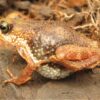
Meet Incilius pisinnus: The Hidden Wonders of a Remarkable Toad#
In the lush forests nestled along Central America’s mountainous backbone, a humble yet enigmatic toad dwells in quiet obscurity. Meet Incilius pisinnus, an amphibian whose understated appearance belies its critical role in maintaining ecological balance. Its scientific name may seem obscure to most outside amphibian circles, yet for those dedicated few who have encountered its subtle grace, Incilius pisinnus is nothing short of captivating.
Though modest in size and coloration, this toad species holds intriguing secrets—from its specialized habitats to behaviors that subtly influence the shape of its environment. So, step with care beneath rainforest canopies as we explore the fascinating life, behaviors, ecological importance, and conservation status of one of nature’s quietly compelling amphibians.
Taxonomy and Classification#
To fully grasp the life and character of this interesting species, it’s important first to place it within its broader family tree. Incilius pisinnus is a small amphibian belonging to the Bufonidae family, widely known as the “true toads.” While toads can sometimes be mistaken as uncanny, stout-legged frogs, true toads typically possess dryer skin adorned with numerous wart-like glands, and shorter hind legs compared to most frogs.
Within Bufonidae, the genus Incilius recently underwent a significant taxonomic reshuffle. What was once grouped broadly within genus Bufo now fans out toward different subcategories, reflecting genetic discoveries gleaned from modern studies. The toads of the genus Incilius generally reflect similar characteristics: terrestrial lifestyle, glandular skin texture, and diverse yet typically muted coloration suited to ground-level camouflage. Closely related species sharing its genus include species like Incilius valliceps and Incilius nebulifer, all sharing subtle yet distinct characteristics evolved to thrive in varying ecological niches.
Natural Habitat#
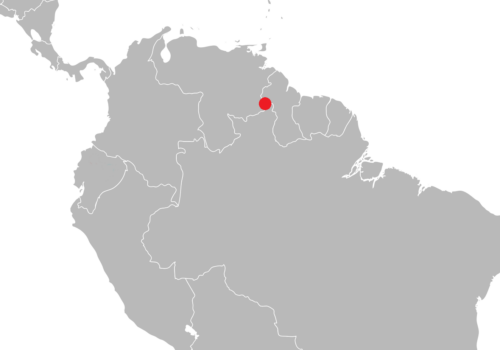
Incilius pisinnus thrives silently across a narrow geographic range throughout Costa Rica and Panama, thriving within the verdant realms of moist montane forests. Here, rainfall is abundant and steady, creating an emerald mosaic alive with streams, leaf-littered forest floors, moss-covered logs, and fallen giant trees. The humidity trapped beneath dense foliage provides the perfect environment for a moisture-dependent amphibian, whose skin is permeable and sensitive to changes in humidity, sunlight exposure, and chemical pollutants.
These toads tend to prefer forest margins and openings, especially near freshwater sources like streams or pools. Their home range is relatively restricted, usually limited to areas where dense tree cover meets water-rich soil. Significantly adapted to life hidden beneath leaf litter, bark, or stones, they dwell inconspicuously, emerging mainly during humid evenings or after heavy rainfall has swept through the forest.
Physical Characteristics#
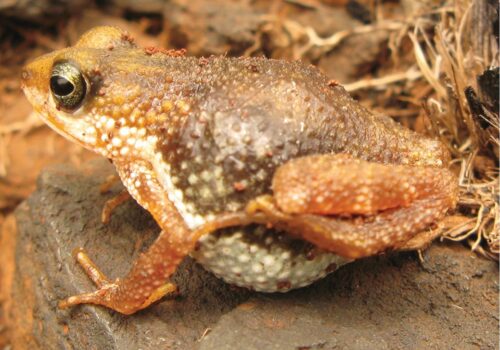
At first glance, Incilius pisinnus may seem unremarkable due to its small stature and understated hue—a deliberate adaptation crucial to its quiet life on the forest floor. Typically measuring just 3 to 5 centimeters long, this species epitomizes the minimalist aesthetic of evolution. Yet, upon closer inspection, this simplicity reveals a sophisticated ecological strategy.
Coloration varies modestly among individual toads and can range from muted earth tones of greyish-brown to olive or ruddy shadows. These subtle shades are interspersed with an irregular pattern of darker blotches, spots, and fine speckles designed specifically for camouflage within their leaf-litter habitats. Glandular ridges—often lined with bumps or warts that release mildly toxic secretions—run down their backs, deterring predators that might threaten a fatal bite. Eyes alert and bulging subtly from smooth, rounded heads lend them a permanently curious yet gentle demeanor, adept at watching for threats from surrounding leaf cover.
Behavior and Life Cycle#
Secretive Hunters of the Forest Floor#
A keen observer may glimpse the elegant hunt of the Incilius pisinnus beneath leaf litter after twilight settles on the forest. Equipped with extraordinarily sensitive vision attuned to low lighting conditions, these little predators capitalize on the twilight hours to hunt crawling insects and arthropods diligently navigating their leafy homes. Employing its clever sit-and-wait tactic, the toad positions itself silently, patiently watching as ants, beetles, crickets, or spiders cross its path. Quick as lightning, the toad darts forward, capturing its prey with a swift flick of its tongue—an impressive hunting feat disguised beneath humble presentation.
Courtship Amidst the Raindrops#
As the rainy season brings its rejuvenating showers, it prompts something extraordinary—inciting Incilius pisinnus to begin its breeding period. During nights thick with humidity and saturated by light rains, a chorus of softly resonant, melodic trills rises from hidden corners of the forest floor. Male toads engage in subtle vocalizations, each employing calls designed to entice receptive females while carefully avoiding attention from predators. While their songs are understated compared to louder tropical frogs, their understated melody perfectly suits their secretive lifestyle.
Once a female selects her mate, breeding typically occurs in shallow depressions filled by seasonal rainwater or in small forest streams. Here, gelatinous strings of delicate eggs are deposited—blending seamlessly with their clear, running-water habitat. From these tiny, transparent eggs emerge equally discreet tadpoles that quickly scatter to avoid predation.
Ecological Role#
Though modest in size, Incilius pisinnus plays a pivotal role in the delicate balance of montane forest ecosystems. Serving as both predator and prey, this humble amphibian is a critical element in managing insect populations, providing a natural pest-control service that directly benefits adjoining ecosystems and human agriculture.
Their position within the forest’s food web places them as prey for various animals—larger amphibians, reptiles, birds, snakes, and mammals alike find nourishment through predation on these toads. Moreover, the population density and health of Incilius pisinnus individuals often offer subtle signals about ecosystem health. As amphibians breathe partially through their skin and require moist, clean habitats, healthy and stable populations generally hint at clean water and stable ecosystem conditions.
Threats and Conservation Status#
Despite its quiet demeanor, Incilius pisinnus faces real and pressing threats. Habitat destruction remains the greatest concern, as expanding agriculture, infrastructure development, and deforestation sharply reduce suitable living spaces for these toads. Additionally, amphibians globally face the alarming threat of infection from pathogens such as chytrid fungus (Batrachochytrium dendrobatidis). A lethal disease decimating amphibian populations worldwide, chytrid continues to pose risks to isolated amphibian communities—including those of moist montane habitats like those inhabited by Incilius pisinnus.
Presently, the International Union for Conservation of Nature (IUCN) classifies Incilius pisinnus as “Vulnerable” due to its limited range and declining habitat quality. Conservation planning and ongoing research to monitor existing populations and habitat conditions are essential components of protecting this subtle yet vital species.
Cultural and Scientific Significance#
Though not as culturally prominent as certain larger or more striking amphibians, small, secretive species like Incilius pisinnus subtly enrich local folklore and indigenous culture, symbolizing forest resilience and quiet strength. Scientifically, these amphibians are indispensable; their sensitivity to environmental changes serves as an early warning system, signaling broader disruptions within ecosystems. As living indicators, studying their biology and behavior contributes vital insights toward addressing broader ecological concerns, climate shifts, and conservation interventions.
Conclusion: A Hidden Gem Worth Protecting#
The jungles of Central America are vast, mysterious, and extraordinarily rich in captivating diversity. Amidst their lush foliage, quiet voices like those of the Incilius pisinnus remind us of the subtle yet essential roles nature’s understated characters play. Though modest at first glance, this toad’s resilience within changing environments resonates deeply, highlighting how integral every organism, no matter how humble, remains in shaping ecological narratives.
Protecting and understanding species like Incilius pisinnus involves more than conservation—it involves a commitment to respecting and preserving our planet’s quieter, hidden wonders. Let us cherish the stories hidden beneath leaf litter, listen carefully to whispers from the natural world, and proactively support the conservation measures necessary to safeguard this charming, subtle amphibian for generations ahead.