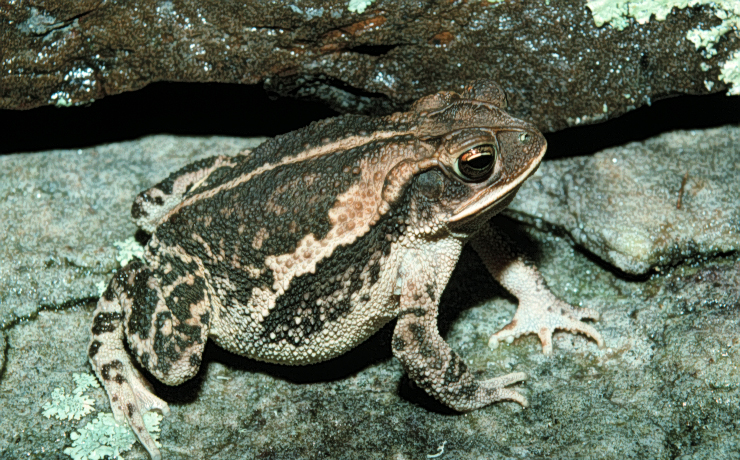
- Gulf Coast Toad (Incilius nebulifer): The Enigmatic Amphibian of North America's Southern Wetlands
- Taxonomy and Classification: Understanding Its Place in the Amphibian World
- Natural Habitat: An Amphibian at Home in Diversity
- Physical Characteristics: A Portrait of Visual Adaptation
- Behavior and Life Cycle: Chronicles of an Amphibian Life
- Ecological Role: Guardians of the Wetland Web
- Threats and Conservation Status: Preserving a Natural Legacy
- Cultural and Scientific Significance: Beyond Biology
- Conclusion: Frogs, Humans, and Shared Survival
Gulf Coast Toad (Incilius nebulifer): The Enigmatic Amphibian of North America’s Southern Wetlands#
When twilight cloaks the wetlands and warm Southern nights descend, a sound fills the humid air, a resonating song that has echoed through these marshes and forests long before human footsteps tread the land. This distinctive trill belongs to the Gulf Coast Toad, scientifically known as Incilius nebulifer, a fascinating amphibian whose presence symbolizes environmental health and biodiversity in the American Gulf Coast region. Familiar in appearance yet deeply intriguing in natural history, this stout-bodied, secretive creature commands attention through its adaptive resilience and ecological importance.
Among marshes, forests, suburban gardens, and urban parks, Incilius nebulifer thrives, often unseen yet protrusively audible. Known not only for its robust build and colorful warts but also for its adaptability to human-altered habitats, this enchanting amphibian offers vital clues into the delicate environmental balance of the Gulf Coast ecosystem.
Taxonomy and Classification: Understanding Its Place in the Amphibian World#
The Gulf Coast Toad belongs to an extensive family of amphibians known as Bufonidae, a diverse group distinguished primarily by their dry, warty skin and terrestrial nature. Within this family, it occupies the genus Incilius, previously grouped under the genus Bufo. Taxonomic reclassification based upon genetic and morphological analyses led scientists to recognize subtle but significant distinctions, thus granting the Gulf Coast Toad its own noteworthy identity.
Distinguished by its scientific name, Incilius nebulifer translates roughly to “cloud-bearing,” a poetic reference to the mottled, nebulous patterns marking the toad’s skin. Closely related species sharing the genus, such as Incilius valliceps (commonly known as the Year’s Toad), often exhibit overlapping ranges and share similar ecological requirements, yet subtle differences segregate their habitats and behaviors.
Natural Habitat: An Amphibian at Home in Diversity#
Stretching from northern Mexico throughout Texas and into parts of Louisiana, Arkansas, Mississippi, and Alabama, the Gulf Coast Toad thrives across a remarkably varied landscape. Unlike many amphibians strictly confined to undeveloped wildlands, Incilius nebulifer demonstrates notable adaptability. It comfortably inhabits not only grassland prairies, marshes, and coastal wetlands but also suburban backyards, city parks, and agricultural fields, demonstrating environmental plasticity essential for survival in a rapidly developing region.
Preferred Habitats and Environment Interaction#
This resilient amphibian favors environments near freshwater sources, such as slow-moving rivers, ponds, marshes, and drainage ditches. The creature’s preferences stem from its biological necessity—fresh water for mating, egg-laying, and development of tadpoles—as well as adequate terrestrial habitats enriched with plant cover and soil consistency conducive to burrowing and hibernation during colder periods.
Even within urban expanses, Gulf Coast Toads skilfully exploit artificial habitats. Carefully maintained residential gardens, backyard ponds, roadside ditches, and golf courses offer niches that these amphibians opportunistically utilize. In fact, their persistence in disturbed areas often serves as an important indicator of local environmental conditions, providing conservationists insight into ecosystem health and continuity.
Physical Characteristics: A Portrait of Visual Adaptation#
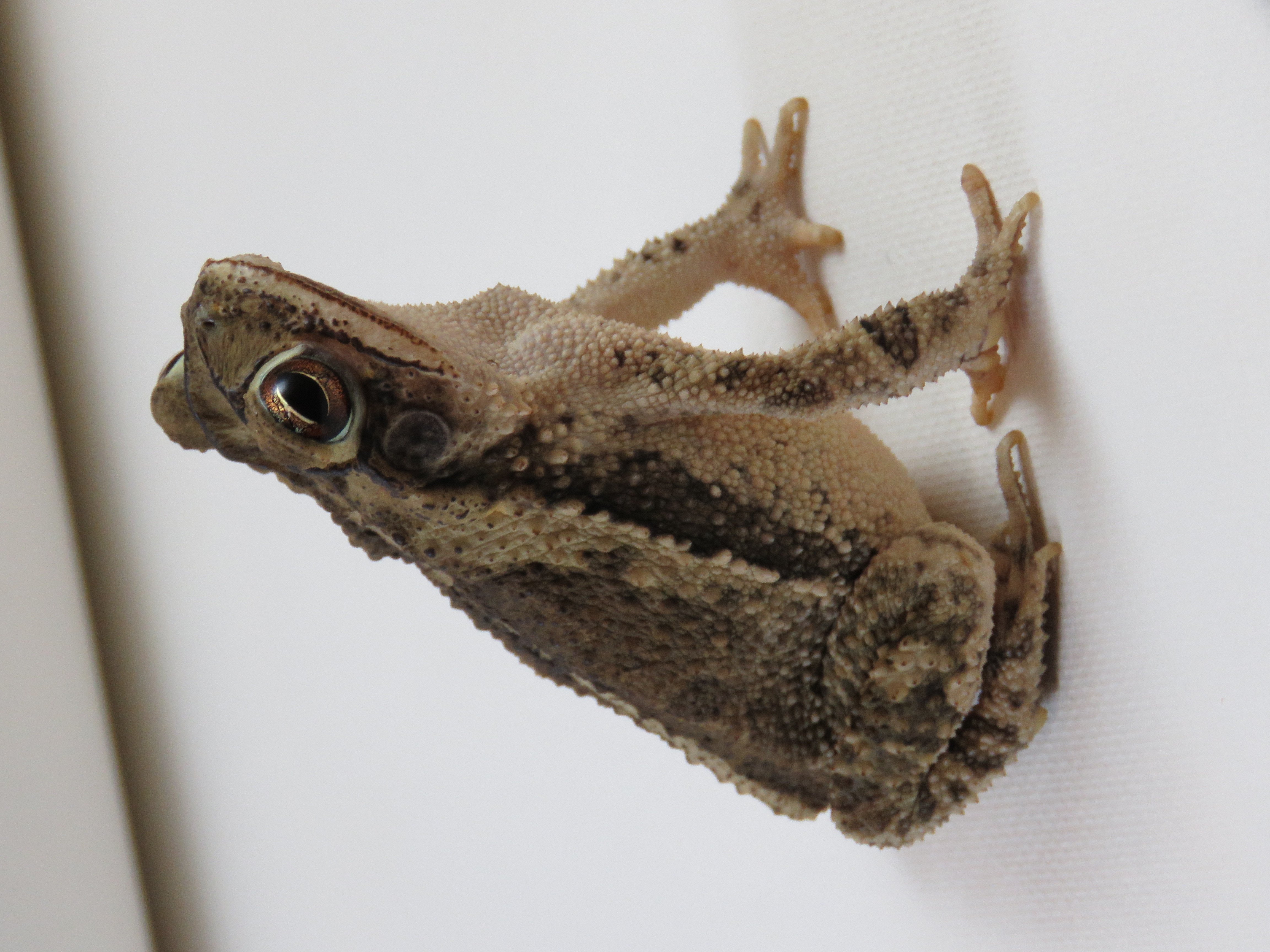
The Gulf Coast Toad exemplifies amphibian adaptation through striking visual markers and defensive physical traits. Upon closer examination, this amphibian reveals itself as a medium-sized creature, typically measuring between two and four inches in length from snout to vent, with females generally larger than males. Its body appears notably robust, designed for terrestrial life rather than streamlined aquatics.
Skin Texture, Coloration, and Defense#
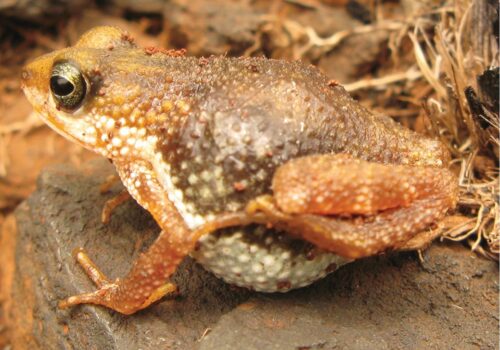
Perhaps the most recognizable feature of Incilius nebulifer is its uniquely adorned skin, peppered with raised wart-like parotoid glands situated behind each eye. These prominent, oval-shaped structures secrete defensive toxins known as bufotoxins when the animal feels threatened, providing powerful deterrents against potential predators. While relatively harmless to humans, contact with secretions may cause mild irritation, emphasizing a natural adaptation designed for self-defense.
The toad’s coloration reflects its ecological versatility. Predominantly hues of brown, gray, olive-green, or tan mark its upper side, patterned with darker blotches or speckles. This mottled appearance closely resembles leaf litter, stones, and soil, effectively blending it into its surroundings and providing essential camouflage against predators and potential threats. Its ventral surfaces take on shades of cream, pale gray, or ivory, often unmarked and lighter in coloration—an instance of countershading, an evolutionary adaptation aiding in concealment from below.
Behavior and Life Cycle: Chronicles of an Amphibian Life#
Under cover of nightfall or during humid, rainfall-heavy conditions, the Gulf Coast Toad emerges from secluded daytime resting spaces—burrows, leaf litter, beneath logs—to embark upon nocturnal activities. Adapted to a primarily insectivorous diet, it eagerly hunts beetles, ants, spiders, moths, and crickets amid the darkened landscape.
Feeding Ecology and Predatory Aptitude#
The toad employs a sit-and-wait hunting strategy; convincingly still, camouflaged within surroundings, it relies on powerful binocular vision to detect and swiftly capture prey that crosses within its effective hunting radius. A sudden flick of its sticky, muscular tongue quickly dispatches prey into its mouth, demonstrating innate predatory efficiency developed throughout millennia of evolutionary adaptation.
Reproductive Behaviors and Developmental Journeys#
With seasonal rains and rising temperatures signaling the onset of spring, reproductive energies awaken among Gulf Coast Toad populations. Males congregate en masse near freshwater habitats, emitting characteristic high-pitched, rhythmic trills resonating deeply throughout the night. These vocalizations, nature’s symphony in miniature, serve dual purposes: simultaneously attracting fertile females and communicating territorial dominance among rival males.
Upon female selection and subsequent successful amplexus (a mating position wherein the male securely clasps the female), the female deposits thousands of gelatinous eggs into the water. Within mere days, these eggs evolve rapidly into aquatic tadpoles uniquely adapted to aquatic environments. Metamorphosis takes roughly one month, after which countless miniature toadlets emerge onto terrestrial terrain, beginning an uncertain but remarkable journey toward maturity and survival, highlighting biological resilience against odds stacked by predators and environmental stresses.
Ecological Role: Guardians of the Wetland Web#
Understanding the significance of the Gulf Coast Toad reaches far beyond mere curiosity about its individual biology. Indeed, Incilius nebulifer occupies a critical ecological niche within Gulf Coast ecosystems. By acting as both predator and prey, the amphibian profoundly influences food-web stability and nutrient cycling.
The Amphibian Intersection#
The toad’s ravenous appetite for insects provides invaluable pest control, potentially reducing human reliance upon harmful chemical pesticides. In turn, Gulf Coast Toads sustain a diverse predator base—including snakes, raccoons, birds, fish, and even larger amphibians—thus transferring nutrient energy upwards within a complex ecological food web. Moreover, their permeable skin intimately connects them to environmental conditions, enabling them to serve as important bioindicator species, rapidly responding to pollutants and habitat quality changes.
Threats and Conservation Status: Preserving a Natural Legacy#
Presently assessed by the IUCN Red List as a species of Least Concern, the Gulf Coast Toad boasts a robust population status, thriving even amidst ongoing expansion of human infrastructure. Nevertheless, complacency would pose a grave risk. Habitat destruction continues, with urban development projects and agricultural expansion potentially fragmenting natural habitats critical for breeding and overwintering survival, exacerbating vulnerability to climate variations and environmental pollutants.
Cultural and Scientific Significance: Beyond Biology#
Throughout various cultures intertwined with Gulf Coast landscapes, frogs and toads symbolize ecological fertility, renewal, and conservationally conscious values. Scholars recognize the Gulf Coast Toad, among related amphibians, as instrumental in scientific exploration, particularly investigating ecological resilience theories, toxicology research, and climate-adaptation science. Notably, studies involving these robust amphibians aid biologists in understanding how wildlife adapts to rapidly changing ecosystems, highlighting conservation priorities crucial for broader environmental and human health.
Conclusion: Frogs, Humans, and Shared Survival#
Collectively, frogs like the Gulf Coast Toad represent irreplaceable biodiversity heritage, teaching lessons of adaptability and interconnectedness. By actively preserving habitats, fostering awareness, and supporting conservation, we safeguard not only Gulf Coast Toad populations but vibrant ecosystems upon which humans equally rely.
Embrace conservation engagement by joining or supporting local wildlife initiatives, promoting sustainable practices, and becoming champions for preservation. Together, our actions today echo through future generations, ensuring the continued song of the Gulf Coast Toad reveals a thriving, balanced natural legacy for all future listeners.