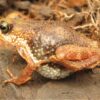
- Introduction: Encountering Incilius mccoyi in Its Enigmatic World
- Taxonomy and Classification: The Place of Incilius mccoyi in Amphibian Science
- Natural Habitat: Navigating the Forest Floor
- Physical Characteristics: A Mosaic of Camouflage and Adaptation
- Behavior and Life Cycle: Tales from the Understory
- Ecological Role: Guardian of Forest Equilibrium
- Threats and Conservation Status: Safeguarding the Elusive Toad
- Cultural and Scientific Significance: The Unsung Hero of Tropical Discovery
- Conclusion: Protecting Incilius mccoyi – Preserving the Mosaic of Life
Introduction: Encountering Incilius mccoyi in Its Enigmatic World#
In the verdant forests that blanket the mountainous slopes and hidden valleys of western Panama and Costa Rica, a diminutive yet captivating amphibian quietly navigates the complex tapestry of the leaf-littered forest floor. Known scientifically as Incilius mccoyi, this remarkable species often goes unnoticed by casual trekkers and outdoor enthusiasts, yet plays an integral role in maintaining the delicate balance of its rainforest home. Belonging to the true toad family Bufonidae, Incilius mccoyi might at first glance appear unassuming, but hidden within its small, rugged frame lies a remarkable story of adaptation, survival, and ecological significance.
Although discovered relatively recently and still unfamiliar to many, Incilius mccoyi thrives perfectly camouflaged among damp, shadowy undergrowth. For those fortunate enough to glimpse them, these toads symbolize the enduring mysteries and subtle beauty of tropical biodiversity.
Taxonomy and Classification: The Place of Incilius mccoyi in Amphibian Science#
The intriguing species Incilius mccoyi falls under the expansive order Anura, embracing all frogs and toads. Within Anura, it belongs to the extensive family Bufonidae, more commonly recognized as the toad family. Members of this family are distinguished by their dry, often warty skin and robust skeletal structures adept at terrestrial habitats, though several are found in diverse ecosystems.
Under genus Incilius, Incilius mccoyi shares relationships with other similar terrestrial toads native to Central America. This genus, delineated in recent taxonomic studies after extensive genetic research, separates this group from their closely-related North American counterparts in genus Bufo, underscoring the remarkable evolutionary pathways unique to Central America’s humid tropical landscapes.
Natural Habitat: Navigating the Forest Floor#
The captivating life of Incilius mccoyi unfolds within the verdant lowland and premontane wet forests along the Pacific foothills and slopes of Costa Rica and western Panama. Typically found between elevations of 100 to 800 meters above sea level, this elusive species flourishes among damp leaf litter, fallen logs, and dense vegetation, which provide ideal shelter and hunting grounds.
The pristine humidity, moderate temperatures, and abundant rainfall of these equatorial forests create habitats teeming with biodiversity—spaces where insects, spiders, and other small invertebrates provide ample sustenance. The thick leaf litter that blankets the forest floor not only serves as camouflage but also sustains the microenvironments necessary for moisture retention and temperature regulation, essential to amphibian survival.
Adaptations to a Specialized Lifestyle#
Incilius mccoyi showcases remarkable ecological adaptability. Their cryptic coloring—dappled shades of brown, gray, and olive green with subtle mottling—allows them to blend seamlessly with the leaf litter environment, effectively avoiding predation from snakes, birds, and small mammals.
Habitat preference is tightly linked to local humidity levels, particularly near slow-moving or temporary streams that form seasonally during intense rainfall. Such microhabitats provide crucial breeding grounds, imparting resilience to the toad’s population against the challenges posed by changing climates and habitat disturbances.
Physical Characteristics: A Mosaic of Camouflage and Adaptation#
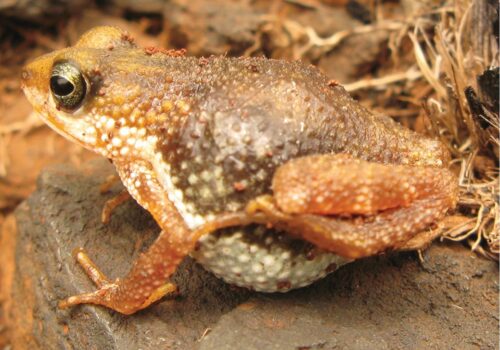
The striking yet subtle appearance of Incilius mccoyi illustrates evolutionary efficiency. Adults typically measure between 35 and 60 mm in length, showing slight sexual dimorphism with females generally larger than males. Both genders exhibit robust, compact bodies accentuated by short limbs, ideal for terrestrial locomotion through dense undergrowth.
Their distinctive dry, warty skin serves multiple critical roles. From camouflage and reducing water loss in their humid yet competitive habitat, to potentially discouraging predation with mild toxins secreted from parotoid glands located just behind the eyes, every attribute contributes directly to survival.
An Intriguing Color Palette#
Coloration patterns vary among individuals and across populations, likely reflecting subtle local variations in habitat and facilitating greater survival odds as camouflage adapts accordingly. Yet, consistent across these variations is their unparalleled ability to vanish amid shifting shadows and decaying leaves at the slightest hint of danger.
Behavior and Life Cycle: Tales from the Understory#
The daily routines of Incilius mccoyi often go gently unnoticed beneath the emerald foliage. Primarily nocturnal, these toads emerge at twilight to scramble quietly among leaves and debris as they hunt for invertebrates—feasting on ants, beetles, crickets, and spiders. Skilled hunters, they rely on keen eyesight and reflexive tongue movement to quickly seize and consume prey, thus keeping insect populations in balance within their habitats.
Breeding Habits and Vocalizations#
With the onset of the rainy season, males become more vocal, signaling to potential mates through distinctive short, melodic trills resonating softly through the forest. After successful courtship, female Incilius mccoyi lay gelatinous strands containing hundreds of minuscule black eggs in shallow temporary pools or slow-moving streams. Once hatched, the tadpoles quickly adapt to life in the water, grazing algae and microscopic organisms until metamorphosing into miniature terrestrial toads that must, from the instant they leave water, seek refuge from predators and harsh environmental conditions.
Ecological Role: Guardian of Forest Equilibrium#
Far from serving as mere inhabitants, Incilius mccoyi actively contributes to ecological stability. As opportunistic predator and essential prey, these amphibiotic residents form vital links within the forest food chain. By preying on insect populations, they control potential pest species that can become detrimental to forest vegetation health. Conversely, their presence supports diverse predators, from snakes to small mammals, thereby playing a role in sustaining healthy predator-prey dynamics crucial to ecological harmony.
Indicator Species of Forest Health#
Like other highly sensitive amphibians, Incilius mccoyi reflects subtle changes in ecosystem health rapidly. Amphibians are well-established bioindicators; fluctuations in population numbers can foretell broader environmental impacts or escalating threats, allowing biologists and conservationists early clues to detect ecosystem stresses.
Threats and Conservation Status: Safeguarding the Elusive Toad#
Current knowledge places Incilius mccoyi within the International Union for Conservation of Nature (IUCN) Red List status as “Least Concern,” indicating stability. Yet, beneath this reassuring classification lie persistent threats that necessitate vigilance. Habitat loss due to expanding agriculture, logging, and habitat fragmentation remains perpetual challenges. Climate-induced shifts causing erratic rainfall patterns threaten the predictability of breeding conditions and tadpole survival rates.
Moreover, amphibian populations globally have been gravely impacted by the spread of chytrid fungus (Batrachochytrium dendrobatidis). While Incilius mccoyi has thus far shown resilience, continued monitoring remains necessary to ensure their sustained survival.
Cultural and Scientific Significance: The Unsung Hero of Tropical Discovery#
Though culturally unassuming, toads like Incilius mccoyi often play understated yet significant roles within indigenous traditions, symbolizing fertility, renewal, or rainfall within many Central American communities. Scientifically, this species contributes vital insights to biodiversity studies, evolutionary biology, and environmental monitoring—informing broader understandings of tropical forest ecology.
Conclusion: Protecting Incilius mccoyi – Preserving the Mosaic of Life#
The story of Incilius mccoyi, though subtle, reminds us profoundly of the unseen and underappreciated wonders that populate our forests. Conserving and protecting such species and habitats is more important than ever, demanding continued research, responsible environmental stewardship, and community engagement. We invite you, the reader, to become an advocate for these incredible amphibians, bearing witness to their mysterious beauty and championing continued efforts to safeguard the rich biodiversity they symbolize and sustain.