- Exploring the Life and Legacy of the Mazatlán Toad (Incilius mazatlanensis)
Exploring the Life and Legacy of the Mazatlán Toad (Incilius mazatlanensis)#
In the lush, vegetation-rich lowlands and quiet canyons of western Mexico, a discreet resident lies tucked among leaf litter, riverbanks, and tangled underbrush. Its earthy appearance blends flawlessly with its surroundings, rendering it practically invisible at first glance. Yet, when the first summer rains fall like life-giving nectar from the skies, this small amphibian’s distinctive call breaks the silence—an emphatic reminder of nature’s quiet resilience and the hidden diversity still thriving in our world. Meet the Mazatlán toad, Incilius mazatlanensis, a humble yet intriguing amphibian commanding quiet importance in its habitat’s biodiversity tapestry.
This fascinating member of the true toad family (Bufonidae) doesn’t often make headlines or feature prominently on wildlife calendars. Yet its fascinating ecology, subtle beauty, and critical role in local ecosystems make it a compelling ambassador for amphibian biodiversity and conservation. Let’s embark on a detailed journey into the biology, habitat, ecology, conservation challenges, and significance of the Mazatlán toad.
Taxonomy and Classification#
Incilius mazatlanensis, commonly known as the Mazatlán toad, is part of the Bufonidae family—a group widely recognized and distinguished by thick, warty skin and short but powerful limbs. Initially described under various scientific names due to historical classification confusion, the Mazatlán toad now comfortably nests within the genus Incilius, characterized by their unique cranial crests and terrestrial habits.
The species was first scientifically described as Bufo mazatlanensis by Taylor in 1940, with subsequent studies and genetic analyses leading researchers to align this species within the genus Incilius. Its closest relatives, such as Incilius occidentalis and others, share subtle morphological and ecological traits, emphasizing the precise evolutionary adaptation of each species to their specific environments.
Natural Habitat and Geographic Range#
The Mazatlán toad is predominantly found along Mexico’s western coastlines—particularly in the states of Sonora, Sinaloa, Jalisco, Nayarit, and Colima, and parts of Durango. Here, the landscape paints an evocative portrait: seasonal dry forests, scrubland dotted by cacti and hardy shrubs, shallow freshwater pools, and the hidden tributaries feeding raging rivers—all nurtured by seasonal monsoon rains.
This amphibian particularly favors moist microhabitats near temporary pools, seasonal wetlands, streams, and rivers. As a terrestrial species rarely engaging with dense aquatic vegetation like its tree-frog brethren, the Mazatlán toad instead seeks shelter in loose soil, beneath fallen logs, or behind rocks, patiently waiting for humidity and moisture to facilitate activity.
Annually, the arrival of monsoon rains signals a biological awakening. Previously dry pools overflow, and moist environments emerge, marking the seasonal breeding invitation that governs this species’ life cycle. This specific selection of habitat isn’t mere preference but a precise adaptation aligned with safety from predators, stability of populations, and maintenance of optimal hydration and breeding conditions.
Physical Characteristics of the Mazatlán Toad#
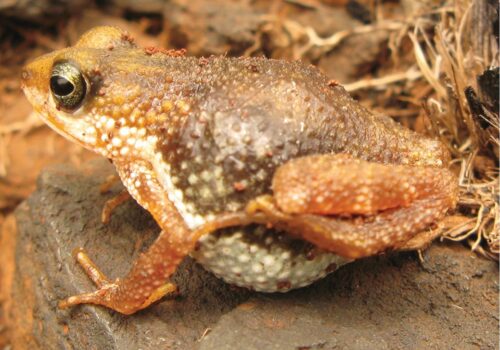
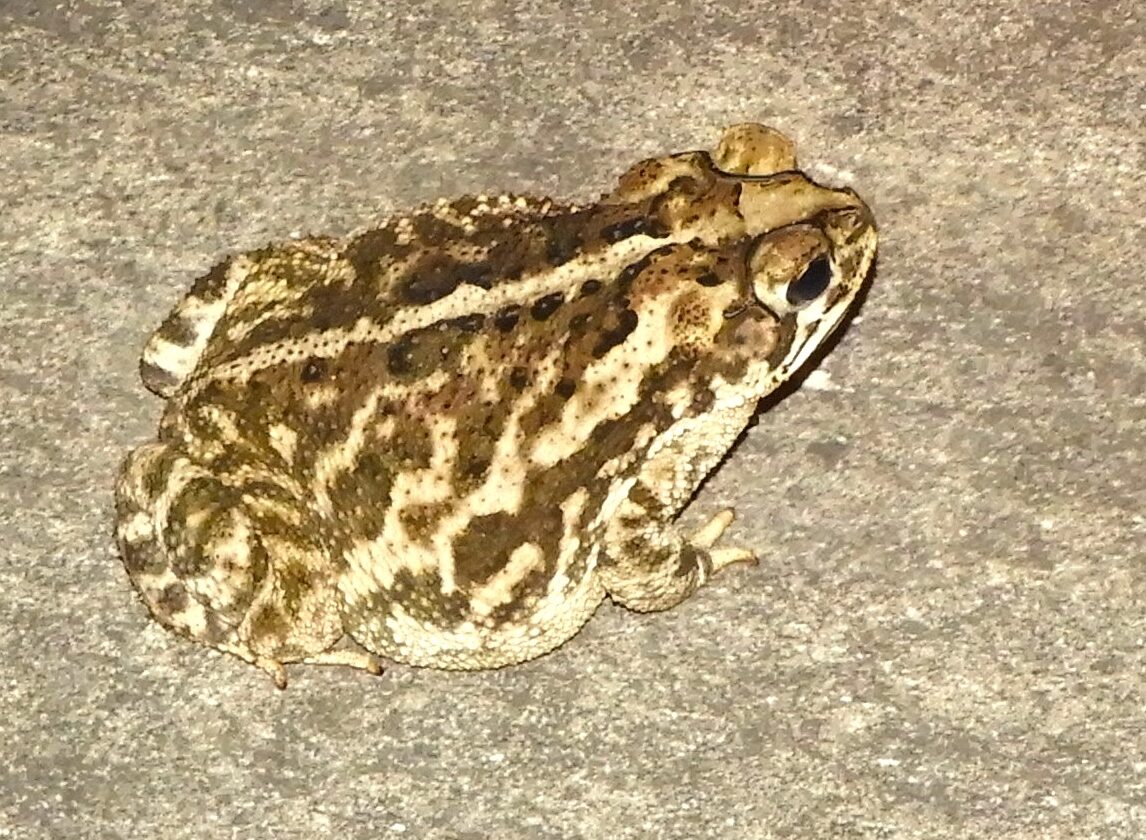
Appearance-wise, Incilius mazatlanensis beautifully reflects its habitat, illustrating nature’s mastery in developing adaptive camouflage. A medium-sized amphibian typically measuring between 5 to 8 centimeters in length, the Mazatlán toad carries an earthy palette of sandy browns, burnt ochres, and subtle olives—colors diffused with dark, contrasting blotches. Its skin is distinctly textured, peppered with rough, granular warts offering subtle protection and hydration retention to endure droughts and heat.
One prominent and characteristic trait that sets the Mazatlán toad apart from other sympatric amphibians is the presence of conspicuous cranial crests atop its head. These raised ridges, often lighter in color and more prominent in adult males, lend the species a disarming, somewhat prehistoric appearance, effectively communicating fitness to potential mates and intimidating rivals during breeding seasons.
This cryptic coloration and morphology are crucial survival tools. In the wild, a powerful array of predators—birds, mammals, larger amphibians—pose a constant threat, yet the Mazatlán toad’s camouflage grants it critical seconds of invisibility, often the difference between life and death.
Behavior and Life Cycle#
With seasonal rains serving as nature’s starting pistol, the Mazatlán toad emerges from sheltered retreats and initiates a brief yet vital period of activity focused primarily on two key aspects: mating and feeding.
Feeding Habits#
Like most bufonid amphibians, diets of the Mazatlán toad comprise a diverse buffet of small insects and arthropods, with preferences including beetles, termites, ants, spiders, and earthworms. Hunting primarily occurs during twilight and nighttime hours, where the cover of darkness aids their patient, sit-and-wait ambush tactics. This deliberate and calculated hunting style serves not only energy efficiency but seamlessly integrates them within the local food web—a critical regulator of insect populations.
Breeding Behaviors and Reproduction#
When summer rains fill temporary pools, males congregate around these freshly formed waters, emitting loud, distinctive calls lasting several seconds per call—like short, rhythmic pulses resonating with repetitive fervor. These choruses generate echoing symphonies announcing communal gatherings, drawing potential mates and establishing territories among competing males.
During courtship, males actively exhibit intense territorial behaviors, engaging in vocal displays and aggressive posturing to discourage rivals. Females, attracted by vocal prowess and territory quality, select suitable partners, proceeding to lay gelatinous masses of eggs, securely attached to submerged vegetation or the pool’s shallow bottom.
Within a matter of days, tadpoles erupt from eggs into these ephemeral waters where they must swiftly mature, metamorphosing into young, terrestrial juveniles. This rapid transformation pattern, characteristic of numerous desert amphibians, ensures survival despite the brief availability of water resources—a remarkable adaptation that mirrors perfectly the region’s rhythmic yet unforgiving environmental cycles.
Ecological Role and Significance#
The Mazatlán toad functions uniquely within its home ecosystem, epitomizing the indispensable roles amphibians play globally. Firstly, as insect predators, they contribute dramatically to managing pest populations, benefiting local agriculture and human settlements. Secondly, serving as prey for larger predators, amphibians help sustain local food webs, feeding snakes, raptors, small mammals, and even larger amphibians.
Perhaps most importantly, amphibians including Incilius mazatlanensis function as profound biological indicators, signposting environmental health realities. Their permeable skin, semi-aquatic lifestyle, and specialized environmental needs make them deeply susceptible to habitat alterations, pollution, and climate change—acting as nature’s sensitive barometers of ecological integrity.
Threats and Conservation Efforts#
Despite their seemingly widespread nature, amphibians worldwide—including the Mazatlán toad—face conservation challenges driven largely by human-induced habitat destruction. Urban expansion, deforestation, agriculture intensification, and pollution all negatively impact their breeding grounds and terrestrial habitats, causing fragmentation and isolation, declining populations, and disrupting critical breeding windows.
Climate change further complicates matters, altering rainfall patterns and reducing the regularity of crucial monsoonal precipitation relied upon by this delicate species. Another emerging concern stems from invasive fungal diseases such as deadly chytridiomycosis, capable of causing dramatic declines in entire amphibian communities.
As of today, Incilius mazatlanensis does not hold a precarious conservation status on the IUCN Red List. Still, such designations do not represent invulnerability. Continuous monitoring, habitat protection, and promotion of amphibian-friendly agricultural practices form essential future strategies, ensuring both the survival of this modest toad and the ecological integrity of its habitat.
Cultural and Scientific Significance#
While not prominently featured in folklore compared to other iconic amphibians, the Mazatlán toad does represent local biodiversity pride. It remains a staple organism for ecological studies, aiding scientists in understanding environmental health and climate change impacts. Amphibians of its kind frequently contribute to toxicological and pharmacological sciences, with skin secretions studied for antimicrobial and anti-parasitic properties with potential pharmaceutical applications.
Furthermore, cautionary observations—such as population fluctuations tied intricately to rainfall patterns—offer meaningful data for local community adaptations, ecosystem restoration, and broader climate policy development.
Conclusion: Why Protect the Modest Mazatlán Toad?#
The Mazatlán toad, though small and unobtrusive, occupies irreplaceable slots within the ecological and scientific fabric of western Mexico. Emphasizing its conservation and understanding its ecological participation helps reframe global conservation priorities—highlighting that every overlooked amphibian species, no matter how humble, has a rich life story worth protecting.
We invite everyone—from casual nature enthusiasts to active conservation advocates—to cherish and defend these subtle champions of biodiversity. Your awareness and involvement make a real difference in safeguarding the quietly remarkable lives of creatures like the Mazatlán toad.