- Unveiling the Marbled Toad (Incilius marmoreus): Life, Ecology, and Conservation
- Introduction to the Enigmatic Marbled Toad
- Taxonomy and Classification
- The Natural Habitat of the Marbled Toad
- Physical Characteristics: Marbled Elegance in Adaptations
- Behavior and Life Cycle: The Secret Lives Beneath Leaf Litter
- Ecological Role: Guardians of Forest Balance
- Threats and Conservation Status: A Fragile Existence Under Threat
- Cultural Significance and Scientific Understanding
- Conclusion: Celebrating and Conserving a Marbled Jewel
Unveiling the Marbled Toad (Incilius marmoreus): Life, Ecology, and Conservation#
Introduction to the Enigmatic Marbled Toad#
Beneath the lush canopy of tropical forests scattered across parts of Central America, a small, striking amphibian waits patiently in the shadowed undergrowth—Incilius marmoreus, more commonly known as the marbled toad. Mottled in patterns of beautiful grey, brown, cream, and even subtle shades of green, this remarkable species balances well-camouflaged discretion with unmistakable charm. Yet despite its unique appearance, this enchanting amphibian remains relatively unknown outside scientific circles and local enthusiasts. Its ongoing existence—characterized by vital ecological functions and fragile interdependence with the surrounding ecosystems—calls for our attention and reverence, prompting a deeper exploration into its captivating story.
If you stroll quietly along a Costa Rican forest trail after a gentle rain, you might piquantly discover a world coming vibrantly to life—and among its secrets waits the marbled toad, quietly participating in nature’s intricate orchestration. With a subtle yet distinctive presence, this species exemplifies amphibians’ pivotal roles in forests, rivers, and communities of organisms spanning from microscopic insects to predatory snakes and birds.
Taxonomy and Classification#
Within the rich taxonomical diversity of amphibians, the marbled toad occupies its place in the family Bufonidae, a widespread group of amphibians commonly known as true toads. Specifically classified within the genus Incilius, this toad’s scientific name—Incilius marmoreus—perfectly encapsulates its marbled coloration. The term “marmoreus” literally hints at a marble-like, intricately patterned appearance, a tribute to the subtle yet complex coloration covering the species.
Within its immediate taxonomic relatives, Incilius marmoreus shares close evolutionary lineage with several other Central American species such as Incilius valliceps. These related species differ subtly in behavior, appearance, and distribution, yet together they form an indispensable branch that enriches the region’s biodiversity.
The Natural Habitat of the Marbled Toad#
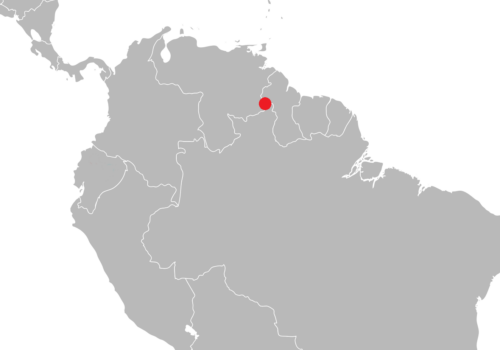
While traversing through lower to mid-elevation forests across southern Mexico, Belize, Guatemala, and Honduras, one may be fortunate enough to encounter Incilius marmoreus. This species prefers humid tropical forests where shade, moisture, and ample leaf litter create an ideal microhabitat. These moist, shaded areas provide the perfect conditions necessary for sustaining amphibian skin hydration, crucial for respiration and protection against dehydration.
These shy creatures can typically be found nestled beneath fallen leaves, logs, rocks, or inside bark crevices during the day, emerging quietly in twilight and nighttime to hunt amidst the rich humus layers that carpet their forest home. Forest margins, stream banks, and shaded thickets offer the marbled toad opportunities for both cover and abundant insect prey, facilitating their essential yet unobtrusive activity in their habitat.
Interactions with Their Environments#
The marbled toad intricately intertwines its life with the health and structure of the forest ecosystem. A humidity-dependent amphibian, it serves as an effective indicator species. By observing populations of these sensitive creatures, biologists can gain critical insights into the health and balance of tropical forests. Any decline in their numbers often signals early warnings of habitat degradation or broader ecological disturbances.
Physical Characteristics: Marbled Elegance in Adaptations#
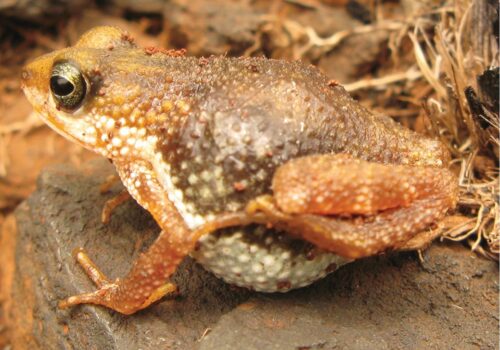
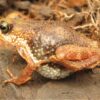
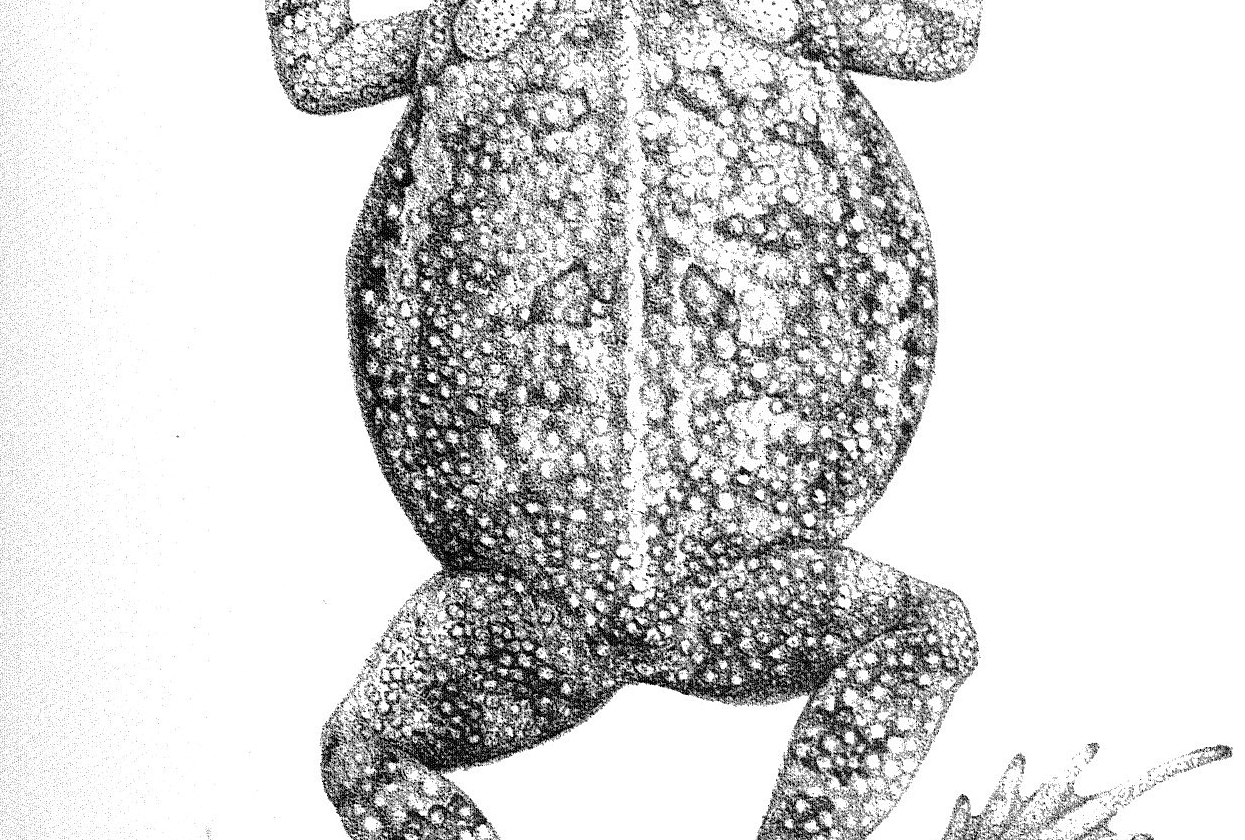
One glance at Incilius marmoreus reveals its unique aesthetic—a splendid camouflage of marbled patterns interweaving earthy tones of olive, brown, grey, cream, and occasionally touches of green and yellow. Adults usually attain moderate sizes, generally ranging from about 35 to 65 millimeters, fitting comfortably into the palm of a researcher’s hand. Their squat, sturdy form further strengthens their charmingly understated presence.
A crucial adaptation for survival in dense tropical foliage is their coloration and textured skin, allowing them to blend seamlessly against the leaf-strewn forest floor. The species exhibits pronounced cranial crests and parotoid glands—a hallmark of true toads—that secrete protective toxins deterring potential predators. Such chemical defenses decrease predation risks and increase their chances to carry on their ancestral lineage.
Behavior and Life Cycle: The Secret Lives Beneath Leaf Litter#
The marbled toad’s nocturnal and secretive lifestyle contributes to its enigmatic aura. By day, hidden away from predators and preference to maintain moisture, these small amphibians rest under logs, buried partially beneath leaves, or in burrows hollowed from soft earth. Only under the curtain of twilight do they quietly emerge to participate actively in forest life expression.
Predatory Behavior and Feeding Habits#
Eloquent predators in miniature form, marbled toads are primarily insectivorous, feasting predominantly on beetles, ants, termites, spiders, and other small arthropods abundant in their forest habitat. Employing excellent eyesight adapted for low-light hunting conditions, these proficient predators seize prey rapidly using their sticky, retractable tongues. Their diversified diets help control insect populations, simultaneously benefiting neighboring vegetation and human agriculture nearby.
Mating, Reproduction, and Tadpole Development#
Like other toads, their life cycle begins with strategic rainfall cues, with males emerging first to breeding ponds or temporary pools, serenading females with melodious trills. Their choruses resonate gently through forest clearings, drawing receptive females nearer under moonlit skies. Following successful mating, females deposit gelatinous egg strings in shallow water. Here, marbled toad tadpoles mature gradually, remaining largely herbivorous and consuming microscopic algae, thus intricately connecting aquatic and terrestrial ecosystems.
After metamorphosis, tiny juvenile frogs vacate aquatic domains to embrace terrestrial lives. This transitional phase between worlds dramatically reshapes their behavior, physiology, and ecological roles. Through this exceptional amphibious life cycle, Incilius marmoreus embodies adaptability—a symbol of ecological flexibility amid environmental unpredictability in their habitat.
Ecological Role: Guardians of Forest Balance#
The marbled toad, in its quiet manner, holds considerable ecological importance. Functioning simultaneously as both predator and prey, it serves within intricate intertwining webs of energy and nutrient transfer that define healthy ecosystems. These toads help manage insect populations that, unchecked, could damage crucial vegetation. Additionally, their presence sustains predator populations, including snakes, birds, and mammals, completing integral links in the tropical food chain.
As ecological indicator species, their well-being reflects forest health. The marbled toad symbolizes ecological balance, highlighting their invaluable presence amid the biodiversity mosaic, resonating profoundly with conservation narratives internationally.
Threats and Conservation Status: A Fragile Existence Under Threat#
Like numerous amphibian species worldwide, Incilius marmoreus faces multiple environmental and anthropogenic threats. Habitat destruction, driven through deforestation, logging, agriculture expansions, and human settlements, remains an existential threat. Additional pressures such as climate change, pesticide pollution, and infectious pathogens like chytrid fungus (Batrachochytrium dendrobatidis) further amplify conservation concerns.
Currently listed as Least Concern by the International Union for Conservation of Nature (IUCN), acknowledging stable populations, this reassuring status shouldn’t overshadow ongoing challenges. Continuous habitat management, forest protection efforts, and conserving critical breeding habitats remain essential actions. Given amphibians’ sensitivity, proactive conservation measures contribute greatly towards safeguarding biodiversity overall.
Cultural Significance and Scientific Understanding#
While this particular species may not prominently feature in local folklore compared to other Central American animals, amphibians broadly encompass significant cultural symbolism. Frogs and toads occur widely within indigenous mythologies, symbolizing renewal, transformation, and ecological health.
Scientifically, the marbled toad—as with many amphibians—assists researchers seeking insights into biodiversity trends, pollution monitoring, habitat wellness, and even human medical breakthroughs. Amphibians’ susceptibility to diseases, habitat changes, and environmental toxins makes them indispensable partners in ecological research.
Conclusion: Celebrating and Conserving a Marbled Jewel#
Understanding the quiet existence of the marbled toad enriches our appreciation for amphibians’ role within healthy ecosystems. Through attentive study and thoughtful conservation, we ensure thriving habitats for species like Incilius marmoreus. Raising awareness enhances conservation outreach, inspiring future generations to foster interconnectedness within nature.
Eager to dive deeper into conservation, immerse yourself in local ecosystem understanding, or support amphibian-focused organizations—the health of delicate species like the marbled toad reflects our shared planetary responsibility, guiding us toward more harmonious coexistence with the extraordinary biodiversity surrounding us.