The Enigmatic White-legged Toad: A Journey into the World of Incilius leucomyos#
In the quiet subtropical forests and lush mountainous regions of Central America, among leaf litter shadows and softly murmuring streams, dwells a small, remarkable creature—Incilius leucomyos. Known commonly as the White-legged Toad, this elusive amphibian captures the imagination of conservationists, herpetologists, and nature enthusiasts alike, not just with its fascinating behaviors but also with its delicate position within the balance of its ecosystem.
Though modest in size and seldom seen, Incilius leucomyos commands attention through its distinct physical traits, enigmatic behaviors, and the crucial ecological role it silently performs. One impressive feature that immediately draws interest lies within its scientific name itself, “leucomyos,” indicative of the subtle white marking or pale tones distinctive to its limbs—an adaptation that is as intriguing as it is visually appealing.
Taxonomy and Classification#
Belonging to the family Bufonidae, Incilius leucomyos falls within the widely diversified group commonly referred to as “true toads.” Previously grouped under the genus Bufo, taxonomic clarification has recently placed many New World species, including our featured toad, within the genus Incilius, a classification that draws from morphological and genetic studies.
The species name, leucomyos, quite fittingly describes a unique identifying character—its characteristic pale or white-colored legs (from Greek roots “leukos” meaning white and “myo-” related to muscle or limb). Close relatives, including Incilius valliceps and Incilius tutelarius, share overlapping ranges but differ notably in visual markings and habitat specificity, making correct identification crucial for accurate ecological studies and targeted conservation efforts.
Natural Habitat#
The White-legged Toad primarily inhabits the subtropical moist forests and montane regions of Guatemala, southern Belize, Honduras, and possibly adjacent parts of surrounding countries in Central America. Their habitats are characterized by dense understories shrouded in perpetual mist, steep ravines nested within rolling forested hills, and a diverse array of perennial water bodies, from crystal-clear mountain streams to tranquil forest pools fringed by lush vegetation.
Microhabitat Preferences#
Incilius leucomyos demonstrates a preference for moist leaf litter and densely shaded forest floors. Notably crepuscular and nocturnal, individuals emerge only after dusk, responding sensitively to atmospheric moisture, temperature, and humidity levels. During dry spells and daylight hours, this cryptic amphibian retreats to sheltered refuges such as beneath rotting logs, under moist leaf litter, and within moss-covered rocky crevices, carefully maintaining hydration and body temperature.
Seasonal rainfall heavily influences the toad’s distribution and congregation habits. After prolonged heavy rains or during the peak of wet seasons, small groups subtly emerge near water features to breed, creating a fleeting yet vivid spectacle for keen observers attentive enough to notice these secretive displays.
Physical Characteristics#
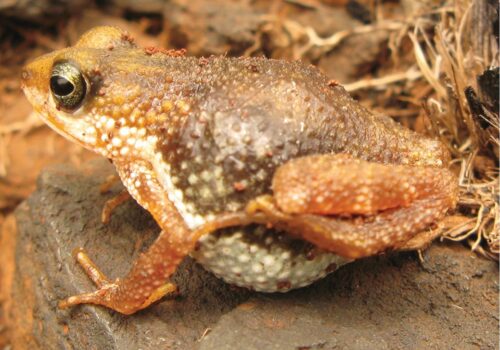
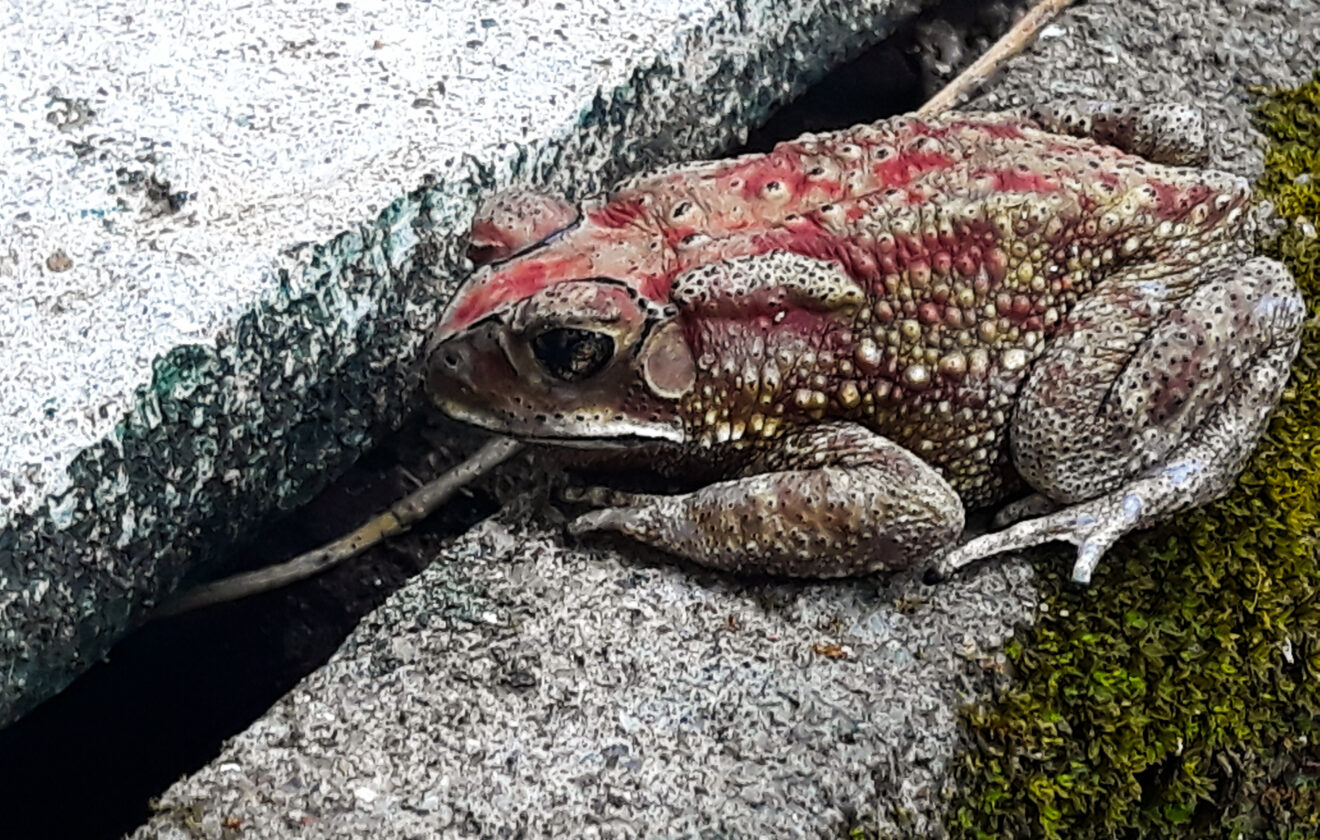
At first glance, Incilius leucomyos may not impose a striking presence. Reaching an adult snout-to-vent length averaging around 40 to 65 millimeters, their compact form belies ecological importance well beyond their diminutive size. Skin texture ranges from finely granulated to warty, offering efficient camouflage amongst leaf litter and ground debris.
The most enchanting visual cue lies within their limbs—subtle, pale markings that lend their common name, “White-legged Toad,” an understated sophistication. The contrast of the pale limbs against the darker earthy tones of their bodies provides both protective camouflage and may possibly serve as a warning or species-identification cue during mating aggregations.
Distinct cranial crests behind each eye connect gently with the parotoid glands, elongated toxin-secreting structures that run parallel to the amphibian’s back. While not lethally toxic to humans, these mild toxins efficiently deter predators, another brilliant evolutionary adaptation to the uncertain perils of forest living.
Behavior and Life Cycle#
A captivating journey occurs each breeding season as dusk descends and humidity peaks, prompting White-legged Toads to initiate their subtle yet sophisticated mating rituals. Males vocalize softly but persistently, producing a low, musical trilling call; a melodious whisper through the darkness that acts as an acoustic beacon to prospective mates.
Mating and Egg-Laying Habits#
Upon successful attraction of females, amplexus—an intimate embrace unique to amphibians—follows tightly. Females delicately deposit egg strings, intricately woven through submerged vegetation or casually draped across shallow, slow-moving stream pools and marshy puddles. Embryonic development in these eggs occurs rapidly under optimal conditions, quickly yielding free-swimming tadpoles uniquely adapted to their aquatic nursery.
The tadpoles of Incilius leucomyos are notably resilient, tolerating variations in dissolved oxygen, temperature fluctuation, and occasionally ephemeral water supplies. Exhibiting typical bufonid herbivorous feeding behavior, tadpoles graze continuously upon algae and provided aquatic vegetation, undergoing a rapid metamorphosis fueled by plentiful, nutrient-rich food sources offered by these mountain water bodies.
Adult Foraging Behavior#
Once metamorphosed and assuming terrestrial form, juveniles and adults integrate themselves naturally into the forest ecosystem. Employing a sit-and-wait foraging strategy, they patiently hunt various invertebrates including crickets, beetles, spiders, centipedes, and ants. Nighttime hunting sessions distinguish Incilius leucomyos through precision strikes, propelled by acute vision, and sensitive detection of vibrations caused by potential prey movements.
Ecological Role#
Incilius leucomyos exemplifies ecological connectivity within its subtropical forest homes through its dual role as predator and prey. Eating a broad spectrum of insects controls arthropod populations, contributing critically to the balance of insect biodiversity. Concurrently, its vulnerability to native predators, including snakes, birds, and small mammals, categorizes this amphibian as an essential trophic link that transfers energy upwards through the food web.
As reliable bioindicators, sensitive to pollution, disease, and habitat degradation, their presence or alarming absences often herald environmental disruptions, signaling urgent intervention needs to attentive conservationists and researchers alike.
Threats and Conservation Status#
Despite its quiet existence, Incilius leucomyos faces serious threats contributing to steady biodiversity declines across Central American amphibian populations. Foremost among these threats ranks habitat degradation through deforestation, driven by agricultural expansion, livestock grazing, and rural development encroachment. Climate variability—exacerbated by rapidly shifting global climate patterns—further stresses populations by altering rainfall patterns and spawning habitats.
Though Incilius leucomyos is currently classified as “Least Concern” by the International Union for Conservation of Nature (IUCN), ongoing habitat losses, pesticide runoff contamination, fungal diseases like chytridiomycosis, and the cumulative impact of these threats steadily erode populations. Experienced local conservationists and dedicated international organizations continually monitor populations, implementing habitat restoration projects and advocacy programs to safeguard future generations of these amphibians.
Cultural and Scientific Significance#
While less prominent culturally compared to some globally renowned toads and frogs, Incilius leucomyos nevertheless merits deeper scientific appreciation. Amphibians of Central America often feature in indigenous folklore, exemplifying the interconnectedness and fragility of the natural world. Regionally, the presence of robust amphibian populations, including this quiet toad, symbolizes environmental health and forest vitality.
Scientifically, these amphibians offer invaluable data through ongoing population studies, contributing to broader climate impact assessments and biodiversity assessments conducted throughout the region.
Conclusion: Safeguarding a Forest Gem#
Incilius leucomyos aptly represents why amphibian conservation remains vital—these small organisms quietly uphold ecosystem stability, offer indicators of environmental integrity, and remind us continually of nature’s inherent wonder. Protecting this inconspicuous yet remarkable creature involves committed habitat conservation, rigorous scientific monitoring, and effective ecological education.
Let the intriguing life story of the White-legged Toad inspire increased awareness, deeper appreciation, and proactive engagement in conservation dialogue. Whether supporting local conservation groups, engaging in citizen science efforts, or simply learning more about your regional wildlife, every action counts. Together, we can ensure the forest echoes forever with the subtle calls and whispers of Incilius leucomyos, a true jewel among Central America’s fauna.