- Introduction: A Hidden Jewel in the Central American Forests
- Taxonomy and Classification: Understanding Incilius ibarrai Within the Amphibian Family Tree
- Natural Habitat: A Life Beneath the Leaf Litter
- Physical Characteristics: Subtle Beauty and Ingenious Adaptations
- Behavior and Life Cycle: The Secret Lives of Forest Amphibians
- Ecological Role: Guardian and Indicator of Forest Health
- Threats and Conservation Status: Protecting an Amphibian in Need
- Cultural and Scientific Significance: Symbolically Subtle, Scientifically Essential
- Conclusion: Celebrating and Conserving Incilius ibarrai
Introduction: A Hidden Jewel in the Central American Forests#
Tucked quietly away amidst the humid, sun-dappled understory of Central American tropical forests, there exists a creature whose existence is easily overlooked but whose role is irreplaceable—the enigmatic toad known scientifically as Incilius ibarrai. Often overshadowed by the charismatic megafauna of Latin America’s lush biodiversity hotspots, this elusive amphibian species embodies the subtle magic of forest ecosystems, serving as both a guardian and an indicator of the health of these delicate environments.
Incilius ibarrai, commonly known as Ibarra’s Toad, might not possess vivid, attention-grabbing colors or overtly spectacular behavior, yet beneath its modest demeanor lies an evolutionary success story tailor-made for survival in the dense, often challenging habitats it inhabits. If one listens carefully in the silence after tropical rains, amidst the dripping leaves and chorus of insects, one may even catch the subtle symphony—the unique vocalizations—that announce the private lives of these fascinating amphibians.
Taxonomy and Classification: Understanding Incilius ibarrai Within the Amphibian Family Tree#
Incilius ibarrai belongs to the Bufonidae family, a diverse and globally distributed group often collectively known as the “true toads.” Within this family, the genus Incilius groups species native specifically to Central and North America, highlighting their evolutionary journey through a vibrant continent rich in ecological niches.
This species was originally described under the genus Bufo, a classification historically used for many toads worldwide. However, recent taxonomic refinement based on genetic and morphological analyses led to the reassignment of several species, including I. ibarrai, to more precise genera. These scientific endeavors clarified close relatives, including the closely allied species Incilius canaliferus and Incilius melanochlorus, whose ranges and habitats partially overlap with Ibarra’s Toad.
Natural Habitat: A Life Beneath the Leaf Litter#
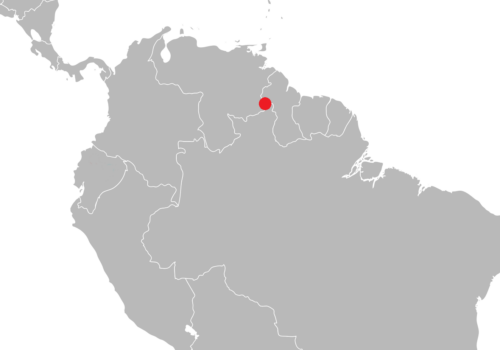
The gentle slopes and sheltered valleys of Honduras, Guatemala, El Salvador, and southern Mexico serve as the primary refuges for the shy and elusive Ibarra’s Toad. Here, beneath layers of decaying leaves, damp soil, and mossy rocks, it leads its secretive existence—a miniature monarch of a subterranean kingdom far away from prying eyes.
The species favors moist lowland and montane forests where humidity is consistently high, keeping its delicate skin hydrated and allowing fungi, mosses, and decomposing leaves to create the rich organic soil they depend on. Small streams, trickling through the shaded forest floor, punctuate their habitat with critical pockets of freshwater. These clear waters not only support adult toads but also form essential nursery grounds where tadpoles can grow, sheltered from predators.
This specialized habitat makes Incilius ibarrai an incredibly sensitive environmental sentinel. Whenever structural changes occur—be it from deforestation, urbanization, or degradation due to agriculture—the presence or absence of Ibarra’s Toad offers invaluable clues to conservationists about ecosystem health.
Physical Characteristics: Subtle Beauty and Ingenious Adaptations#
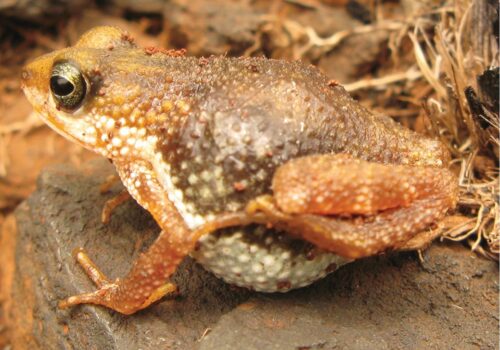
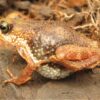
At first glance, Incilius ibarrai appears modestly adorned. Adults typically measure between 45 to 80 millimeters, with females slightly larger than males. Their robust, rounded bodies have a classic toad-like build—short limbs, prominently glandular and rough-textured skin, and characteristically expressive, golden-bronze eyes with horizontal pupils perfectly adapted for their nocturnal lifestyle.
Coloration tends to vary subtly between brownish-olive and gray-brown hues, with mottled patterns that camouflage superbly against leaf litter and wooded landscapes. Such cryptic coloration is arguably among their greatest survival strategies—allowing them to evade detection by keen-eyed predators, such as birds, snakes, and small mammals that roam the forest floor seeking their next meal.
Another prominent feature is a pair of large parotoid glands behind their eyes, which produce and secrete bufotoxin when the animal feels threatened—an effective chemical deterrent that discourages predators from making a meal out of them. These adaptations have enabled the species to inhabit dangerous environments with numerous predators, quietly thriving through stealth and chemical defenses rather than raw speed or aggression.
Behavior and Life Cycle: The Secret Lives of Forest Amphibians#
Nocturnal Hunters and Their Quiet Rituals#
Like numerous amphibian relatives, Incilius ibarrai is primarily nocturnal. As dusk saturates the habitat with shadows and temperatures decrease, these toads emerge cautiously from their hiding places beneath logs or under fallen foliage piles. Silently, with slow yet purposeful movements, they roam in search of infrequent insect prey, spiders, earthworms, and small invertebrates—a diet essential not only for their growth and breeding condition but also integral to regulating insect populations throughout the forest ecosystem.
Mating Calls and Quiet Courtship#
During breeding season—usually timed with the onset of the rainy season—males venture down to shallow forest streams or pools. At these waterside gatherings, under the velvet darkness and gentle drumming of tropical rains, males vocalize their soft, rhythmic calls that punctuate the night air. These subtle melodies attract females to the chorus, resulting in selective pairings, where females evaluate potential mates based on call quality, size, and territorial position.
After mating, females deposit their eggs in shallow bodies of water, where embryos soon develop into tadpoles. Tadpole development, triggered and nourished by the rainy season’s availability of fresh water and abundant planktonic organisms and organic matter, leads to metamorphosis after several weeks. Newly emerging juveniles, small facsimiles of the adults, scatter into the surrounding forest, embarking on their silent, essential roles within the ecosystem.
Ecological Role: Guardian and Indicator of Forest Health#
The significance of Incilius ibarrai extends beyond simply occupying a niche. It plays an important role in trophic regulation, controlling insect populations and maintaining ecological balance within these delicate ecosystems. Simultaneously, it serves as prey for a diverse range of forest predators, thereby anchoring essential food webs.
Yet beyond direct ecological contributions, the species is an invaluable indicator of the environmental vitality or stress of tropical forests. Amphibians, due to their permeable skin and reliance on healthy watersheds, are particularly susceptible to habitat changes, chemical pollution, and climatic shifts. Declines or absences of Incilius ibarrai serve as a warning sign to conservationists—nature’s own sensitive biological alarm—that environmental degradation is occurring, demanding immediate investigation and action.
Threats and Conservation Status: Protecting an Amphibian in Need#
Increasing concerns over deforestation, habitat fragmentation, climate change, and disease exposure (notably chytrid fungus impacting amphibian populations worldwide) pose significant threats to the survival and health of Ibarra’s Toad populations. As agricultural expansion, logging, and urban encroachment continue in Central America, these subtle forest dwellers find themselves under ever-increasing pressure.
Currently categorized as “Near Threatened” by the International Union for Conservation of Nature (IUCN), Incilius ibarrai faces the very real challenge of safeguarding its declining forest habitats. Protecting moist, undisturbed forest patches—especially waterways crucial to their reproductive cycle—is paramount. Active conservation programs and community awareness initiatives are urgently needed to preserve not just the species itself, but the greater ecosystems of which it is a crucial component and indicator.
Cultural and Scientific Significance: Symbolically Subtle, Scientifically Essential#
While perhaps not widely celebrated in cultural myths like frogs of some other regions, Ibarra’s Toad symbolizes an almost poetic resilience—the ability of quiet, unassuming biodiversity to hold ecosystems together. For scientists, the species offers fenestration into forest ecological stability and the threats posed by anthropogenic pressures and global climate change.
Conclusion: Celebrating and Conserving Incilius ibarrai#
Incilius ibarrai serves as a humble, quiet guardian of Central America’s lush forests. As we work towards safeguarding biodiversity and protecting pristine wilderness, let us not forget creatures like Ibarra’s Toad—small in size but immense in ecological importance. After all, their continued existence reminds humanity that even the most inconspicuous creatures play irreplaceable roles in holding ecosystems together.
Join conservation efforts. Learn more about amphibian protection. Advocate for sustainable living. Together, let’s preserve the hidden jewels, like Incilius ibarrai, throughout our planet’s vibrant ecosystems.