- Exploring the Hidden Wonders of Incilius guanacaste: The Secretive Toad of Costa Rica's Forests
- Taxonomy and Classification
- Natural Habitat: A Patchwork of Evergreen and Deciduous Forests
- Physical Characteristics: A Study in Subtle Adaptation
- Behavior and Life Cycle: Quiet Lives Among Forest Shadows
- Ecological Role: Amphibian Guardians of Forest Health
- Threats and Conservation Status: Challenges Facing Incilius guanacaste
- Cultural and Scientific Significance: A Species Worth Celebrating
- Conclusion: Championing the Protection of Costa Rica’s Unsung Amphibians
Exploring the Hidden Wonders of Incilius guanacaste: The Secretive Toad of Costa Rica’s Forests#
Deep within the verdant canopy and gently rolling hills of Costa Rica’s Guanacaste region, a rather secretive amphibian thrives quietly and unobtrusively among leaf litter, streams, and fungal-covered logs. Meet Incilius guanacaste, a fascinating yet often overlooked toad species that embodies the hidden majesty of Central America’s intricate ecosystems. Known among herpetologists for its subtle beauty and elusive nature, this unique hotspot-toad not only enriches the biodiversity of its habitat but serves as an unmistakable sentinel in assessing ecosystem health. Yet despite its crucial ecological role, it remains largely unknown to the broader public. Let us delve deeply into the life, habits, ecology, and conservation of this remarkable amphibian, uncovering what makes Incilius guanacaste a species to cherish and protect.
Taxonomy and Classification#
Belonging to the diverse amphibian order Anura, Incilius guanacaste is classified within the Bufonidae family, known more commonly as true toads. These largely terrestrial amphibians cluster within the genus Incilius, which is distinguished by certain morphological and genetic features defining this unique grouping. Formally described and identified scientifically not so long ago, Incilius guanacaste illustrates just how diverse and continually evolving the understanding of amphibian taxonomy remains. Due to its specific adaptations and locality, it is closely related genetically and ecologically to other members of its genus, including the broadly distributed Neotropical species familiar to herpetologists across Central America and Mexico.
The identification and confirmation of Incilius guanacaste as a distinct species, separate from previously confused closely related taxa, underscore the importance and complexity of amphibian biodiversity studies. Genetic analysis combined with detailed morphological observations led scientists to appreciate the uniqueness of this modest yet astonishingly adapted member of the family Bufonidae.
Natural Habitat: A Patchwork of Evergreen and Deciduous Forests#
Hidden beneath the cool damp canopy of northwestern Costa Rica’s Guanacaste province, this intriguing toad inhabits a mixed landscape of evergreen, dry seasonal forests, and humid lowland forests. Unlike many amphibians that require constant moisture, Incilius guanacaste has evolved to survive in fluctuating habitats characteristic of Guanacaste’s seasonal weather patterns. This ability to endure seasonal drought is a remarkable trait that sets it apart from many amphibians, relying intimately on micro-habitats—small streams, moist leaf litter, fallen logs, and shaded ravines—to maintain adequate moisture levels throughout dry periods.
Microhabitat Preference: Leaf Litter and Moist Shelters#
Travelers trekking through these forested regions are seldom aware of this charmingly cryptic resident hidden beneath their feet. With remarkable camouflage, this amphibian seeks refuge within the moist pockets of forest debris, Indigenous bromeliads, and tangled root systems near streams or ephemeral water sources. These habitats provide essential conditions for maintaining body hydration and the moisture necessary for delicate skin respiration—a fundamental necessity for amphibians. Because moisture plays a critical role in their survival, the conservation of Guanacaste’s forest floor microclimates becomes a conservation imperative for Incilius guanacaste.
Physical Characteristics: A Study in Subtle Adaptation#
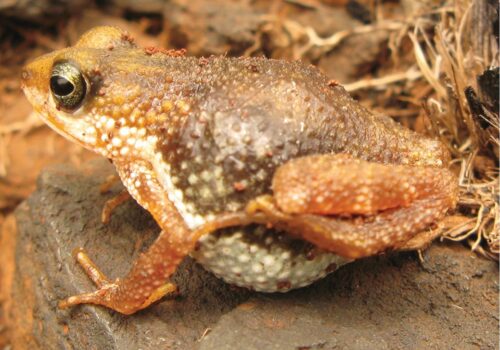
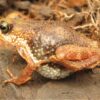
Svelte and modestly built, adult Incilius guanacaste generally reaches lengths averaging around 5 to 7 centimeters, their compact frames masterfully suited to a terrestrial lifestyle. These toads exhibit nuanced patterns of coloration, ranging from soft, earth-toned blends of browns, greys, and greens, to hues that flawlessly mimic the forest floor. These cryptic colorations serve as perfect camouflage, enabling the toad’s discreet existence and hiding its presence from potential predators.
Remarkable Skin and Parotoid Glands: Nature’s Line of Defense#
Like many of its close relatives, this species features moderately sized parotoid glands situated just behind its eyes. These glands are capable of releasing defensive toxins—chemicals that deter predation and highlight a sophisticated evolutionary strategy for survival within the harsh competition faced beneath rainforest canopies. Though the toxins from Incilius guanacaste are less potent compared to some other toad species, they still provide effective protection through an evolutionary balance of moderate toxicity and cryptic coloration.
The skin texture is another noteworthy adaptation—relatively rough yet capable of absorbing vital moisture from atmospheric humidity, especially important during the region’s prolonged dry seasons. This intricate ecological balancing act illustrates the delicate interplay between physical form and environmental demands that defines amphibian evolution in Guanacaste’s habitats.
Behavior and Life Cycle: Quiet Lives Among Forest Shadows#
Incilius guanacaste is notably nocturnal, spending daylight hours quietly sheltered in burrows dug under logs, rocks, or beneath thick layers of leaf litter. As darkness descends, they emerge cautiously into the humid night, exploring the forest floor in search of the insects, spiders, and small invertebrates that make up their diet.
Diet and Foraging Strategies: Patient Ambush Hunters#
Employing patient ambush tactics, these toads remain motionless—camouflaged against tree roots and leaf litter—waiting for unsuspecting prey to wander within striking range. Each capture is executed rapidly with a flick of the sticky, muscular tongue; a behavior efficient enough to ensure survival with minimal energetic expenditure. Opportunistic yet selectively cautious, they play a crucial role in controlling insect populations and balancing forest-floor biodiversity.
Reproduction and Courtship: Songs in Moonlit Nights#
During the rainy season, males congregate near shallow pools and slow-moving streams tucked amidst the forest vegetation, awakened into activity by arriving rains. Their chorus fills the Caribbean twilight, softly whispering mating calls echoing through the glistening wetness, inviting females drawn by the subtle yet distinctive sounds. After successful mating, females deposit long chains of gelatinous eggs into the safety of temporary water bodies. These egg strands soon transform into tiny, free-swimming tadpoles, commencing the delicate and vulnerable early life stage that lasts several weeks before metamorphosing into juvenile toads and joining their adult counterparts in forest life.
Ecological Role: Amphibian Guardians of Forest Health#
Acting as both predator and prey, Incilius guanacaste occupies a crucial ecological niche. By predating on insects, they assist in regulating pest populations, limiting outbreaks that might threaten broader forest biodiversity. Additionally, as prey, they provide nutrition for snakes, birds, and small mammals within their ecosystem, threading ancient food web connections critical to regional biodiversity stability.
Perhaps most importantly, amphibians like this serve as biological “canaries in the coalmine,” sensitive indicators that can forewarn changes in environmental quality. Their semi-permeable skin makes them particularly susceptible to pollutants, climate variations, and habitat alterations, providing early warnings of ecological distress in Costa Rica’s protected areas.
Threats and Conservation Status: Challenges Facing Incilius guanacaste#
While currently not listed as critically endangered by the International Union for Conservation of Nature (IUCN), Incilius guanacaste faces numerous threats common among amphibians globally, amplified by increasing local pressures. Habitat degradation through deforestation for agriculture, tourism development, and infrastructure expansion constitutes a primary threat. Climatic shifts further exacerbate risks; even minor fluctuations in precipitation patterns or temperature can significantly disrupt critical habitats and alter breeding cycles.
Disease also ranks high among concerns—amphibian chytridiomycosis, a fungal infection devastating amphibian populations worldwide, has not spared Central America. Continuous monitoring remains crucial, identifying and responding quickly to outbreaks to prevent devastating declines.
Cultural and Scientific Significance: A Species Worth Celebrating#
While little-known culturally, Incilius guanacaste evokes pride and awe in Costa Rica’s growing conservation community, embodying the country’s continuous pursuit of ecological sustainability and biodiversity protection. Much remains to be learned, making each snippet of research on this batrachian beauty a meaningful addition to ecological knowledge, contributing broadly to global amphibian conservation efforts.
Conclusion: Championing the Protection of Costa Rica’s Unsung Amphibians#
Incilius guanacaste might lack the flashiness of iconic tropical species, yet its subtle presence speaks volumes of the miracle of nature unfolding quietly around us. By understanding, appreciating, and advocating for this and similarly overlooked species, we reinforce the invaluable interconnectedness of all living organisms. Together, let us foster interest and dedication to safeguarding hidden treasures like the Guanacaste Toad, for they symbolize the incredibly diverse, delicate, and irreplaceable tapestry of life.