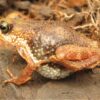
Incilius fastidiosus: Exploring the Mysteries of the Exquisite Forest Toad#
In the lush heartlands of Central America, hidden amid shadowy understory ferns and pools glistening with droplets of tropical rain, a tiny creature patiently awaits nightfall. Its name might not dominate headlines or strike immediate recognition, but Incilius fastidiosus, commonly known as the Pico Blanco Toad or Fastidious Toad, captivates enthusiasts and scientists alike with a delicate blend of beauty, mystery, and ecological importance.
Discreet in its presence yet eloquent in its significance, this unassuming amphibian forms a vibrant thread in the ecological tapestry of its environment. Notably selective in its habitat choice—earning it the eloquent epithet “fastidiosus,” meaning selective or particular—it offers glimpses into the health of its pristine ecosystem, serving as an often-unnoticed sentinel of tropical biodiversity.
Taxonomy and Classification#
Incilius fastidiosus inhabits the taxonomic family Bufonidae—widely recognized as “True Toads.” Within this family, it belongs to the genus Incilius, a diverse lineage of Central and South American toads distinguished by their vibrant diversity, complex behaviors, and ecological adaptability.
Formerly classified under the broader genus Bufo, molecular and morphological analyses have clarified distinctions leading to the species’ current taxonomy. Closely related species sharing its genus, such as Incilius coniferus and Incilius valliceps, similarly adorn the Central American landscapes but display variations in morphological and ecological specializations.
Natural Habitat#
To venture into the lush tropical montane forests of central Costa Rica is to enter the realm of Incilius fastidiosus. Primarily endemic to the high-elevation forests around Cerro Pico Blanco near San José, the species thrives in environments characterized by stable humidity, moderate temperatures, and dense vegetation. It’s no coincidence the Pico Blanco Toad is so selective about its habitat—its survival hinges on intricately stable conditions found within these cloud forests.
Microhabitat Specializations#
Beneath the spongy moss carpets and decaying leaves, these secretive amphibians find ample moisture and shade, providing optimal shelter and conditions necessary for their sensitive skin. Unlike more cosmopolitan relatives, Incilius fastidiosus is known to inhabit unusually specific locales: rocky streams, seepages, and forested slopes with particular microclimatic conditions. Such exacting preferences highlight the species’ delicate relationship with its environment, rendering it vulnerable to even the smallest ecological disturbances.
Physical Characteristics#
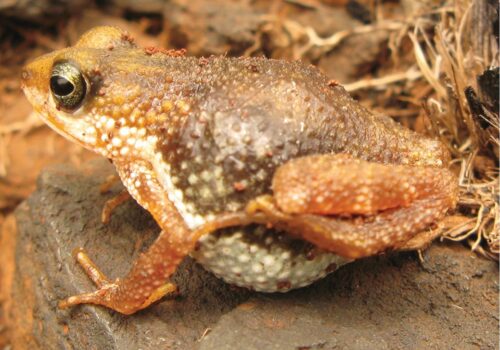
The physical presence of Incilius fastidiosus belies its considerable ecological importance. Typically measuring between 4 to 7 centimeters in adulthood, the species sports earthy shades of brown, grey, or olive with occasional mottlings or blotches that harmonize seamlessly with its leafy surroundings. Its rough, granular skin constitutes an effective camouflage against the leafy substrate and rugged terrain of its mountainous home.
One distinctive feature contributing to its identification is the remarkable cranial crests—ornate ridge-like structures adorning the head, lending it an almost sculptural elegance. Additionally, prominent parotoid glands, characteristic of bufonids, reside behind the eyes, secreting toxins vital to survival against predators.
Adaptive Advantage of Camouflage and Toxicity#
Blended inconspicuously with forest floors, the Pico Blanco Toad easily evades predators. However, when camouflage alone proves insufficient, its toxin-laden glands serve as an additional defensive mechanism, deterring predation by emitting potent irritants or poisoning agents. These dual adaptations allow Incilius fastidiosus to navigate busy ecosystems teeming with potential threats, emphasizing extraordinary evolutionary adaptations finely honed through millions of years’ survival.
Behavior and Life Cycle#
Nightfall heralds activity for Incilius fastidiosus, beckoning them from hidden niches toward the dim waters of forest streams. Predominantly nocturnal, their evenings estivate into fascinating symphonies of croaking males, competing audibly beneath the tropical moonlight for females’ attention. Unique vocalizations resonate through the moist air, each frog producing subtle variations meant to attract potential mates and signify their territorial presence.
Reproduction: A Delicate Ritual Beneath the Canopy#
The breeding season typically coincides with periods of increased rainfall between May and November. Gathering in temporary forest pools or slow-moving streams, males dramatically amplify their songs—distinctive low-pitched trills—to court mates. Females respond selectively, further emphasizing the species’ fastidious nature noted by its Latin epithet. Successful mating culminates in the deposition of gelatinous egg masses, typically beneath submerged vegetation or leaf litter, providing cover and protection in early developmental stages.
Tadpole to Adult: Metamorphosis within Forest Sanctuaries#
Aquatic larvae emerge swiftly from eggs, developing rapidly within their forest pools, grazing algae and detritus as primary sustenance. Their aquatic stage can last between four and six weeks, depending on climate and resource availability. Eventually, fully developed juveniles, no larger than a fingertip, emerge onto land, ready to begin their terrestrial existence. Each tiny specimen then embarks on a journey through leaf litter and moist undergrowth, quickly adapting to forest life and beginning the broader ecological contributions characterizing their adult presence.
Ecological Role#
To the uninitiated, the Pico Blanco Toad might simply represent another amphibious resident hidden amongst the leaf litter. Yet, deeper observation reveals its pivotal ecological position. Within its habitat, Incilius fastidiosus functions as both predator and prey, consuming invertebrates such as insects and worms and themselves providing sustenance for larger forest-dwelling predators.
An Indispensable Environmental Indicator#
Amphibians globally possess heightened sensitivity to environmental changes due largely to their permeable skin and reliance on moist habitats. Thus, Incilius fastidiosus serves as a diligent sentinel species whose presence—or absence—signals environmental quality. Shifts in their populations indicate wider changes, such as habitat degradation, pollution, or climate fluctuations, underlining their importance in ecological assessments and conservation strategies.
Threats and Conservation Status#
Today, Incilius fastidiosus faces intensifying environmental pressures unparalleled in previous centuries. Habitat fragmentation through deforestation, agricultural expansion, and urbanization constitutes a central threat. As a highly selective and localized species, even minor habitat disruptions can significantly impact population stability and survival viability.
Further compounding its peril are broader phenomena such as climate change, causing fluctuations in rainfall patterns and stream hydrology essential for their breeding cycles. Additionally, chytridiomycosis—an epidemic fungal disease devastating amphibians globally—poses potential risks to this small but important toad population as its prevalence grows throughout Central America’s montane habitats.
The International Union for Conservation of Nature (IUCN) currently categorizes Incilius fastidiosus as Critically Endangered, calling urgently for conservation measures to stabilize and protect remaining populations and habitats.
Proactive Conservation Initiatives#
Scientists, conservation groups, and local communities increasingly collaborate to preserve and monitor critical habitats. Efforts include ecological restoration, public education programs, and breeding programs aimed at bolstering this amphibian’s numbers. Moreover, protected natural reserves and parks around Cerro Pico Blanco and related forest habitats continue offering hope and sanctuary to this embattled species.
Cultural and Scientific Significance#
Although lesser-known globally, Incilius fastidiosus retains noteworthy symbolic importance within local cultures and regional conservation discourses. Its very selectiveness attests powerfully to pristine habitat and environmental purity, encapsulating emblematic meanings of sustainability, ecological harmony, and biodiversity preservation intrinsic to Costa Rican cultural ethos.
Scientifically, researchers prioritize studying this species to elucidate broad ecological interactions, disease dynamics, and the implications of environmental change. Furthermore, discoveries regarding its toxins may offer potential biomedical applications, deepening interest beyond conservation circles.
Conclusion: Guardianship of Incilius fastidiosus#
Incilius fastidiosus exemplifies the subtle beauty, ecological significance, and critical conservation imperatives that characterize the plight of many lesser-known amphibians today. To appreciate this exquisite forest toad is to recognize not only its considerable intrinsic value but also our collective responsibility as stewards of biodiversity and environmental health. Our understanding, respect, and conservation actions will ultimately illuminate paths toward securing its future, reaffirming our role as caretakers of nature’s intricate and remarkable tapestry.