- Meet Incilius cristatus: The Enigmatic Elegance of the Crested Toad
- Taxonomy and Classification: Placing the Crested Toad in Context
- Natural Habitat: A Home Beneath the Leafy Canopy
- Physical Characteristics: Captivating Crests and Cryptic Colors
- Behavior and Life Cycle: Secret Lives Beneath the Canopy
- Ecological Role: A Vital Link Within the Forest Community
- Threats and Conservation Status: Navigating a Turbulent Future
- Cultural and Scientific Significance: Amphibians at the Intersection of Culture and Discovery
- Conclusion: Celebrating and Safeguarding Incilius cristatus
Meet Incilius cristatus: The Enigmatic Elegance of the Crested Toad#
In the verdant depths of Central America’s tropical forests, a creature of remarkable charm and enigmatic elegance hops quietly beneath the canopy’s shadow. This intriguing amphibian, the Crested Toad (Incilius cristatus), thrives within its luscious sanctuary, embodying the rich biodiversity and delicate complexities of rainforest ecosystems.
With its distinctive crest and shy disposition, Incilius cristatus often slips unnoticed beneath dense foliage, yet it is a pivotal part of its ecological community. To understand its significance is to appreciate both the fragility and resilience found in nature’s tapestry—a story well worth telling.
Taxonomy and Classification: Placing the Crested Toad in Context#
Scientifically known as Incilius cristatus, the Crested Toad belongs to the family Bufonidae—the true toads. This family encompasses a diverse array of amphibians recognized for their hardy adaptability, distinctive dry skin, and characteristically plump bodies. Within Bufonidae, the genus Incilius represents a lineage native primarily to the Neotropics, comprising species renowned for fascinating morphological adaptations and unique behaviors.
First described formally by Wiegmann in 1833, Incilius cristatus traces its evolutionary lineage to a group of species well adapted to humid, tropical climates. It shares close evolutionary ties with related species like Incilius valliceps and Incilius nebulifer, each showcasing unique survival strategies amid Central America’s ever-changing ecosystems. Understanding this taxonomic tree sheds light upon how minor evolutionary adjustments culminate in magnificently distinctive traits—such as the ornate crest for which this species earns its evocative common name.
Natural Habitat: A Home Beneath the Leafy Canopy#
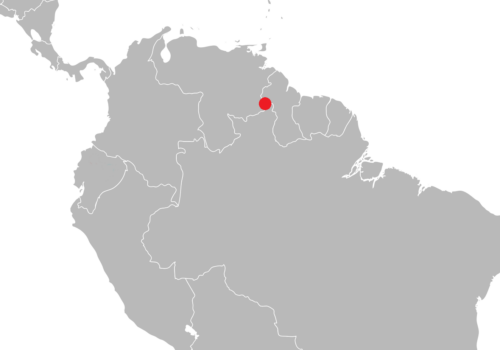
When exploring the shady understory of tropical forests, one might chance upon the elusive Crested Toad. Geographically, Incilius cristatus inhabits regions of southern Mexico, Guatemala, Belize, Honduras, and northern Nicaragua. Here, within the lush forests and subtropical moist lowlands, these subtle amphibians thrive among leaf litter, riverbanks, damp ravines, and seasonally flooded depressions.
This toad has adapted gracefully to environments characterized by abundant precipitation, moderate temperatures, and ample vegetative cover. The forest floor offers a unique mosaic, where decomposing leaves provide fabric-like layers perfect for concealment from predators and improved microhabitats for regulating humidity and temperature.
Embedded in this spectacular setting, Incilius cristatus becomes a discreet ruler of its small kingdom, an amphibian profoundly intertwined with the subtle rhythms and intricate dynamics of life beneath the verdant canopy. Integral to its habitat, the Crested Toad reflects the overall health of these forest ecosystems—any disruption to environmental conditions readily reverberates through its populations.
Physical Characteristics: Captivating Crests and Cryptic Colors#
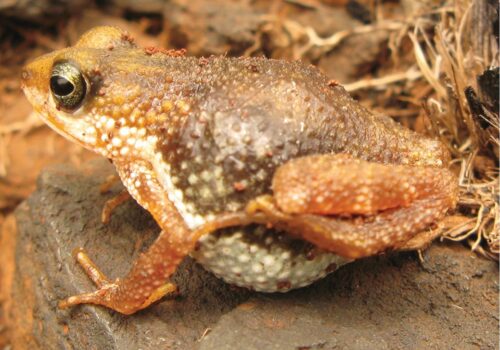
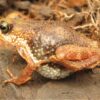
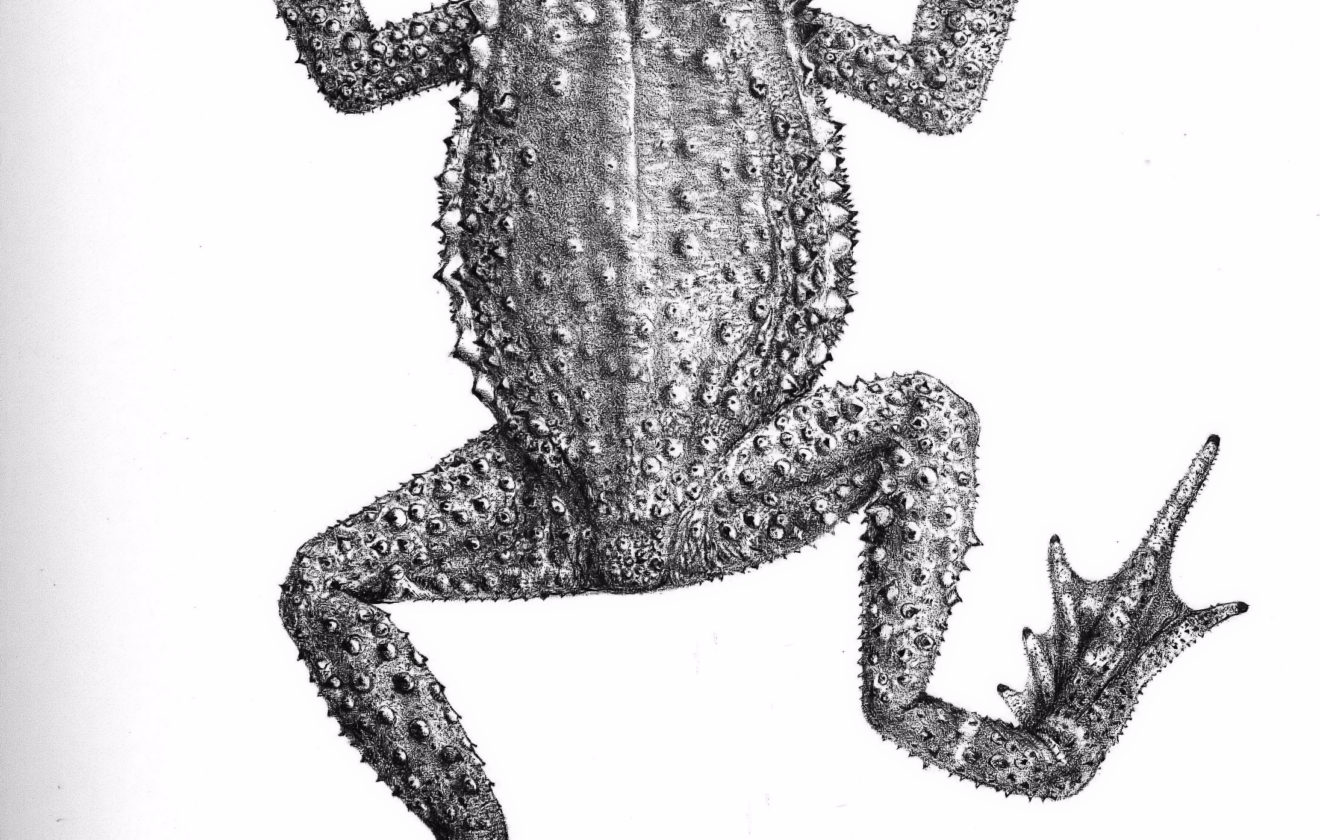
A first glance at Incilius cristatus reveals that while modest in size—typically measuring about 5 to 8 centimeters in body length—this toad is nothing short of extraordinary. Its definitive feature, the spectral cranial crest, is an ornamentation that lends this amphibian its charismatic allure. Extending from the head down along the back, the crest comprises pronounced bony ridges which exude an air of delicate elegance amid an otherwise humble physique.
Its coloration is specifically evolved to complement their secluded habitat. The subdued shades of olive-brown, grayish hues, and muted earth tones, occasionally punctuated by darker, irregular mottled patterns, camouflage this fascinating amphibian seamlessly against the backdrop of decaying foliage and moist soils. Their rough, dry skin further accentuates cryptic concealment, marked occasionally by subtle, wart-like protrusions that create complex textures preventing predator detection.
The toad’s relatively short legs hint at a preference for hopping rather than extensive jumping, an adaptation perfectly suited for navigating its intricate niche of leaf litter and leaf-covered forest floors. Meanwhile, ventral coloration ranging to creamy whites and mottled browns offers further protective camouflage.
Behavior and Life Cycle: Secret Lives Beneath the Canopy#
Incilius cristatus is a predominantly nocturnal creature, active mainly at dusk and during humid nights when moisture-rich air facilitates its vital amphibious physiology. By staying concealed beneath leaf litter and within burrows during daylight hours, they avoid exposure to desiccation and predators, emerging under the gentle cover of darkness to forage.
Feeding Habits and Dietary Preferences#
The Crested Toad’s dietary habits reflect its opportunistic and practical nature. Active foraging typically involves consuming a diverse diet of insects, spiders, and various small invertebrates abundant within forest litter. An ambush predator in essence, the Crested Toad relies heavily on stealth and precision, patiently waiting as prey crawls unsuspecting past its sheltered location. The quick snap of a sticky tongue signals successful hunting—a small but essential act repeated regularly for survival and growth.
Breeding and Reproduction Behaviors: A Rain-Induced Symphony#
Ages-old rhythms of rainfall guide the reproduction and life cycle of the Crested Toad. During rain-soaked nights early in the wet season, males congregate near seasonal pools and slowly flowing streams to vocalize calls—distinctive resonant notes that soothe through humid forest air, serving as invitations and territorial declarations. Females, receptive to these vocal advances, approach waterside territories to locate suitable mates.
After courtship and pairing, females deposit strings of black-pigmented eggs in shallow water bodies. Tadpoles soon emerge and begin their fascinating developmental marathon, turning from aquatic organisms dependent on aquatic habitats to terrestrial juveniles carefully embarking upon new journeys beneath the terrestrial canopy. These breeding habitats thus becomes ecological nurseries teeming with increasingly mobile juveniles that disperse into neighboring forests, continuing their lineage’s legacy.
Ecological Role: A Vital Link Within the Forest Community#
Every amphibian is a vital cog within the complex machinery of tropical biodiversity, acting simultaneously as predator and prey. Incilius cristatus, with its penchant for consuming insects and other small invertebrates, assumes a protective role controlling pest populations within this intricate forest domain.
Simultaneously, the toad itself serves as nourishment for numerous predators including snakes, birds, and various mammals. This dual role within the food web establishes the species’ presence as distinctly important to maintaining ecological equilibrium and biodiversity dynamics. Moreover, their sensitivity to environmental change renders them effective indicators of ecosystem health, signaling shifts in habitat quality through their physiological and population responses.
Threats and Conservation Status: Navigating a Turbulent Future#
Sadly, the Crested Toad faces growing threats in our rapidly changing world. Habitat destruction driven by deforestation, intensified agriculture, human settlement expansion, and industrial activity remains foremost among these concerns, fragmenting populations and diminishing viable breeding sites where these amphibians reproduce and thrive.
Additional pressures, including pollution of waterways by pesticides and chemicals, climate change heightened drought cycles, and introduction of invasive species further compound the threats to their continued survival. Currently, Incilius cristatus is classified by the International Union for Conservation of Nature (IUCN) as Near Threatened, signaling ongoing concerns over declining populations.
Fortunately, conservation initiatives—such as habitat preservation, ecological research, and environmental education—offer essential pathways toward securing the future for this unique amphibian.
Cultural and Scientific Significance: Amphibians at the Intersection of Culture and Discovery#
In Mayan and Central American cultures, amphibians like the Crested Toad symbolize fertility, transformation, and environmental health. Although less documented culturally than some of its flamboyant relatives, the Crested Toad offers compelling insights to scientists studying amphibians as bioindicator species, unraveling clues about biodiversity, climate resilience, and ecosystem health.
Conclusion: Celebrating and Safeguarding Incilius cristatus#
Incilius cristatus reminds us of nature’s profound beauty and vulnerability. Understanding and celebrating this modest yet magnificent creature deepens our appreciation for the delicate interconnectedness of life. By raising awareness, engaging in conservation efforts, and ensuring long-term ecological stewardship, we can ensure that future generations continue marveling at this amphibious jewel hidden in the shadows of tropical forests—an enchanting emblem of a thriving planet.