- The Intriguing World of <em>Incilius canaliferus</em>: Exploring the Valley Toad's Ecology, Behavior, and Conservation
- Taxonomy and Classification
- Natural Habitat and Distribution
- Physical Characteristics: A Master of Camouflage
- Life Cycle and Fascinating Behaviors
- An Integral Part of Their Ecosystem
- Conservation Status and Ongoing Threats
- Cultural and Scientific Significance
- Conclusion: Protecting the Modest Sentinel of Forest Streams
The Intriguing World of Incilius canaliferus: Exploring the Valley Toad’s Ecology, Behavior, and Conservation#
In the hidden recesses of Central American forests, among leaf-laden streams and shaded undergrowth, lives a humble yet fascinating amphibian: Incilius canaliferus, commonly known as the Valley Toad. Often overshadowed by the more flamboyant tropical creatures that steal the spotlight, this modest amphibian has an understated charm and ecological significance that are no less remarkable. Defined by its unique call, resilient nature, and integral environmental role, Incilius canaliferus is a species worthy of keen attention and dedicated study by nature enthusiasts and conservationists alike.
What role does this modest creature play in its verdant habitat, and how is it coping amid environmental upheaval? Join us as we delve deeply into the biology, habitat, and conservation status of the Valley Toad, uncovering the story hidden behind its quiet presence.
Taxonomy and Classification#
Incilius canaliferus, the Valley Toad, belongs to the Bufonidae family—a widespread group known simply as true toads. Within this diverse family, they fall under the genus Incilius, a collection of American toads characterized by distinctive cranial crests and wart-covered skin. Originally described scientifically as Bufo canaliferus by Edward Drinker Cope in 1877, later taxonomic reassessments placed them under the genus Incilius, reflecting genetic and morphological distinctions from other “true toad” lineages.
The Valley Toad often shares overlapping habitat ranges with close relatives such as Incilius coccifer and Incilius valliceps, yet subtle differences in morphology, behavior, and habitat preferences distinguish it within this group. Understanding its precise classification not only enriches our appreciation for biodiversity but also aids researchers in accurately assessing conservation strategies and ecological niches occupied by this specific species.
Natural Habitat and Distribution#
The habitat of the Valley Toad is delightfully diverse yet consistently humid. Found predominantly across the lowland regions of southern Mexico, Guatemala, Honduras, and Nicaragua, this toad thrives in moist, wooded areas, particularly along river valleys, streams, and lagoons in tropical and subtropical environments. Forest floors carpeted with damp leaf litter and shaded by dense canopies provide ideal conditions for their life, safeguarding them from harsh sunlight and predators.
The species often prefers elevations ranging from sea level up to approximately 1,300 meters. You might glimpse them hiding beneath fallen logs, nestled in crevices, or seated motionless near water sources, their cryptic skin impeccably blending into the earthy tones around them. Such habitats provide not only shelter but abundant food resources—predominantly insects—that the toad eagerly consumes.
Physical Characteristics: A Master of Camouflage#
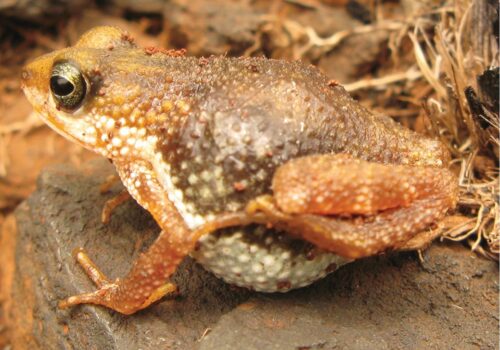
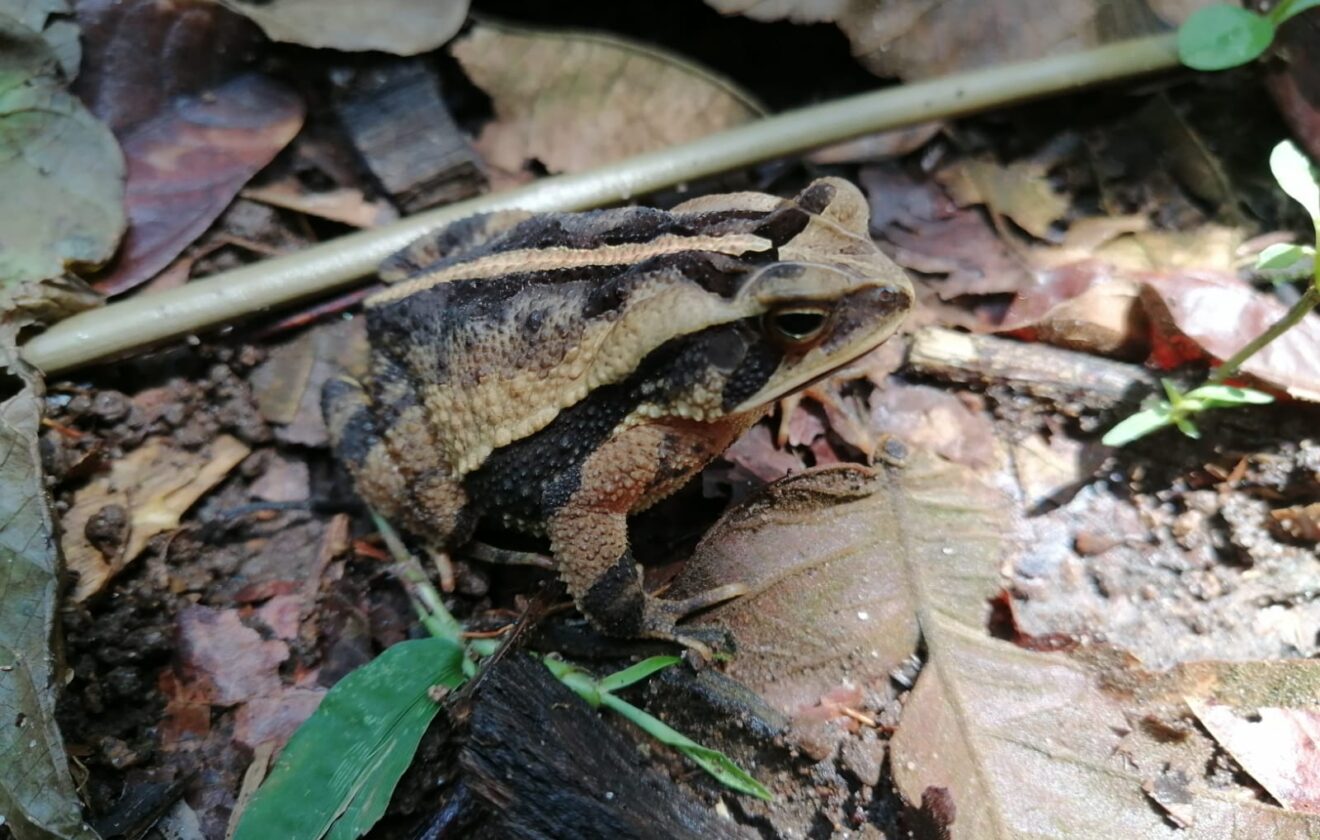
At first glance, Incilius canaliferus might appear unremarkable. However, closer inspection reveals intricate details that speak volumes of the evolutionary artistry penning each patch of skin. A medium-sized amphibian, adult Valley Toads typically measure between 4 to 8 centimeters snout-to-vent, with females generally larger and more robust compared to males.
Their coloration varies considerably, but usually showcases earthy shades of brown, grey, or olive with subtle patterns blended to perfection—allowing seamless camouflage against leaf litter or tree bark. Prominent cranial ridges forming V-shaped patterns between their eyes further distinguish the species. Meanwhile, their skin is dotted with characteristic wart-like glands that not only heighten the animal’s cryptic appearance but also secrete mild toxins providing necessary defensive protection from predators.
Eyes of burnished bronze or muted copper peer cautiously, their pupils horizontally elliptical—a familiar trait among terrestrial amphibians adapted to cautious, low-light activity. Feet succinctly developed for terrestrial navigation and occasional climbing, paired with powerful hind legs, demonstrate their adaptive versatility within the challenging terrain of their rainforest habitat.
Life Cycle and Fascinating Behaviors#
Courtship and Breeding Rituals#
Imagine twilight descending upon a tropical forest stream. As day transitions into night, a chorus gently rises from undergrowth and water edges—low, melodious calls initiated by male Valley Toads, waiting patiently for their efforts to draw females nearby.
These calls, modest yet persistent, serve as essential beacons for females ready to select mates. The mating season typically coincides with the rainy periods, ensuring ample water sources for egg deposition and eventual tadpole development. After successful courtship, females deposit long strings of eggs–numbering in hundreds– within shallow pools or slow-running streams, carefully anchoring them to submerged vegetation for safekeeping.
The Journey from Tadpole to Toad#
In approximately one to two weeks—depending upon water temperature and conditions—tiny tadpoles hatch and begin their arduous yet critical passage into adulthood. During their initial stages, these fragile larvae eagerly consume algae, organic detritus, and microscopic aquatic organisms, steadily growing stronger and preparing for metamorphosis.
After roughly two months, limbs begin to form, lungs develop, and their gills gradually disappear—this truly magical transformation soon brings forth miniature Valley Toads equipped to face terrestrial life. Once ashore, these juvenile toads mature slowly, taking up to a year or more before reaching reproductive age, embarking on the same life cycles that their ancestors dutifully followed.
An Integral Part of Their Ecosystem#
The Valley Toad inhabits a unique ecological niche, quietly maintaining the balance within its tropical habitats. As voracious insectivores, these amphibians significantly reduce pest populations, maintaining ecological equilibrium and indirectly benefiting agriculture and local human populations.
However pivotal their predation role, they simultaneously present critical nutrition for higher predators within the forest, including birds, snakes, and certain mammals. Thus, their presence helps sustain a complex network of predator-prey relationships integral to forest health. Moreover, amphibians like Incilius canaliferus serve as important bioindicators, reflecting environmental quality through their health, population trends, and distribution patterns.
Conservation Status and Ongoing Threats#
Although currently classified by the International Union for Conservation of Nature (IUCN) as “Least Concern,” the Valley Toad is not immune to serious threats impacting its ecosystems. Habitat destruction from logging, agriculture expansion, urbanization, and pollution pose significant challenges that could escalate rapidly.
Additionally, climate change intensifies the frequency of severe weather events, alters rainfall patterns critical for breeding, and promotes the spread of dangerous chytrid fungal infections that have decimated amphibian populations worldwide. Conservationists must continue proactive monitoring, protection of habitats, restoration projects, and community awareness campaigns to ensure the Valley Toad thrives in the long term.
Cultural and Scientific Significance#
Toads such as Incilius canaliferus have traditionally held cultural significance in various indigenous communities. Often symbolizing fertility, renewal, and ecological harmony, their calls mark seasonal changes and environmental shifts local communities have monitored for generations.
Scientifically, their genetic composition can provide insights into evolutionary adaptations, reproductive behaviors, antifungal resistance, and the environmental robustness of amphibian lineage, offering invaluable perspectives for conservation biology around the globe.
Conclusion: Protecting the Modest Sentinel of Forest Streams#
Incilius canaliferus, the Valley Toad, quietly surpasses mere legitimacy as a member of its environment—it shapes and reflects the delicate balance of life within tropical forests. It reminds us that conservation is not limited to charismatic megafauna but includes the unassuming creatures whose silent perseverance signifies wilderness health.
Join us in celebrating and protecting this hidden yet vital species. Support local conservation efforts, educate others about unsung heroes like the Valley Toad, and let your curiosity lead you toward continued exploration and advocacy, ensuring this humble amphibian’s chorus continues echoing softly through lush valleys and shaded streams for generations to come.