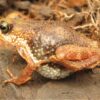
Duttaphrynus wokhaensis: Exploring the Hidden World of Wokha’s Unique Toad#
Deep in the lush, verdant hills of Wokha district in the Indian state of Nagaland thrives a small yet remarkable amphibian, the Duttaphrynus wokhaensis. Little-known yet fascinatingly adapted, this elusive creature invites nature enthusiasts and scholars alike to delve into its secretive life and delicate existence. Amid the symphony of rainforest sounds—the rustle of leaves, the gentle patter of raindrops, and the occasional call of wild birds—this shy toad navigates an ever-changing landscape, reminding us of nature’s complexity and fragility.
Barely documented and considered rare, Duttaphrynus wokhaensis represents a poignant case of biodiversity hidden from mainstream view yet intrinsically valuable. While many amphibians such as bright-eyed tree frogs or poison dart frogs often steal the spotlight, species like this modest toad quietly play an intricate, pivotal role in their ecosystems. And here’s something fascinating: This amphibian, endemic to Nagaland, was only formally identified in recent years, demonstrating that our comprehension of biodiversity continues to unfold in surprising ways.
Taxonomy and Classification#
Amphibians, particularly toads, belong in a diverse taxonomic group well known for their adaptive radiation—their ability to diverge and thrive in varied habitats. Scientifically classified in the order Anura, the family Bufonidae (‘true toads’), and the genus Duttaphrynus, our focal species, Duttaphrynus wokhaensis, is a relatively recent addition.
The genus Duttaphrynus itself houses numerous species spread across Asia, often adapted to specific microhabitats and ecosystems. The species epithet “wokhaensis” denotes its discovery location in Wokha district, emphasizing the deeply regional and ecological connections that species maintain with their habitats.
Closely related species in this genus often exhibit similar ecological requirements and behavior, highlighting the intricate interconnectedness in ecosystems. But Duttaphrynus wokhaensis has its unique hurdles and survival strategies, adaptations sculpted by the very environment it occupies.
Natural Habitat#
Imagine remote hills draped in dense greenery, valleys that fill with mist each dawn, and streams that carve gentle paths through forests teeming with life. This captivating setting is precisely the backdrop for Duttaphrynus wokhaensis in Nagaland’s Wokha district.
Primarily, this species prefers moist, subtropical forest habitats, where humidity, appropriate moisture levels, and leaf litter provide ideal conditions. The subtle crevices in damp forest floors and small rocky streams form perfect hideaways for these intriguingly shy amphibians. Here, camouflage allows them to blend seamlessly into their surroundings, making them elusive even for the careful observer.
This amphibian’s spatial choices underscore the delicacy of amphibian ecosystems: slight variations in temperature, rainfall patterns, or human-induced disturbances can profoundly impact their populations. Hence, their presence itself can offer a biological insight into the health and stability of their surroundings.
Physical Characteristics#
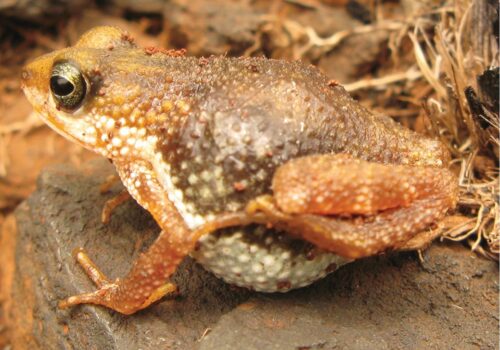
Upon first glance, one might overlook Duttaphrynus wokhaensis due to its muted coloration and smaller size. Adults typically measure no more than three centimeters, modest by most toad standards. Their skin texture is rough and granular, a typical Bufonidae trait that helps deter predators and aids in moisture retention.
Coloration tends toward earthy tones—browns, muted greens, and greys—with occasional darker markings or mottled patterns across their bodies. This blend effortlessly mimics fallen leaves and the moist soils of subtropical forests, creating a masterful natural camouflage that protects them from predation.
Their short limbs, adapted more for discreet hopping than dramatic leaps, indicate a lifestyle closely confined to ground level. Adaptations like specific skin toxins, though mild compared to brightly colored tropical frogs, also reinforce their defense against predators and unwanted intrusions.
Behavior and Life Cycle#
Like a quiet storyteller, the behavior of Duttaphrynus wokhaensis is shy yet intricate. Primarily nocturnal, they spend daylight hours inactive and hidden away beneath logs, amidst leaf litter, or in rocky recesses. At nightfall, humidity rising and air cool, they emerge cautiously to hunt a variety of insects: ants, termites, beetles, and spiders—prey abundant in their rich habitat.
During the monsoon season, as the hills become shrouded with rain and fog, a subtle metamorphosis unfolds in their behavior. Breeding begins with males gathering beside slow-moving streams and shallow pools, their soft, croaking calls barely audible over the rains. Unlike more flamboyant cousins, these toads practice quiet courtship, blending discretion with subtlety—a testament to survival strategies shaped by the environment.
Females deposit eggs in carefully chosen waterside locations, laying long strands wrapped intricately around submerged plants and rocks. The resulting tadpoles, with immaculately designed bodies ideal for streamlined movement and avoiding predation, spend critical early stages in quiet, shallow waters. Over weeks, they undergo an astonishing transformation—losing gills, developing limbs, and finally emerging onto land, ready for the terrestrial challenges ahead. This metamorphosis, a hallmark of amphibians, is both a biological wonder and a sensitive indicator of environmental health.
Ecological Role#
The ecological role of Duttaphrynus wokhaensis transcends its diminutive size. Occupying a niche as insectivorous predators, they maintain populations of many insects and small arthropods within manageable numbers, indirectly influencing plant life and overall forest health.
Moreover, becoming prey themselves, they nourish predatory species such as snakes, birds, and mammals. Their presence aids biodiversity maintenance within food webs, stabilizing the delicate balance underlying healthy, functional ecosystems.
In ecological research, amphibians are increasingly recognized as indicator species—vital creatures whose populations reflect the health of their habitat. Given its sensitivity to environmental changes and relative obscurity, studying Duttaphrynus wokhaensis can yield insights into overall forest ecosystem health, climate change impacts, and conservation efforts required to maintain biological stability.
Threats and Conservation Status#
Unfortunately, the habitat that shelters Duttaphrynus wokhaensis faces unprecedented threats, primarily due to deforestation, shifting agricultural patterns, urban development, and climate change. Habitat loss particularly stands out, fragmenting populations and endangering the delicate life cycles crucial for amphibian reproduction and survival.
The amphibian-specific threat of chytrid fungus, responsible for significant amphibian declines globally, always looms. Although precise population metrics remain sparse due to the species’ elusive nature and the remote terrain it inhabits, conservationists warn against complacency. Without baseline data, vulnerabilities become magnified—their silent disappearance could occur unnoticed, underscored only by stark realization when too late.
Currently, Duttaphrynus wokhaensis hasn’t yet been formally classified on the IUCN Red List, highlighting the urgent need for comprehensive field studies. Such assessments are vital to understanding their distribution, threats, and immediate conservation actions required to safeguard their future.
Cultural and Scientific Significance#
Locally, amphibians like Duttaphrynus wokhaensis often hold subtle, symbolic significance within indigenous cultures—representatives of rain, renewal, and hidden strength. However, given the recent identification and limited awareness, specific cultural narratives surrounding this particular species remain poorly documented, presenting intriguing future research opportunities at the fascinating crossroad of anthropology and conservation biology.
From a scientific viewpoint, each new amphibian discovery enriches our understanding of life, evolution, and ecological dynamics. As we’ve seen with other toads, potential insights exist in their bioactive compounds—some amphibian species possess skin substances valuable to medical science, hinting at unexplored potentials in healthcare and pharmacology—a unique window where conservation directly intersects human well-being.
Conclusion: The Call to Stewardship#
In the captivating yet obscure narrative of Duttaphrynus wokhaensis, we glimpse a crucial reminder of nature’s hidden complexities and fragile connections. Conservation enthusiasts, students, and citizens alike must recognize and respect its unseen role in ecological health and biodiversity. Protecting humble species like this solitary toad is more than saving “one tiny frog;” it’s embracing an ethic of holistic conservation—a promise to safeguard entire ecosystems and the myriad forms of life they support.
The invitation is clear: the call for stewardship reaches all of us. Understanding amphibians like Duttaphrynus wokhaensis inspires us to nurture curiosity, educate others, and advocate passionately for planet-wide biodiversity conservation.