Duttaphrynus valhallae: Unveiling the Mysteries of an Enigmatic Frog Species#
Deep within the lush, verdant rainforests of Indonesia resides a fascinating and remarkably elusive amphibian—one whose stirrings unfold in quiet streams and shadowy forest undergrowth. Known scientifically as Duttaphrynus valhallae, this captivating species has intrigued herpetologists and wildlife enthusiasts alike since its discovery. Possessing adaptations unique to its secluded world, Duttaphrynus valhallae symbolizes both the fascinating diversity and inherent fragility of our planet’s delicate ecosystems.
Named intriguingly after “Valhalla,” the legendary Norse hall of heroes, Duttaphrynus valhallae has struck a chord within scientific communities for intriguing reasons: its survivability in ecologically unique niches, its distinct physical and behavioral adaptations, and its ecological significance as an indicator species. Journey with me into the heart of this enigmatic amphibian’s world, as we uncover the secrets and strengths that characterize one of nature’s quietly impressive and lesser-known inhabitants.
Taxonomy and Classification#
Duttaphrynus valhallae belongs to the expansive Bufonidae family, a group more commonly known as true toads. First described scientifically by herpetologists Meade-Waldo and colleagues in recent decades, the species distinguished itself instantly by certain anatomical traits and behaviors wholly unique to its region.
The genus Duttaphrynus encompasses various Asian toads known for their rugged, warty skin, robust limbs, and terrestrial habits. Within this diverse lineage, Duttaphrynus valhallae emerges as an intriguing figure due to subtle yet significant morphological differences that set it apart. Comparing its physical characteristics to closely related species, such as Duttaphrynus melanostictus, reveals subtle evolutionary adaptations perfected over thousands of years within their isolated forest habitats.
Natural Habitat#
Enveloped in the dense, perpetually damp embrace of Indonesia’s tropical forests, Duttaphrynus valhallae has intricately adapted to a terrestrial lifestyle. Found predominantly within the forested foothills and lower montane zones of islands such as Java and Sumatra, this species illustrates an impressive specialization to the uniquely humid microclimates enveloping forest streambanks, moist leaf-litter carpets, and hidden moisture-laden crevices.
Here, growths of moss and fern intermingle with decaying logs and sporadic pools of standing water, creating an ideal microhabitat for this elusive being. It thrives specifically near pristine streams and natural springs where humidity remains consistently high. The intactness and pristine condition of the forest ecosystem are paramount for its survival, making Duttaphrynus valhallae a powerful indicator of environmental health and ecological balance.
Physical Characteristics#
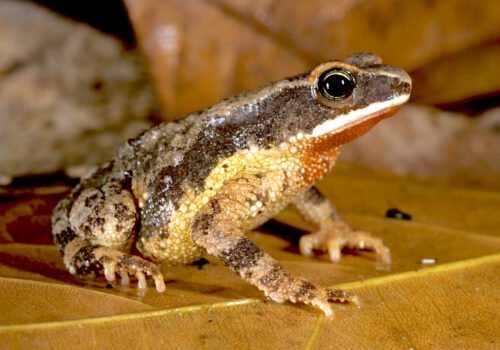
At first glance, Duttaphrynus valhallae reveals itself as a humble yet extraordinary creature. Its coloration ranges from earthy brown hues to deep olive greens, seamlessly blending into the surrounding forest floor and leaf litter—a striking testament to adaptation through camouflage. The skin is rough, dotted with irregularly placed warts and glands, mirroring both texture and tone with the habitat’s organic debris.
Adult specimens measure an average length of 40 to 55 millimeters, characteristically compact in shape and robustly built—a body optimized for terrestrial locomotion. Prominent parotoid glands behind each eye secrete alkaloid toxins as an effective deterrent against predators, further enhancing an already significant degree of survival adaptability. Robust hind legs support powerful leaps critical for evading threats and effective foraging within their forest home.
Perhaps most intriguing are the expressive golden eyes, large relative to the head size, allowing for exceptional nocturnal vision. These specialized eyes not only signal the toad’s adaptation to crepuscular and nocturnal activity but also allow nuanced navigation amidst low-light conditions of its shadowy environment.
Behavior and Life Cycle#
The behaviors exhibited by Duttaphrynus valhallae provide critical insights into its adaptive success. Primarily nocturnal, the species becomes active at twilight, awakening as the humid forest evening descends. During the dark hours, its activity peaks as it explores its territory—preying voraciously on a diet of insects, spiders, and small invertebrates commonly found within the moist leaf litter.
Their feeding method is swift and efficient; as an insect crosses its path under the cloak of darkness, the frog rapidly extends its sticky tongue, reeling in prey in fractions of a second before retreating back into the cover provided by the forest floor. Observing the elegant precision of these hunting behaviors speaks profoundly of its evolutionary journey and niche adaptations.
Reproduction and Developmental Stages#
Rainfall sparks the onset of breeding activities in this secretive amphibian. Males congregate near shallow pools or slow-moving stream edges, calling in choruses characterized by resonant and melodious croaks—an auditory performance meant to attract females from considerable distances. After finding a suitable mate, courtship behaviors ensue, culminating in the laying of elongated strings of gelatinous eggs that adhere to aquatic vegetation or submerged structures.
The subsequent metamorphosis from egg to fully terrestrial juvenile unfolds in intimate synchronization with environmental cycles. Tadpoles begin their lives remarkably adapted to aquatic existence, quickly developing an herbivorous diet suitable for their freshwater nursery. Upon maturity, the transition onto land signifies the formation of a terrestrial lifestyle, guided delicately by instinctive behaviors and gradual physiological adjustments.
Ecological Role#
This amphibian’s ecological role within its rainforest habitat is undeniably significant despite its diminutive stature and understated presence. As both predator and prey, Duttaphrynus valhallae forms a vital part of balanced forest food webs—controlling insect populations, mitigating pest outbreaks, and simultaneously feeding larger species such as snakes, birds, and small mammalian predators.
Most importantly, it serves as a sentinel species, offering valuable bio-indicator insights into the health of its habitat. Any decline in its population may be considered a poignant warning signal reflecting larger and less visible ecological disturbances, from habitat degradation and pollution to climate shifts affecting precipitation patterns and humidity cycles.
Threats and Conservation Status#
Like many rainforest inhabitants, Duttaphrynus valhallae faces an array of environmental threats stemming primarily from human-induced habitat loss. Rapid deforestation resulting from logging, agricultural expansion, and urbanization culminates in severely fragmented landscapes isolated from each other—isolations debilitating for sustaining viable genetic exchanges crucial for the species’ long-term survival.
Climate change poses an equally insidious threat, altering monsoon cycles, intensifying droughts, and disrupting essential breeding patterns and egg-laying habitats. Although not yet globally evaluated officially by entities like the International Union for Conservation of Nature (IUCN), mounting local scientific evidence suggests declining population numbers. Conservation foundations and local ecologists have begun calling attention to preserving habitat integrity, educating the public, and initiating targeted biological monitoring efforts.
Cultural and Scientific Significance#
Despite its relative obscurity, Duttaphrynus valhallae occupies powerful cultural symbolism for many local communities living near its natural habitat. In traditional belief systems, its nocturnal croaking signals seasonal changes, guiding agricultural decisions relating to planting and harvesting times. This powerful cultural symbiosis underscores the intricate relationship humans traditionally have maintained with creatures populating their environments.
Scientifically, the species holds significant potential as a subject of genetic studies and ecological research. Its adaptations offer valuable genetic insights into environmental resilience, with promising implications for conservation biology and ecological restoration strategies. Moreover, alkaloid toxins secreted by the parotoid glands present exciting pharmacological potential, prompting researchers to explore medical avenues involving novel therapeutic chemicals derived from amphibian extracts.
Conclusion#
Duttaphrynus valhallae stands as a powerful testimony to the resilience, ingenuity, and unmistakable beauty of nature’s hidden corners. Protecting this remarkable species requires not only ecological preservation measures but also profound appreciation and awareness from society at large. Embracing greater responsibility for our shared forests ensures the survival of these quiet residents, safeguarding invaluable ecosystems and the unlimited potential novel discoveries that still whisper forth from the heart of nature. Together, we hold responsibility for its preservation, a crucial aspect woven into our broader commitment to conserving Earth’s wondrous biodiversity.