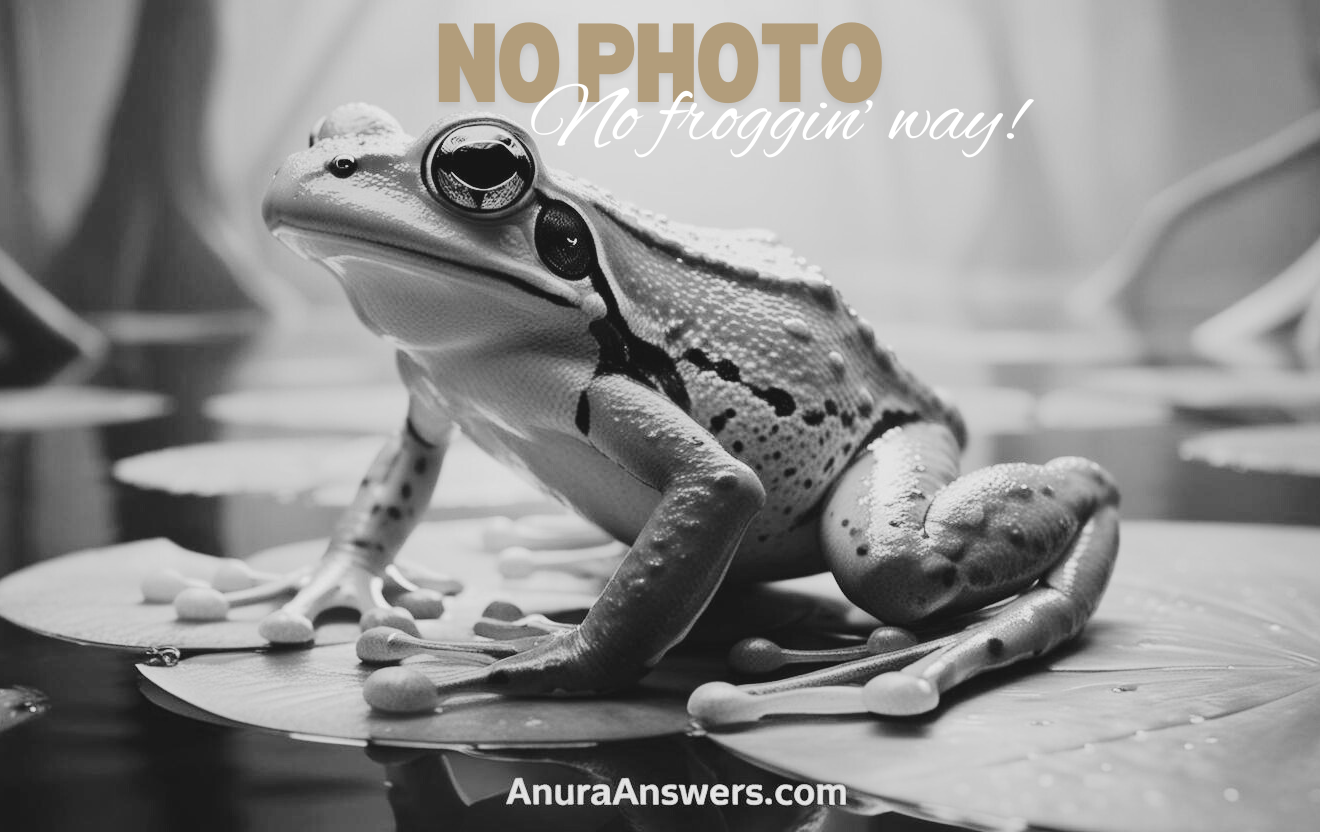
- Exploring the Intriguing Life of Duttaphrynus stomaticus: The Indus Valley Toad
- Taxonomy and Classification: Understanding Its Roots
- Natural Habitat: Home Among Varied Landscapes
- Physical Characteristics: Camouflage Meets Utility
- Behavior and Life Cycle: Unveiling Daily Life in the Wild
- Ecological Role: Vital Links in Ecological Chains
- Threats and Conservation Status: Securing the Toad's Future
- Cultural and Scientific Significance: Bridging Worlds
- Conclusion: Celebrating the Underrated Hero
Exploring the Intriguing Life of Duttaphrynus stomaticus: The Indus Valley Toad#
Hidden amidst the sun-baked earth and lush, monsoon-drenched forests across South Asia lives a hardy amphibian: the Indus Valley Toad (Duttaphrynus stomaticus). Though often overlooked, this inconspicuous resident plays an essential role in maintaining ecological balance within its habitat. Distinguished by its distinctive looks and intriguing behaviors, this remarkable toad warrants closer attention from nature enthusiasts and conservationists alike.
Duttaphrynus stomaticus thrives in a changing world, quietly contributing to biodiversity and offering clues about environmental health. Before exploring its fascinating existence, consider this curious fact: despite its modest size and unassuming appearance, the Indus Valley Toad serves as a vital shield against harmful insects, preventing potential agricultural damage. Such underappreciated heroes often slip beneath our notice, yet their stories deserve to be told.
Taxonomy and Classification: Understanding Its Roots#
The Indus Valley Toad belongs to the family Bufonidae, a widespread and diverse family commonly referred to as true toads. Within this large and complex group, the genus Duttaphrynus encompasses a collection of closely related species dispersed mainly across Asia. Scientifically first described by German zoologist Johann Ludwig Christian Gravenhorst in 1829, Duttaphrynus stomaticus was initially categorized under a different genus. Over time, revisions to scientific taxonomy and genetic understanding have placed it firmly within the current genus.
This unique amphibian is closely related to other Asian species, such as the common Asian Toad (Duttaphrynus melanostictus). However, it possesses several distinct biological and ecological characteristics setting it apart from its relatives. Careful research into its genetic lineage continues to clarify the evolutionary journey of this understated yet fascinating amphibian.
Natural Habitat: Home Among Varied Landscapes#
The Indus Valley Toad claims a broad geographic range, primarily inhabiting regions spanning Pakistan, India, Sri Lanka, Nepal, Bangladesh, and even parts of Afghanistan. Its adaptability underscores the species’ resilience as it occupies diverse environments—from semiarid scrublands and seasonal riverbanks to cultivated agricultural fields, rural gardens, and urban parks.
A Master of Adaptability#
A remarkable feature that defines the Indus Valley Toad is its incredible adaptability. Unlike many amphibian species restricted to lush rainforests or pristine freshwater bodies, this toad thrives in areas routinely disturbed by human activity. Often found near human settlements, it opportunistically capitalizes on irrigation canals, gardens, degraded wetlands, and small water bodies sustained by regular rainfalls and human irrigation practices.
The toad’s natural habitat typically consists of mixed topography with hotspots of moisture critical for its reproductive cycle. Shallow ditches and pools of stagnant water serve as ideal breeding grounds, providing a protected environment for egg laying and tadpole development. Thus, identifying this adaptable species within agricultural landscapes provides a meaningful glimpse into ecosystems where biodiversity subtly thrives alongside human habitation.
Physical Characteristics: Camouflage Meets Utility#
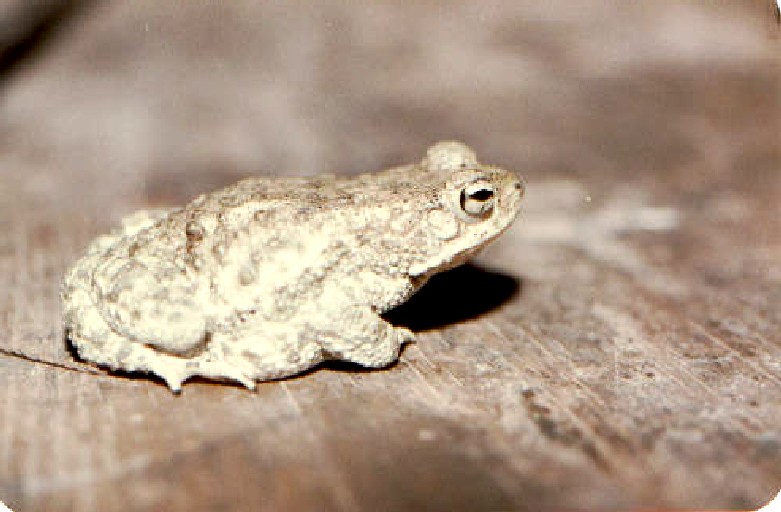
The Indus Valley Toad typically measures about 4 to 8 centimeters in length, showcasing the relatively modest size common among true toads. But what this charming frog lacks in size, it more than compensates for through resilience and a camouflage-friendly coloration.
Colors of Camouflage#
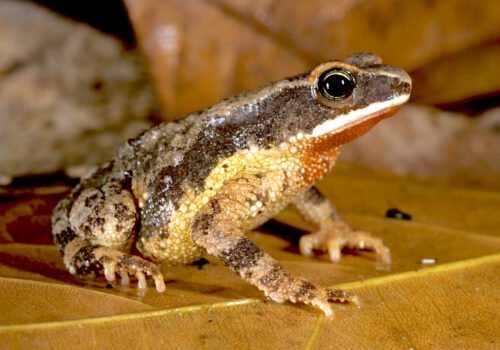
Upon close inspection, the subtle beauty of Duttaphrynus stomaticus reveals itself. Their wonderfully mottled bodies range from earthy shades—brown, grayish-green—to darker spots or irregular blotches blending seamlessly with their surroundings. This clever camouflage aids tremendously in protecting them from predators, allowing the toad to remain still and unnoticed among leaf litter, soil clumps, and scattered vegetation.
The characteristic dry, warty skin typical of true toads also sets apart the species from moist-skinned tree frogs or aquatic amphibians. The toad’s rough-textured skin aids in water conservation, crucial for survival in environments with pronounced dry periods.
Additionally, prominently visible parotoid glands situated just behind their eyes secrete toxins potent enough to discourage potential predators—an effective and pragmatic defense mechanism that helps ensure their survival in challenging environments.
Behavior and Life Cycle: Unveiling Daily Life in the Wild#
As dusk falls across the rural fields of South Asia, the Indus Valley Toad emerges cautiously from its daytime hiding place under logs or stones. Nocturnal by preference, nighttime hours present a perfect opportunity for foraging activities and social encounters crucial to the species’ survival and reproduction.
The Art of Feeding and Foraging#
Duttaphrynus stomaticus is predominantly insectivorous, efficiently eliminating an abundance of insects, such as beetles, moths, ants, and termites. Equipped with swift tongues and precise movements, they rely on visual and vibration-sensitive cues to capture prey. This voracious appetite helps provide valuable biological pest control, contributing positively to agricultural and human-dominated ecosystems.
The Annual Cycle: Romance and Renewal#
The arrival of seasonal monsoon rains marks the eagerly anticipated breeding season. Male toads take center stage, congregating near temporary water bodies, emitting distinct calls described as repetitive, melodic creaks echoing into the humid night. These calls both attract females and deter competing males, establishing territories in a lively performative dance that signifies vitality and ecological continuity.
After mating, females lay long, gelatinous strings of eggs in shallow standing water. Within days, tadpole populations flourish, feeding vigorously on algae and microbes. Quick growth ensures they metamorphose within a few weeks—a strategy perfectly suited to the temporary habitats in which they’re born. Emerging froglets begin their terrestrial journeys, cautious yet resilient, adapting quickly to the challenges around them.
Ecological Role: Vital Links in Ecological Chains#
The Indus Valley Toad plays a pivotal ecological role in its ecosystem narrative, dynamically interacting as both predator and prey within intricate food webs. By feeding heavily on insect prey, it effectively regulates insect populations, providing immense value for agricultural ecosystems and human settlements.
A Crucial Indicator Species#
In addition to being proactive pest controllers, their responsiveness to habitat alteration positions them ideal ecological indicators. Because amphibians are particularly sensitive to environmental degradation—given their permeable skin and complex aquatic-terrestrial life cycles—the presence of healthy populations of Duttaphrynus stomaticus suggests relatively balanced ecological conditions.
Threats and Conservation Status: Securing the Toad’s Future#
Presently, the Indus Valley Toad is categorized as Least Concern on the International Union for Conservation of Nature (IUCN) Red List of Threatened Species. Nevertheless, complacency remains unwise: continuous environmental degradation poses potential future threats.
The Looming Challenges#
Expanding urbanization, habitat fragmentation, water pollution, pesticide use, and climate change present enduring challenges. Particularly worrying is their exposure to pesticides in agricultural areas, which not only jeopardize tadpole survival but also impact reproductive success and adult population stability.
Stepping Up Conservation Efforts#
Thankfully, awareness around amphibian conservation gradually gains momentum on national and global stages. Local governments, conservationists, and rural communities across South Asia increasingly realize amphibians’ importance, implementing educational outreach, habitat restoration projects, and reduced pesticide reliance initiatives to protect this extraordinary species.
Cultural and Scientific Significance: Bridging Worlds#
Although Indus Valley Toad lacks the celebrity status of charismatic megafauna, local folklore and perceptions highlight a subtle cultural appreciation among rural communities that coexist harmoniously with them. Known for their insect-control properties, the toads enjoy acceptance and protection among rural farmers aware of their beneficial ecological roles.
Moreover, the species has prompted scientific curiosity, inspiring researchers to understand evolutionary adaptations to a variety of habitats and stressors. Studies examining their toxin secretions contribute afterward to medical and environmental sciences, showcasing how such humble species profoundly impact broader scientific understanding.
Conclusion: Celebrating the Underrated Hero#
Undoubtedly, Duttaphrynus stomaticus encapsulates resilience, adaptability, and ecological service. Understanding their life history, behavior, and conservation needs fuels critical awareness imperative towards protecting vital habitats, ensuring their role remains appreciated for generations.
Let us continue to explore, investigate, and cherish diverse species like the Indus Valley Toad. Their quiet existence tells louder stories about harmonious coexistence, ecological balance, and essential conservation actions. Supporting local conservation and educational programs is not merely beneficial—it is integral. By preserving the humble, resilient, and captivating Indus Valley Toad, we ultimately preserve ourselves and our shared world.